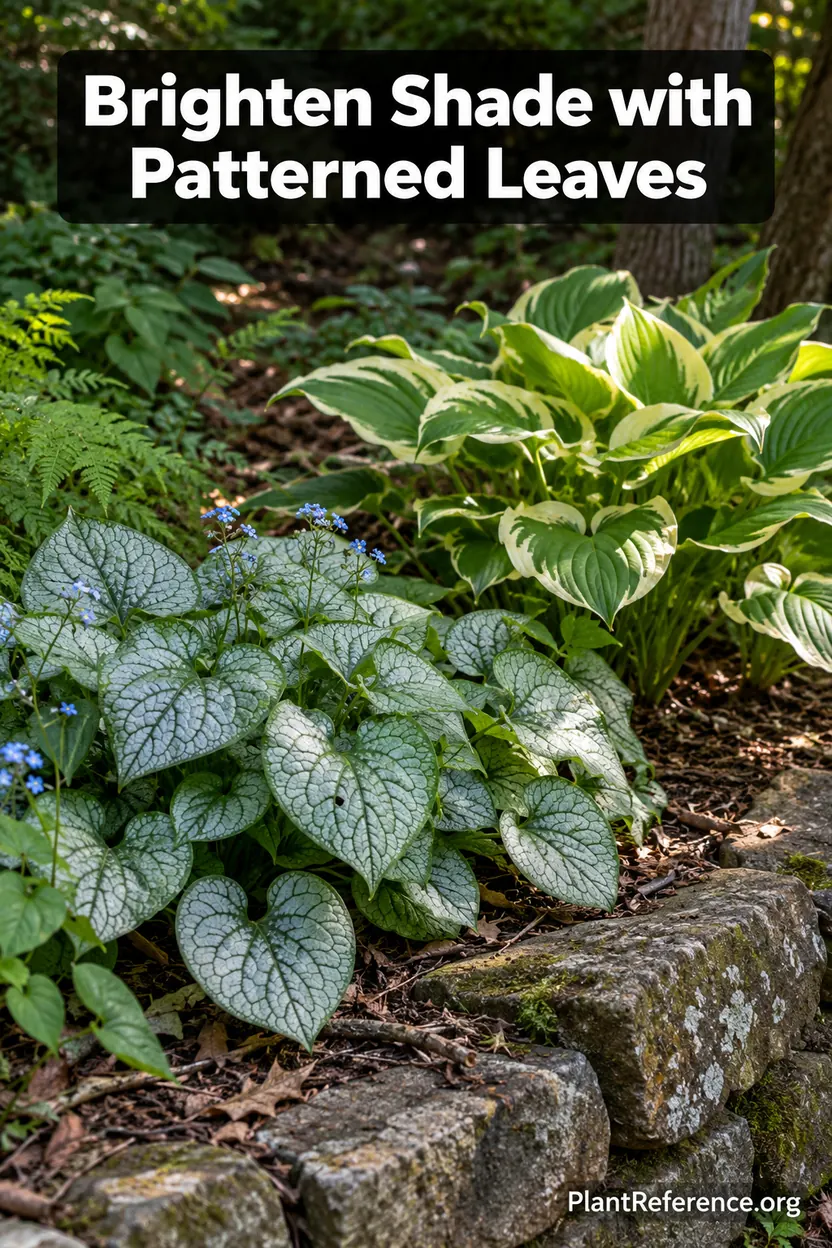
Variegated Shade Plants: Silver, Cream and Gold Picks
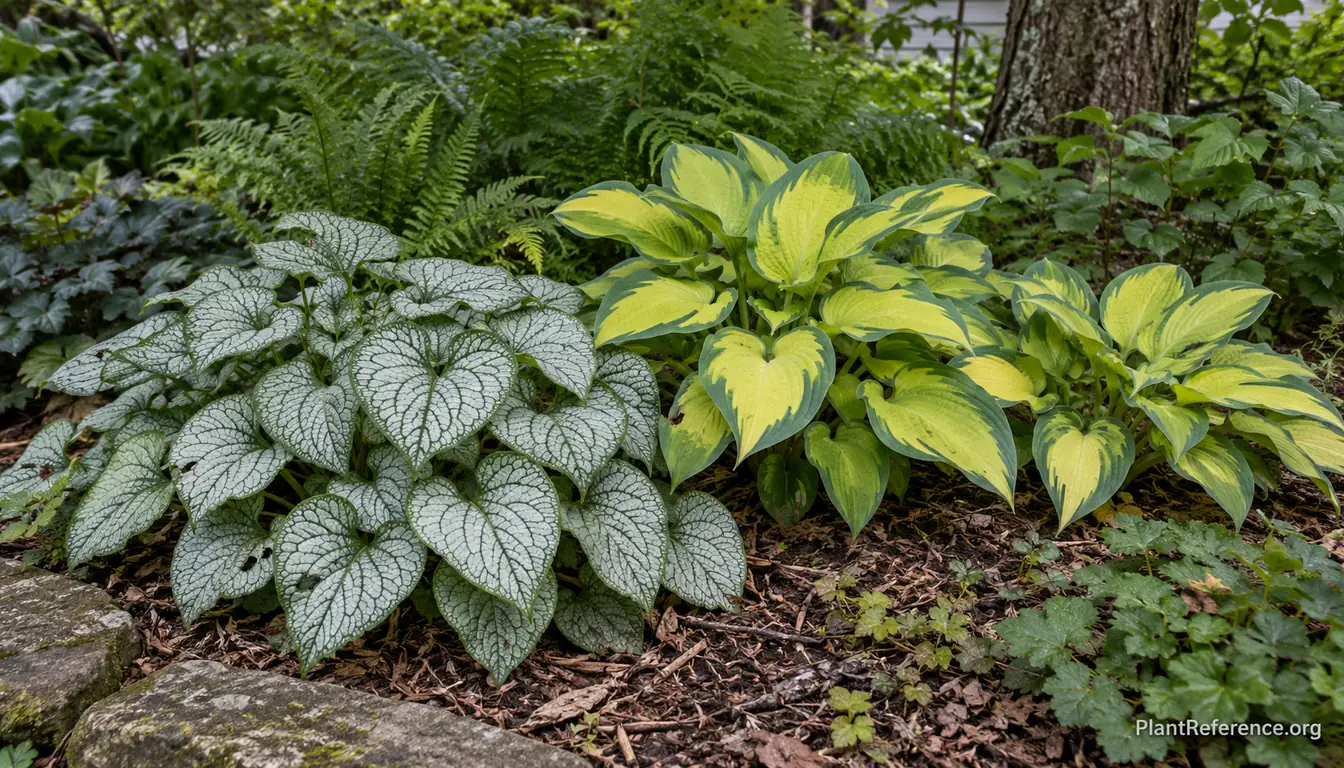
— Image © PlantReference.org 2026
Pets & Toxicity
Recorded toxicity for plants linked in this guide. An unknown status is not a safety assessment.
Toxic to pets: june hosta, hostasDetailsHide
Brunnera macrophylla 'Jack Frost' — Toxicity
Non-toxicView Brunnera macrophylla 'Jack Frost' plant profileVariegated shade plants can make a dark-looking border feel brighter by contrasting pale leaf areas with surrounding green foliage. Start with silver brunnera, gold-centered or white-patterned hostas, and cream-edged toad lilies, then choose the ones that fit the site's moisture and light rather than expecting leaf color to solve unsuitable conditions.
Choose Variegated Shade Plants for the Actual Site
Bright shade and deep shade are different growing environments. A bed open to reflected sky light can support much more growth than a narrow pocket beneath a dense evergreen canopy, even when neither receives direct sun. Observe the site through the day and again after deciduous trees leaf out.
Pale foliage creates visual contrast; it does not manufacture light. White or cream areas may contain less chlorophyll, while silver effects can arise through different leaf structures. Avoid assuming that every pale-leaved plant has identical physiology or should receive exactly the same exposure.
Moisture is equally important. Mature trees can create dry shade even where the surface looks cool, and moisture-loving perennials may struggle beside dense roots. Best Perennials for Shade: 12 Species That Thrive helps compare broader plant choices before committing to a particular color scheme.
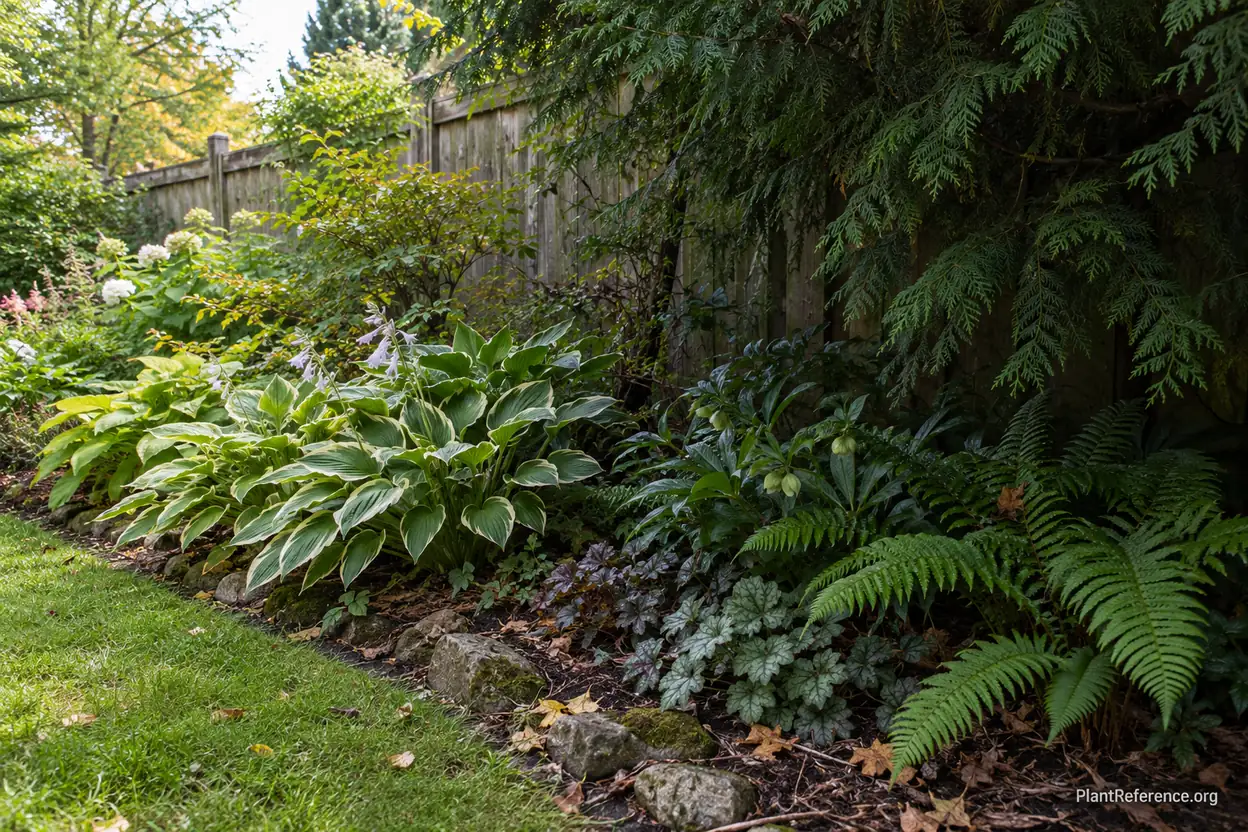
Compare the effect, not just the color name
Plant selection | Main foliage effect | Design role | Selection caution |
|---|---|---|---|
Silver with green veins | Broad, cool highlight | Needs a suitable sheltered site | |
Brunnera macrophylla 'Alexander’s Great' | Large silver leaves | Larger-scale focal grouping | Allow room for broad foliage |
Brunnera macrophylla 'Queen of Hearts' | Bold silver heart-shaped leaves | Distinct leaf-shape accent | Confirm mature dimensions |
Gold centers and blue-green margins | Warm patterned focal point | Color varies with conditions | |
Hosta 'Lakeside Paisley Print' | Feathery white markings | Detailed close-viewing accent | Avoid hiding it behind larger leaves |
Tricyrtis 'Gilt Edge' | Cream leaf margins | Finer upright contrast | Requires suitable moisture |
Silver Brunnera for Broad Foliage
Brunnera 🌿Brunnera macrophylla (BROON-er-ah mak-roh-FIL-ah) contributes heart-shaped foliage and delicate blue spring flowers. In the silver-leaved selections, the foliage carries the design after the short floral display. Choose for the mature leaf mass rather than buying solely because the plant is flowering in the nursery.
🌿Brunnera macrophylla 'Jack Frost'
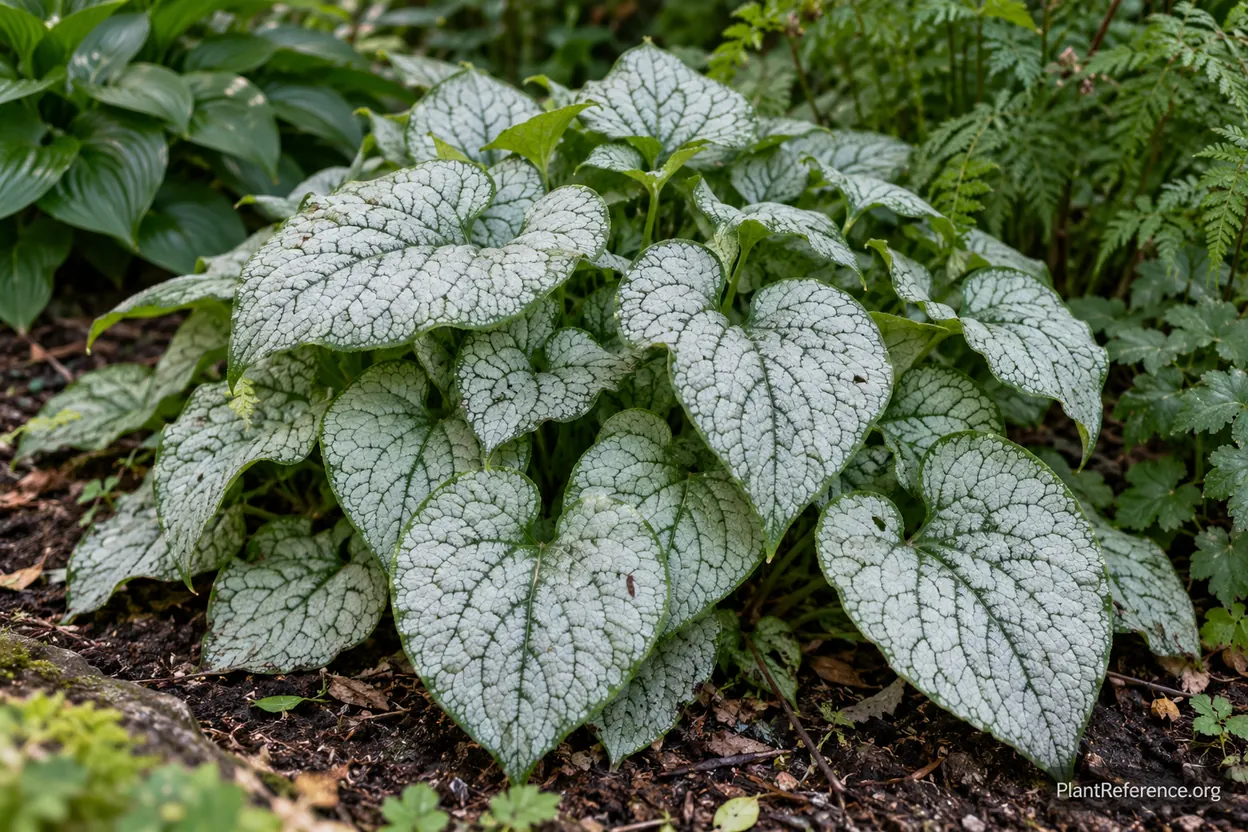
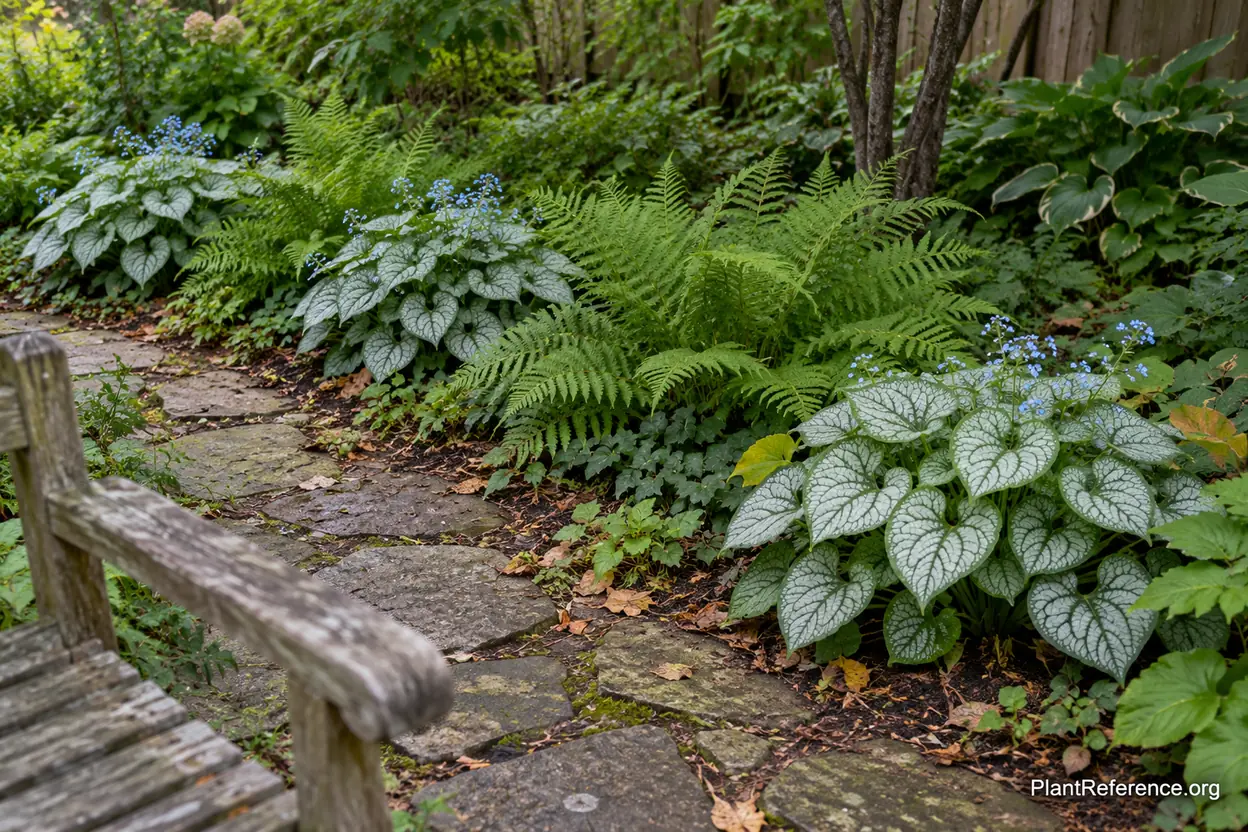
Choose 🌿Brunnera macrophylla 'Jack Frost' for the familiar combination of silvery leaf surfaces and green veining. That pattern reads clearly against darker foliage without needing a mass of flowers. It is a useful starting selection when you want a cool highlight rather than a warm gold accent.
Keep it in a site where moisture and exposure suit broad, shade-adapted leaves. Sudden intense sun can cause scorch, so do not interpret silver coloring as protection from every hot position. Check the root zone before adding water to a plant with damaged leaves.
Larger silver alternatives
Brunnera macrophylla 'Alexander’s Great' offers a larger-leaved effect, useful where a small patterned plant would disappear in the view. Brunnera macrophylla 'Queen of Hearts' contributes bold heart-shaped foliage with a pronounced silver appearance. The research supports those visual distinctions, not a universal ranking of which performs best in every garden.
Confirm mature height and spread with the supplier, then leave room for neighboring plants. A broad leaf can cover a small perennial even when the crowns were initially well spaced. Soil Health 101: How to Build Living, Productive Garden Soil explains the soil foundation behind healthy growth rather than relying on increasingly elaborate amendments.
Patterned Hostas for Gold and Cream Accents
Hostas 🌿Hosta spp. (HOSS-tuh) offer strong leaf shapes that can anchor a border. Patterned selections add another layer of contrast, but they still need enough mature space. A small nursery division does not mean the adult plant will remain a small edging accent.
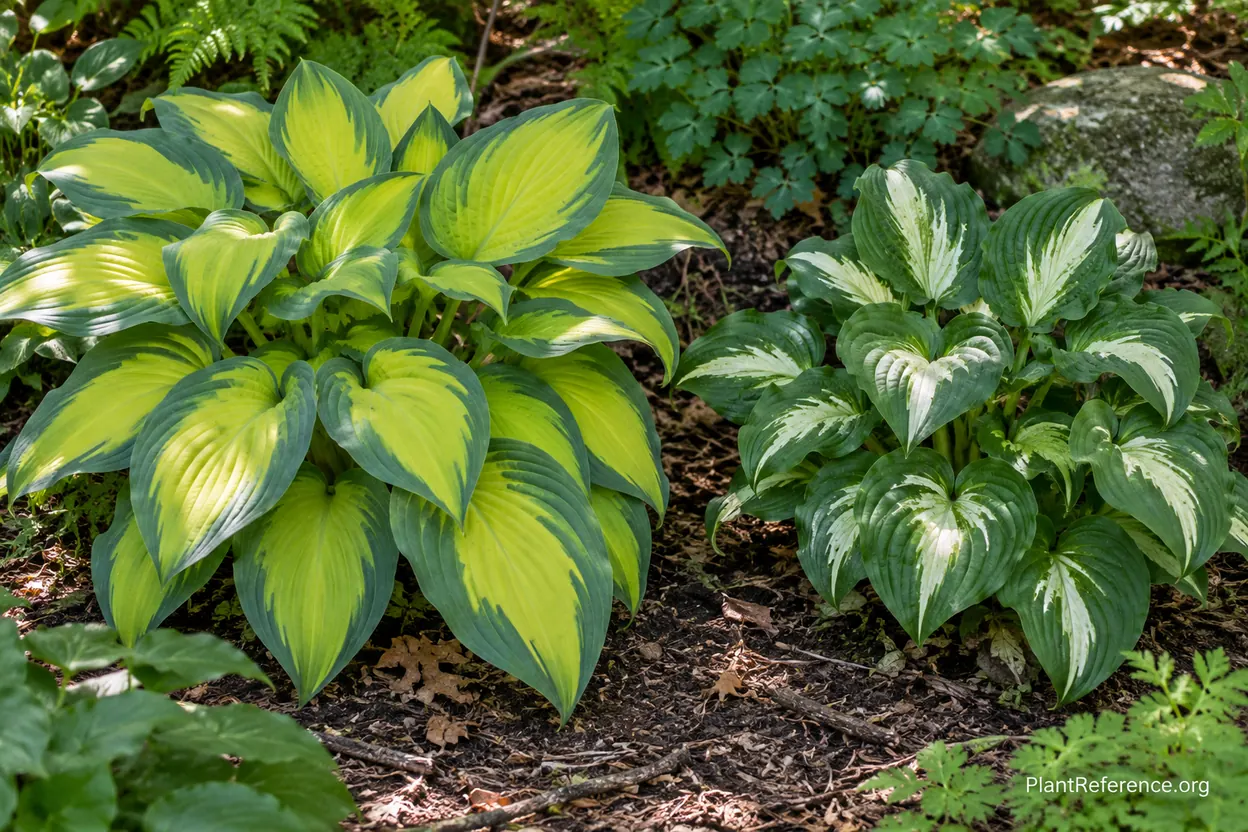
🌿Hosta 'June' for warmer contrast
🌿Hosta 'June' pairs gold centers with blue-green margins, producing a warmer impression than silver brunnera. Use it as a focal point within a simpler green grouping or repeat it in a deliberate rhythm. Too many unrelated patterns can make a small border feel busy rather than bright.
Leaf color changes with exposure and season, so a catalog photograph is not an exact permanent color promise. Assess the actual labeled plant where possible, and choose conditions that support healthy growth. Do not move shade-grown foliage into hot afternoon sun simply to intensify its color.
Hosta 'Lakeside Paisley Print' for close viewing
Hosta 'Lakeside Paisley Print' has wavy green margins and feathery white markings. Its fine pattern rewards a location near a path or sitting area where individual leaves are visible. At a great distance, that detail may be less useful than a larger block of contrasting color.
The research describes a medium-scale plant, but confirm the seller's mature dimensions before arranging companions. Inspect foliage for damage without expecting any hosta to be pest-proof. How to Get Rid of Slugs on Hostas: What Works explains management if feeding becomes a problem.
Keep the growing conditions separate from the pattern
Neither cultivar makes saturated soil suitable for hostas. How to Improve Clay Soil Without Making It Worse helps with heavy-soil decisions, while How to Improve Sandy Soil That Dries Out Fast addresses a different constraint. The right pattern in the wrong root environment is still the wrong purchase.
Cream-Edged Toad Lilies and Textural Partners
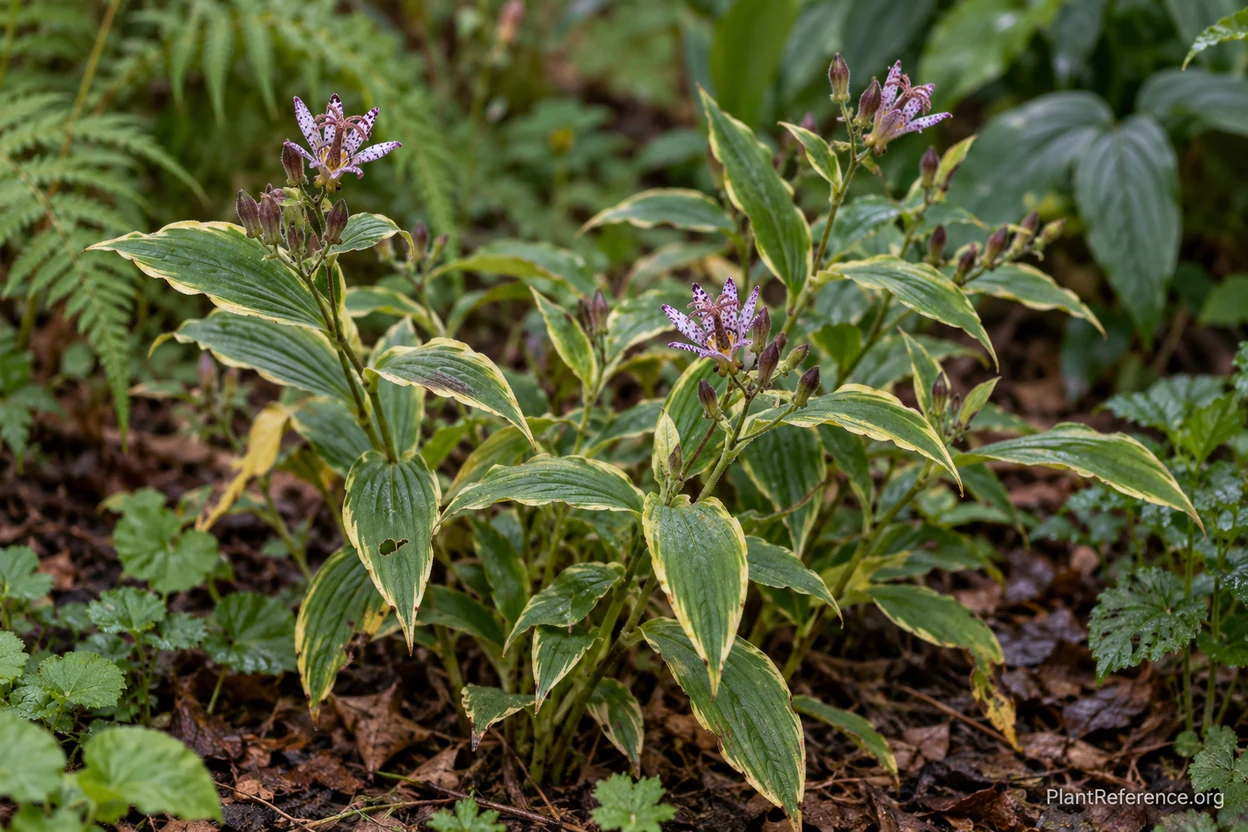
Toad lilies Tricyrtis (try-SER-tiss) offer a different silhouette from broad hosta and brunnera leaves. Tricyrtis 'Gilt Edge' adds creamy margins and purple-spotted flowers, bringing foliage interest before its later floral display. Choose it when a finer upright accent is more useful than another broad mound.
Moisture is the deciding factor
Toad lilies prefer moist, organically rich soil in partial to full shade. That does not mean stagnant, waterlogged ground, and it does not make them an effortless choice under thirsty trees. Confirm that you can provide appropriate moisture through the growing season.
Tree roots commonly occupy the upper 12–18 inches (30–46 cm), where small perennials also establish. How Much Soil Do Urban Trees Actually Need? The Root Volume Guide explains why cutting roots or adding deep soil is not a safe way to create a new planting pocket.
Use plain foliage as a visual resting place
Fern fronds and simple green leaves make patterned plants easier to read. Silver-toned Japanese painted ferns can provide finer texture too, but not every pale foliage effect is the same as cream-edged variegation. Choose the combination for contrast in shape as well as color.
Coral bells add another useful palette. How to Grow Heuchera (Coral Bells) in Shade Gardens covers their range, but a uniformly chartreuse or amber leaf should not be described as white-and-green variegation. A solid-colored partner can be exactly what a heavily patterned grouping needs.
Build a Coherent Planting Before Buying
Choose one dominant pale effect, then add a contrasting shape. A silver brunnera grouping, one gold-centered hosta and a quieter green background can be easier to appreciate than six unrelated patterns packed together. View the proposed arrangement from the place where you actually spend time.
Variegated shade plants remain living plants, not permanent decorative panels. Confirm hardiness, mature dimensions and seasonal dormancy with the supplier before ordering. This comparison provides research-supported characteristics, not verified current inventory, prices or performance from a personal trial.
Identify bright, dappled or deep shade before selecting a cultivar.
Check summer moisture rather than relying on a wet spring visit.
Confirm the exact cultivar name and mature spread.
Leave room for neighboring foliage to expand.
Repeat a limited palette instead of filling every gap with a new pattern.
Trial a position without disturbing tree roots
A suitable container can help test the visual arrangement, provided its drainage and watering needs are met. Container Gardening: Pots, Soil, Water & Yields explains those differences. A successful pot display does not prove the soil beneath a nearby tree will support the same plant.
Where growth is poor, investigate the site before applying fertilizer or changing pH. How to Test Garden Soil: Jar, Ribbon & pH Tests helps distinguish measurable soil questions from a general impression that a dark corner needs “improvement.” Sometimes the right answer is fewer plants in better positions.
Finish by checking the planting from a distance and close up. Pale foliage should guide the eye, while healthy green companions give it context. A successful shade corner feels brighter because the plants are well chosen and well placed, not because every leaf is the lightest available.
Frequently Asked Questions

Reading about plants and recognising them are different skills. These three build the second.
- Daily PlantIdentify the day’s mystery plant from a close-up photograph.
- Keyed OutWork a dichotomous key, lead by lead, to name a hidden specimen.
- Name That PlantName a specimen from botanical clues dealt hardest first.
Free to play, no account needed
Tagged with
Sarah earned her doctorate in plant biology and spent time working in botanical garden education before transitioning to freelance writing and consulting. Now based in Portland, Oregon, she teaches plant identification workshops at local community centers and maintains a modest collection of over 60 houseplants in her small apartment. Sarah specializes in helping beginners understand plant science without the jargon—her approach focuses on practical observation over theory. She's killed her fair share of fiddle leaf figs and finally cracked the code on keeping them alive.