Hosta, Genus, 'June', Cultivar,
- Genus
- Cultivar
june hosta
Garden hybrid; sport of 'Halcyon' in the Tardiana Group; genus native to Japan, Korea, and northeastern China
Overview
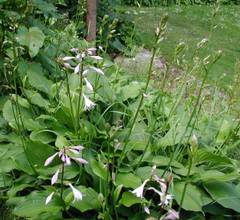
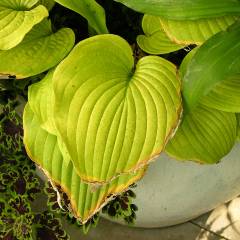
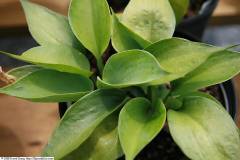
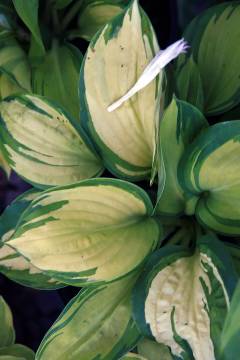
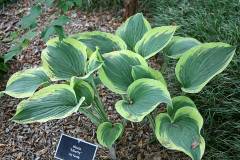
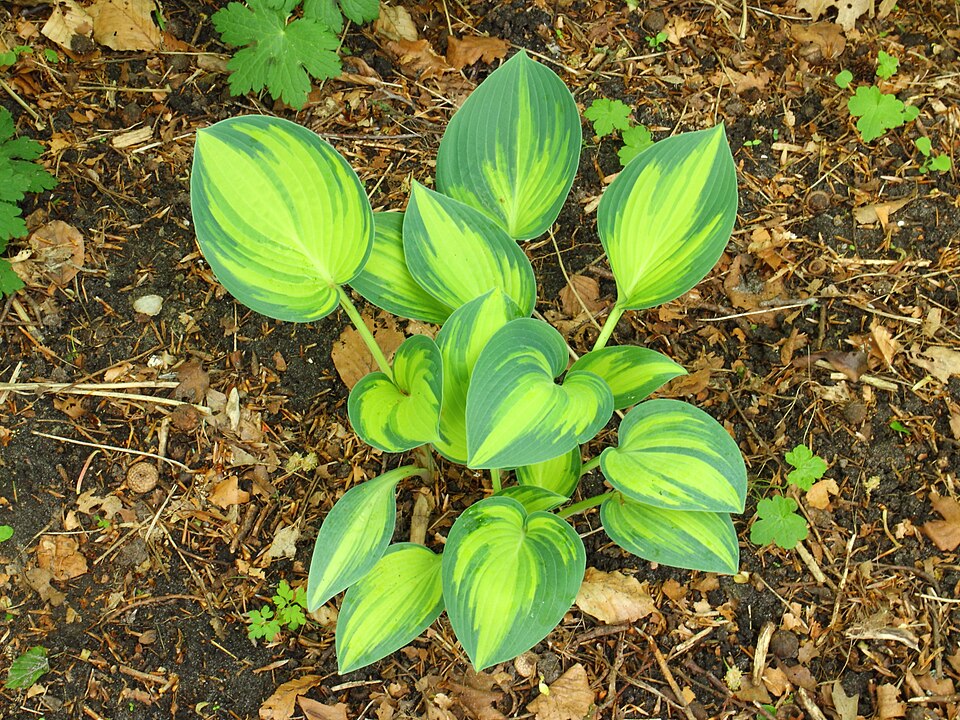
Hosta 'June' is a medium, mounding, deciduous perennial reaching 12-15 inches (30-38 cm) tall and 24-30 inches (60-75 cm) wide. A sport of Hosta 'Halcyon' from the Tardiana Group (H. sieboldiana crossed with H. tardiflora), it carries heart-shaped leaves 6-7 inches (15-18 cm) long with golden-yellow to chartreuse centers and irregular blue-green margins. The leaf color shifts across the season, running bluer in spring, gaining yellow in the center as temperatures rise, and deepening to gold by midsummer. Leaf substance is thick and slightly puckered, a trait from the 'Halcyon' parent that lends some slug resistance. Pale lavender funnel-shaped flowers open on 20-inch (50 cm) scapes in July for 2-3 weeks. Growth is moderate, and the plant is hardy in zones 3-9. The leaf centers scorch in full hot sun, slugs and snails still graze the foliage despite the thicker substance, and the plant emerges later in spring than many hostas, so early cultivation can nick the dormant crown. All parts are toxic to cats and dogs if eaten.
Native Range
Hosta 'June' is a garden hybrid, a sport of Hosta 'Halcyon' in the Tardiana Group, which traces to H. sieboldiana crossed with H. tardiflora. The genus Hosta is native to Japan, Korea, and northeastern China.Suggested Uses
Grown in shaded borders, woodland gardens, and containers of 3 gallons (11 L) or larger, spaced 24-30 inches (60-75 cm) apart. The color shift from blue-green spring leaves to gold-centered summer ones stretches interest from April into September. It pairs with Astilbe, Heuchera, Polystichum, and Dryopteris in shade. Foliage is toxic to pets.How to Identify
Appearance
Size & Dimensions
Height1' - 1'3"
Width/Spread2' - 2'6"
Colors
Bloom Information
Pale lavender funnel-shaped flowers open on 20-inch (50 cm) scapes in July for 2-3 weeks, held above the foliage mound. The variegated gold and blue-green leaves carry the plant through the season, with the flowers a brief summer accent. Bees visit the blooms.
Detailed Descriptions
Flower Description
Pale lavender, funnel-shaped, on 20-inch (50 cm) scapes in JulyFoliage Description
Golden-yellow to chartreuse centers with irregular blue-green margins; heart-shaped; 6-7 inches (15-18 cm) long; thick and slightly puckered; color shifts from bluer in spring to gold-centered by midsummerGrowing Conditions
Sun Requirements
Requires 2-4 hours of direct sunlight daily
• Full Sun: 6+ hours of direct sunlight
• Partial Shade: 3-6 hours of direct sunlight
• Full Shade: Less than 3 hours of direct sunlight
Care & Maintenance
Care Guide
Grow in partial to full shade in moist, humus-rich, well-drained loam or clay at pH 5.5-7.0, hardy in zones 3-9. Morning sun with afternoon shade brings out the strongest gold-to-blue-green contrast; deep shade greens the centers, while full hot sun scorches the gold. The plant emerges late in spring, so early-season cultivation near the crown risks the dormant buds. Slugs and snails are the main pest, and the thicker leaf substance slows but does not stop feeding. Watering in dry spells and a light mulch hold moisture. All parts are toxic to cats and dogs.Pruning
Cut spent flower scapes back to the base after bloom if seed is not wanted. Cut the foliage to the crown once frost browns it in fall, or leave it standing for winter structure and clear it in early spring before new shoots rise.Pruning Schedule
Prune: March & November
fallearly spring
Container Growing
Suitable for container growing
Minimum container size: 3 gallons