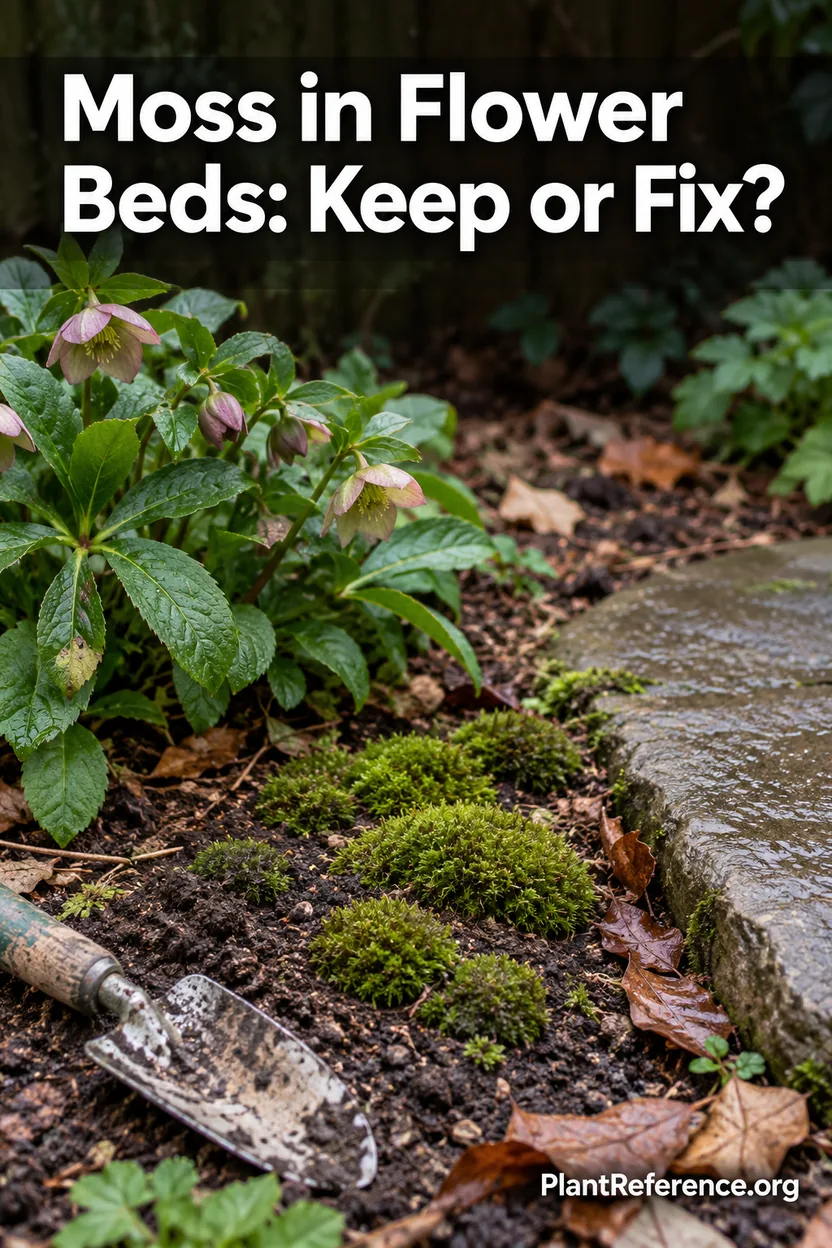
Moss Growing in Flower Beds: Keep It or Fix the Soil?
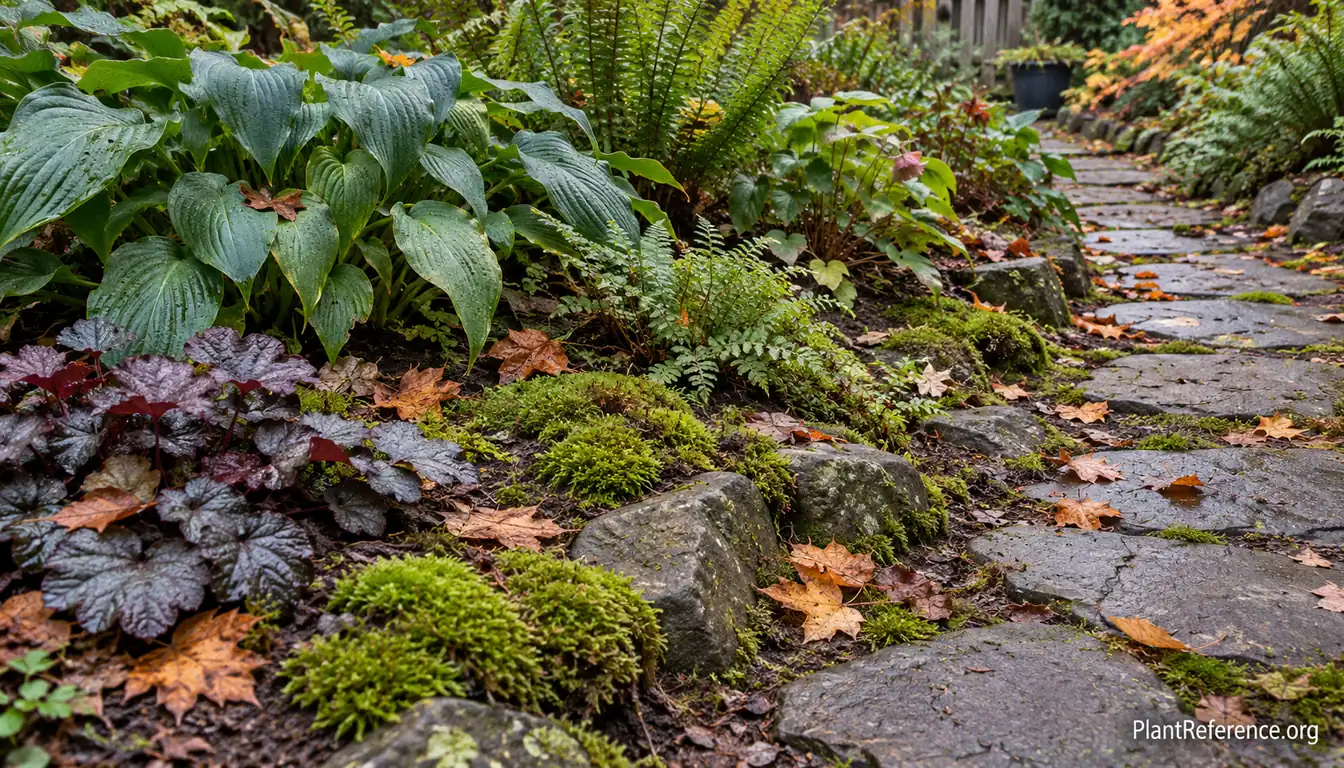
— Image © PlantReference.org 2026
Moss growing in flower beds can be a welcome woodland carpet or a prompt to investigate water and soil structure. The deciding factor is not the green surface alone: look at the surrounding plants, how long the soil stays wet and whether feet or equipment repeatedly compress the bed.
Read the Surface Before Treating It
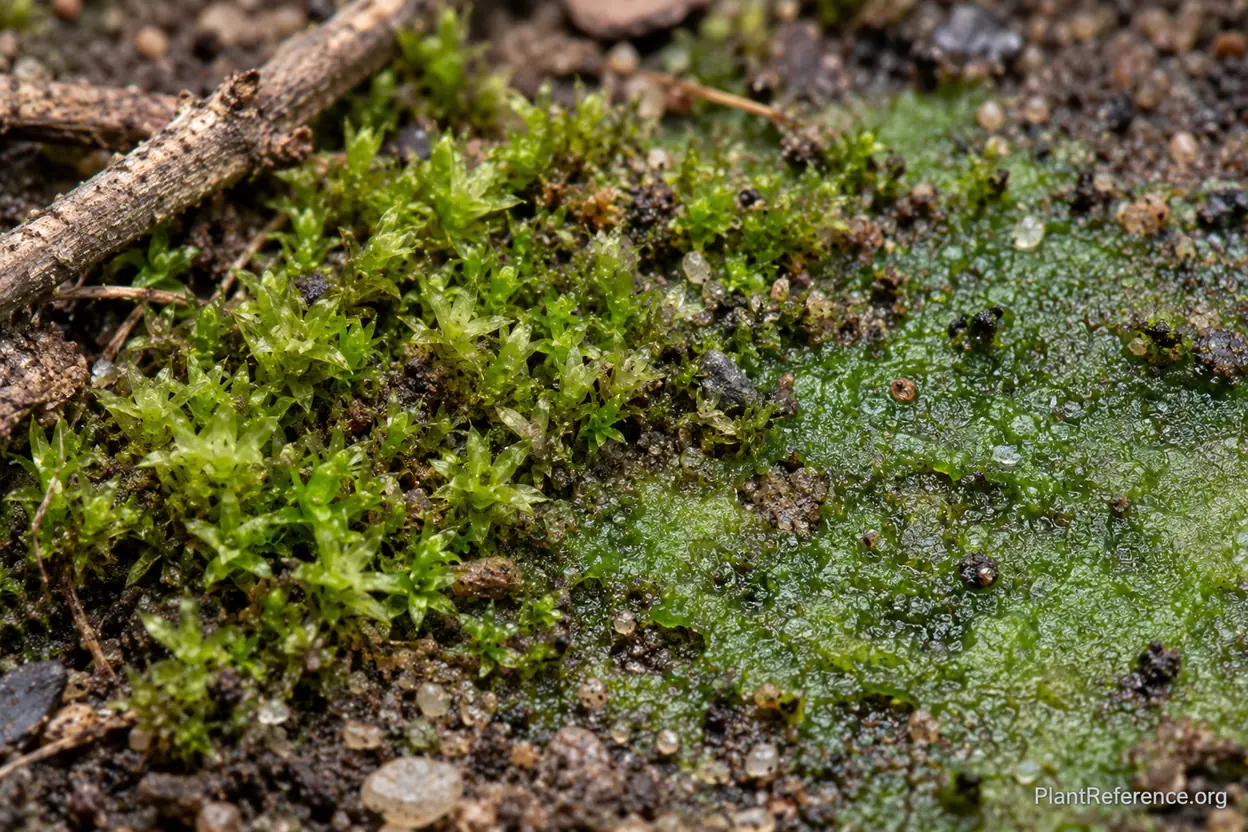
Moss forms tiny leafy shoots, cushions or spreading mats. Algae more often appears as a thin green film that can feel slick when wet; not every green coating is moss. If identification is uncertain, examine a small patch closely rather than selecting a treatment by color.
Unlike flowering plants, mosses lack true roots and take up moisture across their surfaces. That helps explain why they can occupy a firm shaded surface where a conventional flower struggles. Their presence does not establish what is happening deeper in the root zone.
Shade slows surface drying, and low traffic allows delicate growth to persist. Some mosses tolerate drying by becoming dormant and rehydrating later, so a green winter patch does not necessarily indicate a permanently wet summer bed. Soil Health 101: How to Build Living, Productive Garden Soil provides the broader context for judging the soil rather than its appearance.
Do not infer pH from moss
Many familiar woodland mosses grow in acidic conditions, but that does not make moss an accurate pH indicator. Use How to Test Garden Soil: Jar, Ribbon & pH Tests before changing soil chemistry. Raising pH without evidence can harm nearby acid-loving plants while leaving the moisture conditions unchanged.
Check Water Movement and Root Conditions
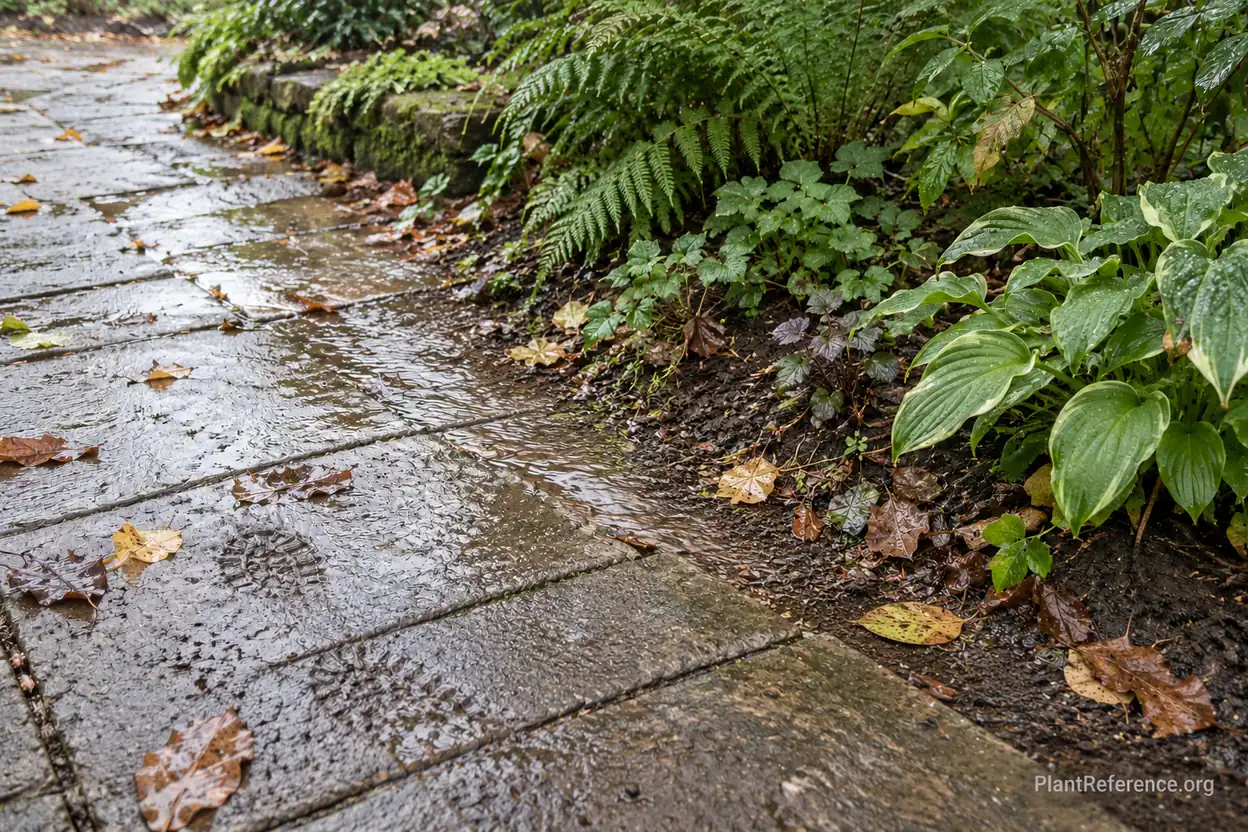
Watch the bed during rain and again after it ends. Does water arrive from a downspout, run off a path, collect in a depression or remain around plant crowns? Record the pattern across more than one weather event; a single intense storm can overwhelm otherwise functional soil.
Check moisture gently beneath the surface in a spot clear of major roots. About 2 inches (5 cm) down is a useful first observation depth, not a universal watering rule. Compare a mossy patch with a nearby healthy planting area rather than assuming both have identical drainage.
Look for standing water, persistently soft ground and declining neighboring plants.
Check whether irrigation runs even when the shaded soil remains damp.
Note whether only the walked-on edge develops a sealed surface.
Separate seasonal winter wetness from summer root-zone moisture.
Persistently wet soil reduces oxygen available to roots. Yet mature trees can also leave the same border dry in summer through root competition and rainfall interception. A mossy surface and a thirsty perennial are not mutually exclusive; assess the perennial's actual root ball.
Investigate before installing drainage
Redirecting water or altering grade can affect foundations, neighboring property and tree roots. Obtain appropriate professional advice for persistent flooding rather than improvising a trench through the bed. For texture-related questions, How to Improve Clay Soil Without Making It Worse explains why adding a little sand is not a dependable solution.
Relieve Compaction Without Damaging Tree Roots
Repeated foot traffic squeezes soil pores, reducing the space available for air and water movement. First stop the pressure: create a clear access route and avoid working the bed when it is wet enough to smear. Loosening soil while continuing to walk on it produces a short-lived improvement.
Do not automatically fork, spike or rototill a mossy shade bed. Tree feeder roots occupy much of the upper 12–18 inches (30–46 cm), alongside perennial roots, and aggressive cultivation can damage both. Firm ground suitable for moss is not an instruction to compact the entire planting bed deliberately.
Where no valuable roots are present, an unplanted area can be prepared more thoroughly when soil moisture is suitable. In an established root-filled border, favor gradual surface management and professional assessment for severe compaction. How Much Soil Do Urban Trees Actually Need? The Root Volume Guide explains why the underground space deserves protection.
Amend gradually, not by burying the bed
A modest surface application of suitable organic material can support soil organisms and protect exposed ground. Keep crowns and tree trunk flares uncovered, and do not raise the grade with thick layers of imported topsoil. There is no blanket “safe depth” that makes burying tree roots harmless.
Soil Food Web: Support Microbes, Fungi, and Living Roots explains the gradual biological side of improvement. Compost does not instantly open a blocked drainage route, and a bagged garden-soil blend is not interchangeable with pure compost. Choose the material for a demonstrated need, not simply to hide a green patch.
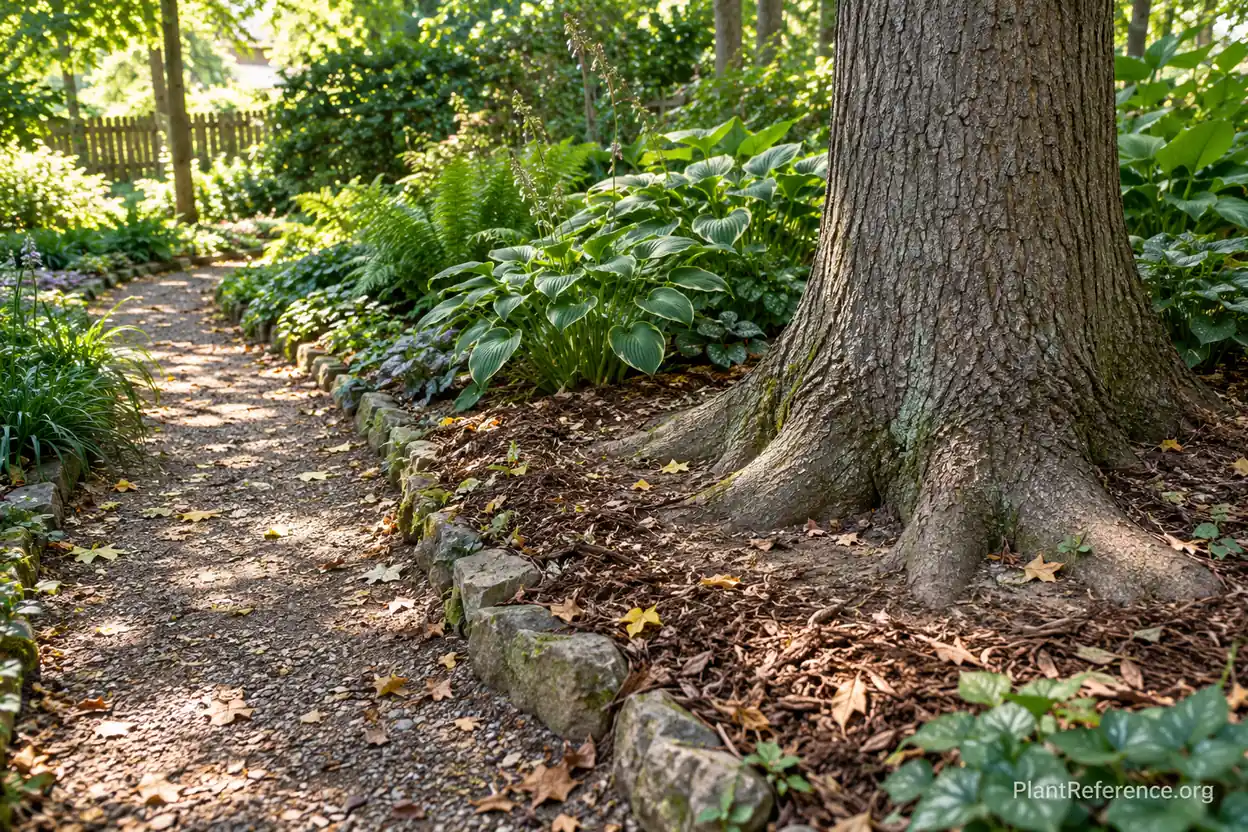
Decide Whether to Keep Moss Growing in Flower Beds
Keep moss where it fits the design, stays clear of vulnerable plant crowns and accompanies healthy growth. Its fine texture can contrast with broad leaves and fern fronds without requiring a flower display. Leave existing patches in place rather than stripping moss from wild habitats.
If you want conventional perennials instead, choose plants for the real combination of light and moisture. Best Perennials for Shade: 12 Species That Thrive helps with that selection; How to Grow Heuchera (Coral Bells) in Shade Gardens offers a more specific foliage option where conditions suit it. Neither list makes saturated soil suitable for every shade plant.
Observation | Keep or investigate? | Practical response |
|---|---|---|
Moss with healthy neighboring plants | Usually reasonable to keep | Preserve crowns and monitor seasonally |
Green film with prolonged puddling | Investigate water movement | Review irrigation and incoming runoff |
Moss on a frequently walked bed edge | Investigate compaction | Move traffic to a designated route |
Moss beside summer-wilted plants | Check deeper moisture | Assess root competition separately |
Slippery growth on a walking surface | Address the safety issue | Clean the path using a surface-appropriate method |
Separate paths from planted soil
A product intended for hard surfaces is not automatically suitable around living plants. Best Moss Killers for Roofs, Patios and Walkways concerns a different use case; check the exact product label before any treatment and protect surrounding vegetation. Killing visible growth does not repair compacted or poorly drained soil.
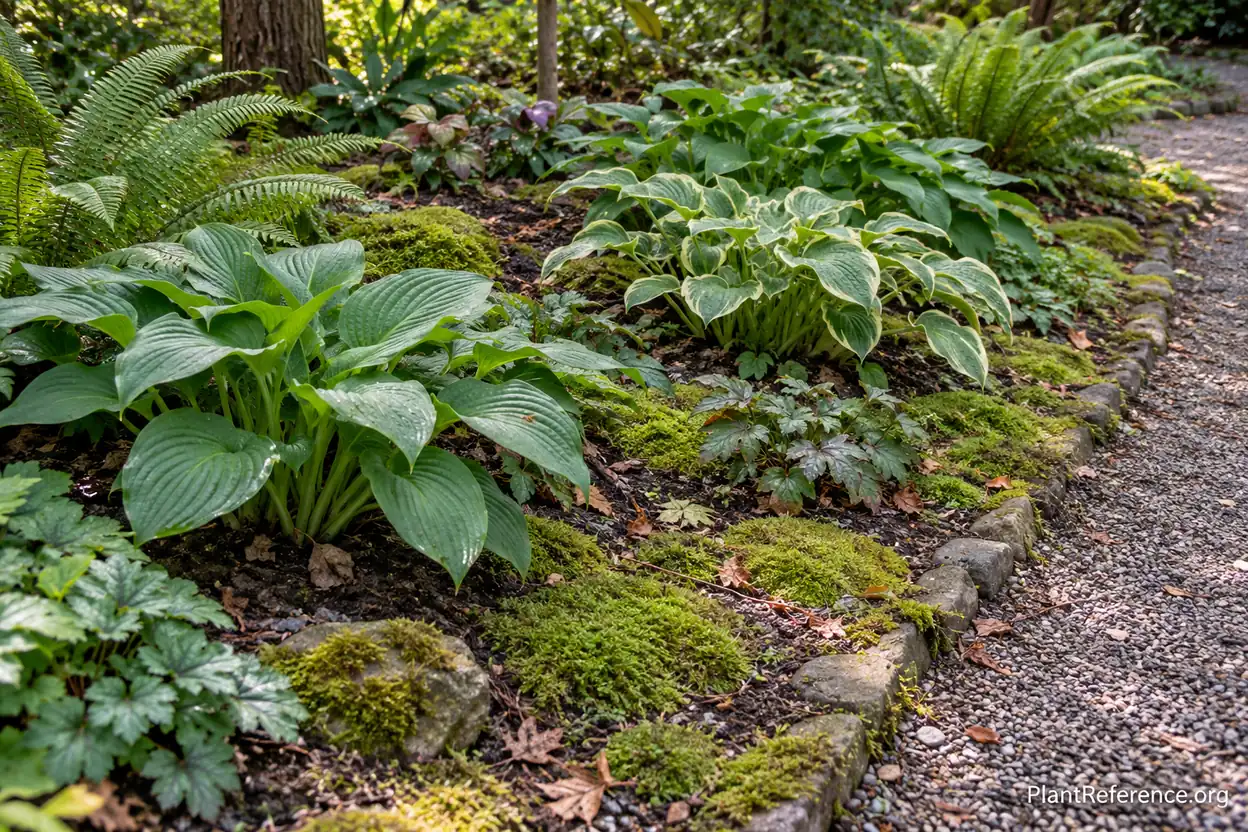
Make a Small Change and Watch the Result
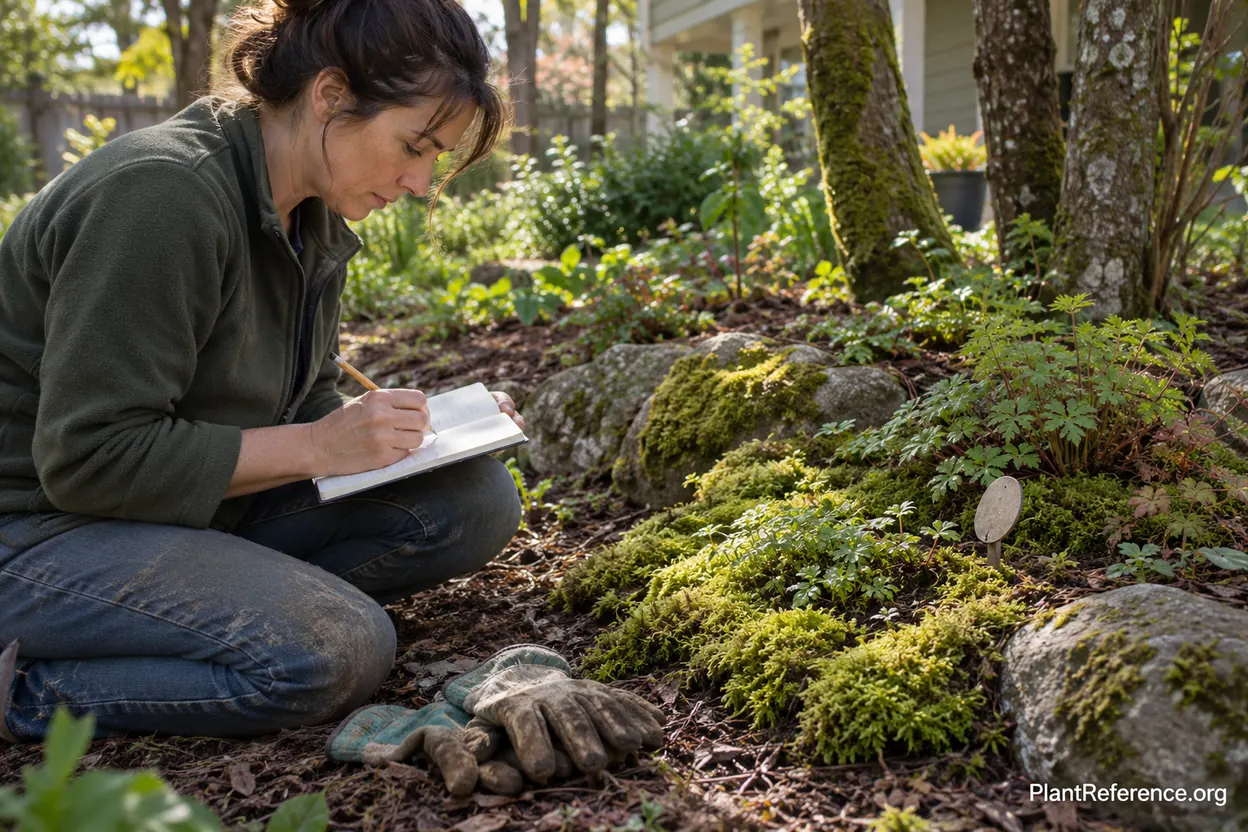
Choose one evidence-based intervention first: reduce unnecessary irrigation, protect an access route or clear a blocked surface-water outlet where safe. Photograph the area and note rainfall, soil moisture and plant response. Changing watering, pH, fertilizer and soil structure together makes the outcome difficult to interpret.
If moss must be removed for planting, lift only the needed surface patch carefully without tearing through tree or perennial roots. Do not scrape away the entire topsoil layer. Replant appropriately or protect bare ground; leaving the same damp, undisturbed surface invites recolonization.
Avoid lime or acidifier unless a test and the intended plants justify it. Fertilizer is equally poor as a general moss treatment. Healthy root conditions, suitable plants and a manageable access pattern are better measures of success than a completely moss-free bed.
Recheck in the opposite season
A maritime shade garden can be wet in winter and dry in summer. Revisit the diagnosis during both periods before committing to moisture-loving replacements or permanent irrigation changes. If plants continue declining despite sensible adjustments, seek a local horticultural assessment rather than escalating treatments.
Frequently Asked Questions

Reading about plants and recognising them are different skills. These three build the second.
- Daily PlantIdentify the day’s mystery plant from a close-up photograph.
- Keyed OutWork a dichotomous key, lead by lead, to name a hidden specimen.
- Name That PlantName a specimen from botanical clues dealt hardest first.
Free to play, no account needed
Tagged with
Sarah earned her doctorate in plant biology and spent time working in botanical garden education before transitioning to freelance writing and consulting. Now based in Portland, Oregon, she teaches plant identification workshops at local community centers and maintains a modest collection of over 60 houseplants in her small apartment. Sarah specializes in helping beginners understand plant science without the jargon—her approach focuses on practical observation over theory. She's killed her fair share of fiddle leaf figs and finally cracked the code on keeping them alive.