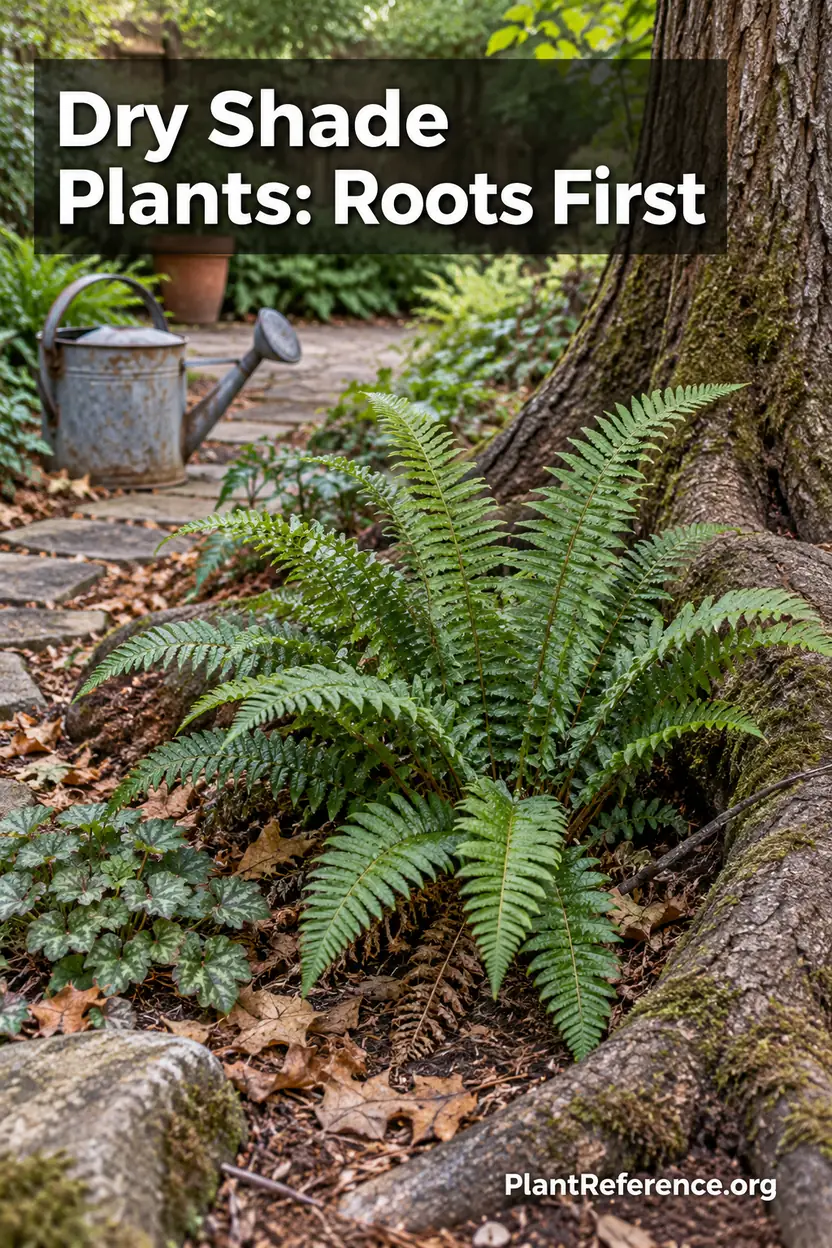
Dry Shade Plants for Gardens Under Maples and Conifers
— Image © PlantReference.org 2026
Pets & Toxicity
Recorded toxicity for plants linked in this guide. An unknown status is not a safety assessment.
Toxic to pets: hostas, English ivy, silver mapleDetailsHide
Dry shade plants need to tolerate two limitations at once: little direct sunlight and a root zone that loses available moisture to established trees. The strongest planting plan starts with a small, suitable selection and a realistic establishment routine. It does not promise that every shaded corner can become a dense, permanently watered flower border.
Understand the Site Before Buying Dry Shade Plants
Shade often reduces evaporation, but that is only part of the water balance. A large tree can intercept rainfall and absorb moisture efficiently through its roots. The air may feel cool while the soil available to a new perennial is already dry.
This is why a moisture-loving shade plant can struggle beneath an otherwise healthy tree. The tree and perennial are not drawing on equivalent root systems. The newly planted specimen starts with a small root ball, while the tree has already occupied much of the surrounding soil.
Separate summer dryness from year-round drainage
A site can be wet in winter and dry in summer. This seasonal pattern is particularly relevant in maritime Pacific Northwest gardens, where winter rain does not guarantee moisture throughout the growing season. Observe both seasons before selecting a plant solely for drought tolerance.
Check several locations under the canopy. Conditions near the outer edge may differ from those beside the trunk, beneath a roof overhang, or next to paving. Record where water lingers after rain as well as where the soil dries first; a single observation cannot represent the entire bed.
Distinguish filtered shade from deep shade
Open branches create moving patches of light, while dense evergreen foliage can exclude both direct sun and much ambient light. Dry soil beneath a bright canopy is a different planting opportunity from dry soil in near-darkness. More irrigation cannot replace the energy a plant needs from light.
Best Perennials for Shade: 12 Species That Thrive helps identify broader possibilities, but filter that list through your moisture observations. A plant's association with woodland gardens does not automatically make it suitable for the driest part of your yard.
Compare Plants and Ground Treatments
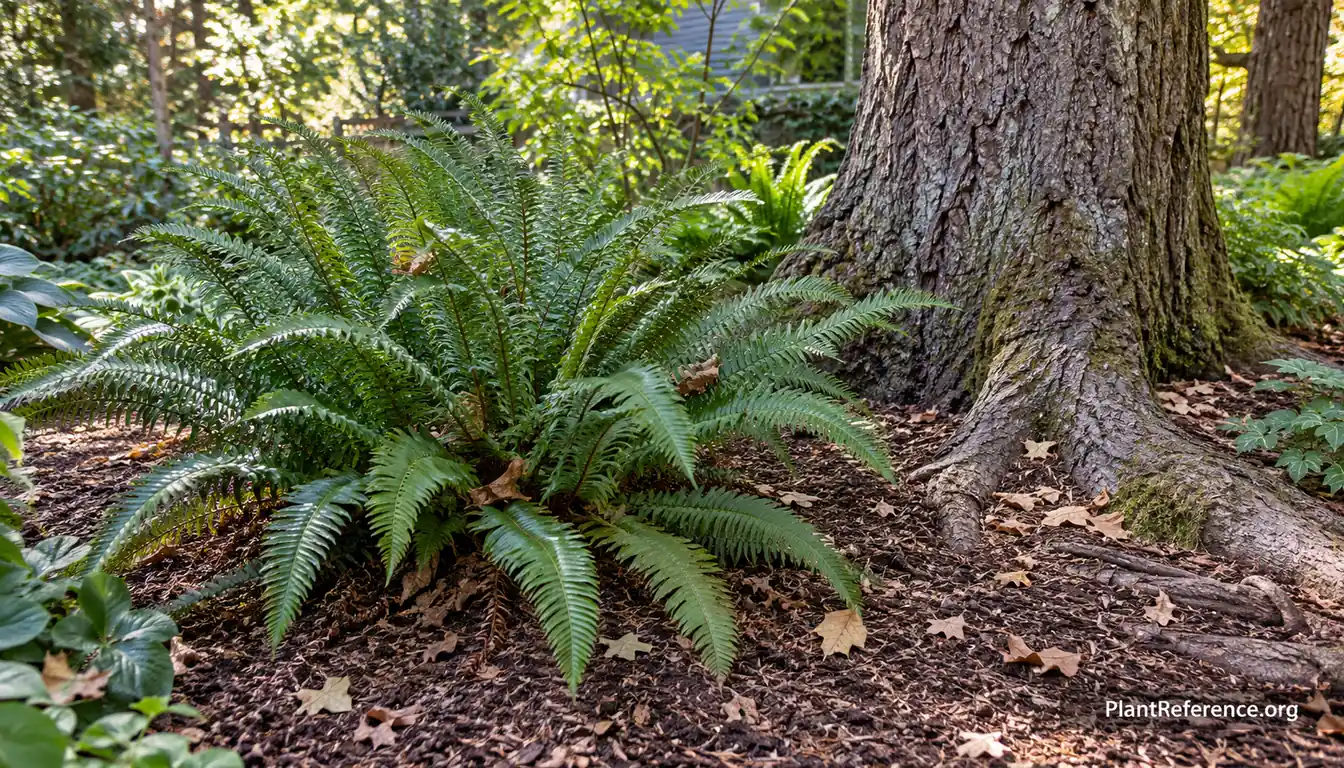
Western sword fern 🌿Polystichum munitum is the strongest explicitly supported dry-shade example in the research. It provides evergreen fronds and can withstand seasonal dryness once established in suitable conditions. That final phrase matters: local hardiness, exposure, and the first growing seasons still determine whether it is a sensible choice.
Use Western Sword Fern and Salal Planting Guide for the associated planting approach. Check the actual mature dimensions supplied with your plant, and allow the fronds to develop without blocking paths or crowding neighboring crowns. A fern that looks modest in a nursery pot can become a substantial structural element.
Option | Why consider it | What to verify | When to choose something else |
|---|---|---|---|
Evergreen structure and established dry-shade tolerance | Local suitability, mature spread, establishment water | Climate or available space does not fit | |
Selected Helleborus | Leathery foliage and a contrasting form | Exact species or hybrid, local dry-shade performance, handling precautions | The selection needs more moisture than the pocket provides |
Locally suitable low groundcovers | Small starting plants may fit shallow root gaps | Identity, moisture needs, mature spread, local invasiveness | Rapid spread would create a removal problem |
🌿Hosta spp. or 🌿Heuchera spp. in a moister pocket | Foliage contrast where conditions permit | Selection-specific light and moisture requirements | The site repeatedly dries beyond their tolerance |
Mulch without additional plants | Protects difficult root areas from repeated disturbance | Appropriate material and conservative depth | Do not use it to bury trunks or conceal grade changes |
Treat hellebores as a selection, not a blanket promise
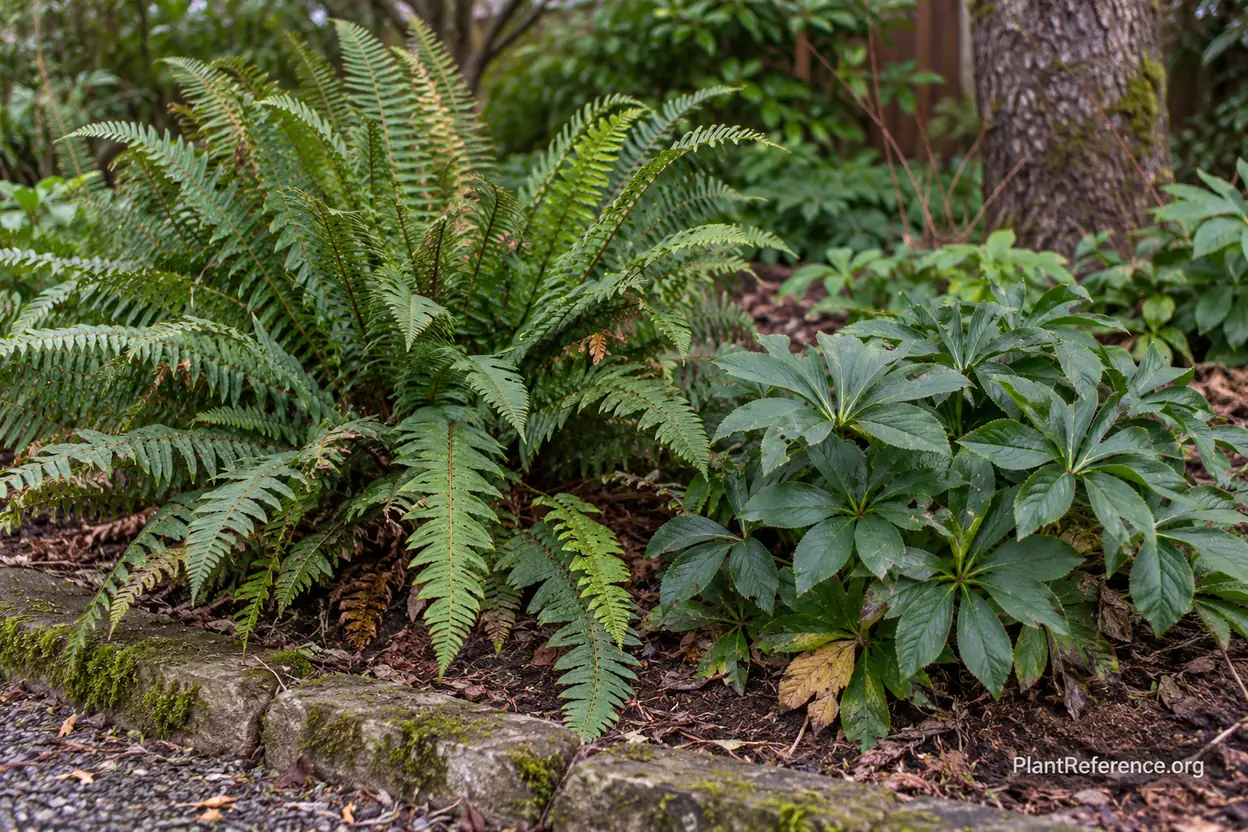
Hellebores Helleborus bring leathery foliage that contrasts with fern fronds. The plan identifies them as candidates, but the research does not establish one universally drought-proof species or cultivar. Ask a local nursery which exact selection performs in comparable dry shade rather than accepting the genus name as enough information.
Keep suitability and household safety in the same decision. These are ornamental plants, not edible groundcovers; consider access by children and animals and follow handling guidance for the selection. Deer resistance, where reported, does not mean a plant is harmless or immune to browsing.
Be specific about groundcovers
Shallow-rooted does not mean noncompetitive, drought-tolerant, or safe to introduce. A groundcover can fit a small hole and still spread aggressively later. Confirm the botanical identity, growth habit, and local suitability before using it beneath a tree where removal would be difficult.
Avoid solving a bare patch with invasive climbing or spreading plants. The research highlights English ivy 🌿Hedera helix as a management problem in some regions, not a shortcut to a resilient understory. A modest mulched area is preferable to a plant that creates years of control work.
Hostas 🌿Hosta spp. and coral bells 🌿Heuchera spp. belong in the discussion only where moisture conditions suit the chosen selection. How to Grow Hostas: Varieties, Care & Pest Solutions and How to Grow Heuchera (Coral Bells) in Shade Gardens explain their care. Do not use extra watering to force every attractive foliage plant into the driest root pocket.
Find Planting Pockets Without Damaging Trees
Silver maple 🌿Acer saccharinum and Norway maple 🌿Acer platanoides can produce strongly competitive surface roots. Conifers such as Douglas fir 🌿Pseudotsuga menziesii and hemlock Tsuga also create demanding understory conditions. Identify the tree, but let the visible roots and soil determine where planting is practical.
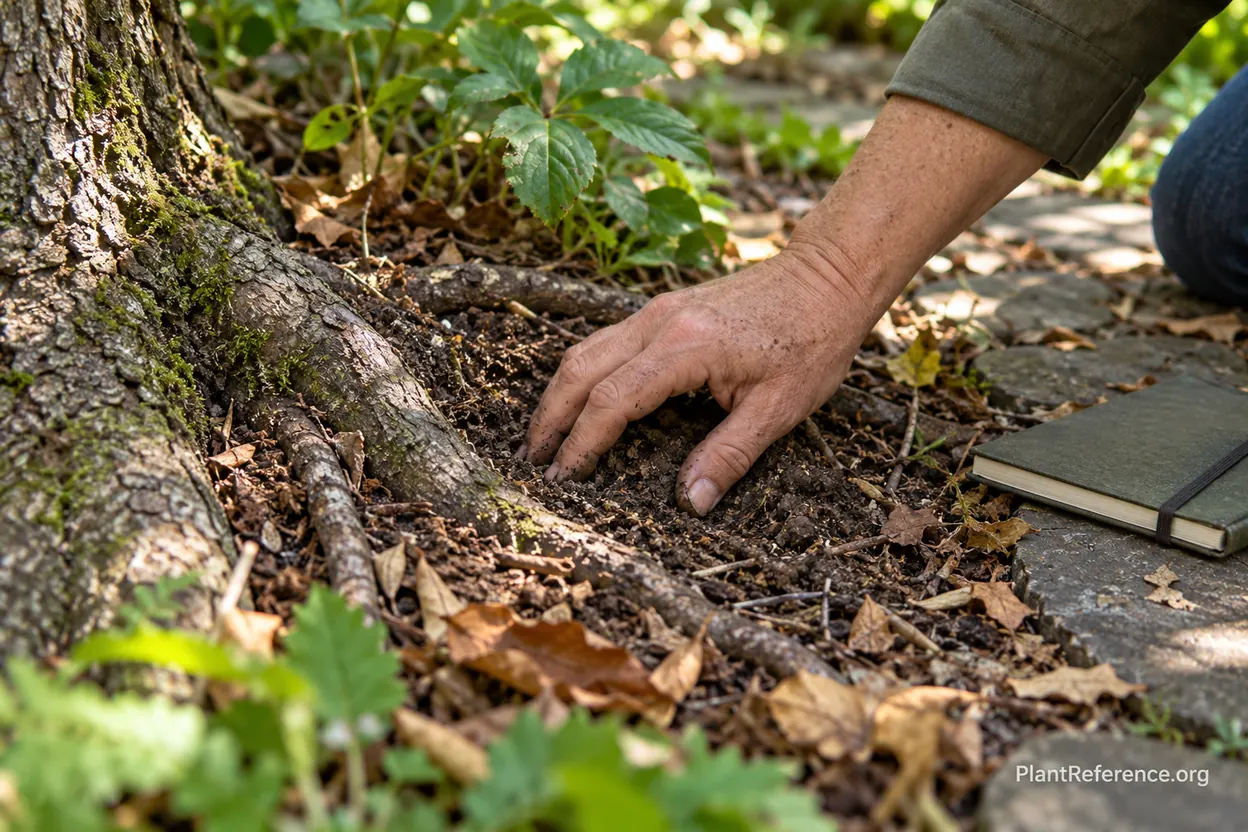
Many tree roots occupy the upper 12–18 inches (30–46 cm) of soil. This overlaps the space a gardener might otherwise cultivate. Avoid rototilling, deep trenching, and cutting major roots to accommodate a larger perennial or shrub.
Start with smaller plants
Small root balls are easier to fit between existing roots than large nursery specimens. Arrange the plants provisionally, then move positions when a root blocks a hole. The layout should remain flexible; preserving the tree is more important than maintaining exact spacing from a sketch.
Keep plants at their established nursery depth. Do not bury the crown to make a shallow pocket work, and do not mound soil around it until the whole bed becomes a raised layer over tree roots. If a suitable pocket is absent, leave that spot unplanted.
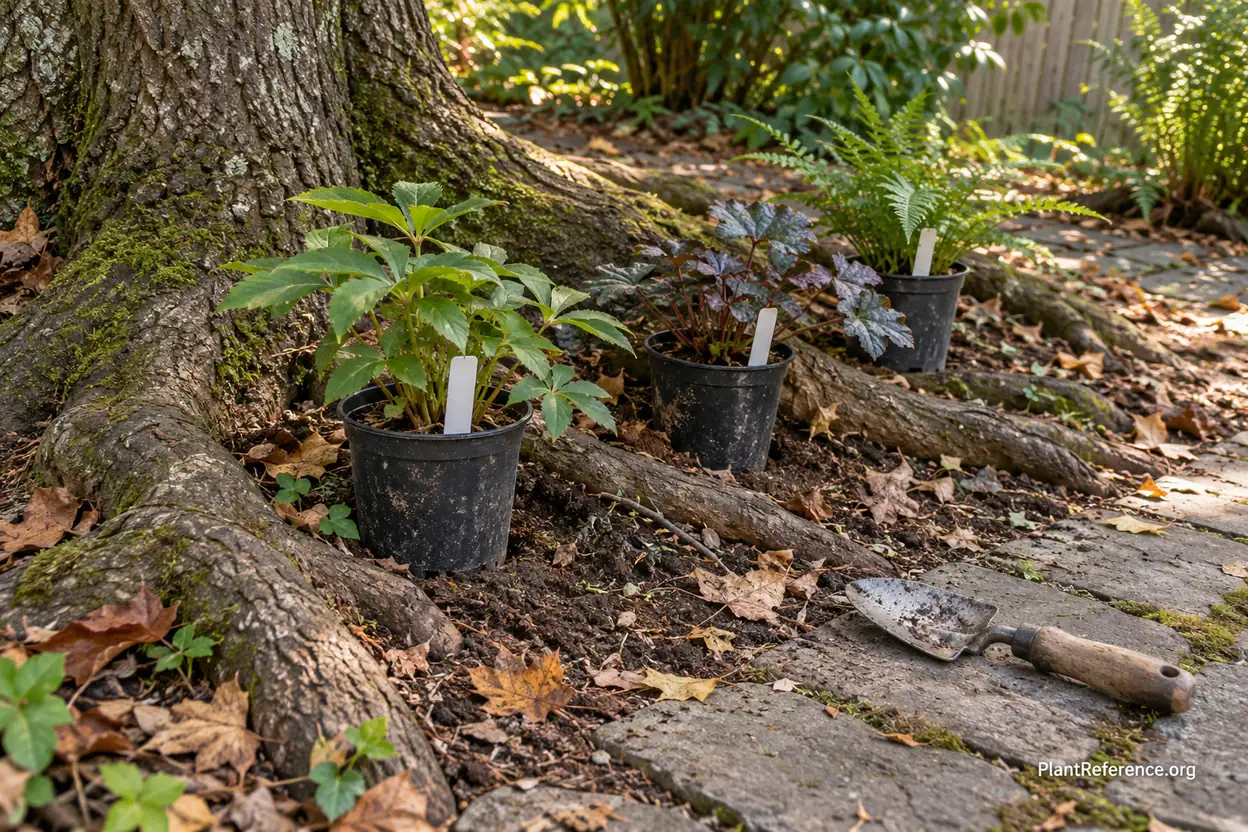
The report warns about substantial soil fill over roots, including additions above 4–6 inches (10–15 cm). Do not interpret that as permission to add a shallower blanket without assessing the tree. Preserve the existing grade and consult an arborist before significant excavation or filling.
Plan Watering for the First Summers
Choose a planting size you can monitor. A small group of well-observed plants is more informative than a large installation that becomes difficult to water during its first dry spell. Before planting, confirm that you can reach each root ball without dragging equipment across fragile crowns or damaging tree roots.
At planting, water the root zone and observe whether moisture reaches the nursery root ball. Later, check that root ball and nearby soil separately. Differences between the two can explain why a new plant wilts while established neighbors appear unaffected.
Check root-zone moisture after planting and during changing weather.
Recheck after rain rather than assuming the canopy allowed enough through.
Water when the selected plant's root zone needs it, not by shade alone.
Reassess during warm, windy, or unusually dry periods.
Continue observations through later summers before reducing support substantially.
Change an unsuitable plant choice instead of maintaining permanently incompatible irrigation.
A schedule should describe checks, not automatic watering
There is no reliable universal instruction to water every fixed number of days beneath all maples and conifers. Soil, root competition, weather, and plant size vary too much. Use recurring checks to decide whether water is needed, rather than treating the check itself as an instruction to irrigate.
In the first summer, keep notes on which pockets dry fastest. During the next growing season, compare new growth and moisture behavior before assuming establishment is complete. A plant surviving one mild summer has not demonstrated that it will tolerate a much drier one without help.
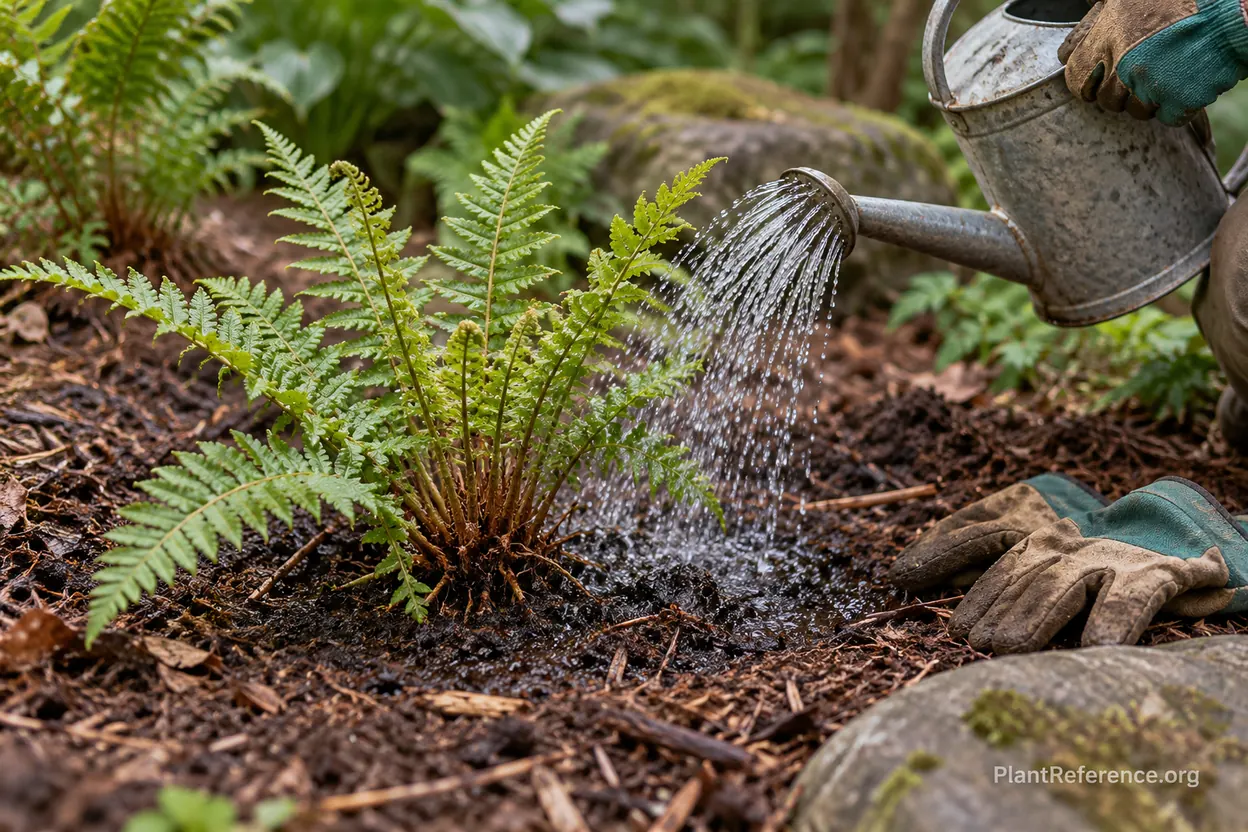
Avoid keeping the tree's root environment constantly wet merely to support a thirsty understory. If the new planting requires conditions incompatible with the tree, revise the planting. Dry shade plants should reduce that conflict after establishment, not disguise it with a more intensive irrigation routine.
Improve the Surface With Mulch and Leaf Mold
Organic surface material can moderate drying and gradually improve the soil environment. Leaf mold and composted bark are useful approaches identified in the research. They work as gradual surface improvements, not as justification for digging out root-filled soil and replacing it with a richer mixture.
Soil Health 101: How to Build Living, Productive Garden Soil explains the broader role of organic matter. Beneath mature trees, apply those ideas gently: preserve existing roots, avoid compaction, and protect the trunk flare from burial. The tree's root environment is not an empty container waiting for a new recipe.
Check depth before adding another layer
Keep organic material away from trunks and perennial crowns. Inspect what is already on the ground before replenishing; repeated applications can accumulate into a deeper layer than intended. A conservative surface treatment should not become a mound that hides bark or changes the grade.
Aged hardwood mulch is one supported catalog option, but purchased material is not essential. Compare locally available leaf mold or suitable composted bark and choose material appropriate to the site. Best Composting Method: Hot, Cold, Tumbler, Worm, Bokashi helps frame the options for handling organic garden material.
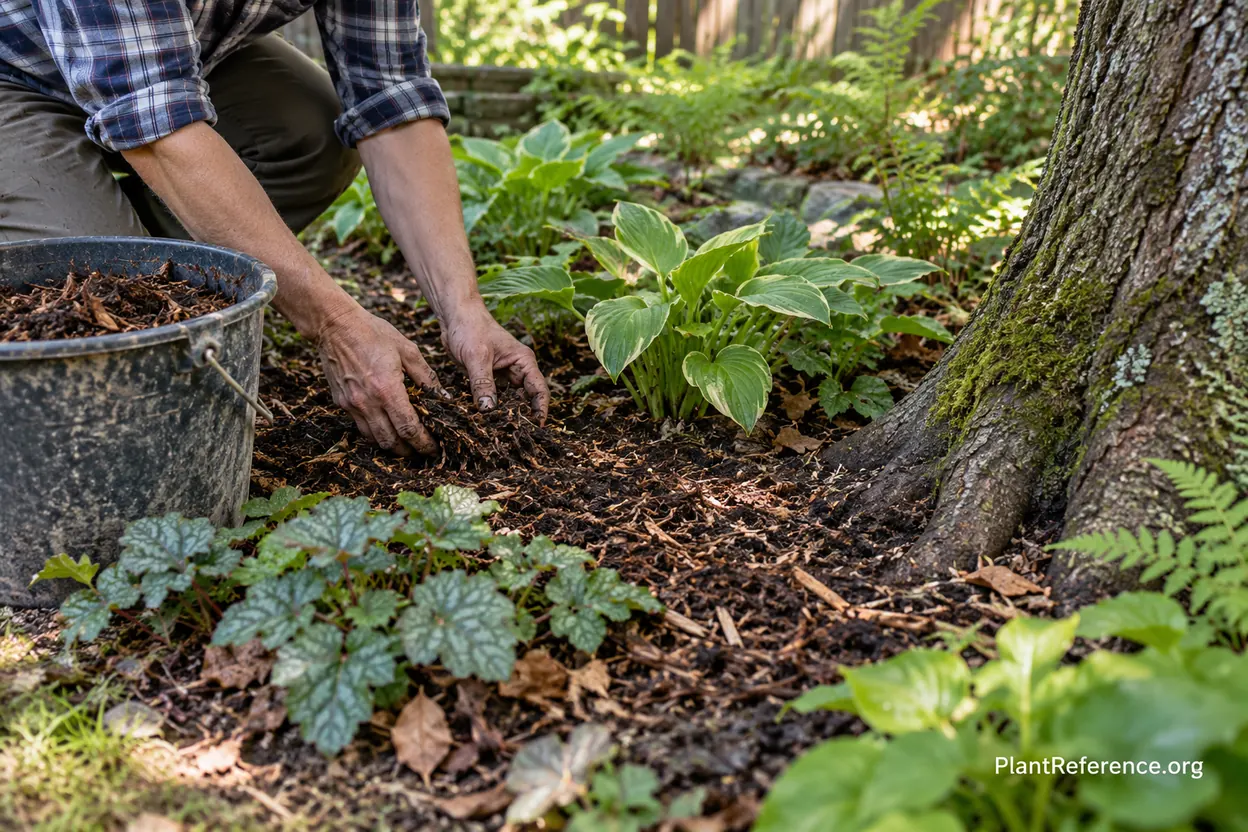
Keep a designated route through the area so maintenance does not compact every planting pocket. Avoid working wet soil or parking heavy supplies beneath the canopy. Preventing repeated disturbance is often more useful than buying another amendment to repair its effects.
Diagnose Struggling Plants and Expand Carefully
Wilting is a signal to inspect, not an automatic instruction to water. Check root-zone moisture, recent weather, planting depth, and the condition of new growth. A plant in saturated soil needs a different response from one whose nursery root ball has dried while surrounding soil remains damp.
Distinguish feeding damage from drying or scorch. Sheltered gardens can still support slugs, especially during wetter periods, so use How to Get Rid of Slugs on Hostas: What Works when the damage pattern fits. More water or fertilizer will not repair a pest problem simply because the plant occupies dry shade.
Reassess light after canopy changes
Storm damage, pruning, or tree removal can expose shade-grown leaves to much stronger light. Their existing leaves may not tolerate that abrupt shift. Rhododendron Leaf Scorch and Split Bark Fixes provides a focused example of why exposure changes belong in the diagnosis.
Temporary protection and careful moisture management may be needed while you decide whether plants should move. Do not prune the canopy heavily merely to make a struggling understory brighter. The tree creates the habitat, and changing it can introduce a new set of problems.
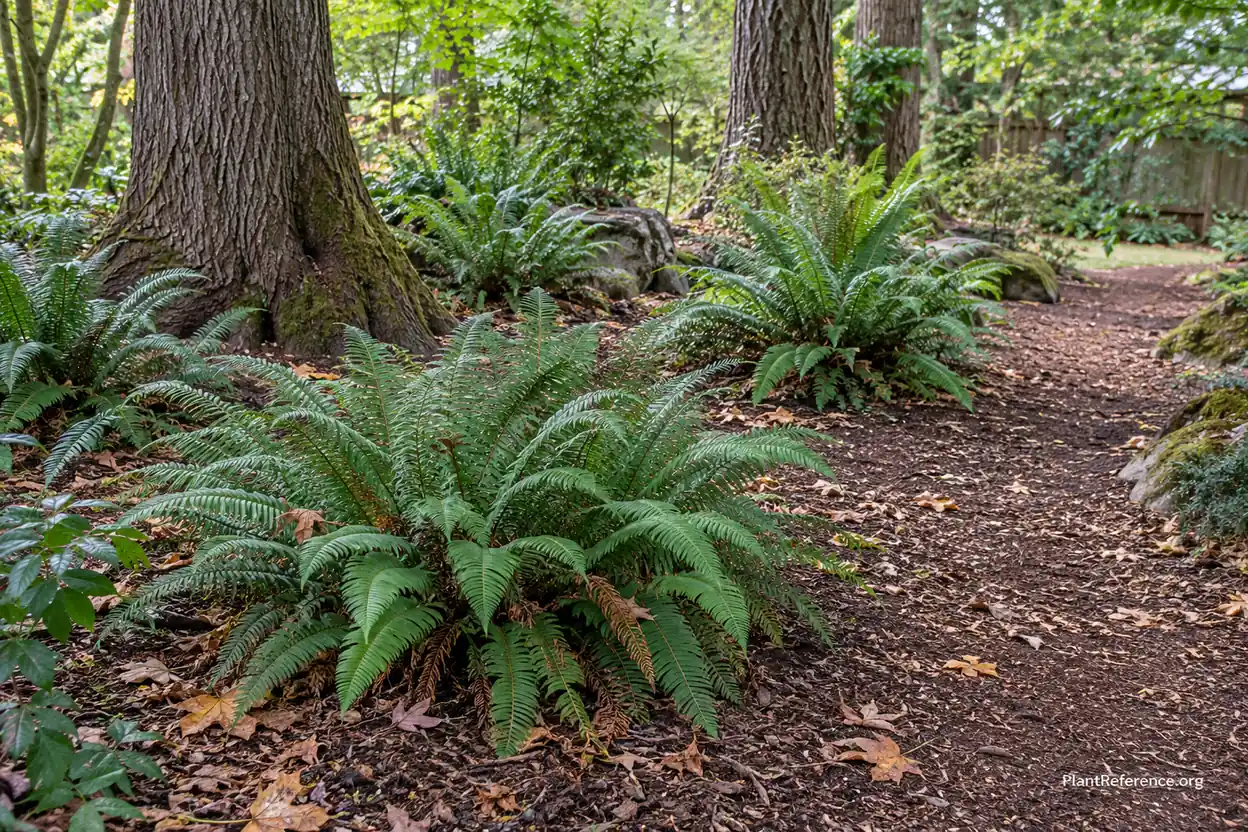
Expand only after you know which combinations work without repeated rescue. Keep the most difficult roots and deepest shade unplanted if necessary. A healthy, modest planting that preserves the tree is a stronger result than a continuous carpet maintained through constant replacement.
Frequently Asked Questions

Reading about plants and recognising them are different skills. These three build the second.
- Daily PlantIdentify the day’s mystery plant from a close-up photograph.
- Keyed OutWork a dichotomous key, lead by lead, to name a hidden specimen.
- Name That PlantName a specimen from botanical clues dealt hardest first.
Free to play, no account needed
Tagged with
Sarah earned her doctorate in plant biology and spent time working in botanical garden education before transitioning to freelance writing and consulting. Now based in Portland, Oregon, she teaches plant identification workshops at local community centers and maintains a modest collection of over 60 houseplants in her small apartment. Sarah specializes in helping beginners understand plant science without the jargon—her approach focuses on practical observation over theory. She's killed her fair share of fiddle leaf figs and finally cracked the code on keeping them alive.