Image 1 of 4
1 / 4
Plant Reference
Pseudotsuga, Genus, menziesii, Species,
- Genus & species
douglas fir
British Columbia south through Washington, Oregon, California; east to the Rocky Mountains; sea level to 7,000+ feet (2,100+ m); the dominant timber species of the Pacific Northwest
Overview
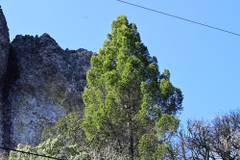
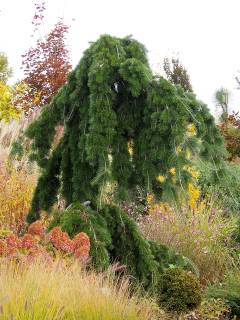
Pseudotsuga menziesii is Douglas fir (Oregon pine), an upright evergreen coniferous tree growing 80-150 feet (24-46 m) tall and 20-40 feet (6-12 m) wide. Dark green flat needles 0.75-1.25 inches (2-3 cm) with two white stomatal bands below, spirally arranged. In Pinaceae. Pseudotsuga = false hemlock. NOT a true fir — Pseudotsuga is its own genus. The pendant cones 2-4 inches (5-10 cm) with three-pronged exserted bracts ('mouse tail') are the primary diagnostic. The second-tallest conifer on Earth (to 330 feet / 100 m). The dominant timber species of the Pacific Northwest. Sharply pointed reddish-brown buds. The massive size (80-150 feet / 24-46 m) is unsuitable for residential landscapes. Douglas fir beetle is the primary mortality agent. Swiss needle cast causes needle loss in coastal areas. Foliage has a citrus-resin scent when crushed. Non-toxic. Deer-resistant. Zones 4-8. Full sun to partial shade. Growth rate is moderate to fast.
Native Range
Native from British Columbia south through Washington, Oregon, and California; east to the Rocky Mountains. Found from sea level to 7,000+ feet (2,100+ m). The dominant timber species of the Pacific Northwest.Suggested Uses
Grown as a native specimen tree, timber tree, windbreak, and Christmas tree in western landscapes, spaced 20-40 feet (6-12 m). Massive mature size — not suited for residential lots. Non-toxic. Not suitable for containers. Zones 4-8.How to Identify
Appearance
Size & Dimensions
Height80' - 150'
Width/Spread20' - 40'
Reproduction
Monoecious. Orange-red to yellow male cones on undersides of branches and small reddish-purple female cones at branch tips in March-May. Pendant cones 2-4 inches (5-10 cm) with three-pronged exserted bracts, brown, mature in one year.
Detailed Descriptions
Foliage Description
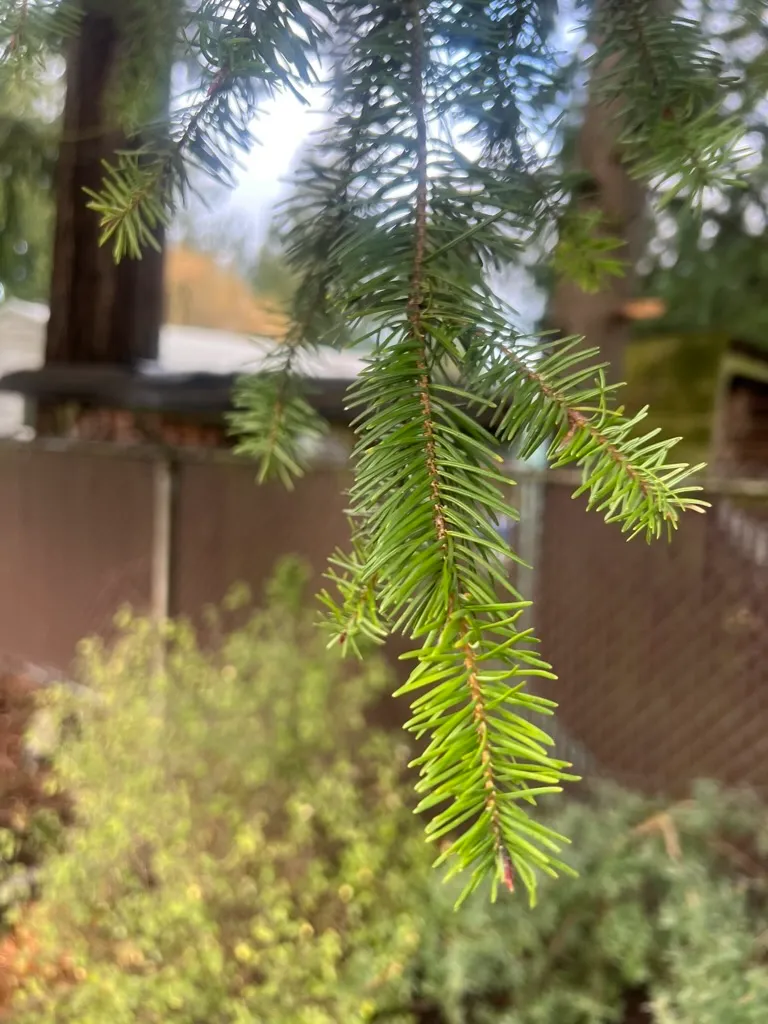
Dark green above with two white stomatal bands below, flat needles 0.75-1.25 inches (2-3 cm), soft, spirally arranged but appearing two-ranked on lower branches; the needles emit a citrus or sweet resin scent when crushedGrowing Conditions
Sun Requirements
Requires 4-12 hours of direct sunlight daily
• Full Sun: 6+ hours of direct sunlight
• Partial Shade: 3-6 hours of direct sunlight
• Full Shade: Less than 3 hours of direct sunlight
Care & Maintenance
Care Guide
Full sun to partial shade (4-12 hours). Well-drained acidic soil pH 5.0-6.5. Drought-tolerant once established. Douglas fir beetle is the primary mortality agent. Swiss needle cast causes needle loss in coastal areas. The massive size (80-150 feet / 24-46 m) requires large-scale landscapes. Non-toxic. Deer-resistant. Zones 4-8.Pruning
No regular pruning needed in landscape or forest settings. If used as a Christmas tree, shear in winter (November-December). Remove dead or damaged branches only. The natural conical form develops without intervention.Pruning Schedule
Prune: November–December
winter