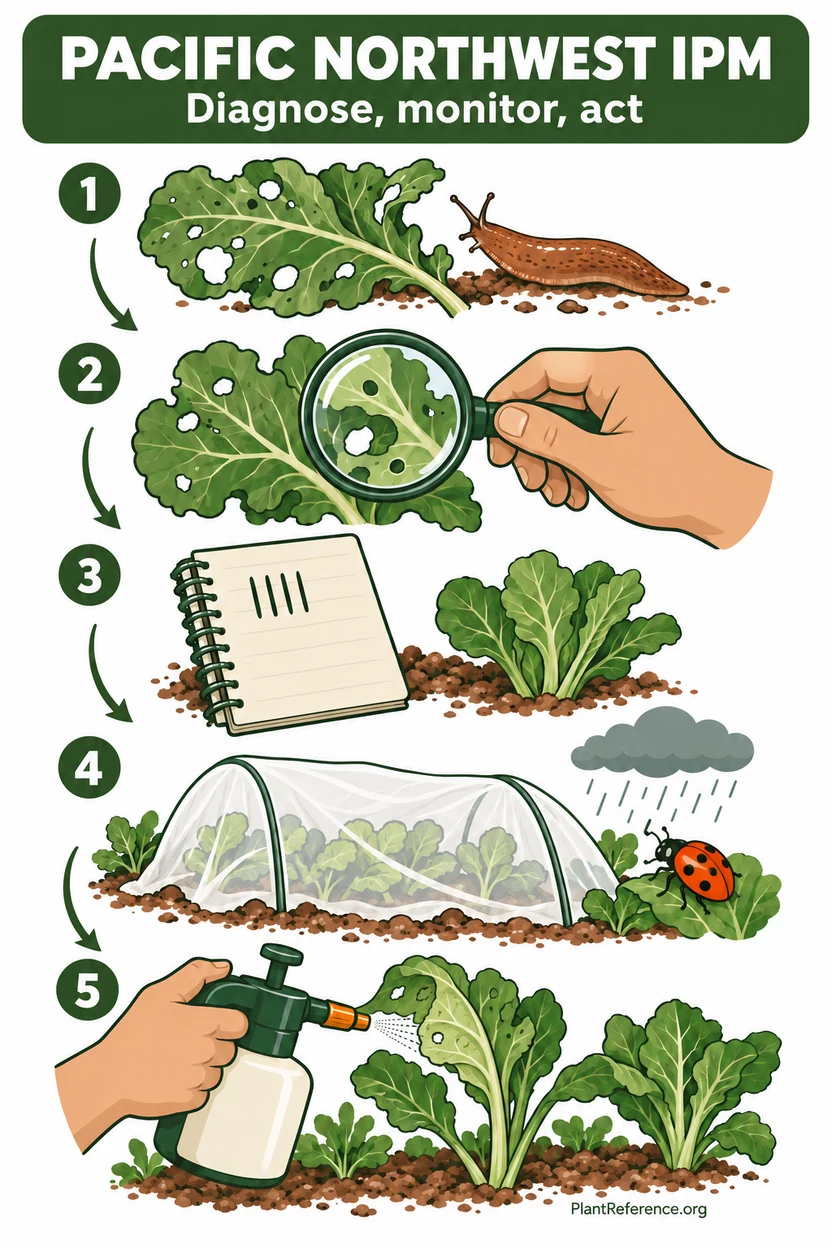
Integrated Pest Management for Pacific Northwest Gardens
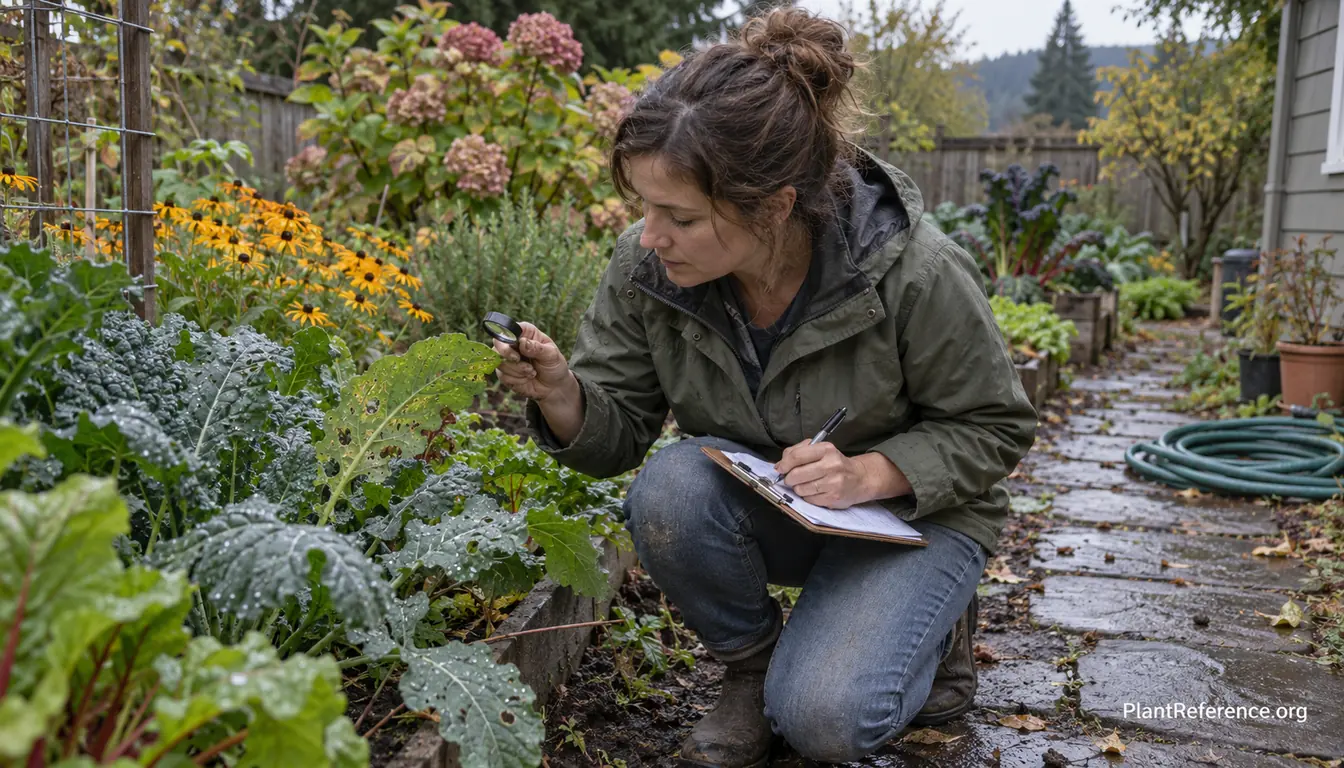
— Image © PlantReference.org 2026
Pets & Toxicity
Recorded toxicity for plants linked in this guide. An unknown status is not a safety assessment.
Toxic to pets: common yarrow, tomato, Legend Tomato and 1 moreDetailsHide
Solanum lycopersicum — Toxicity Warning
Toxic to pets and humansView Solanum lycopersicum plant profileSolanum lycopersicum 'Legend' — Toxicity Warning
Toxic to petsView Solanum lycopersicum 'Legend' plant profileSolanum lycopersicum 'Stupice' — Toxicity Warning
Toxic to petsView Solanum lycopersicum 'Stupice' plant profileIntegrated pest management Pacific Northwest gardeners can use successfully is a decision process, not a pesticide schedule. You identify the cause, monitor change, decide whether damage has crossed a meaningful threshold, and choose the least disruptive control that can work. In a maritime climate with wet springs, mild winters, and increasingly dry summers, that sequence prevents many unnecessary treatments and preserves the predators that keep pests below damaging levels.
Most garden organisms are harmless or helpful. A chewed leaf or a few aphids can look urgent without threatening the plant. The goal is not a sterile garden; it is a resilient system where damage stays tolerable and intervention stays proportional.
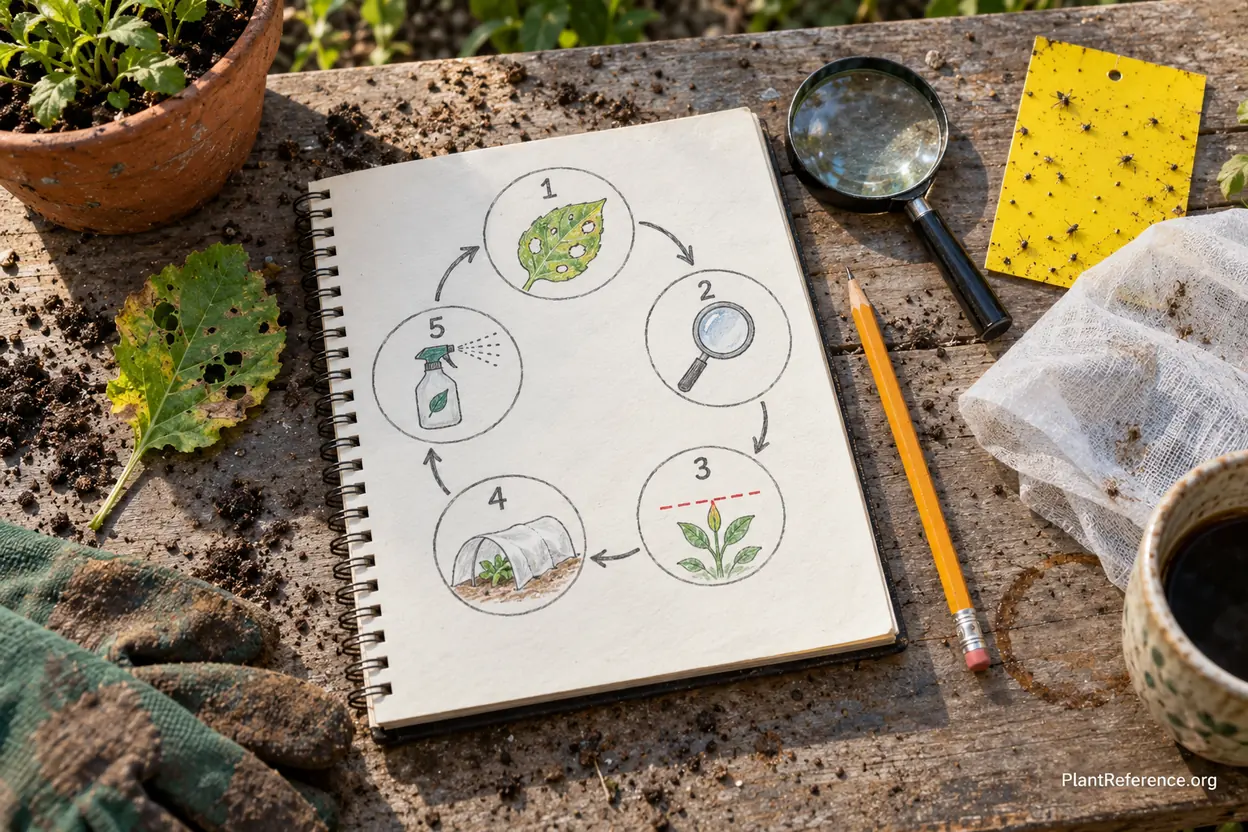
The Pacific Northwest IPM Decision Cycle
An IPM cycle has five practical questions: What is happening? How much is present? Is the damage increasing? What is the least disruptive effective response? Did the response work? Each answer informs the next inspection.
IPM Stage | Question | Useful Evidence | Common Mistake |
|---|---|---|---|
Diagnose | What caused the symptom? | Whole-plant pattern, leaf surfaces, roots, weather | Treating before identification |
Monitor | Is the problem changing? | Counts, photos, trap records, dated notes | Relying on memory |
Set threshold | Is action justified? | Plant vigor, crop stage, harvest risk, tolerance | Demanding zero damage |
Intervene | What is the least disruptive effective tool? | Site correction, removal, barrier, biological, targeted product | Starting with broad-spectrum spray |
Evaluate | Did it work without new harm? | Follow-up counts and plant response | Repeating treatment automatically |
The cycle matters because symptoms change. Aphids may peak on soft spring growth and then collapse when ladybug larvae arrive. A leaf spot may stop spreading once irrigation changes. A treatment chosen before that pattern is understood can kill predators, waste money, or conceal the real cause.
Use Pacific Northwest Gardening Guide: Climate, Soil & Plant Selection to place each observation in regional context. The bed-level process in Raised Bed Pest Problems: Identification and Organic Control Methods shows how the same decision cycle works in a smaller, contained growing system.
Diagnose the Cause Before Choosing a Control
Start by looking at the entire plant and its surroundings. Damage concentrated on the windward side suggests a different cause from evenly distributed stippling. Yellow lower leaves in saturated soil point somewhere different than curled, sticky shoot tips covered with aphids.
Separate living causes from abiotic stress. Frost cracks, drought, fertilizer burn, nutrient imbalance, soil compaction, and root oxygen loss can resemble infection or insect feeding. A fungicide will not fix waterlogged roots, and an insecticide will not correct herbicide drift.
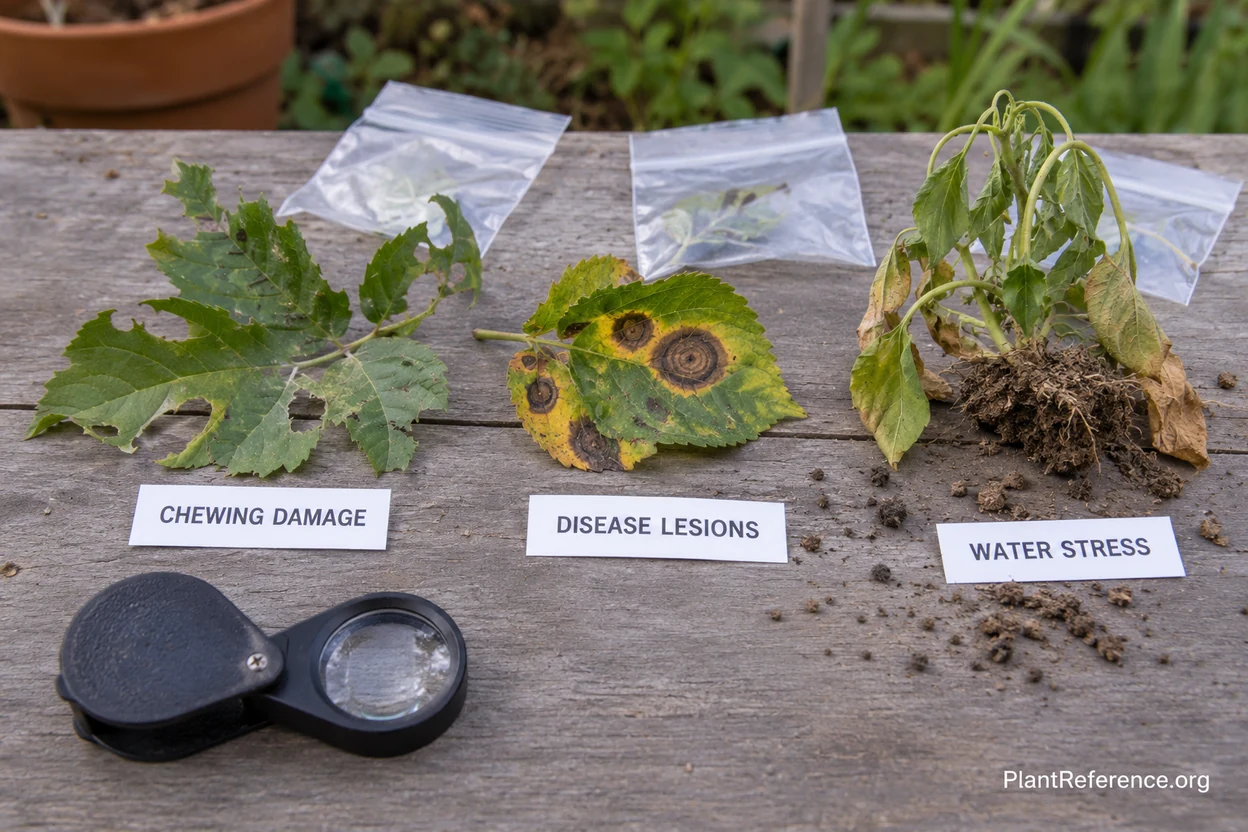
Inspect both leaf surfaces, stems, branch crotches, crowns, and the upper root zone. Aphids cluster on tender shoots; whiteflies and mealybugs favor sheltered leaf undersides and crotches; scale adults resemble fixed bumps; flea beetles leave many tiny shot holes. Honeydew and black sooty mold tell you sap-feeding insects are active even when the insects themselves are hidden.
Record the host, plant age, symptom location, irrigation method, recent weather, and any product applied. Take clear photographs with a ruler for scale. Compare symptoms with research-based regional references instead of choosing a treatment from a generic image search. Container Tomato Diseases: Preventing and Treating Septoria and Early Blight demonstrates how lesion position and pattern narrow a diagnosis.
Drainage deserves an early check in wet landscapes. Fix PNW Garden Drainage: Glacial Till, Hardpan & Raised Beds can help separate pathogen pressure from chronic oxygen deprivation around roots.
Monitor Pests and Set an Action Threshold
Monitoring turns a one-time sighting into useful information. Walk the same route weekly during active growth, inspect the same representative plants, and write down counts. For aphids, count colonies on ten shoot tips. For scale, flag infested twigs and look for mobile crawlers. For slugs, check shelter traps after damp nights.
Phenology improves timing. Rather than treating by a fixed date, connect pest stages with plant development and weather: bud break, blossom, seedling emergence, first sustained warmth, or a long leaf-wetness period. The vulnerable crawler stage of scale insects responds differently from the wax-covered adult, and young caterpillars are easier to control than mature ones.
Observation | Low Concern | Rising Concern | Action Signal |
|---|---|---|---|
Aphids | Small colony; predators present | Colonies spreading to new shoots | Distorted growth or honeydew across the plant |
Flea beetles | A few holes on established leaves | Damage expanding on seedlings | Seedlings stall or lose much of the leaf surface |
Slugs | Cosmetic chewing on mature leaves | Repeated feeding on new growth | Seedlings disappear or crowns are damaged |
Leaf spots | Old lesions not expanding | New lesions after wet periods | Rapid spread, defoliation, or fruit infection |
Deer browse | One sampled shoot | Repeated visits and tracks | Crop loss or structural damage to young plants |
An action threshold is the point where the expected harm justifies intervention. In a home garden, it may be aesthetic, structural, or harvest-based. A few holes in mature kale are tolerable; the same feeding on newly emerged seedlings may justify immediate exclusion. A small aphid colony with active predators can be watched, while a colony curling every shoot on a young fruit tree needs attention.
Photograph the same plant over several days. If damage is stable and new growth is healthy, the threshold may never be crossed. Stop Slugs in the Pacific Northwest Garden Safely shows why thresholds differ between vulnerable seedlings, ornamental foliage, and established plants.
Prevent Problems With Cultural and Mechanical Controls
Cultural controls change the conditions that favor a pest or disease. Put the right plant in the right site, improve drainage, space for mature airflow, water the root zone, rotate annual crops, remove infected volunteers, and avoid excessive nitrogen. These practices are less dramatic than spraying, but they prevent repeated outbreaks.
Excess nitrogen deserves special attention. It produces tender, nitrogen-rich shoots favored by aphids and can create dense canopies that remain wet. Feed from a soil test and plant response, not from the idea that more fertilizer always means more resilience.
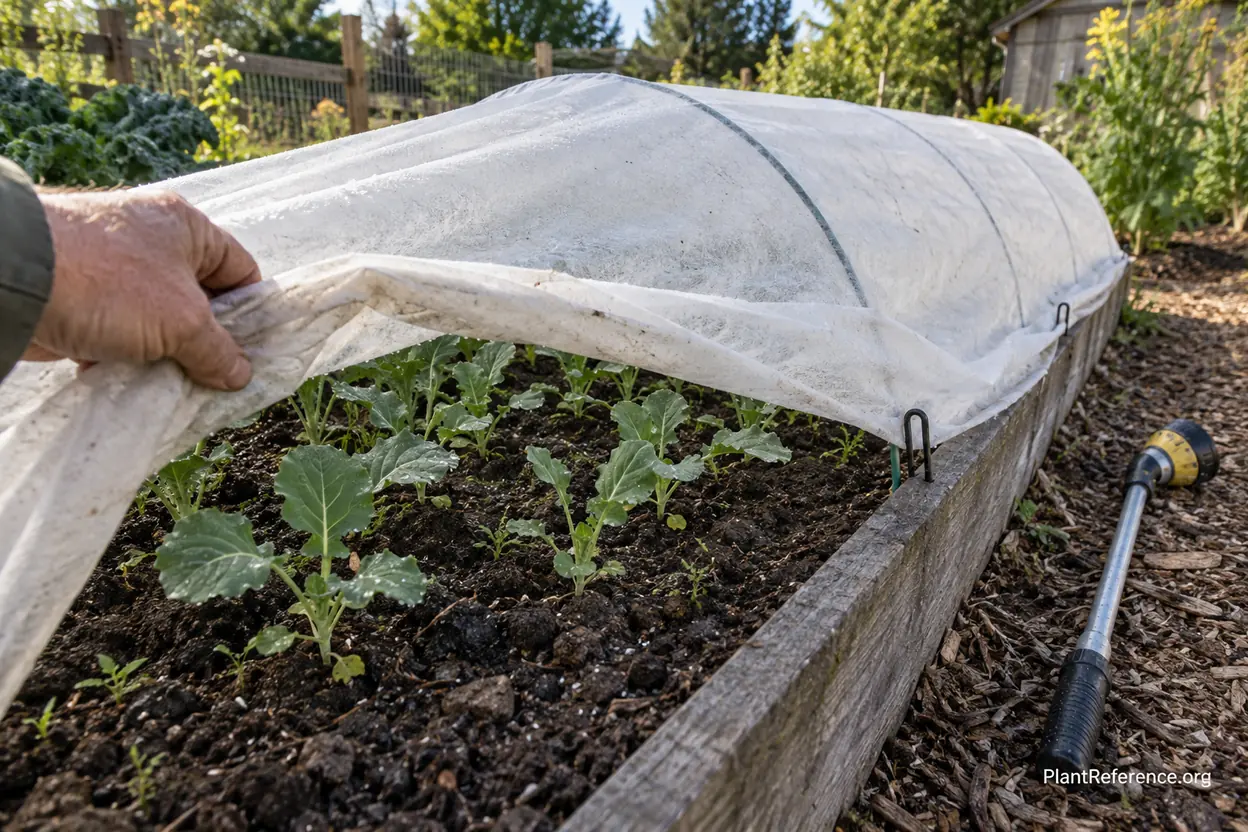
Mechanical controls remove or block the pest. A strong morning water spray dislodges aphids. Hand-picking removes hornworms and Japanese beetles. Trap boards placed overnight collect squash bugs. Mulch interrupts soil splash that moves early-blight spores onto lower leaves. Floating row cover excludes flea beetles and flying egg-layers before they reach seedlings.
Install barriers before pest arrival. Seal row-cover edges with soil, pins, or weights, and remove or open the fabric when insect-pollinated crops begin flowering. For wind-pollinated or self-fertile leafy crops, the cover can remain longer if heat does not build underneath. Best Season Extenders for the Pacific Northwest Garden explains how fabric weight and ventilation also change temperature.
Sanitation is selective, not obsessive. Remove diseased tomato and potato volunteers that can carry late blight, discard collapsed squash vines, and clean tools after cutting infected tissue. Leave some healthy stems, leaf litter, and stick piles away from vulnerable crops to shelter beneficial insects. A clean crop bed can coexist with habitat elsewhere.
Use Beneficial Organisms as Working Partners
More than 98 percent of insect species in the region are beneficial or harmless. Ladybugs eat aphids, mealybugs, and mites; lacewing larvae consume aphids, caterpillars, and thrips; syrphid fly larvae specialize in aphids; parasitic wasps attack scales, hornworms, and other hosts.
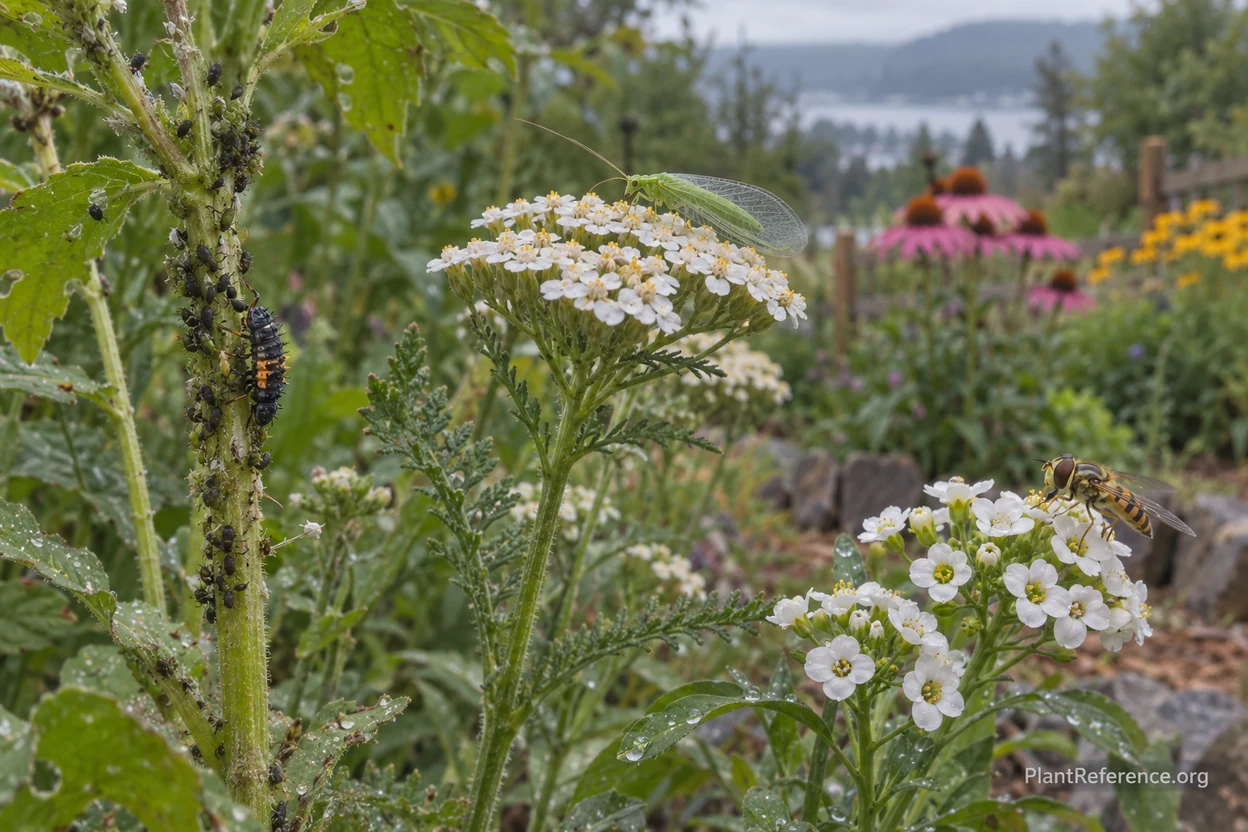
Adult beneficial insects often need pollen and nectar even when their larvae are predators. Plant small, accessible flowers such as dill 🌿Anethum graveolens (AN-eh-thum grav-ee-OH-lenz), cilantro 🌿Coriandrum sativum, yarrow 🌿Achillea millefolium, cosmos 🌿Cosmos bipinnatus, and sweet alyssum 🌿Lobularia maritima. Stagger bloom so food remains available from spring through fall.
Provide shallow water, avoid treating open flowers, and keep a refuge from mowing and leaf removal. How to Build a Pollinator Garden That Works explains habitat structure, while Best Perennials for Pollinators: Bees & Butterflies helps extend bloom without relying entirely on annual flowers. Native Plant Gardening: Ecological Design Guide adds host plants and overwintering habitat to the design.
Do not assume every caterpillar is a pest or every wasp is dangerous. White cocoons attached to a hornworm show parasitism; leave that caterpillar in place so the next generation of wasps can emerge. The most successful biological control is often the predator population you avoid killing.
Match Common Insect Pests to the Right Response
Different feeding strategies require different controls. Sap-suckers, chewing beetles, and caterpillars cannot be managed intelligently with one universal spray.
Pest | Diagnostic Sign | First Response | Escalation Point |
|---|---|---|---|
Aphids | Colonies on tender tips; honeydew | Strong water spray; reduce excess nitrogen | Persistent distortion despite predators |
Scale | Fixed bumps; honeydew; twig decline | Identify species; monitor crawlers | Treat crawler stage with labeled product |
Mealybugs or whiteflies | Hidden colonies; honeydew; sooty mold | Prune pockets; wash or wipe small infestations | Target exposed mobile stages |
Squash bugs | Bronze eggs; vine collapse | Remove eggs; use overnight trap boards | Repeated nymph buildup |
Flea beetles | Tiny shot holes; jumping adults | Cover seedlings before emergence | Kaolin or labeled targeted treatment |
Hornworms | Missing foliage; large droppings | Hand-pick; preserve parasitized larvae | Bt for small actively feeding larvae |
Japanese beetles | Metallic adults; skeletonized leaves | Hand-pick into soapy water; report suspect finds | Follow current state guidance |
Timing is decisive. Insecticidal soap works only when it contacts soft-bodied insects. Bt must be eaten by young caterpillars and will not control aphids or beetles. Neem can affect several soft-bodied pests and mites, but application in strong light can burn leaves. Spinosad can affect bees while wet, so evening use and strict label compliance matter.
Japanese beetles deserve special caution because they are an invasive regulatory concern in Washington. Do not move suspect beetles, soil, or infested plant material. Photograph and report a suspected find through current state channels, then follow official instructions rather than improvising a property-wide treatment.
Manage Diseases in a Maritime Climate
Plant disease requires a susceptible host, a pathogen, and favorable conditions. IPM breaks that triangle by selecting resistant plants, reducing leaf wetness, improving airflow, removing inoculum, and timing protection before predictable infection periods.
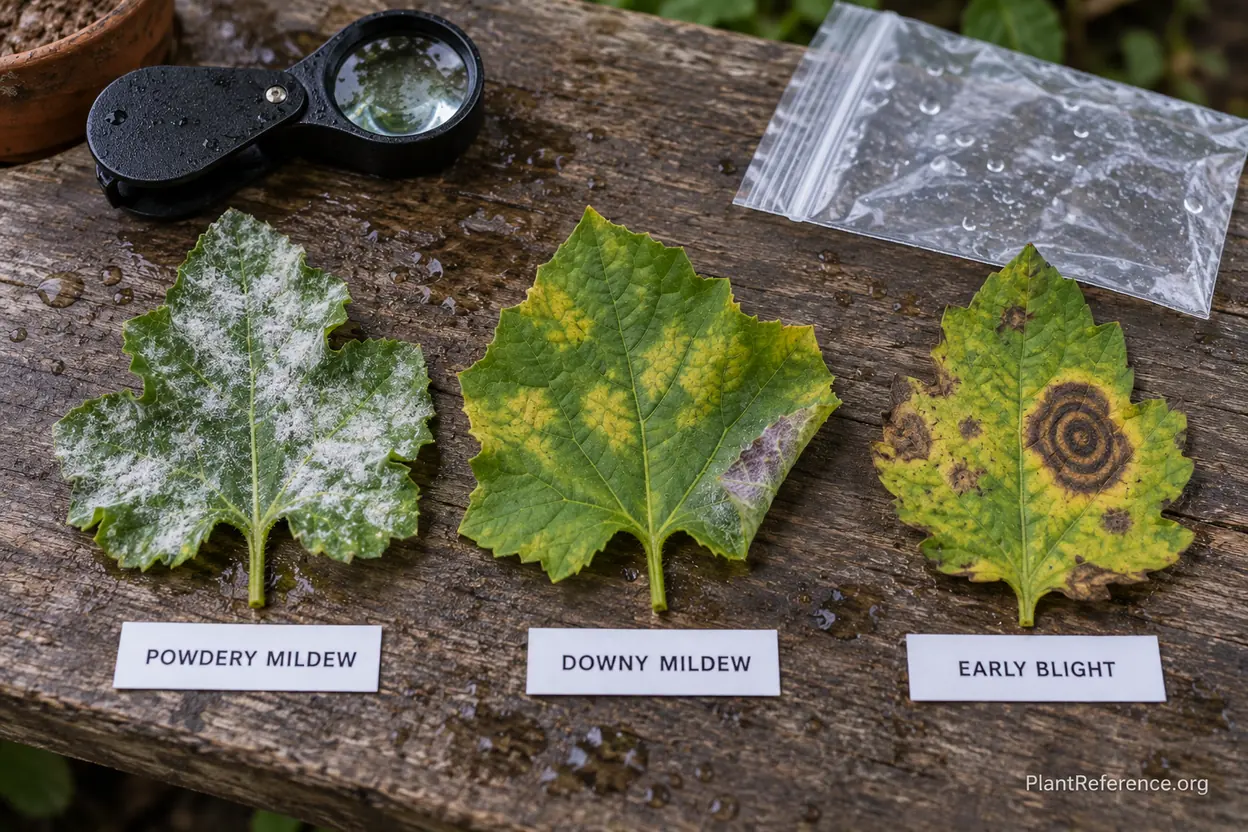
Powdery mildew forms a white floury coating and can thrive in warm, dry conditions with humid nights. Downy mildew is an oomycete that needs free water and can progress rapidly. They look similar from a distance but demand different environmental corrections.
Tomato 🌿Solanum lycopersicum (soh-LAY-num ly-koh-PER-see-kum) late blight spreads by wind and rain and can overwinter in infected tubers and volunteers. Resistant choices such as 🌿Solanum lycopersicum 'Legend' and 🌿Solanum lycopersicum 'Stupice', root-zone irrigation, and removal of volunteers reduce risk. Early blight begins more often on older foliage with target-like concentric rings; mulch reduces soil splash.
Fire blight threatens apples and pears during warm blossom weather, producing wilted shepherd's-hook tips. Remove infected wood with clean tools using the extension-recommended cut distance and sanitation protocol for the situation. Avoid high nitrogen that creates highly susceptible succulent shoots.
Container Tomato Diseases: Preventing and Treating Septoria and Early Blight offers a detailed foliar-disease comparison. When soil remains saturated, consult Poor Drainage in Raised Beds: Causes and Fixes for Waterlogged Soil before blaming every wilt on an infectious pathogen.
Exclude Deer, Voles, and Mountain Beavers
Vertebrate IPM starts with identification. Deer leave torn browse at reachable height and visible tracks. Voles create narrow surface runways and may girdle stems near ground level. Mountain beavers occupy moist slopes and ravines, cutting saplings and chewing shrubs.
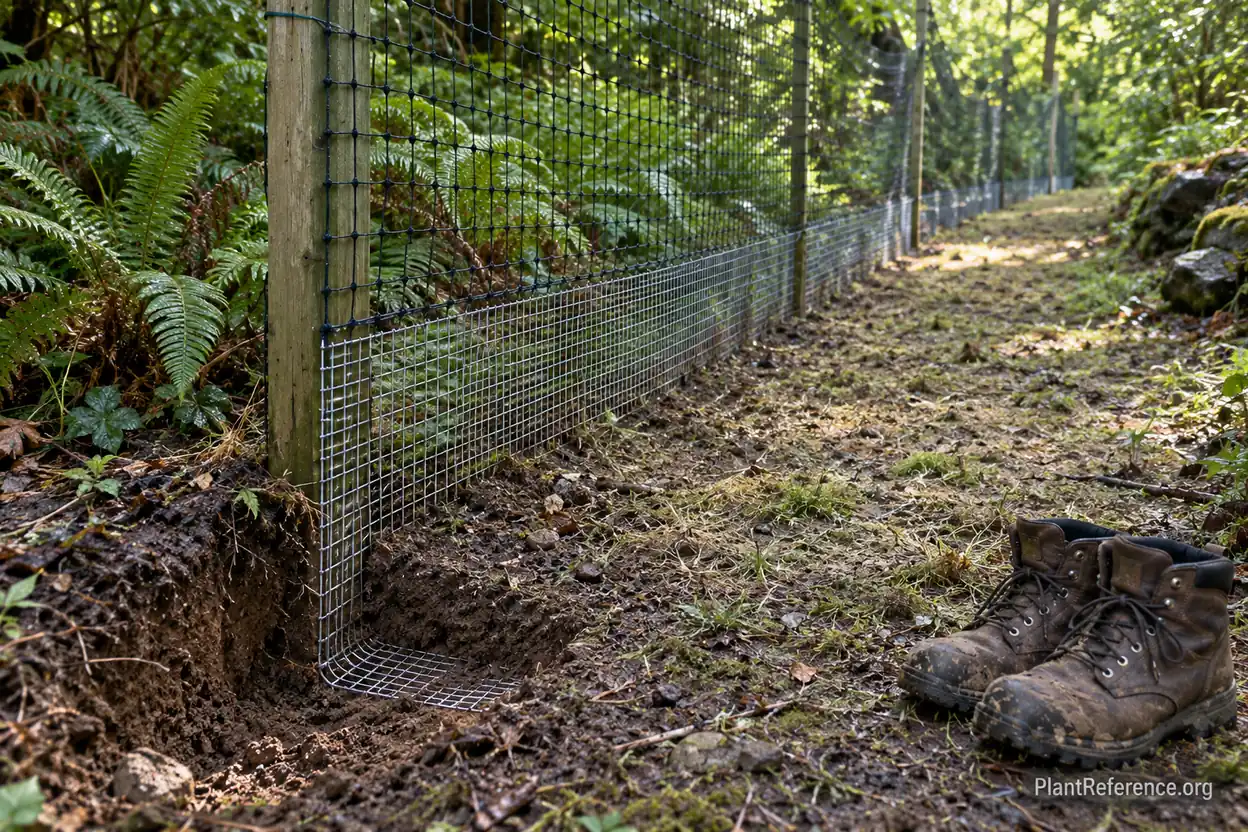
An 8-foot (2.4 m) net-wire fence is the reliable deer standard. Repellents containing blood meal or putrescent egg solids work best before browsing becomes established and require renewal according to the label, especially after weathering. For small beds, a properly designed monofilament barrier may deter entry, but visibility and human safety must be considered.
Manage voles by mowing lawns short and maintaining vegetation-free buffers around valuable beds and trunks. Protect young woody plants with guards that do not trap moisture against bark. Mountain-beaver exclusion uses 1-inch (2.5 cm) mesh at least 2 feet (60 cm) high with a 2-foot (60 cm) horizontal skirt buried outward to block digging.
Habitat modification and exclusion last longer than repeated poisoning, and they avoid secondary exposure to predators. The plant-community approach in Pacific Northwest Native Plants: 10 Resilient Picks can help place tougher species along high-pressure edges while preserving habitat in less vulnerable areas.
Use Pesticides as a Targeted Last Step
A pesticide can fit IPM when diagnosis is sound, the threshold is crossed, lower-risk methods are insufficient, and the product is labeled for the host and target. Choose the narrowest effective option and treat the smallest practical area.
Read the entire current label before purchase and again before mixing. Confirm the target pest, host plant, rate, interval, protective equipment, weather restrictions, pollinator precautions, and disposal requirements. The label is the legal instruction, not a suggestion.
Use insecticidal soap only where direct contact with exposed soft-bodied insects is possible.
Apply Bt only for susceptible caterpillars that are actively feeding.
Use neem in low-light conditions and avoid open flowers or heat-stressed foliage.
Apply spinosad in the evening when the label permits, after bees stop foraging.
Keep diatomaceous earth dry and away from flowers visited by beneficial insects.
Reserve copper for labeled disease situations because it can accumulate in soil and harm aquatic organisms.
Avoid sulfur above 80°F (27°C) and follow every oil-compatibility interval.
Measure results after the treatment interval. If the population falls below threshold, stop. Repeating a successful application automatically can turn a targeted intervention into routine pesticide dependence.
Build a Season-Long IPM Routine
A practical integrated pest management Pacific Northwest calendar follows plant growth and weather rather than a rigid spray date. Keep it short enough to use consistently.
Season | Monitoring Focus | Preventive Work | Typical Decision |
|---|---|---|---|
Late winter | Scale, overwintering eggs, damaged wood | Prune selectively; clean tools; repair barriers | Wait for vulnerable pest stage |
Spring | Aphids, slugs, seedling beetles, blossom diseases | Install row cover; protect flowers; manage nitrogen | Act quickly on seedlings, tolerate minor mature-leaf damage |
Summer | Mites, beetles, squash bugs, mildew, blight | Root-zone water; mulch; scout twice weekly in outbreaks | Choose targeted control only above threshold |
Autumn | Voles, deer, infected crop residue | Remove diseased annuals; mow buffers; protect trunks | Exclude before damage becomes habitual |
Winter | Drainage, shelter, records | Review notes; improve beds; preserve beneficial habitat | Plan prevention instead of buying sprays |
Keep a notebook or simple spreadsheet with date, host, symptom, count, weather, action, and result. Over two or three seasons, those records reveal which pests recur, which controls actually work, and which plants are poorly matched to the site.
Review the system after every intervention. If row cover prevented flea beetles but overheated seedlings, change the fabric or ventilation. If aphids returned after high-nitrogen feeding, correct the fertilizer program. If disease persists where foliage never dries, redesign spacing or irrigation rather than rotating through fungicides.
The strongest IPM program is quiet. Healthy plants, modest tolerated damage, active predators, and a small number of well-timed interventions show that the system is functioning. That is more durable than trying to eliminate every organism that leaves a mark.
Frequently Asked Questions
Reading about plants and recognising them are different skills. These three build the second.
- Daily PlantIdentify the day’s mystery plant from a close-up photograph.
- Keyed OutWork a dichotomous key, lead by lead, to name a hidden specimen.
- Name That PlantName a specimen from botanical clues dealt hardest first.
Free to play, no account needed
Tagged with
Sarah earned her doctorate in plant biology and spent time working in botanical garden education before transitioning to freelance writing and consulting. Now based in Portland, Oregon, she teaches plant identification workshops at local community centers and maintains a modest collection of over 60 houseplants in her small apartment. Sarah specializes in helping beginners understand plant science without the jargon—her approach focuses on practical observation over theory. She's killed her fair share of fiddle leaf figs and finally cracked the code on keeping them alive.