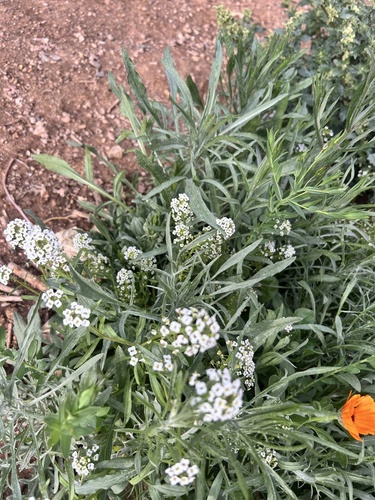
Lobularia, Genus, maritima, Species,
- Genus & species
sweet alyssum
Mediterranean region (southern Europe, North Africa, Canary Islands)
SunFull Sun – Part Shade
Overview
Lobularia maritima is sweet alyssum, growing 3–6 inches (8–15 cm) tall and 9–18 inches (23–45 cm) wide. Dense rounded clusters 1–2 inches (2.5–5 cm) of tiny 4-petaled flowers in white, purple, pink, or apricot from late spring through fall. Honey-like fragrance detectable at 3–5 feet (1–1.5 m). Gray-green narrow lance-shaped leaves 0.5–1 inch (12–25 mm). In the mustard family (Brassicaceae) — not related to true alyssum (Alyssum). Flowering thins or pauses when daytime temperatures exceed 85°F (29°C) for extended periods — shearing by one-half during the heat pause promotes regrowth and resumed bloom in cooler fall temperatures. Self-seeds freely — volunteer seedlings appear the following spring (the progeny may revert to white). Supports beneficial insects: syrphid flies (hoverflies) and parasitoid wasps — used as a companion plant in vegetable gardens to attract these biological pest-control agents. Direct-sow after last frost or start indoors 6–8 weeks before last frost. Tolerates light frost. The species name 'maritima' refers to the coastal habitat — tolerates salt spray and sandy soil. Native to the Mediterranean region (southern Europe, North Africa, Canary Islands). Drought-tolerant once established. Non-toxic — the flowers are edible. Deer-resistant. Growth rate is fast.
Native Range
Native to the Mediterranean region — southern Europe, North Africa, and the Canary Islands, growing on coastal cliffs, sandy shores, and disturbed ground.Suggested Uses
Grown as edging, in containers, between pavers, and as a vegetable garden companion (attracts beneficial insects) as a frost-tender annual. Self-seeds. The honey-like fragrance is the primary trait. White, purple, pink, and apricot cultivars available. Non-toxic. Deer-resistant.How to Identify
Appearance
Size & Dimensions
Height3" - 6"
Width/Spread9" - 1'6"
Bloom Information
Detailed Descriptions
Flower Description
White, purple, pink, or apricot; tiny, 4-petaled, in dense rounded clusters 1-2 inches (2.5-5 cm)Foliage Description
Gray-green, narrow lance-shaped, 0.5-1 inch (12-25 mm)Growing Conditions
Sun Requirements
Requires 6-10 hours of direct sunlight daily
• Full Sun: 6+ hours of direct sunlight
• Partial Shade: 3-6 hours of direct sunlight
• Full Shade: Less than 3 hours of direct sunlight
Care & Maintenance
Care Guide
Full sun (6+ hours). Tolerates poor sandy soil, drought, and salt spray. Flowering pauses in sustained heat above 85°F (29°C) — shear by one-half for fall regrowth. Self-seeds (may revert to white). Supports beneficial insects (syrphid flies, parasitoid wasps). Non-toxic — flowers edible. Deer-resistant.Pruning
Shear by one-half when flowering thins in midsummer heat. The plants regenerate from the cut stems and resume dense bloom in cooler fall temperatures. No other pruning needed.Pruning Schedule
Prune: July
summer
Container Growing
Suitable for container growing
Minimum container size: 1 gallons
Toxicity
Non-toxicPlanting Guide
Planting Methods & Timing
Planting Method
both
Indoor Start
6 weeks before last frost
Direct Sow Timing
After last frost or in early fall
Days to Maturity
50–65 days
Plant Spacing
8 inches