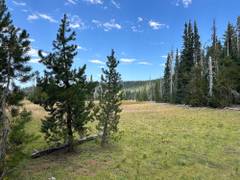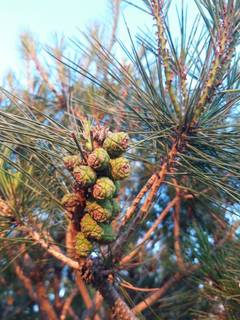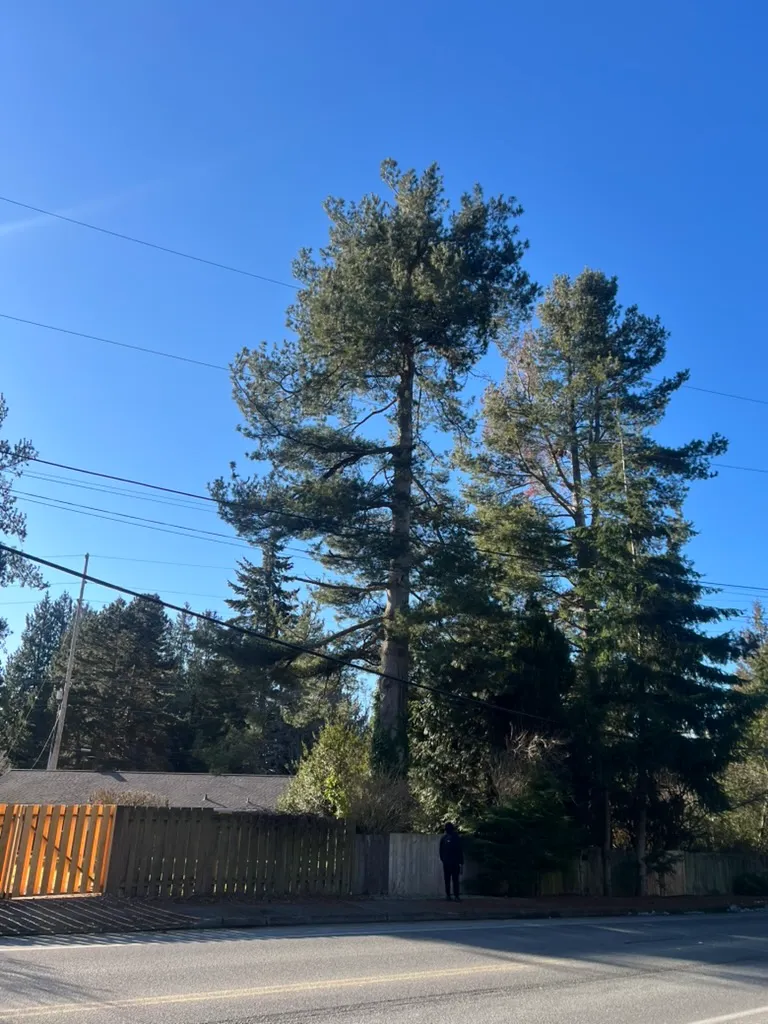
Image 1 of 10
1 / 10
Plant Reference
Pinus, Genus, monticola, Species,
- Genus & species
western white pine
Native to the mountains of western North America — British Columbia south through Washington, Oregon, northern Idaho, western Montana, and into the Sierra Nevada of California, at 1,000-7,500 feet (300-2,300 m) elevation
Overview
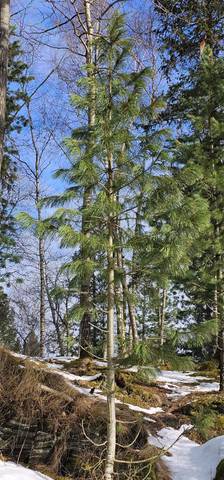
Pinus monticola is western white pine, a tall straight-trunked evergreen coniferous tree in the pine family Pinaceae growing 60-100 feet (18-30 m) tall and 20-35 feet (6-10.7 m) wide in cultivation (and to substantially greater dimensions in unlogged old-growth stands) with a growth rate of 18-24 inches (45-60 cm) per year on productive sites. The specific epithet monticola is from Latin mons (mountain) and -cola (dweller) and records the species' native habitat in the mountains of the Pacific Northwest and the northern Rocky Mountains. The crown is broadly conical to pyramidal on young trees with horizontal branches arranged in regular whorls around the straight single trunk, becoming more open and irregular with age as lower branches are shed and the upper canopy retains the characteristic tiered branching. Needles are carried in fascicles of five (the 5-needle count is the primary field diagnostic of subgenus Strobus and separates the species from the 2-needle and 3-needle hard pines), 2-4 inches (5-10 cm) long, slender, flexible, soft to the touch, blue-green with conspicuous white stomatal lines on the inner adaxial surfaces that produce a silvery cast when the foliage is viewed from below — the silvery cast is the source of the alternative common name silver pine. Cones are cylindrical, 5-11 inches (12.5-28 cm) long, slender, pendant, light brown at maturity, and the 5-11 inch cone length exceeds that of most other North American pine species — a reliable field character that separates P. monticola from the shorter-coned P. strobus (eastern white pine, 4-8 inch cones) where the two species' cultivated ranges overlap. Limitation: white pine blister rust (Cronartium ribicola), a fungal pathogen native to Asia that arrived in western North America at the port of Vancouver in 1910, has caused severe population decline of the species across its native range — the rust completes its life cycle between the pine (primary host) and Ribes species (currants and gooseberries, alternate host), and garden specimens in the Pacific Northwest remain at serious risk where Ribes plants grow within 1,000 feet (300 m) of the pine. Rust cankers on the main trunk are fatal, and branch cankers are fatal unless detected and pruned out 6-8 inches (15-20 cm) below visible discoloration within the first growing season. U.S. Forest Service breeding programs at Moscow, Idaho, and at the Dorena Genetic Resource Center in Cottage Grove, Oregon have produced rust-resistant seedling lines (the Champion Tree program) that are now the recommended planting stock for Pacific Northwest restoration projects. Non-toxic. Deer-resistant.
Native Range
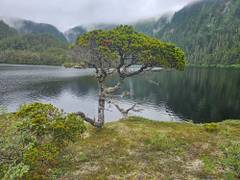
Native to the mountains of western North America — British Columbia, Washington, Oregon, northern Idaho, western Montana, and the Sierra Nevada of California — at 1,000-7,500 feet (300-2,300 m) elevation. The species once dominated mid-elevation Pacific Northwest and northern Rocky Mountain forests before white pine blister rust arrived at the port of Vancouver from Asia in 1910 and spread through the native range across the following decades. The specific epithet monticola is from Latin mons (mountain) and -cola (dweller) and records the mountain native habitat.Suggested Uses
Used as a native specimen tree in Pacific Northwest and northern Rocky Mountain landscapes, as a component of large-scale naturalistic plantings and parks, and as a restoration planting within the species' natural range at 20-30 foot (6-9 m) spacing between trees in USDA zones 3 through 8. The eventual height of 60-100 feet restricts siting to positions with adequate vertical and lateral clearance for multi-century growth. The soft blue-green feathery 5-needle foliage with silvery inner surfaces, the tall straight single-trunked architectural form, the long pendant cones that supply winter food for Clark's nutcrackers and squirrels, the species' historical role as the dominant mid-elevation conifer of Pacific Northwest mid-mountain forests before the 1910 arrival of blister rust, and the rust-resistant seedling stock now available from U.S. Forest Service breeding programs combine to make P. monticola a foundation native conifer for large-scale Pacific Northwest landscapes. Sites within 1,000 feet of Ribes plants are unsuitable because of the blister-rust alternate-host relationship unless the Ribes are removed or rust-resistant pine stock is used. Small urban lots and confined suburban plantings are unsuitable because of the tree's eventual mature size.How to Identify
Appearance
Size & Dimensions
Height60' - 100'
Width/Spread20' - 35'
Colors
Bloom Information
Not applicable — the species is a monoecious conifer. Male pollen cones (strobili) are yellow to reddish, clustered at the base of new shoots in May through June across a 2-3 week wind-pollinated release period. Female seed cones are small and reddish at pollination at the branch tips, mature over two growing seasons through green to light brown, and open in late summer of the second year to release small winged seeds. Cone production begins at 10-20 years. The seeds are a winter food source for Clark's nutcrackers, red squirrels, Douglas squirrels, and several smaller rodents and birds across the native range.
Detailed Descriptions
Foliage Description
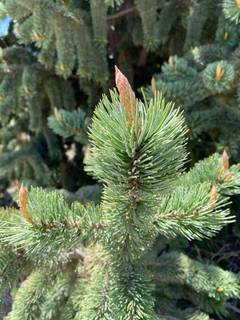
blue-green with conspicuous white stomatal lines on the inner (adaxial) surfaces of the needles that produce a silvery cast when the foliage is viewed from below, with needles carried in fascicles of five (the 5-needle count is the primary field diagnostic of subgenus Strobus and separates the species from the 2-needle and 3-needle hard pines); needles 2-4 inches (5-10 cm) long, slender, flexible, soft to the touch, and in dense tufts at the branch tips that produce a feathery foliage texture; evergreen year-round with individual needles retained 2-4 years before sheddingGrowing Conditions
Sun Requirements
Requires 6-12 hours of direct sunlight daily
• Full Sun: 6+ hours of direct sunlight
• Partial Shade: 3-6 hours of direct sunlight
• Full Shade: Less than 3 hours of direct sunlight