Pinus, Genus, edulis, Species,
- Genus & species
Colorado pinyon
Overview
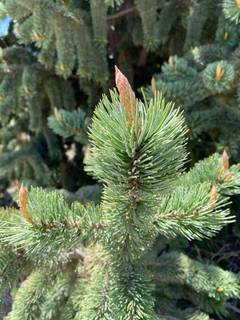
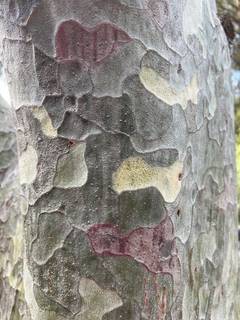
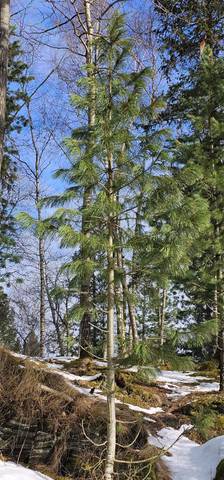
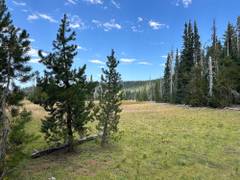
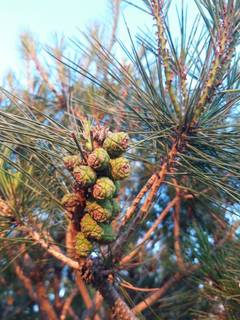
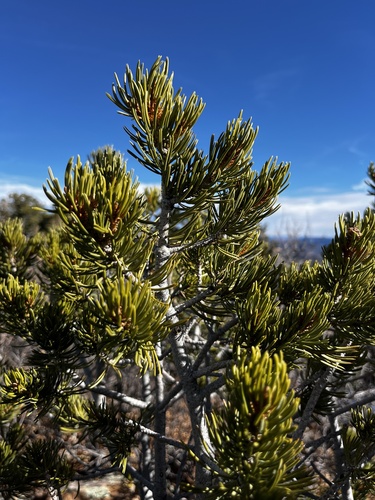
Pinus edulis is a small, slow-growing evergreen conifer of the southwestern United States, reaching 10-35 feet (3-10 m) tall and 10-20 feet (3-6 m) wide, with a rounded to irregular crown and a short, often crooked trunk. The stiff needles are usually held in pairs, 0.75-1.5 inches (2-4 cm) long, blue-green to yellow-green, and persist three to nine years. The rounded woody cones are 1.5-2 inches (4-5 cm) long and open to release large wingless seeds, the edible pine nuts harvested as pinyon or pinon nuts. The grey-brown bark is furrowed into scaly ridges with age. Native to the Great Basin and Colorado Plateau, it grows in pinyon-juniper woodland on dry, rocky mesas, foothills, and slopes between about 4,500 and 7,500 feet (1,400-2,300 m). It withstands cold, heat, drought, and poor alkaline soils, and is hardy in USDA zones 5-8. Growth is very slow, with trees adding only a few inches a year and living several centuries; seed crops are heavy only every few years. It is intolerant of shade, wet ground, and humid climates. Drought and bark beetles have killed large stands in dry years. The seeds feed jays, rodents, and people.
Native Range
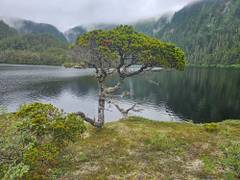
Native to the southwestern United States, across the Colorado Plateau and Great Basin in Arizona, New Mexico, Colorado, Utah, and adjacent states. It grows in pinyon-juniper woodland on dry, rocky foothills, mesas, and lower mountain slopes.Suggested Uses
Used as a slow-growing specimen, screen, or windbreak in dry-climate gardens, and for xeriscaping and habitat plantings, spaced 10-20 feet (3-6 m) apart. Grown for edible pine nuts and as a drought-tolerant evergreen in high desert regions.How to Identify
Appearance
Size & Dimensions
Height10' - 35'
Width/Spread10' - 20'
Colors
Foliage Colors
Fall Foliage Colors
Bloom Information
Pollen is shed in late spring, with small reddish female cones near the branch tips and yellowish pollen cones lower down. Cones take two years to ripen, opening in late summer of the second year. Heavy seed crops occur only every three to seven years.
Detailed Descriptions
Flower Description
reddish seed cones and yellow pollen conesFoliage Description
blue-greenGrowing Conditions
Sun Requirements
Requires 6-12 hours of direct sunlight daily
• Full Sun: 6+ hours of direct sunlight
• Partial Shade: 3-6 hours of direct sunlight
• Full Shade: Less than 3 hours of direct sunlight
Care & Maintenance
Care Guide
Grow in full sun on dry, well-drained, rocky or sandy soil, including alkaline ground; the tree fails in wet, heavy, or humid conditions. Water young trees occasionally until established, then only in extended drought. It needs no feeding and grows very slowly. Cold, heat, wind, and drought are all tolerated. Hardy in USDA zones 5-8, it suits high desert and plateau climates with low humidity. Bark beetle attack rises during prolonged drought.Pruning
Little pruning is needed. Dead, damaged, or crossing branches are removed in late winter, and lower limbs can be cleared to expose the trunk. Heavy cutting into old bare wood does not resprout.Pruning Schedule
Prune: February–March
winterearly spring
Container Growing
Suitable for container growing
Minimum container size: 10 gallons