Pinus, Genus, contorta, Species, 'Taylor's Sunburst', Cultivar,
- Genus & species
- Cultivar
Taylor's sunburst lodgepole pine
Overview
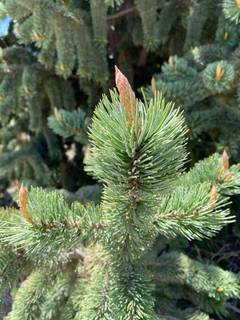
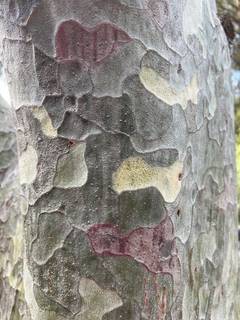
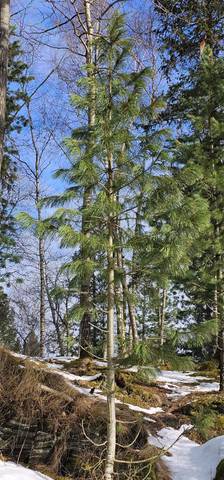
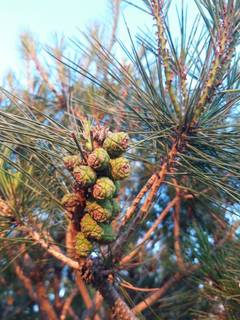
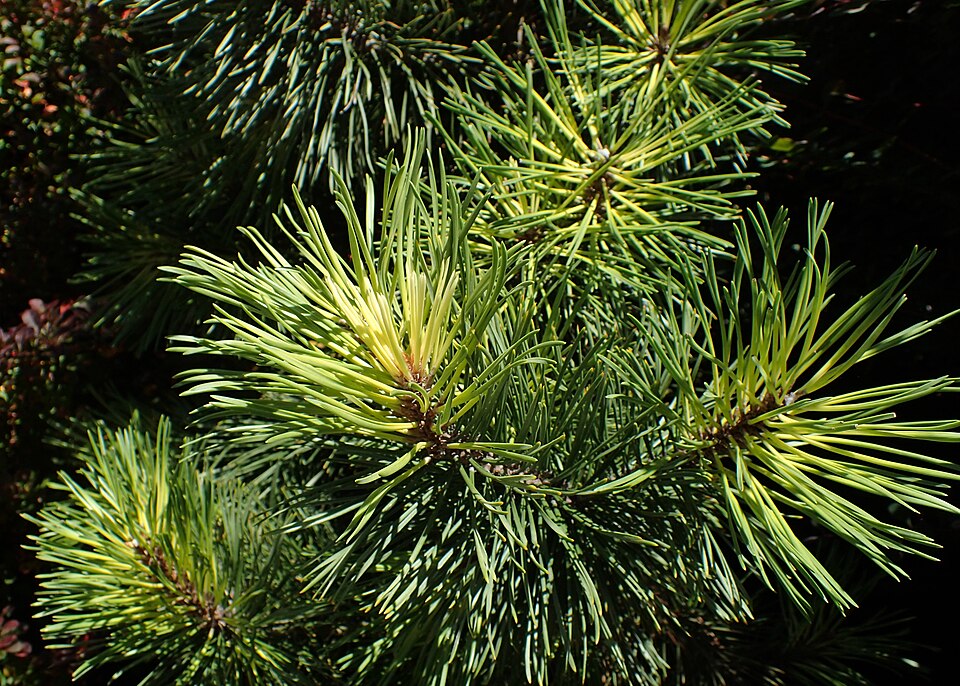
'Taylor's Sunburst' is a slow-growing cultivar of Pinus contorta with golden-yellow new growth that emerges in late spring and gradually transitions to green by mid-summer. Mature plants reach 8-15 feet (2.4-4.6 m) tall and 6-10 feet (1.8-3 m) wide after 20 years, with an irregular upright pyramidal form and growth rate of 6-12 inches (15-30 cm) per year. Needles in fascicles of 2, twisted along their axis, 1.5-2.5 inches (4-6.5 cm) long, persisting 3-5 years. New candles emerge lemon-yellow to gold for 4-6 weeks before fading to green. Pollen cones bright red in May-June, clustering at branch tips. Female cones egg-shaped, 1.5-2 inches (4-5 cm) long, persisting on branches for many years. Bark grey-brown, becoming scaly with age. Yellow new-growth color fades earlier in zones with hot summers (zones 7-8) than in cool maritime climates. Susceptible to mountain pine beetle (Dendroctonus ponderosae) in interior western regions where outbreaks occur, and to needle cast fungi in humid summer climates.
Native Range
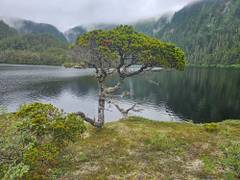
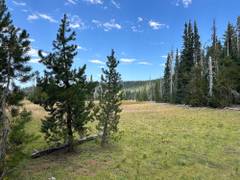
The species Pinus contorta is native to western North America from Yukon and Alaska south through the Rocky Mountains to Baja California, and west to the Pacific coast. The cultivar 'Taylor's Sunburst' was selected from a wild seedling found by Taylor Williams near Steamboat Springs, Colorado, around 1985. The species inhabits subalpine forests and coastal dunes at 0-11,500 feet (0-3,500 m) elevation.Suggested Uses
Used as a specimen in mixed-conifer plantings and rock gardens where the contrast between red pollen cones and yellow candles is visible at close range. Spaced 8-12 feet (2.4-3.7 m) apart when grouped. Container culture is feasible in pots of at least 25 gallons (95 L) for the first 10-15 years before in-ground planting.How to Identify
Appearance
Size & Dimensions
Height8' - 15'
Width/Spread6' - 10'
Bloom Information
Pines produce wind-pollinated cones rather than flowers. Male pollen cones bright red, develop at branch tips in May-June, releasing pollen for 1-2 weeks. Female cones develop the same season, mature over 2 years, and reach 1.5-2 inches (4-5 cm) at maturity. Some seed lots produce serotinous cones that remain closed for years until heat-triggered to open.
Detailed Descriptions
Foliage Description
golden-yellow new growth fading to greenGrowing Conditions
Sun Requirements
Requires 6-12 hours of direct sunlight daily
• Full Sun: 6+ hours of direct sunlight
• Partial Shade: 3-6 hours of direct sunlight
• Full Shade: Less than 3 hours of direct sunlight
Care & Maintenance
Care Guide
Establish in well-drained acidic to neutral soil (pH 5.0-7.0) with full sun exposure of at least 6 hours daily for the strongest yellow color development. Water weekly during the first two growing seasons; established plants tolerate drought, but yellow color is more pronounced in plants receiving consistent moisture. Yellow new growth fades to green earlier in zones 7-8 than in zones 4-6. Sustained heat above 95°F (35°C) can scorch the developing candles and reduce the duration of yellow color. Mountain pine beetle (Dendroctonus ponderosae) attacks stressed trees in the western interior; sanitation pruning of dead wood reduces beetle pressure. Needle cast fungi cause needle browning in humid summers and are managed by raking fallen needles and improving air circulation.Pruning
Pines do not regenerate from old wood; pruning is limited to removal of dead or broken branches at any time and to candle pruning of new spring growth. Pinching candles by one-third to one-half in late spring (when candles are 1-2 inches / 2.5-5 cm long) reduces extension and creates denser foliage. The natural irregular form develops without shaping; cuts to mature wood do not produce new shoots.Pruning Schedule
Prune: May–June
late spring
Container Growing
Suitable for container growing
Minimum container size: 25 gallons