Image 1 of 8
1 / 8
Plant Reference
Pinus, Genus, nigra, Species,
- Genus & species
Austrian pine
Native to central and southern Europe and Asia Minor — from Spain and Morocco east through Italy, Austria, the Balkans, Greece, Turkey, and Cyprus — at 300-6,600 feet (90-2,000 m) elevation on rocky slopes and dry mountain woodlands
Overview
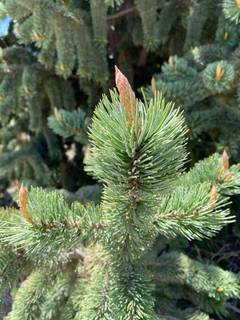
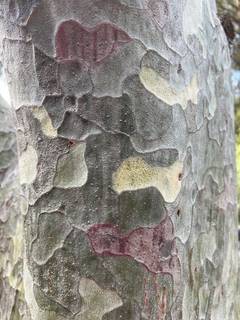
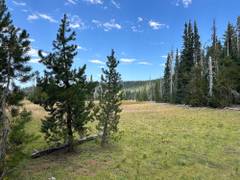
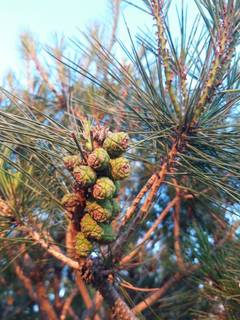
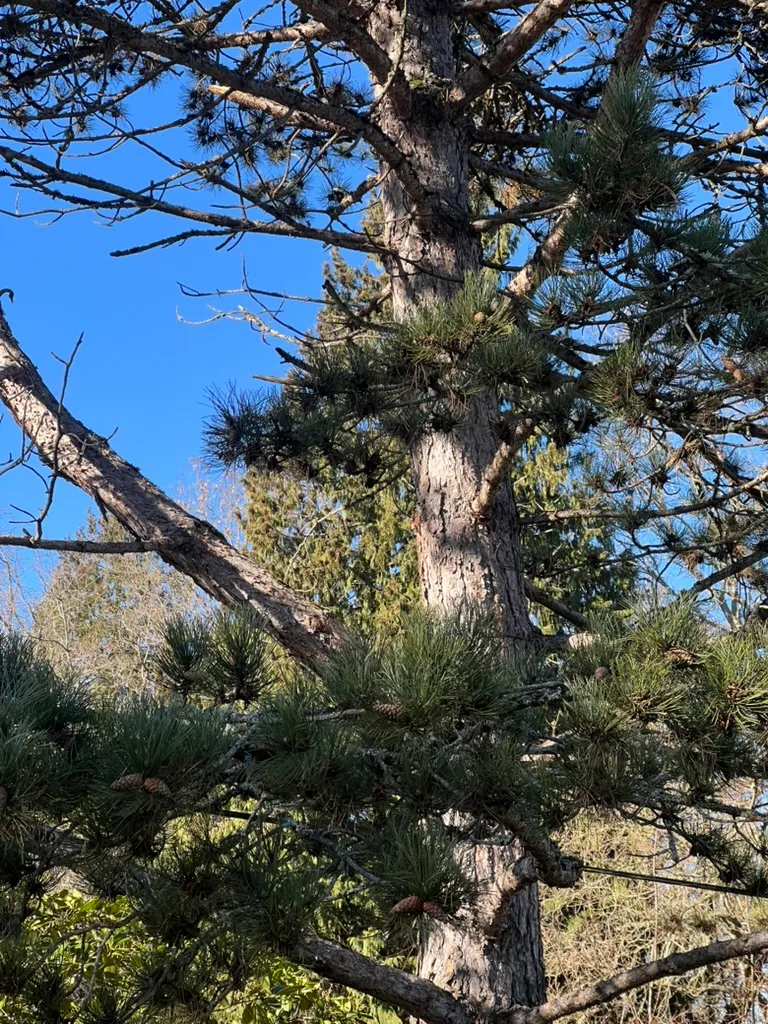
Pinus nigra is Austrian pine (European black pine), a large broadly pyramidal evergreen coniferous tree in the pine family Pinaceae growing 40-60 feet (12-18 m) tall and 20-40 feet (6-12 m) wide in cultivation with a growth rate of 12-24 inches (30-60 cm) per year. The specific epithet nigra is from Latin niger meaning black and refers to the dark gray to black bark on mature trunks and the dark green foliage tone — the same reference supports the alternative common name European black pine. The crown is broadly pyramidal and symmetrical on young trees with horizontal to slightly ascending branches arranged in regular whorls, becoming broad and irregular with age as the canopy flattens and the lower branches are shed to expose the lower trunk and its dark deeply furrowed bark. Needles are carried in fascicles of two (the 2-needle count places the species in subgenus Pinus, the hard pines, and separates it from the 5-needle white pines such as P. strobus and P. monticola), 3-6 inches (7.5-15 cm) long, stiff, sharp-pointed, dark green, and held in dense tufts at the branch tips — the stiff dark-green needles produce a coarse bold foliage texture that supplies visual contrast in mixed conifer plantings alongside the softer-needled white pines and the smaller-needled dwarf pines. The bark on mature trunks is dark gray to near-black, deeply furrowed into plates of rough vertical ridges separated by pale fissures, and this bark character is a secondary identifying feature alongside the dark needle color. Cones are ovoid, 2-3.5 inches (5-9 cm) long, light brown at maturity, and carry a small straight prickle on each scale. The species combines broad soil adaptability across the pH 5.0-7.5 range and across soil textures from heavy clay through sand and chalk, extreme cold hardiness through USDA zone 3, drought tolerance once established, and high tolerance of road salt, air pollution, and compacted urban soils — the combination supports urban and roadside positions that exclude most other large pines. Limitation: Diplodia tip blight (Sphaeropsis sapinea, formerly Diplodia pinea) is the most significant disease concern for the species in cultivation across North America, with fungal infection triggered by wet weather during bud break in spring and progressive shoot-tip dieback that appears as brown dead shoot tips in late spring and progresses to crown thinning over successive years under continued disease pressure — plantings in the humid Midwest and Northeast regions of the United States carry heavier disease pressure than plantings in the drier Pacific Northwest lowlands. The disease is managed by pruning out infected shoots promptly, disposing of the pruned material off-site to reduce fungal inoculum in the surrounding soil, and avoiding overhead irrigation during bud break. Non-toxic. Deer-resistant.
Native Range
Native to central and southern Europe and Asia Minor — from Spain and Morocco east through Italy, Austria (the type locality and source of the primary common name Austrian pine), the Balkans, Greece, Turkey, and Cyprus — at 300-6,600 feet (90-2,000 m) elevation on rocky slopes and dry mountain woodlands. The specific epithet nigra is from Latin niger meaning black and records the dark gray to black mature bark and dark green needle color.Suggested Uses
Used as a large specimen tree in parks, residential landscapes with adequate lateral space for the 20-40 foot mature width, visual screen and windbreak at 20-25 foot (6-7.6 m) spacing between trees, roadside highway-margin tree where salt and pollution exposure excludes most other large pines, and urban shade-tree position on compacted soils that reject other conifers in USDA zones 3 through 8. The coarse stiff dark-green 2-needle foliage texture that supplies visual contrast in mixed conifer plantings, the dark gray to near-black deeply furrowed bark on mature trunks that serves as a secondary year-round ornamental feature, the broad soil adaptability (loam through clay through sand through chalk across pH 5.0-7.5), the high tolerance of salt, pollution, and compacted urban soils, and the extreme cold hardiness through USDA zone 3 combine to make P. nigra a foundation large conifer for urban, roadside, and exposed residential positions where other large pines fail. Humid Midwest and Northeast positions with heavy Diplodia tip blight pressure should be assessed against local disease incidence before siting. Small urban lots without adequate lateral space for the 20-40 foot mature width are unsuitable.How to Identify
Appearance
Size & Dimensions
Height40' - 60'
Width/Spread20' - 40'
Colors
Bloom Information
Not applicable — the species is a monoecious conifer. Male pollen cones (strobili) are yellow, clustered at the base of new shoots in May through June across a 2-3 week wind-pollinated release period. Female seed cones are small and reddish at pollination at the branch tips, mature over two growing seasons through green to light brown, and open at maturity to release winged seeds. Cone production begins at 10-15 years and increases with tree age.
Detailed Descriptions
Foliage Description
dark green with needles carried in fascicles of two (the 2-needle count places the species in subgenus Pinus, the hard pines, and separates it from the 5-needle white pines); needles 3-6 inches (7.5-15 cm) long, stiff, sharp-pointed, dark green, held in dense tufts at the branch tips, and retained 3-4 years before shedding — the stiff dark-green needles produce a coarse bold foliage texture that separates the species from the softer-needled white pines and the smaller-needled dwarf pines; evergreen year-roundGrowing Conditions
Sun Requirements
Requires 6-12 hours of direct sunlight daily
• Full Sun: 6+ hours of direct sunlight
• Partial Shade: 3-6 hours of direct sunlight
• Full Shade: Less than 3 hours of direct sunlight