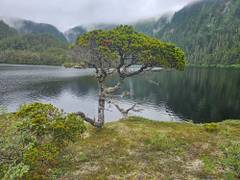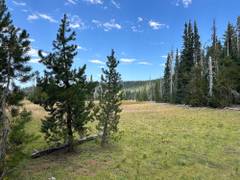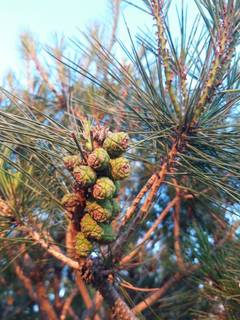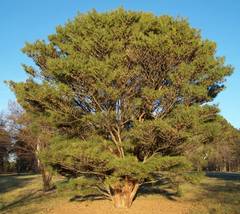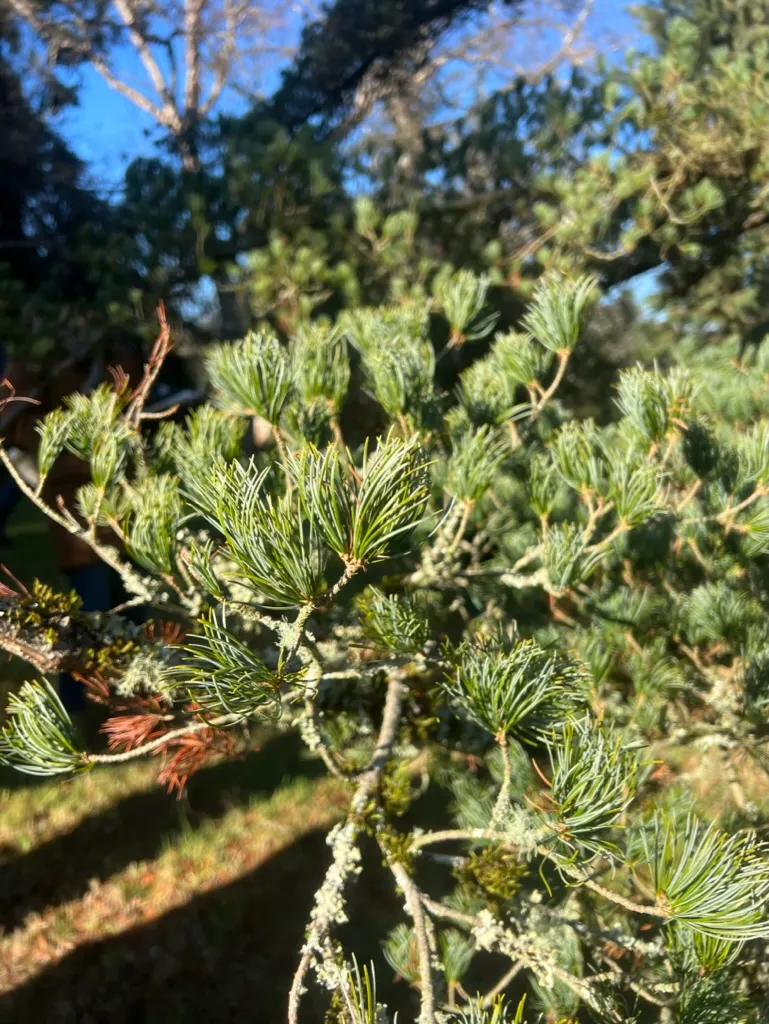
Pinus cembra, Swiss stone pine
1 / 2
Coniferous Trees

Pinus cembra

Swiss stone pine

Pinaceae

Alps, Carpathians, Urals, and Siberia; 3,900–7,900 feet (1,200–2,400 m)

At a Glance

TypeTree
HabitUpright
FoliageEvergreen
Height35–50 feet (10.7–15 m)
Width15–25 feet (4.6–7.6 m)
Maturity35 years

Growing Zones

USDA Hardiness Zones

3 - 8
Zone 3
Zone 4
Zone 5
Zone 6
Zone 7
Zone 8
These zones indicate the coldest temperatures this plant can typically survive.
Frost Tolerancehardy

Key Features

Deer Resistant
Drought Tolerant
Maintenancevery low

Overview

Pinus cembra is a slow-growing, narrowly columnar to broadly pyramidal evergreen pine native to the subalpine zones of Europe and central Asia. Trees reach 35–50 feet (10.7–15 m) tall and 15–25 feet (4.6–7.6 m) wide at maturity in cultivation; growth rate is 6–12 inches (15–30 cm) per year. The crown is dense and columnar when young, broadening with age. Needles are in bundles of five, 2.5–3.5 inches (6–9 cm) long, flexible, blue-green to gray-green with white stomatal lines on the inner surfaces. Needles persist for 3–5 years. Cones are ovoid, 2–3 inches (5–7.5 cm) long, violet-blue when young, ripening to brown in the second season; they do not open to release seeds and fall intact. Seeds are large, wingless, edible, and dispersed primarily by nutcrackers in the wild. Blister rust can affect five-needled pines; susceptibility in Pacific Northwest conditions should be considered at planting.

Native Range

Pinus cembra is native to the subalpine zones of the Alps and Carpathian Mountains in Europe, and the Ural Mountains and Siberia in Asia, at elevations of 3,900–7,900 feet (1,200–2,400 m). It is not native to the Pacific Northwest.

Suggested Uses

Planted as a specimen tree in residential landscapes and parks, spaced 15–20 feet (4.6–6 m) from adjacent plants. The columnar form in youth makes it suitable for confined spaces that broader pines cannot occupy; eventual width of 15–25 feet (4.6–7.6 m) should be planned for. The non-opening, seed-bearing cones attract corvids and nutcrackers, bringing wildlife activity in natural settings.

How to Identify

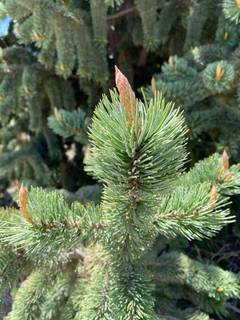
Pinus cembra is identified by five needles per fascicle, 2.5–3.5 inches (6–9 cm) long, flexible, blue-green with white inner surfaces, arranged in dense tufts giving branches a brushy appearance. Cones are ovoid, 2–3 inches (5–7.5 cm), violet-blue when young. Distinguished from P. strobus by the shorter, stiffer needles and non-opening cones; distinguished from P. monticola by the denser, more columnar crown and shorter needles.

Appearance

Size & Dimensions

Height35' - 50'
Width/Spread15' - 25'

Reaches mature size in approximately 35 years

Colors

Flower Colors

red
purple

Foliage Colors

blue green
gray green

Fall Foliage Colors

no change

Bloom Information

Bloom Period

~3 weeks
J
F
M
A
M
J
J
A
S
O
N
D
SpringSummer
Male strobili are reddish-purple, releasing pollen in May–June in lowland cultivation. Female cones mature in the second season, ripening to brown in August–September. Cones fall intact without opening; seed production begins at 20–30 years.

Detailed Descriptions

Flower Description

reddish-purple (male strobili)

Foliage Description

blue-green to gray-green

Growing Conditions

Sun Requirements

Full Sun
Requires 6-12 hours of direct sunlight daily
• Full Sun: 6+ hours of direct sunlight
• Partial Shade: 3-6 hours of direct sunlight
• Full Shade: Less than 3 hours of direct sunlight
Soil Requirements

pH Range4.5 - 7.0(Acidic)
357912
Soil Types
loamsandrocky
Drainage
well drained

Water & Climate

Water Needs

Low

Frost Tolerance

hardy

Time to Maturity

30–40 years

Drought Tolerance

Drought tolerant when established

Care & Maintenance

Care Guide

Water weekly during the first two growing seasons; established trees tolerate 2–3 weeks without rain. Prefers well-drained, slightly acidic soils; tolerates rocky and nutrient-poor substrates. White pine blister rust affects five-needled pines and is prevalent in the Pacific Northwest; removal of nearby currant and gooseberry plants, which are the alternate host, reduces infection risk. Pine needle scale and aphids are occasional pests. Transplants slowly; balled-and-burlapped or container-grown specimens establish more reliably than bare-root. Fertilization is not required in adequate soils.

Pruning

No pruning is required to maintain the columnar to pyramidal form. Dead branches can be removed at any time. The single central leader develops naturally and does not require training. Lower branches persist to near ground level on open-grown trees; they can be removed if clearance is needed, though this alters the natural silhouette.

Maintenance Level

very low

⚠️ Toxicity Warning

Non-toxic
Pinus cembra (Swiss stone pine) - Identification & Care Guide | PlantRef