Image 1 of 13
1 / 13
Plant Reference
Pinus, Genus, parviflora, Species,
- Genus & species
Japanese white pine
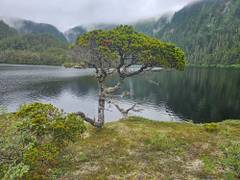
Native to Japan (Honshu, Shikoku, Kyushu) and Korea; montane forests at 300-6,600 feet (90-2,000 m) elevation on rocky ridges and mountain slopes
Overview
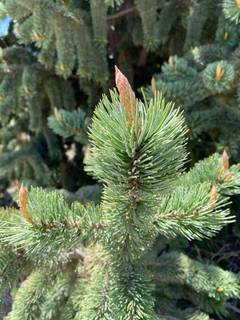
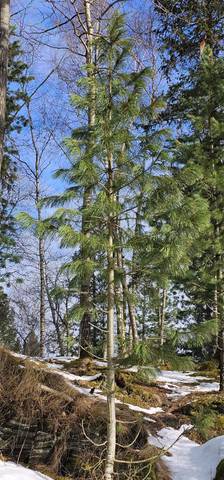
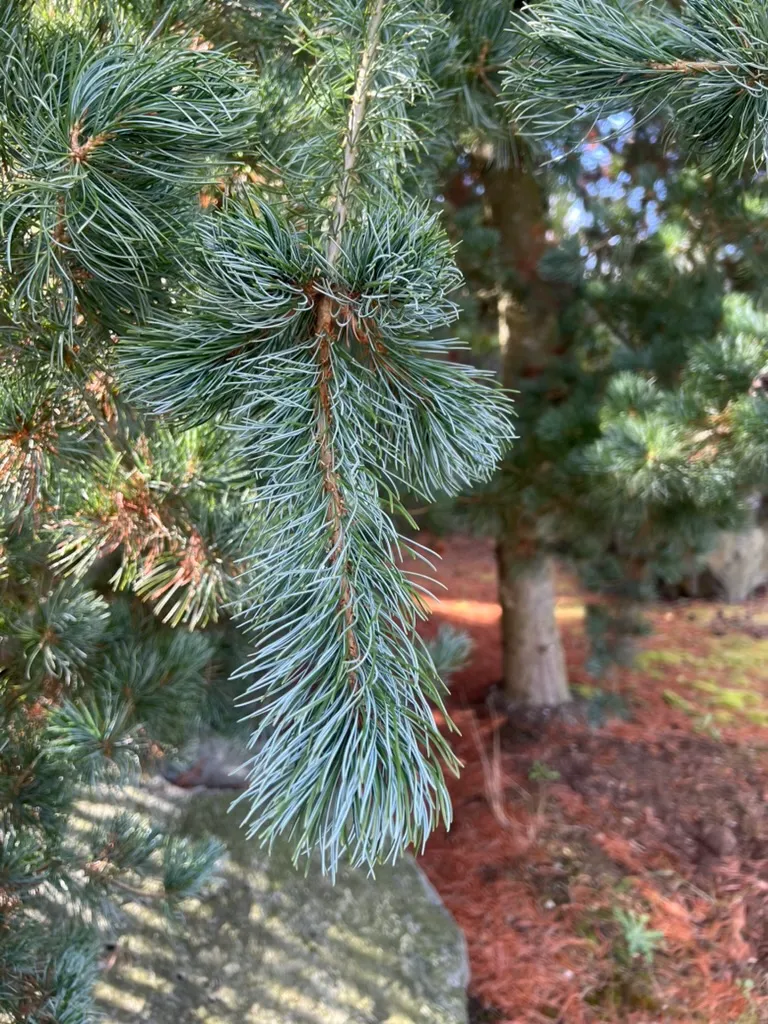
Pinus parviflora is Japanese white pine (five-needle pine), a wide-spreading evergreen coniferous tree in the pine family Pinaceae growing 25-50 feet (7.6-15 m) tall and 20-35 feet (6-10.7 m) wide in cultivation on a broad crown with horizontal layered branches that produce the species' architectural silhouette. The specific epithet parviflora is from Latin parvus (small) and flos (flower) and refers to the small reddish-purple female cones at pollination rather than to any floral feature in the angiosperm sense — the specific epithet predates the modern understanding that conifers do not bear true flowers. Needles are carried in fascicles of five (the 5-needle count places the species in subgenus Strobus and separates it from the 2-needle and 3-needle hard pines), 1.5-2.5 inches (4-6 cm) long, slightly twisted along the axis, blue-green with conspicuous white stomatal lines on the inner surfaces that produce a silvery-blue effect when the foliage is viewed from below, and clustered in dense tufts at the branch tips. The short twisted 5-needle fascicles combined with the tufted branch-tip arrangement and the wide-spreading crown with horizontal layered branches are the three combined identifying characters of the species and separate P. parviflora from the taller narrower-crowned P. strobus (eastern white pine, 2-5 inch needles) and from the more pyramidal P. flexilis (limber pine, flexible branches that bend without breaking). The species is the signature pine of Japanese bonsai practice and the primary five-needle pine used in traditional Japanese bonsai cultivation for centuries, and the species has been introduced to North American and European horticulture both as a landscape specimen tree and as the standard bonsai pine. Ornamental erect reddish-brown to purplish cones 2-4 inches (5-10 cm) long are clustered on the upper branches in fall and winter and persist on the tree over successive seasons — the erect cone orientation (cones held upright on the branches rather than hanging pendant as on P. strobus and P. monticola) is a secondary identifying character and a year-round ornamental feature. Limitation: the species is susceptible to white pine blister rust (Cronartium ribicola) in the same manner as other 5-needle pines, and plantings within 1,000 feet (300 m) of Ribes species (currants and gooseberries, the alternate host) carry the disease-transmission risk that affects the genus Pinus subgenus Strobus. Most nursery specimens of P. parviflora are grafted onto P. thunbergii (Japanese black pine) rootstock because of graft compatibility, drought tolerance, and scale production, and the graft union at the soil line is a long-term consideration for landscape plantings. Non-toxic. Deer-resistant.
Native Range
Native to Japan (the main islands of Honshu, Shikoku, and Kyushu) and Korea. Found in montane forests at 300-6,600 feet (90-2,000 m) elevation on rocky ridges and mountain slopes. The specific epithet parviflora is from Latin parvus (small) and flos (flower) and refers to the small reddish-purple female cones at pollination.Suggested Uses
Used as a specimen tree with horizontal layered branching in Japanese-style gardens, as a feature tree in mixed conifer plantings for contrast with pyramidal and conical forms, as a focal specimen on residential lawns with adequate lateral space for the 20-35 foot mature width, and as the signature five-needle pine species of traditional Japanese bonsai cultivation (a use for which the short twisted foliage, the naturally layered branching, and the ornamental erect cones all combine to make the species the foundation pine of bonsai practice) at 20-35 foot (6-10.7 m) landscape spacing between trees in USDA zones 4 through 8. The wide-spreading crown with horizontal layered branches that supplies architectural contrast with pyramidal and conical conifers, the short twisted blue-green 5-needle foliage in tufts at the branch tips, the ornamental erect reddish-brown to purplish cones that persist on the upper branches year-round, and the species' centuries-long cultivation history in Japanese bonsai practice combine to make P. parviflora a foundation specimen conifer for Japanese-style and mixed conifer landscapes. Narrow planting positions under 20 feet of lateral space, sites within 1,000 feet of Ribes plants (blister-rust alternate host), and container cultivation at landscape dimensions are unsuitable.How to Identify
Appearance
Size & Dimensions
Height25' - 50'
Width/Spread20' - 35'
Colors
Foliage Colors
Fall Foliage Colors
Reproduction
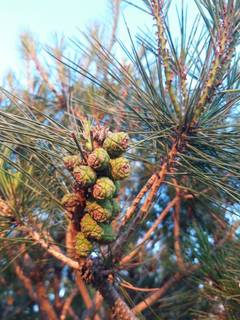
Reddish male pollen cones are clustered at the base of new shoots in May through June across a 2-3 week wind-pollinated release period. Small reddish-purple female seed cones at the branch tips mature over two growing seasons into ornamental erect reddish-brown to purplish cones 2-4 inches (5-10 cm) long that are clustered on the upper branches and persist on the tree across successive seasons.
Detailed Descriptions
Foliage Description
blue-green with conspicuous white stomatal lines on the inner adaxial surfaces of the needles that produce a silvery-blue effect when the foliage is viewed from below; needles are carried in fascicles of five (the 5-needle count places the species in subgenus Strobus and separates it from the 2-needle and 3-needle hard pines), 1.5-2.5 inches (4-6 cm) long, slightly twisted along the axis, and clustered in dense tufts at the branch tips — the short twisted 5-needle fascicles combined with the tufted branch-tip arrangement produce the species' characteristic feathered foliage appearance that separates it from the longer-needled P. strobus and P. monticola; evergreen year-round with needles retained 3-5 years before sheddingGrowing Conditions
Sun Requirements
Requires 6-12 hours of direct sunlight daily
• Full Sun: 6+ hours of direct sunlight
• Partial Shade: 3-6 hours of direct sunlight
• Full Shade: Less than 3 hours of direct sunlight
Care & Maintenance
Care Guide
Site in full sun with 6-12 hours of direct sun per day in well-drained loamy or sandy soil with an acidic pH of 5.0-6.5. Water weekly during the first two growing seasons to establish the root system; established trees tolerate moderate drought. The wide-spreading crown reaches 20-35 feet (6-10.7 m) at maturity and requires the full allowance of lateral space — narrow planting positions along property lines, close to buildings, or under power lines are unsuitable because of the species' eventual canopy width. The species is susceptible to white pine blister rust (Cronartium ribicola) in the same manner as other 5-needle pines, and plantings within 1,000 feet (300 m) of Ribes species (currants and gooseberries, the alternate host) carry the disease-transmission risk. Most nursery specimens are grafted onto P. thunbergii (Japanese black pine) rootstock, and the graft union at the soil line is a long-term consideration — the graft may be vulnerable to cold injury in the coldest parts of the zone 4 range and to fungal attack at the union if covered by mulch or soil. Non-toxic. Deer-resistant. Hardy in USDA zones 4-8.Pruning
Candle pruning in late spring (May) is the traditional management method for controlling branch length and increasing foliage density — the new soft light-green shoots (candles) that emerge at the branch tips in May are pinched by one-third to one-half of their length before the needles expand, which reduces the following season's growth increment and causes the branch to produce a denser tuft of needles at the cut point. Candle pruning is standard practice in bonsai cultivation of the species and is used selectively in landscape plantings to maintain a more compact crown. The natural horizontal layered branching architecture requires no shaping — the species' characteristic silhouette develops without intervention. Dead or crossing branches are removed at any time. Pruning into old wood without live foliage is not productive because pines do not regenerate from leafless stems.Pruning Schedule
Prune: May
late spring