Coriandrum, Genus, sativum, Species,
- Genus & species
Cilantro
Mediterranean and Middle Eastern origin; cultivated for approximately 7,000 years and recovered from archaeological sites across the ancient Near East and Mediterranean basin.
Overview
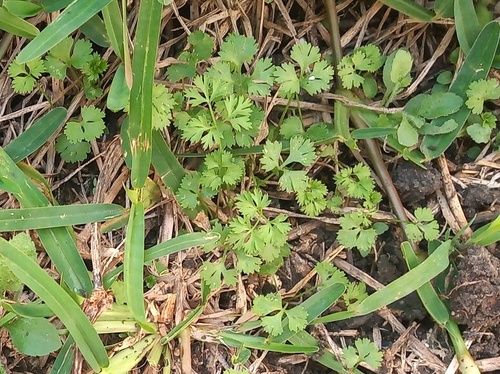
Coriandrum sativum is a fast-growing cool-season annual herb in the carrot family (Apiaceae) grown for both the fresh foliage (cilantro) and the dried ripe fruits (coriander). Plants reach 12-24 inches (30-60 cm) tall and 6-12 inches (15-30 cm) wide, with an upright branching habit and a short life cycle. The species shows pronounced leaf heterophylly from the rosette to the bolted stem: lower leaves are broad and shallowly lobed, resembling flat-leaf parsley, while upper leaves are feathery and pinnately dissected on the flowering stem. The rosette-to-bolt transition is triggered by long days and by sustained temperatures above 75°F (24°C), with the rosette stage giving the leaf harvest and the bolted stage giving the seed harvest. Flowers are white to pale pink, small, borne in flat-topped compound umbels 1-2 inches (2.5-5 cm) across at stem tips 40-55 days after sowing in warm conditions. Fruit is a round schizocarp 0.1-0.2 inch (2-5 mm) in diameter that splits into two mericarps at maturity; the fruit is tan when fully ripe and carries a warm spicy aroma from volatile terpene compounds that differ from the aldehyde-dominated aroma of the fresh leaves (which explains why some people perceive the leaf as soapy while enjoying the dry seed). Succession sowings every 2-3 weeks through spring and fall extend the leaf harvest, and the species produces the heaviest leaf harvest in Pacific Northwest spring and fall, bolting reliably in summer heat but resowing cleanly from August plantings for a fall leaf harvest.
Native Range
Coriandrum sativum is of Mediterranean and Middle Eastern origin and has been cultivated for approximately 7,000 years, with seeds recovered from archaeological sites across the ancient Near East, the Mediterranean basin, and Bronze Age Europe. The species is not native to the Pacific Northwest and is grown as a cool-season annual across all Pacific Northwest hardiness zones.Suggested Uses
Grown in herb gardens, raised beds, and containers of 1 gallon (4 liters) or larger with at least 6 inches (15 cm) of depth. Spring and fall succession sowings every 2-3 weeks maintain a continuous leaf harvest through the cool-season window, with summer plantings reserved for the coriander seed crop because sustained heat triggers rapid bolting. The species is a primary teaching example of leaf heterophylly in Apiaceae, with the rosette-to-bolt transition visible across a single plant over a few weeks. Fresh leaves are used in Latin American, South Asian, and Middle Eastern cooking, and the dried seed is a widely used spice with a different volatile compound profile than the fresh leaf.How to Identify
Appearance
Size & Dimensions
Height1' - 2'
Width/Spread6" - 1'
Bloom Information
White to pale pink flowers in flat-topped compound umbels 1-2 inches (2.5-5 cm) across open 40-55 days after sowing in warm conditions, or earlier when temperatures climb above 75°F (24°C) and trigger the rosette-to-bolt transition. Round tan schizocarp seeds ripen 2-3 weeks after flowering. Umbels are cut when seeds begin to turn tan and dried indoors to finish the seed crop without shatter loss in the garden.
Detailed Descriptions
Flower Description
White to pale pink; small flowers carried in flat-topped compound umbels 1-2 inches (2.5-5 cm) across at stem tips after boltingFoliage Description
Bright green with variable leaf architecture along the stem: lower (rosette) leaves are broad and shallowly lobed resembling flat-leaf parsley, while upper (stem) leaves are feathery and pinnately dissected; the species shows strong leaf heterophylly from rosette to boltGrowing Conditions
Sun Requirements
Requires 4-12 hours of direct sunlight daily
• Full Sun: 6+ hours of direct sunlight
• Partial Shade: 3-6 hours of direct sunlight
• Full Shade: Less than 3 hours of direct sunlight
Care & Maintenance
Care Guide
Direct sow outdoors in well-drained soil after the last hard frost, typically March through May west of the Cascades and April through May east of the Cascades. Seed is sown 0.25 inch (6 mm) deep at 2 inches (5 cm) apart, then thinned to 6 inches (15 cm) after germination. Succession sowings every 2-3 weeks through spring extend the leaf harvest, because each planting bolts within 50-55 days of sowing and loses leaf quality once flowering begins. Resow in August for a fall leaf harvest as soil temperatures cool below the bolt-triggering range. Soil is kept evenly moist during the leaf harvest period because drought stress accelerates bolting. Outer rosette leaves are harvested regularly to slow bolting. For a coriander (seed) harvest, plants are allowed to bolt, flower, and set seed, with the whole umbel cut and dried indoors when the seeds begin to turn tan.Pruning
No pruning is applied. Outer rosette leaves are harvested regularly for the cilantro crop. Once bolting begins, the plant is either left to complete the coriander seed crop or removed and replaced with a fresh sowing for continued leaf harvest.Container Growing
Suitable for container growing
Minimum container size: 1 gallons
Toxicity
Non-toxicPlanting Guide
Planting Methods & Timing
Planting Method
direct sow
Direct Sow Timing
March through May west of the Cascades or April through May east of the Cascades; resow every 2-3 weeks across spring for continuous leaf harvest; resow in August for a fall leaf harvest as soil temperatures cool.
Days to Maturity
50–55 days
Plant Spacing
6 inches