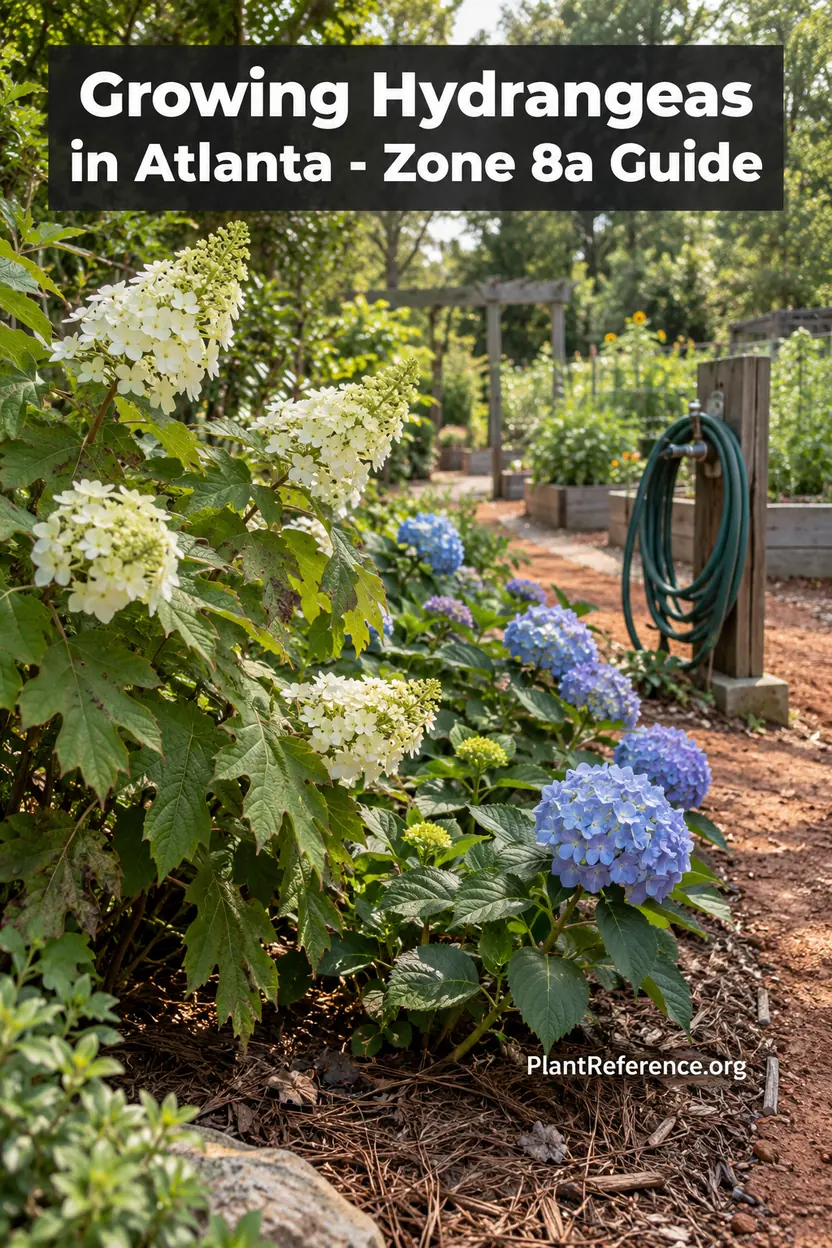
Growing Hydrangeas in Atlanta: Zone 8a Guide
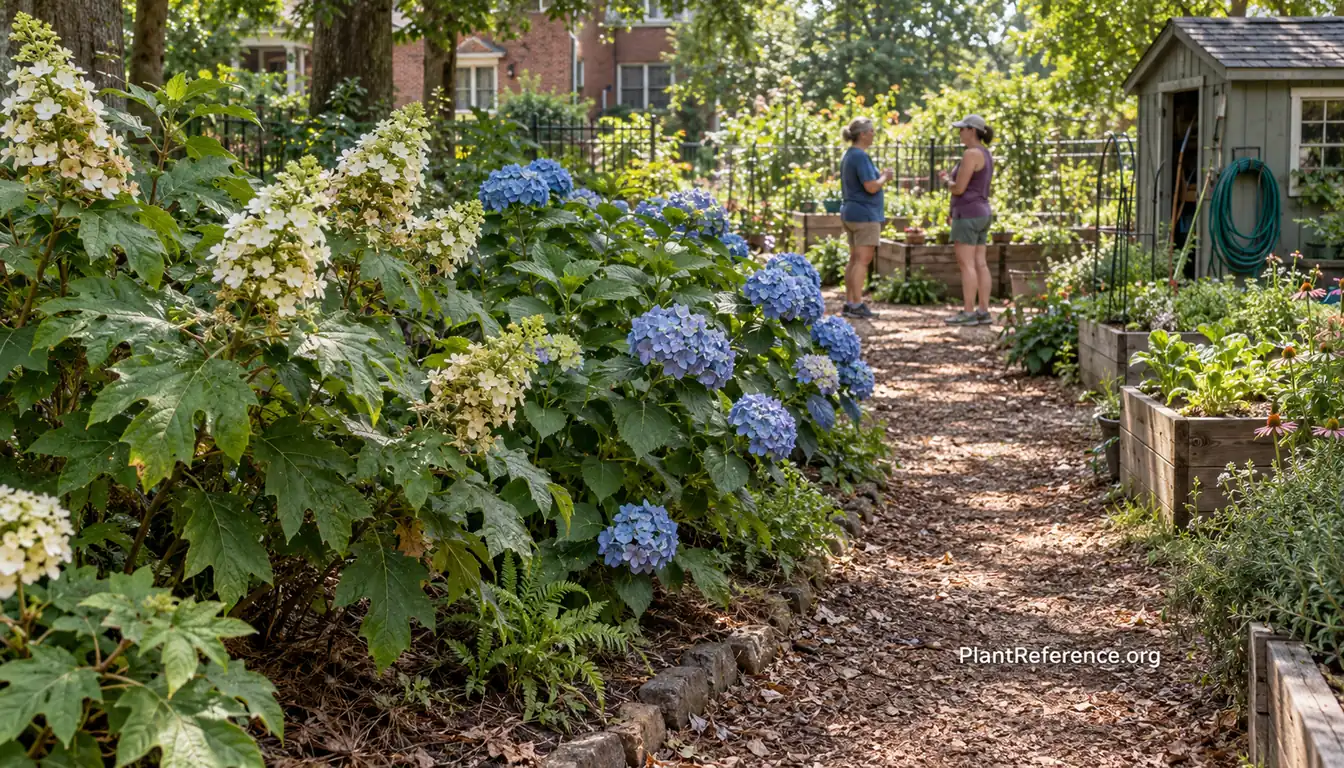
— Image © PlantReference.org 2026
Pets & Toxicity
Recorded toxicity for plants linked in this guide. An unknown status is not a safety assessment.
Toxic to pets: oak-leaf hydrangea, alice oakleaf hydrangea, BloomStruck Hydrangea and 2 moreDetailsHide
Hydrangea quercifolia — Toxicity Warning
Toxic to pets and humansView Hydrangea quercifolia plant profileHydrangea quercifolia 'Snow Queen' — Toxicity
Non-toxicView Hydrangea quercifolia 'Snow Queen' plant profileHydrangea quercifolia 'Alice' — Toxicity Warning
Toxic to pets and humansView Hydrangea quercifolia 'Alice' plant profileHydrangea macrophylla 'BloomStruck' — Toxicity Warning
Toxic to pets and humansView Hydrangea macrophylla 'BloomStruck' plant profileHydrangea paniculata 'Limelight' — Toxicity Warning
Toxic to petsView Hydrangea paniculata 'Limelight' plant profileHydrangea arborescens 'Incrediball' — Toxicity Warning
Toxic to petsView Hydrangea arborescens 'Incrediball' plant profileGrowing hydrangeas in Atlanta is not difficult when the planting works with heat, humidity, and red clay instead of ignoring them. Zone 8a supports bigleaf, panicle, smooth, mountain, climbing, and native oakleaf hydrangeas. The deciding factors are morning light, afternoon shade, a broad well-drained root zone, and habits that slow leaf-spot disease. In a community bed, those habits need to be simple enough for every gardener to follow.
Start by identifying the plant correctly with Hydrangea Types Explained: Pruning, Color & Care Guide. Species determines mature size, pruning time, sun tolerance, and whether flower color can change. One clear label at planting saves years of confusion for everyone who maintains the space later.
Best Hydrangea Varieties for Atlanta's Climate
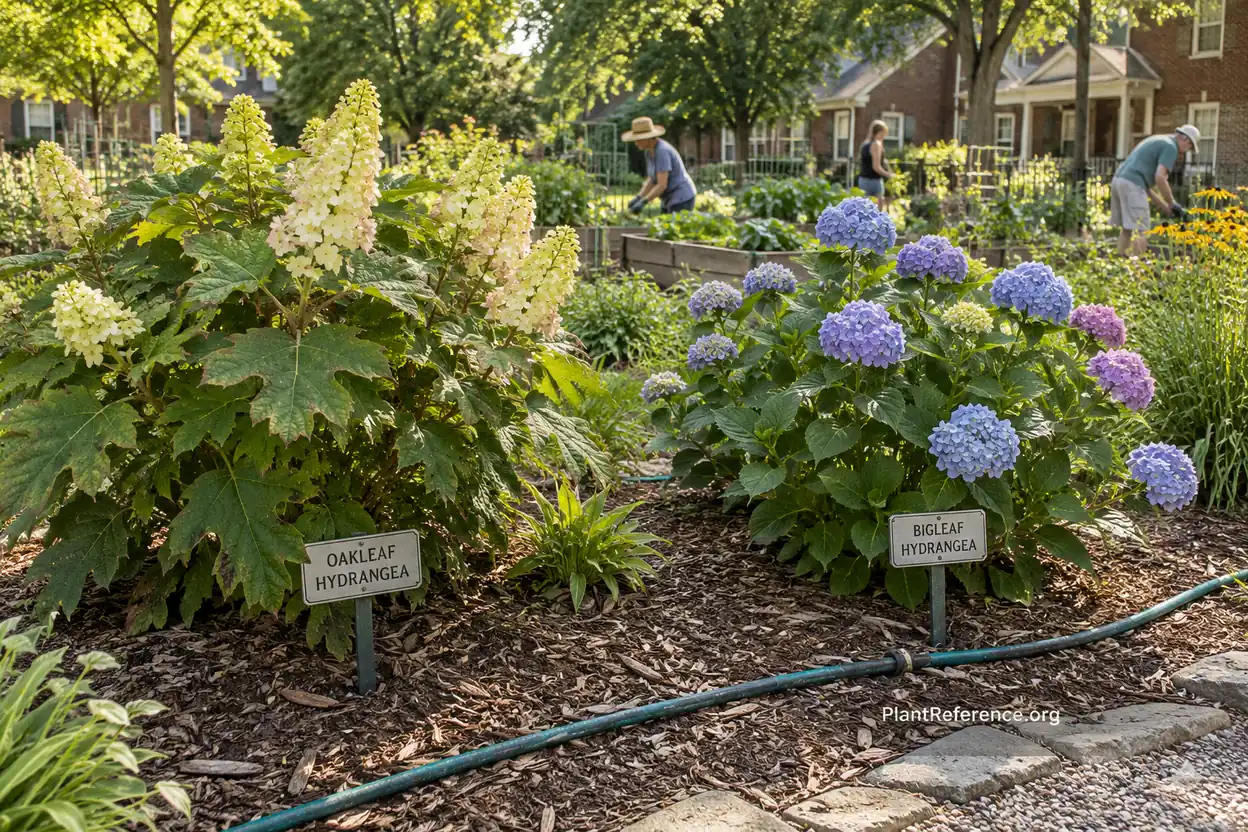
Oakleaf hydrangea 🌿Hydrangea quercifolia should lead the list because it is native to the Southeast and contributes through more than one season. Its lobed leaves turn orange, red, and mahogany; its bark peels into cinnamon layers; and established plants handle heat better than bigleaf types. It does not tolerate wet feet, so give it a raised or freely draining position in Atlanta clay.
Hydrangea quercifolia 'Ruby Slippers' stays around 3-4 feet (90-120 cm), making it useful near paths or in smaller shared plots. White flowers age to ruby rose, and the compact frame needs little shaping. 🌿Hydrangea quercifolia 'Snow Queen' reaches 5-6 feet (1.5-1.8 m) with upright flower heads and strong fall color. For a large naturalized edge, 🌿Hydrangea quercifolia 'Alice' can reach 8-12 feet (2.4-3.7 m), so place it where that size helps rather than blocks access.
Bigleaf hydrangeas produce the familiar mophead display. 🌿Hydrangea macrophylla 'BloomStruck' flowers on old and new wood and has stronger stems than many older cultivars. Hydrangea macrophylla 'Twist-n-Shout' brings lacecap flowers and a lighter visual texture. Both need morning sun, afternoon shade, consistent moisture, and room for air to move. Acidic Georgia soils can favor blue flowers when aluminum is available, but How to Change Hydrangea Color: Blue, Pink & Purple explains why testing comes before amendments.
Panicle hydrangeas tolerate brighter sites and bloom on new wood. 🌿Hydrangea paniculata 'Limelight' grows 6-8 feet (1.8-2.4 m) and can create a background mass or informal screen. Hydrangea paniculata 'Little Lime' fits a 3-5 foot (90-150 cm) space and works in large containers. Atlanta afternoon sun can still scorch either cultivar during drought, so “sun tolerant” does not mean “plant beside west-facing pavement.” The comparisons in Panicle Hydrangea Guide: Limelight, Little Lime & More help match scale to the site.
Smooth hydrangea Hydrangea arborescens is another native eastern species. 🌿Hydrangea arborescens 'Incrediball' produces large white heads on stronger stems and blooms on current-season growth. It tolerates shade, though deep shade reduces flowers and holds humidity around leaves. Mountain hydrangea Hydrangea serrata 'Tuff Stuff' offers compact lacecap flowers for the front of a part-shade border.
Variety | Mature Size | Best For | Notes for Atlanta |
|---|---|---|---|
Hydrangea quercifolia 'Ruby Slippers' | 3-4 ft (90-120 cm) | Compact native planting | Heat tolerant after establishment; needs drainage |
5-6 ft (1.5-1.8 m) | Four-season structure | Upright flowers and strong fall color | |
3-4 ft (90-120 cm) | Mophead display | Afternoon shade and leaf-spot monitoring required | |
Hydrangea paniculata 'Little Lime' | 3-5 ft (90-150 cm) | Brighter compact beds | New-wood bloom; protect from reflected heat |
4-5 ft (1.2-1.5 m) | Woodland edge | Strong stems and reliable new-wood flowering | |
Hydrangea serrata 'Tuff Stuff' | 2-3 ft (60-90 cm) | Front of shade border | Fine texture and compact lacecap form |
In a shared garden, repeat a few reliable plants instead of collecting one of everything. Repetition simplifies pruning, watering, and disease monitoring. It also lets volunteers recognize when one plant looks different from its neighbors. Use Plan a Perennial Garden That Blooms Spring to Fall to add lower plants without crowding the hydrangea canopy.
Specific Planting Dates for Atlanta
Atlanta averages its last frost around March 25 and first frost around November 10, giving roughly 230 frost-free days. Hydrangeas are hardy shrubs, so frost is not the only clock. The goal is to establish roots during cool weather, when leaf demand is low and Georgia heat is still weeks away.
Plant from February 20 through March 25 if soil is workable rather than saturated. Dormant or barely swelling shrubs lose less water while roots begin expanding. A late frost may burn tender new leaves, but established nursery stock usually recovers. Keep mulch in place and do not force new growth with early high-nitrogen fertilizer.
The preferred autumn window is October 1 through October 25. Soil stays warm enough for root growth while air temperatures fall. Finish at least two weeks before the November 10 average first frost. Autumn planting also lets natural rainfall reduce hand-watering, though every new shrub still needs moisture checks.
Post this simple schedule where volunteers can see it:
February 1-19: Test drainage, pH, and hose coverage.
February 20-March 25: Complete the main spring planting.
March 26-April 30: Plant only with dependable follow-up watering.
June 1-September 15: Avoid transplanting and inspect leaves weekly.
October 1-25: Complete the preferred autumn planting.
By November 10: Remove diseased leaves and renew mulch.
Do not transplant established shrubs during summer. Root damage reduces water uptake just when leaves lose the most moisture. A discounted July shrub can remain in a bright, shaded holding area until October, where the container is easier to monitor than a fresh hole in hot clay.
Complete Growing Guide for Atlanta
Start with Morning Light and Airflow
Give bigleaf and mountain hydrangeas three to five hours of morning sun, followed by afternoon shade. Panicle and oakleaf types tolerate more light after establishment, but protection from west-facing heat keeps foliage cleaner. Avoid tight corners where walls block air movement. Cercospora spores spread easily in warm, wet conditions, and dense foliage stays wet longer after rain.
Space shrubs at mature width, not nursery width. A 5-foot (1.5 m) shrub needs about that much room even if the one-gallon plant looks small today. In community spaces, keep access paths wide enough for watering and leaf cleanup without brushing against every plant.
Build a Wide Root Zone in Red Clay
Dig a hole two to three times wider than the root ball and no deeper. Set the root flare level with or 1 inch (2.5 cm) above grade. Roughen smooth clay walls and backfill primarily with native soil. Filling one hole with soft compost creates a texture change that can trap water and keep roots circling.
Spread 1-2 inches (2.5-5 cm) of finished compost across the whole bed and incorporate it into the top 6-8 inches (15-20 cm). If a 12-inch (30 cm) test hole remains full after 24 hours, raise the planting area 8-12 inches (20-30 cm). Raised Bed Soil Settling and Compaction: Prevention and Solutions explains why broad preparation performs better than an isolated planting pocket.
Water Soil and Keep Leaves Dry
Provide about 1-2 inches (2.5-5 cm) of water weekly from rain and irrigation, adjusted for exposure and soil. Run a soaker hose or dripline across the root zone beneath mulch. Early-morning root watering reduces evaporation and keeps foliage dry. Overhead sprinklers repeatedly splash Cercospora spores from soil and fallen leaves onto lower foliage.
Check moisture 2-3 inches (5-8 cm) deep before running another cycle. Red clay can remain wet below a dry crust. Afternoon wilt that resolves by morning is often heat response, while persistent dawn wilt needs investigation. Saturated roots cannot absorb water efficiently, so both drought and overwatering can produce drooping leaves.
Apply 2-3 inches (5-8 cm) of aged hardwood mulch, keeping it 3 inches (8 cm) from stems. Mulch slows evaporation, reduces soil splash, and gives volunteers a clear weed-free ring to inspect. It does not correct a low wet site.
Fertilize and Prune by Species
Test soil before adding fertilizer. A balanced slow-release feeding in early spring is usually enough. Excess nitrogen produces soft, crowded growth that is more susceptible to leaf spot and may reduce flowering. Stop feeding by July.
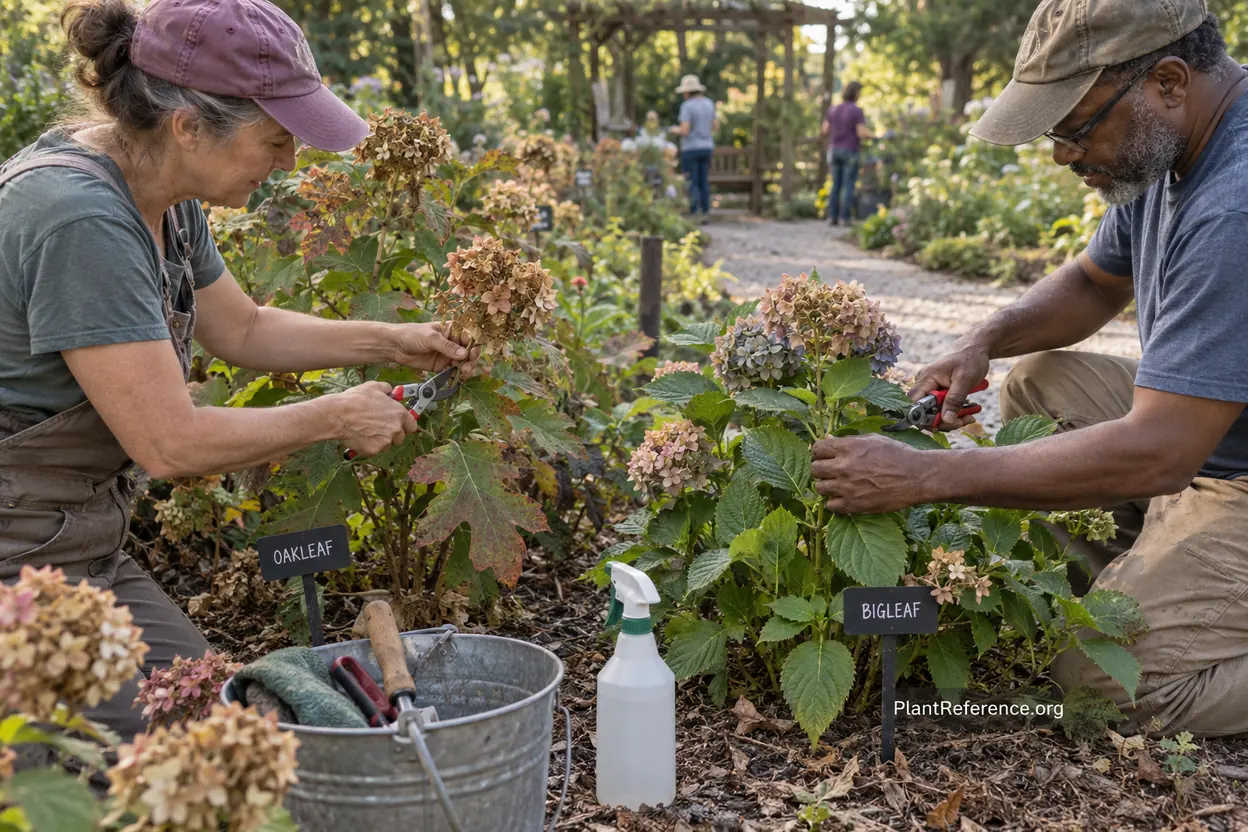
Panicle and smooth hydrangeas bloom on new wood and can be pruned in late winter. Bigleaf, mountain, oakleaf, and climbing hydrangeas carry most flower buds on old stems. Prune those immediately after bloom, or remove only dead and crossing wood. Keep a species label beside every shrub and share How to Prune Hydrangeas: Old Wood vs New Wood Guide with anyone leading cleanup.
Containers are useful where drainage or soil contamination is uncertain. Choose a pot 18-24 inches (45-60 cm) wide with several drainage holes and a bark-based mix. Compact forms such as Hydrangea paniculata 'Little Lime' work best. Containers need frequent summer checks; Hydrangeas in Pots: Container Care & Winter Protection covers watering and repotting.
Troubleshooting Atlanta-Specific Problems
Cercospora leaf spot is the main recurring issue. Purple-brown spots with tan centers begin on lower leaves and move upward as rain or sprinklers splash spores. The disease rarely kills a healthy shrub in one season, but repeated defoliation weakens plants and makes a shared bed look neglected.
Prevention is a group routine: water soil instead of leaves, maintain mature spacing, remove infected foliage from the ground, and sanitize pruners before moving between shrubs. Do not compost heavily diseased leaves. Fungicides protect clean new tissue but do not repair spotted leaves, so begin with cultural control and use any labeled product only when disease has been severe.
Sun scorch creates crisp brown margins on exposed leaves. Underwatering usually affects the whole canopy and feels dry several inches down. Overwatering produces limp growth in wet soil, sometimes with yellowing. Hydrangea Leaves Turning Brown: Causes and Solutions compares the patterns so a symptom is not automatically treated as fungus.
When a shrub produces leaves but no flowers, check the species label, pruning date, shade level, fertilizer history, and deer browse. Winter bud kill is less common in Atlanta than in cold climates, but a March freeze can damage swelling old-wood buds. Hydrangea Not Blooming? 7 Causes and the Old Wood Fix provides a practical diagnosis.
Japanese beetles chew leaves, aphids gather on soft growth, and spider mites stipple foliage during hot dry spells. Hand-pick small outbreaks, use water rinses where practical, and preserve beneficial insects. A shared garden benefits more from regular inspection than from routine broad pesticide spraying.
Cut Flowers, Seasonal Cleanup, and Storage
Cut flowers early in the morning when sepals are fully open and slightly papery. Take 12-18 inch (30-45 cm) stems with clean bypass pruners, remove leaves below the waterline, and place stems in a shared clean bucket immediately. Recut under water before arranging to reduce air blockage in the stem.
For drying, harvest as flower color begins to soften. Stand stems in 1-2 inches (2.5-5 cm) of water and let it evaporate in a cool room away from direct sun. Panicle and smooth forms hold their shape well. Store finished stems upright in a dry cupboard or use them in community displays.
After leaf fall, remove diseased leaves and old mulch that contains heavy infection, then replace with a clean layer. Leave healthy flower heads if the winter form matters. How to Prepare Perennial Gardens for Winter by Species helps coordinate cleanup without stripping every habitat resource from the garden.
Clean, dry, and lightly oil pruners before storage. Drain hoses before a hard freeze and post the spring setup date for the next volunteer team. Good records turn one season's observations into a healthier shared garden the following year.
Frequently Asked Questions
Reading about plants and recognising them are different skills. These three build the second.
- Daily PlantIdentify the day’s mystery plant from a close-up photograph.
- Keyed OutWork a dichotomous key, lead by lead, to name a hidden specimen.
- Name That PlantName a specimen from botanical clues dealt hardest first.
Free to play, no account needed
Tagged with
Grace is a community garden organizer in Atlanta who manages three neighborhood garden plots across the city. She came to gardening through food justice work—she saw how many Atlanta neighborhoods lacked access to fresh produce and decided to do something about it. Grace has a background in public health and brings that lens to everything she writes about food growing, soil safety in urban settings, and making gardens work for the communities they serve. She grows a wide range of vegetables, with a focus on crops that produce heavily in Atlanta's long growing season. Grace is practical and community-minded—she thinks about gardens as shared spaces, not just personal projects.