How to Grow Weigela: Varieties and Rebloomers
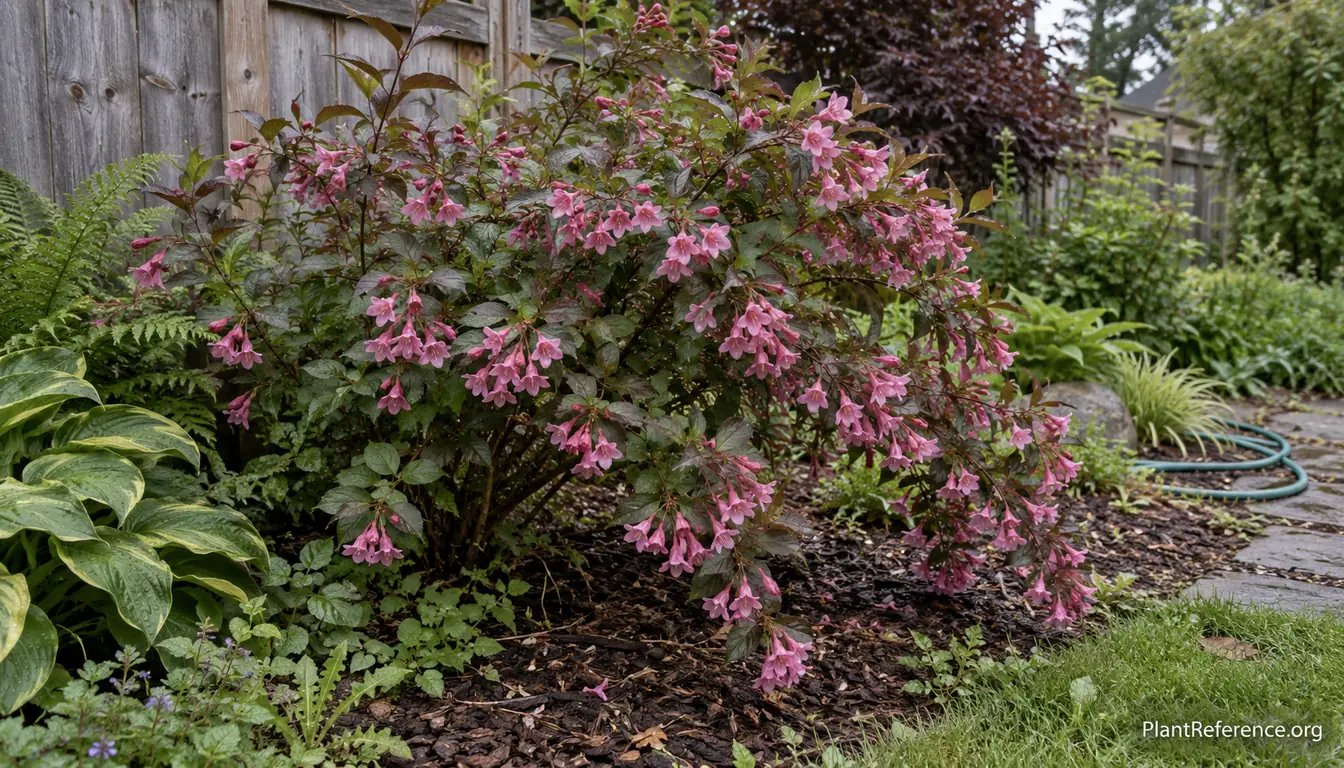
— Image © PlantReference.org 2026
Pets & Toxicity
Recorded toxicity for plants linked in this guide. An unknown status is not a safety assessment.
No linked plant is recorded as toxicDetailsHide
Learning how to grow weigela starts with one distinction that controls nearly every pruning decision. Traditional weigela flowers primarily on stems produced the previous year. Reblooming types can flower on both old and new wood, producing a strong spring display and additional flowers later. Treat both shrubs the same with a hard winter haircut, and the classic type loses its flowers while the rebloomer wastes much of its early display.
The rest of the care is forgiving. Give weigela enough sun to build flower buds and develop strong foliage color, plant it in soil that drains through a wet winter, water consistently while roots establish, and choose a mature size that fits the bed. The Pacific Northwest's mild maritime climate suits the shrub well when winter saturation and summer drought are addressed. Pacific Northwest Gardening Guide: Climate, Soil & Plant Selection explains that regional pattern in detail.
Choose Weigela by Foliage, Size, and Bloom Habit
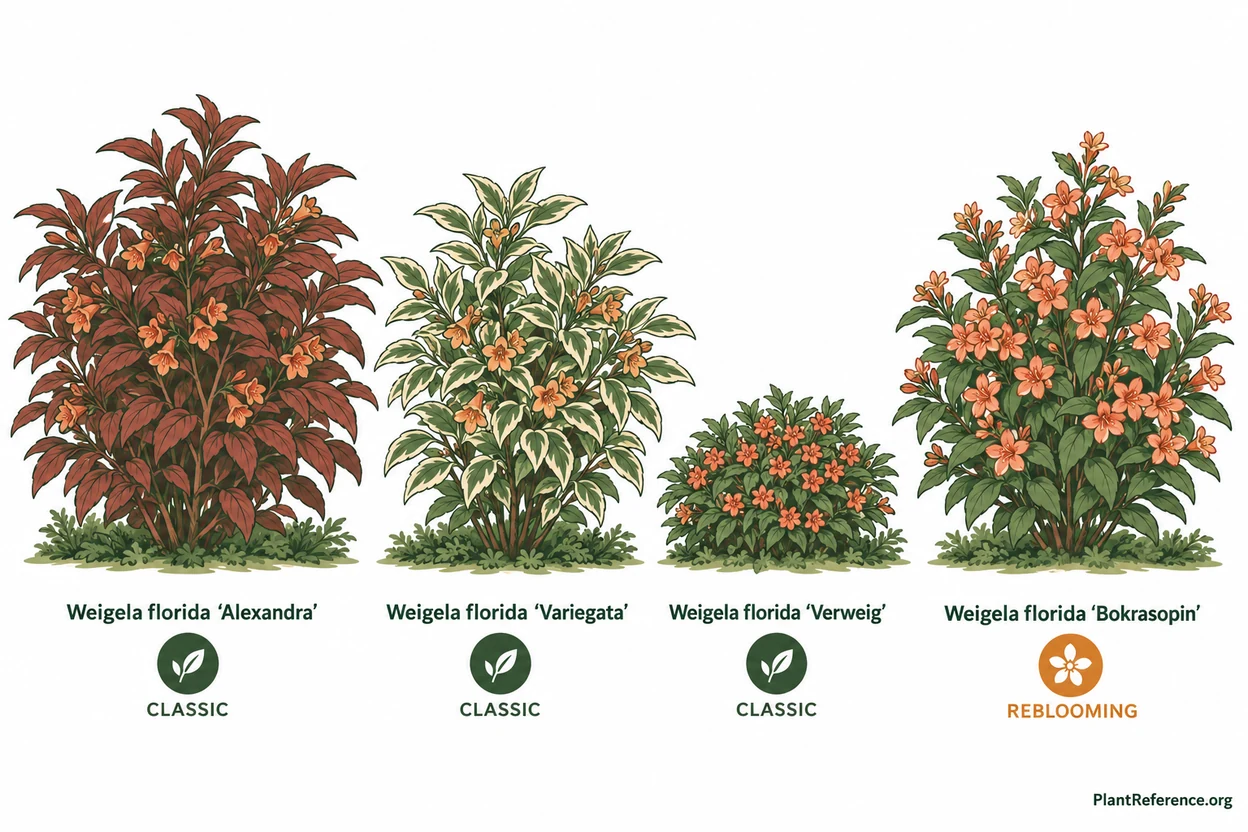
The species weigela 🌿Weigela florida (why-GEE-luh FLOR-ih-duh) is a deciduous shrub with arching stems and tubular flowers that attract hummingbirds and other pollinators. Its cultivars differ enough in size and leaf color that “weigela” is not a complete buying description. A compact variegated plant and a full-size burgundy-leaved shrub fill different landscape roles even before either one flowers.
🌿Weigela florida 'Alexandra', commonly sold under the trade name Wine & Roses, combines deep burgundy-purple foliage with rose-pink flowers. It works as a medium shrub or dark backdrop where bright green and silver companions can show against it. The leaf color is strongest in direct sun; too much shade can turn the foliage greener and reduce flowering.
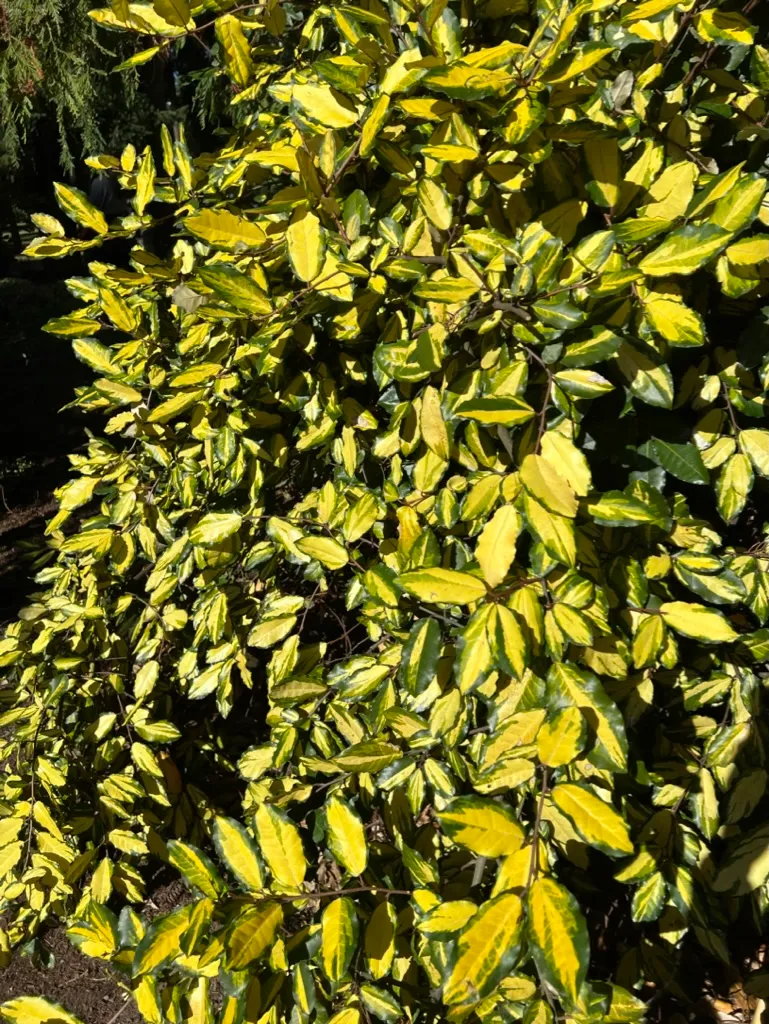
🌿Weigela florida 'Variegata' carries green leaves edged in cream and soft pink flowers. The pale margins brighten a mixed border but can scorch in unusually hot reflected afternoon sun. Light shade may protect foliage in a heat-trapping site, though dense shade reduces bloom. Give the mature plant enough width to preserve its loose branching.
Weigela florida 'Verweig', sold as My Monet, is a dwarf variegated selection useful in the foreground or a large container. Its small scale should be used intentionally rather than buried behind fast perennials. 🌿Weigela florida 'Bokrasopin', sold as Sonic Bloom Pink, represents the reblooming group: it flowers on old wood in spring and can produce later flowers on new growth.
Weigela | Approximate mature size | Main feature | Flowering habit | Best use |
|---|---|---|---|---|
4-5 feet (1.2-1.5 m) | Burgundy foliage, pink flowers | Classic spring emphasis on old wood | Mixed border, dark foliage contrast | |
4-6 feet (1.2-1.8 m) | Cream-edged green leaves | Classic spring emphasis on old wood | Bright middle layer, informal specimen | |
Weigela florida 'Verweig' | 12-18 inches (30-45 cm) | Dwarf variegated foliage | Compact spring flowering | Foreground, large container, low accent |
4-5 feet (1.2-1.5 m) | Bright pink flowers | Reblooming on old and new growth | Long-season color, pollinator border |
Buy from a nursery that labels the cultivar, not just the genus. Check the current tag for mature dimensions because climate and stock can shift final size. Look for flexible shoots, evenly distributed branches, healthy buds, and roots that have not circled into a hard woody coil. A cultivar with attractive leaves earns space after flowers fade, making foliage contrast a practical design feature rather than an optional extra.
Coordinate that foliage with the rest of the border. Burgundy leaves read as visual weight, while cream variegation creates brightness. Perennial Combinations That Look Good Together can help balance those effects, and Best Perennials for Pollinators: Bees & Butterflies offers companions that extend nectar and pollen beyond weigela's flowering periods.
Plant Weigela for Sun, Drainage, and Mature Space
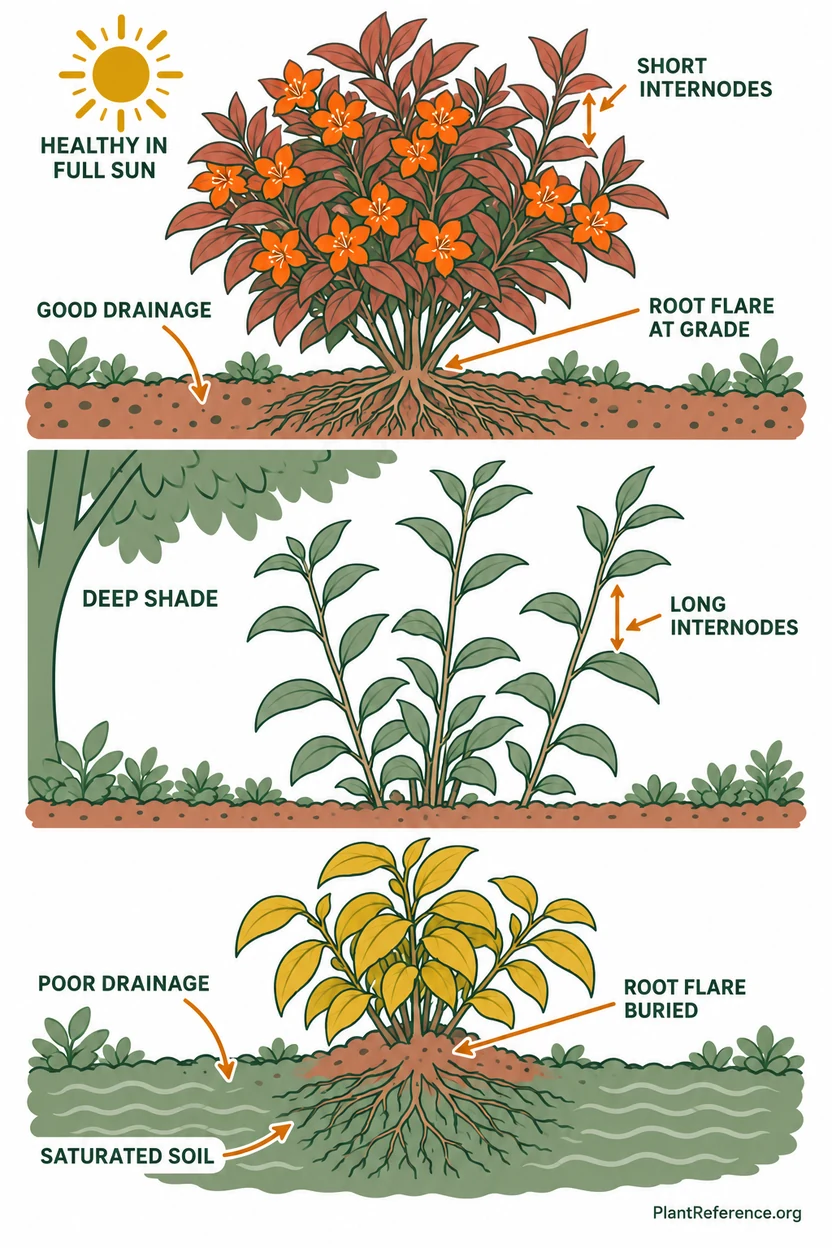
Full sun—at least six hours of direct light—supports the strongest bloom and most saturated burgundy foliage. Light afternoon shade can help variegated leaves on a hot west-facing wall, but avoid a dark site beneath dense evergreen branches. In too little light, shoots stretch, the center opens, and flowering declines. Observe the site in spring, not only summer, because nearby structures and conifers change the light pattern.
Weigela adapts to many ordinary garden soils as long as excess winter water can leave the root zone. Roots need oxygen for respiration; saturated pores hold water instead of air. Dig a test hole about 12 inches (30 cm) deep, fill it, let it drain, then refill it. Water remaining after 24 hours signals slow drainage. Fix PNW Garden Drainage: Glacial Till, Hardpan & Raised Beds explains why compacted glacial and construction soils can trap water.
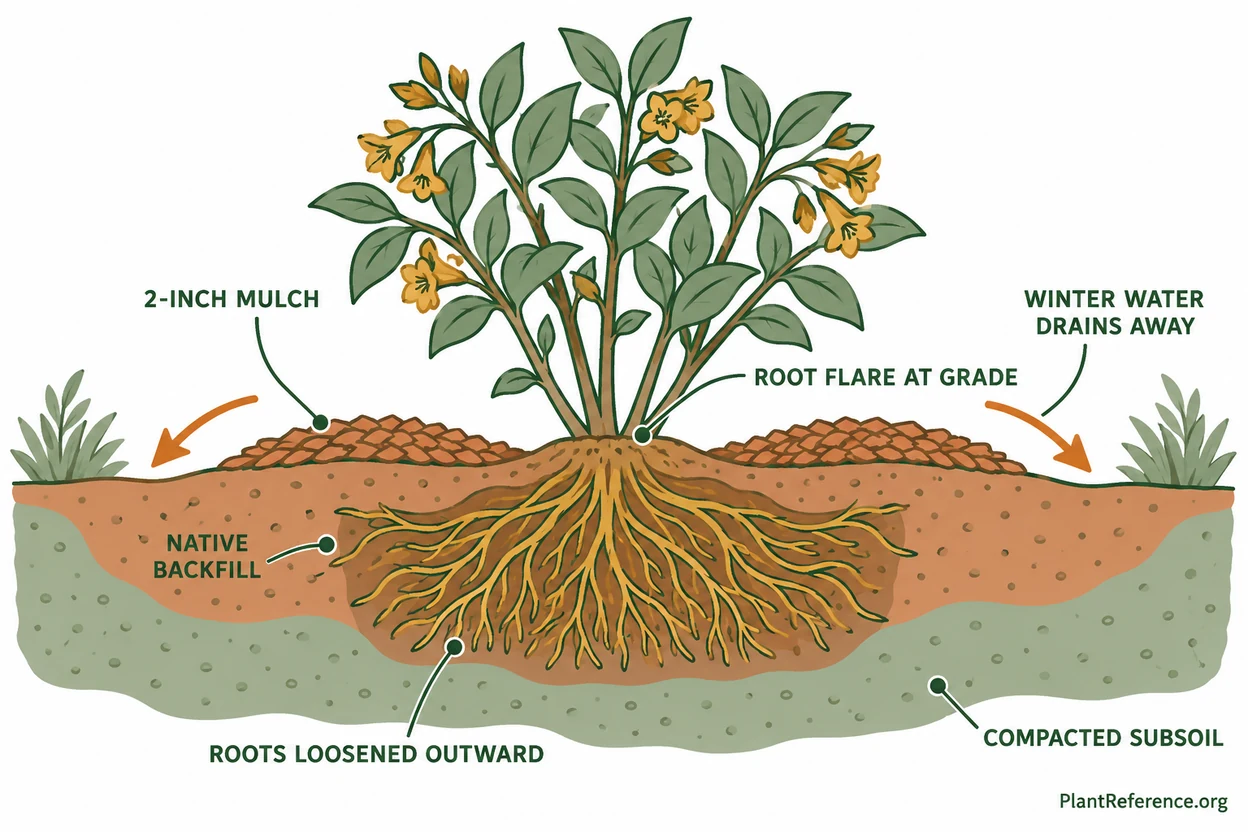
Plant in early fall after heat subsides or in early spring. Dig two to three times wider than the root ball and no deeper. Expose the root flare, loosen or cut circling roots, and place the flare at grade. On marginally heavy soil, set it 1-2 inches (2.5-5 cm) high and blend soil into a broad mound. Backfill mostly with native soil rather than creating a moisture-holding pocket of rich amendment.
Water the container before planting and inspect the root system.
Redirect circling roots outward so they enter surrounding soil.
Set the root flare at grade or slightly high on slow ground.
Backfill gently without stomping air spaces from the soil.
Water deeply, correct any lean, and add shallow mulch.
Space from the plant's mature width, not its nursery size. Keep a 5-foot-wide (1.5 m) cultivar far enough from paths, siding, and windows that half its spread fits without repeated cutting. Leave access behind foundation plants for cleaning and inspection. A dwarf plant such as Weigela florida 'Verweig' belongs at the front, where it will not disappear beneath larger shrubs.
Do not amend soil pH from a regional assumption. Pacific Northwest soil is often acidic, but imported fill, concrete, and previous liming create local exceptions. Read Why Pacific Northwest Soil Is Acidic + How to Fix It for context, then test the actual bed before making a major adjustment.
Water, Mulch, and Feed for Balanced Growth
Water a new weigela deeply when the upper 2-3 inches (5-8 cm) of soil dry during its first two summers. Apply water over both the original root ball and adjacent soil so roots expand beyond the container-shaped zone. A quick surface sprinkle may wet mulch while leaving the center of the root ball dry. Probe beneath the surface before deciding.
An established weigela tolerates short dry periods, but prolonged summer drought can reduce shoot development, later bloom, and the flower buds carried into the next spring. Deep occasional irrigation is more useful than frequent shallow watering. Keep foliage dry when practical and water early enough that any splashed leaves dry during the day.
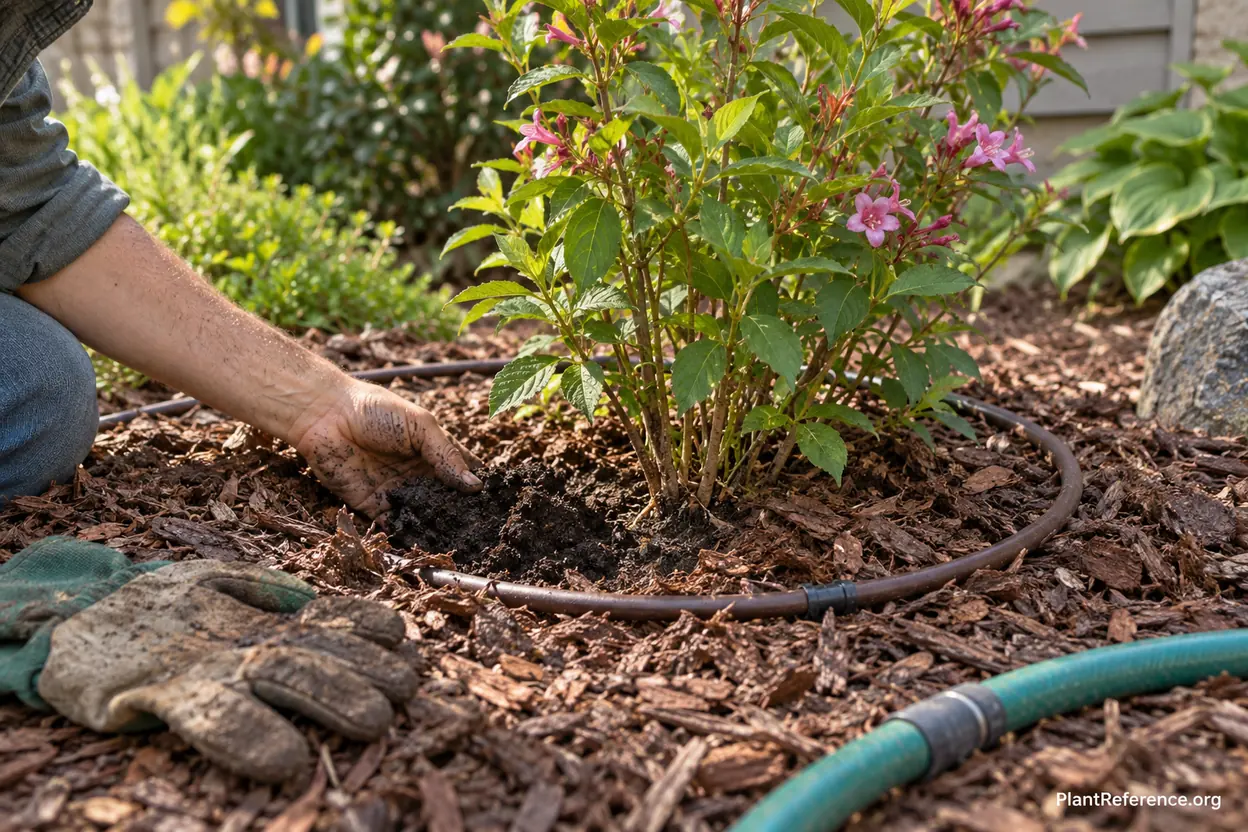
Spread about 2 inches (5 cm) of coarse bark or arborist chips toward the drip line, keeping material 4-6 inches (10-15 cm) from stems. Mulch moderates moisture, suppresses turf, and prevents soil splash. Deep piles against the crown hide damage and keep bark damp. Replenish only after the existing layer decomposes.
Fertilize only when growth or testing shows a need. Excess nitrogen pushes long, soft shoots and can reduce the balance between flowers and foliage. If leaves look pale, first check light, drainage, root depth, and moisture. Raised Bed Soil pH Problems: Testing, Adjusting, and Maintaining Balance provides a practical testing framework that transfers well to shrub beds.
Remove grass from the root zone. Turf competes strongly for water and invites string-trimmer damage. Fill the open bed with compatible perennials outside the shrub crown, leaving room for air movement and pruning access. Plan a Perennial Garden That Blooms Spring to Fall helps keep the border active after the spring flush, while How to Grow Coneflowers (Echinacea) That Feed Pollinators offers one sun-loving summer companion for larger beds.
Prune Classic and Reblooming Weigela Differently
Classic weigela flowers mostly from buds formed on the previous year's stems. This is old-wood flowering: the branch exists before winter, carries dormant buds through the cold season, and opens them in spring. Major pruning in winter removes that stored display. Prune immediately after the spring flush, giving replacement shoots the remaining growing season to mature.
Start with dead, broken, rubbing, and inward-growing branches. Then remove up to one-third of the oldest canes at ground level when the shrub becomes crowded. Old canes are thicker, darker, and less productive. Base thinning admits light and encourages replacement stems without turning every tip into a cluster of weak shoots.
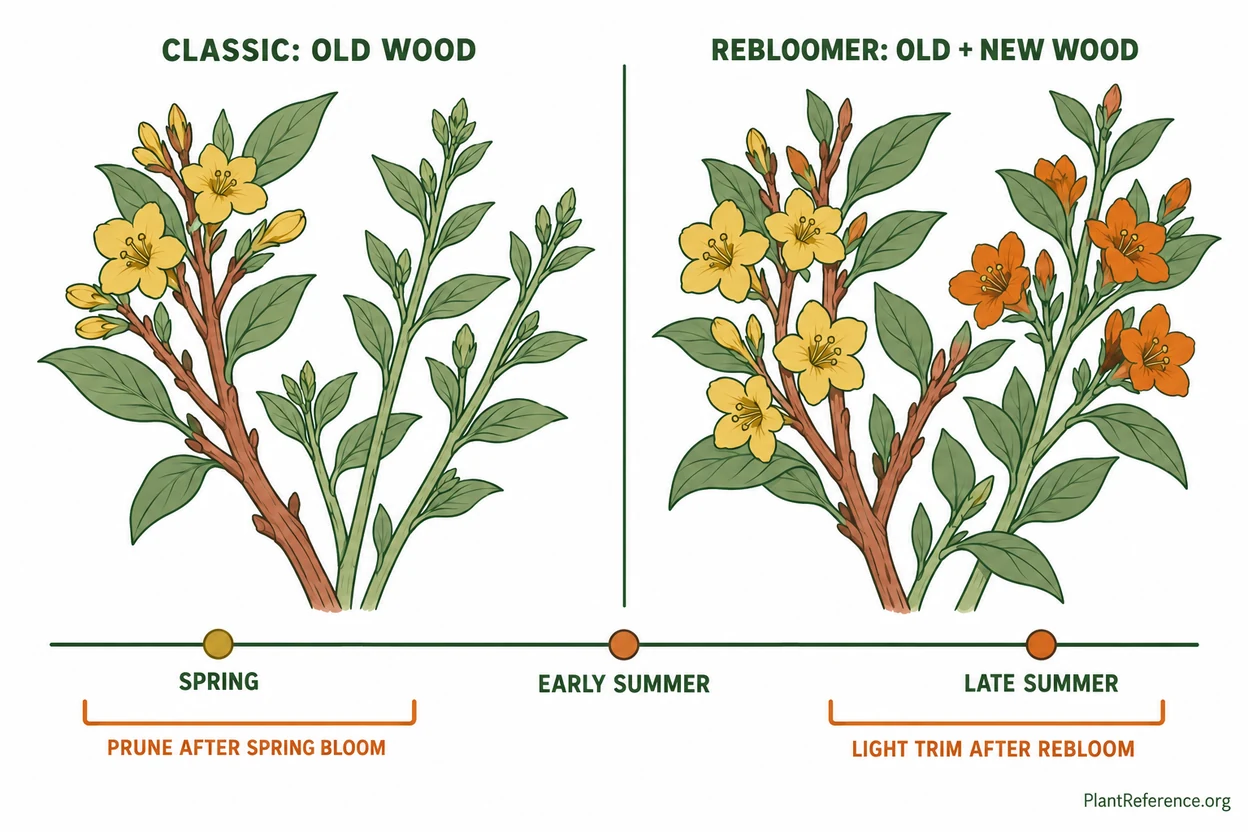
Rebloomers such as 🌿Weigela florida 'Bokrasopin' behave differently because new growth can also flower. Preserve the spring framework, deadhead if practical, and shape lightly after the first flush. Heavy cutting can delay or reduce the later bloom by removing active shoots and forcing the plant to rebuild structure. The capacity to rebloom is not permission to shear monthly.
Classic old-wood type: complete major thinning immediately after spring bloom.
Reblooming type: remove dead wood and shape lightly after the first flush.
Both types: remove selected old canes at the base when crowded.
Both types: shorten branches to a side shoot inside the canopy.
Neither type: shear repeatedly into a dense outer shell.
Use bypass pruners for small stems and loppers or a pruning saw for larger canes. Make clean cuts at the branch origin or just above a suitable side shoot. Do not leave long stubs. The decision framework in Prescriptive Pruning: The PPQ Model for Structural Tree Care helps define the objective before the blade touches the plant.
An overgrown classic shrub can be renewed over three years by removing one-third of the oldest canes after bloom each year. This preserves some flowers while steadily replacing old structure. A full cutback may trigger vigorous growth but sacrifices the next spring display. For seasonal timing principles across plant types, see How to Prepare Perennial Gardens for Winter by Species.
Diagnose Problems and Use Weigela in the Landscape
Few flowers usually point to shade, wrong-season pruning, excess nitrogen, or an immature plant. Trace the previous year's work before treating the shrub. If it was cut in winter, the missing flowers have a clear mechanical cause. If foliage has turned greener than expected, compare current sunlight with the cultivar's requirements.
Yellow leaves in persistently wet soil suggest root stress before hunger. Check whether the root flare is buried and whether water drains from the planting zone. A dry root ball surrounded by moist soil is also possible during establishment; irrigation can follow the easier surrounding soil and bypass the original potting mix. Use a trowel to inspect both zones.
Leaf spots and dieback become more troublesome in dense, damp canopies. Improve spacing, direct irrigation to the soil, remove dead material, and clean tools between suspect plants. Identify the cause before applying a pesticide. A symptom is evidence, not a diagnosis.
In design, use foliage color to give weigela value beyond flowers. Place 🌿Weigela florida 'Alexandra' behind chartreuse or silver perennials, but avoid stacking several dark shrubs into a heavy block. Use 🌿Weigela florida 'Variegata' to brighten a middle layer, and keep Weigela florida 'Verweig' at the edge where its pattern remains visible. Repeat one cultivar rather than collecting unrelated singles if the border needs coherence.
Weigela's tubular flowers support hummingbirds, but a resilient pollinator garden should not depend on one spring shrub. Add plants that flower before and after it, avoid spraying open blooms, and provide varied structure. Best Perennials for Pollinators: Bees & Butterflies offers additional succession choices.
Deer may browse weigela where pressure is high, especially new growth. No ornamental shrub is deer-proof. Protect young plants near active travel routes and combine plant selection with physical exclusion when losses are likely. Deer-Resistant Perennials: A Zone-by-Zone Planting Guide explains relative resistance without promising immunity.
The most reliable care plan follows the flowering wood. Put the right cultivar in the right space, keep roots oxygenated in winter and evenly moist during establishment, then prune according to whether the plant is classic or reblooming. That one distinction preserves more flowers than any fertilizer or complicated calendar.
Frequently Asked Questions
Reading about plants and recognising them are different skills. These three build the second.
- Daily PlantIdentify the day’s mystery plant from a close-up photograph.
- Keyed OutWork a dichotomous key, lead by lead, to name a hidden specimen.
- Name That PlantName a specimen from botanical clues dealt hardest first.
Free to play, no account needed
Tagged with
Sarah earned her doctorate in plant biology and spent time working in botanical garden education before transitioning to freelance writing and consulting. Now based in Portland, Oregon, she teaches plant identification workshops at local community centers and maintains a modest collection of over 60 houseplants in her small apartment. Sarah specializes in helping beginners understand plant science without the jargon—her approach focuses on practical observation over theory. She's killed her fair share of fiddle leaf figs and finally cracked the code on keeping them alive.