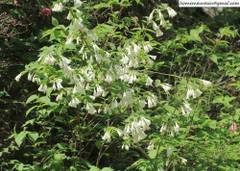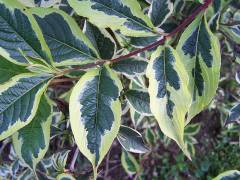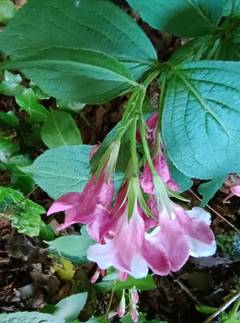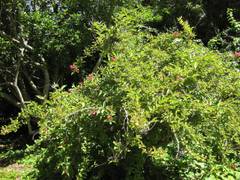
Image 1 of 14
1 / 14
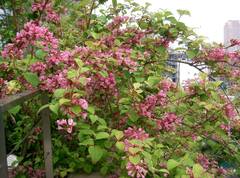
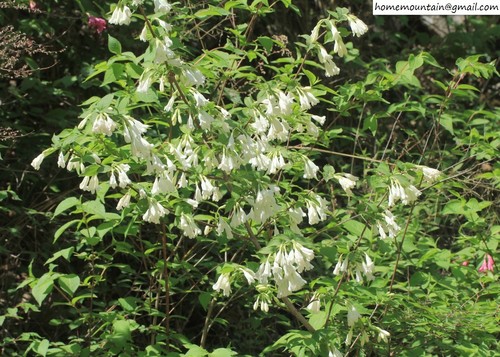
Species photo — your cultivar may vary
© Homemountain/Shan Gui, some rights reserved (CC-BY-NC) · iNaturalist
Weigela, Genus, florida, Species, 'Alexandra', Cultivar,
- Genus & species
- Cultivar
Wine & Roses Weigela
Northern China, Korea, and Russian Far East
Overview
Weigela florida 'Alexandra', sold under the trade name Wine & Roses, is a deciduous shrub reaching 4-5 feet (1.2-1.5 m) tall and 4-5 feet (1.2-1.5 m) wide at maturity, with an upright rounded habit. Leaves opposite, ovate, 2-4 inches (5-10 cm) long, finely serrated, emerging deep purple-burgundy in spring and holding this color through summer; foliage darkens to near-black in full sun and shifts toward bronze-green in part shade. Flowers tubular-funnelform, rose-pink, 1.25-1.5 inches (3-4 cm) long, opening in clusters along second-year wood from late May through mid-June. Sporadic light rebloom occurs in summer in zones 6 and warmer. Growth rate moderate, adding 12-18 inches (30-45 cm) per year. Cold hardy to USDA zone 4 (-30°F / -34°C); foliage color is most intense in zones 5-7 and tends toward muddy bronze in zones 8-9 hot summers. Powdery mildew develops in humid, poorly ventilated plantings. Branch dieback is common in extreme winters, especially on exposed sites with no snow cover.
Native Range
Weigela florida is native to northern China, Korea, and the Russian Far East, growing in mixed forests and along stream banks at low to mid elevations. The 'Alexandra' cultivar was developed in cultivation by Bot Kwekerijen of Belgium and introduced under license by Proven Winners ColorChoice in 2000 (PP10,772).Suggested Uses
Used in mixed shrub borders, foundation plantings, and as accent plantings at 4-5 foot (1.2-1.5 m) spacing, where the dark foliage contrasts with chartreuse, gold, or silver-leaved companions. Planted in butterfly and hummingbird gardens. Suitable for containers of at least 10 gallons (38 L) with adequate drainage; container plants reach approximately 70% of in-ground mature size.How to Identify
Appearance
Size & Dimensions
Height4' - 5'
Width/Spread4' - 5'
Bloom Information
Late May through mid-June in zones 5-7, beginning 1-2 weeks earlier in zones 8-9. Total bloom period spans approximately 3 weeks, with peak bloom in early June. Light sporadic rebloom occurs through summer in zones 6 and warmer, with occasional flowers continuing into early fall.
Detailed Descriptions
Foliage Description
deep purple-burgundy to near-blackGrowing Conditions
Sun Requirements
Requires 6-8 hours of direct sunlight daily
• Full Sun: 6+ hours of direct sunlight
• Partial Shade: 3-6 hours of direct sunlight
• Full Shade: Less than 3 hours of direct sunlight
Care & Maintenance
Care Guide
Water deeply weekly during the first two growing seasons in the absence of rain. Established plants tolerate moderate drought but bloom intensity decreases during prolonged hot, dry periods. Fertilize once in early spring with a balanced fertilizer at the rate listed on the label. Mulch 2-3 inches (5-7.5 cm) deep with shredded bark, held back from the trunk. Powdery mildew develops in humid, poorly ventilated plantings; cosmetic damage only. Plants live 15-25 years in suitable sites.Pruning
Prune lightly immediately after the spring flush ends in late June to remove spent flower clusters and shape the plant. Hard rejuvenation pruning to 12-18 inches (30-45 cm) above the soil line can be performed in late winter on overgrown plants every 5-7 years; the spring flush is reduced that season. W. florida blooms primarily on second-year wood, so heavy late-summer or fall pruning eliminates the following season's flowers.Pruning Schedule
Prune: June
late spring
Container Growing
Suitable for container growing
Minimum container size: 10 gallons