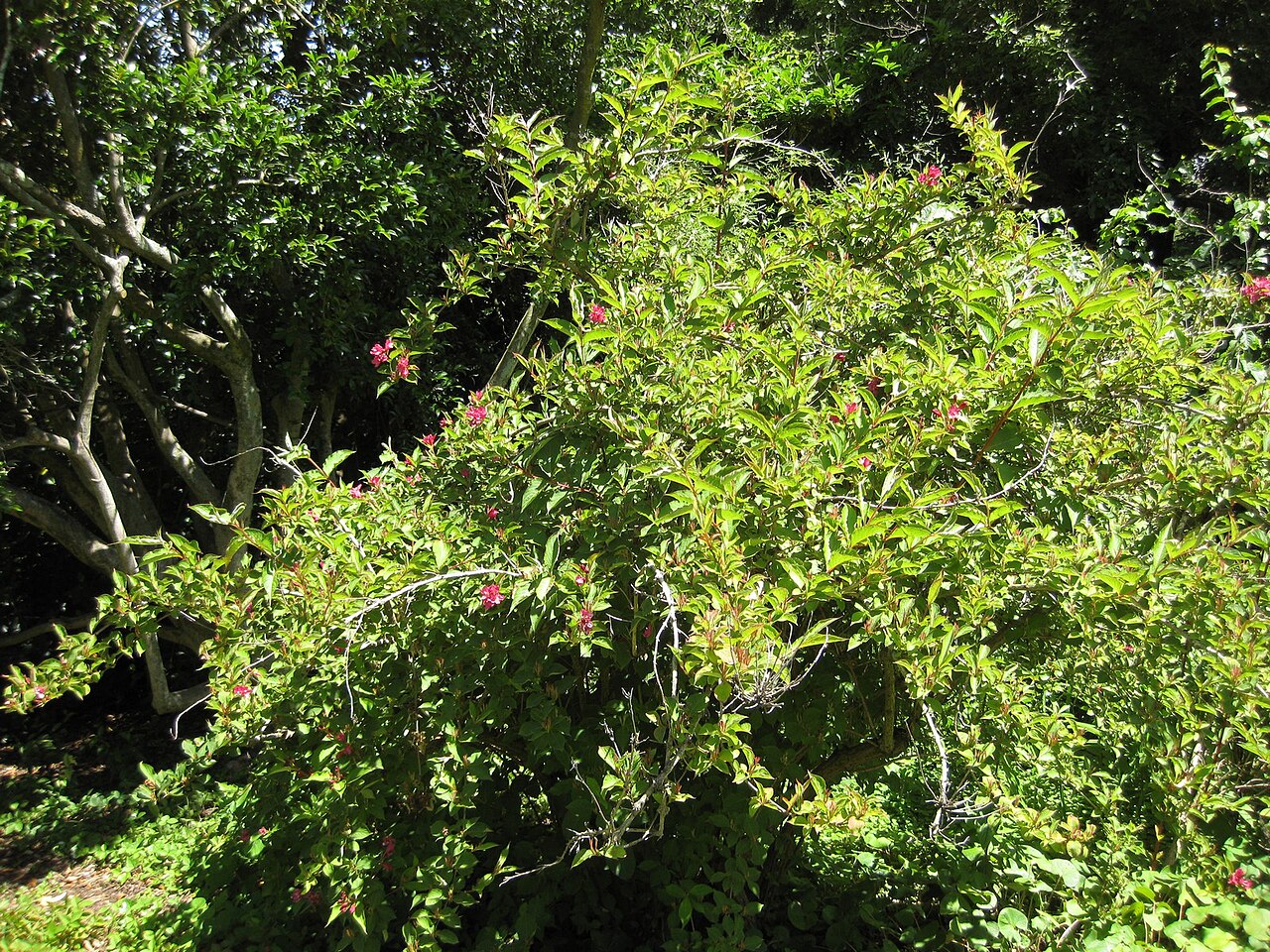
Weigela, Genus, 'Bristol Ruby', Cultivar,
- Genus
- Cultivar
Weigela Bristol Ruby
Garden origin; parent species from northeastern Asia
Overview
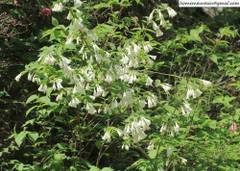
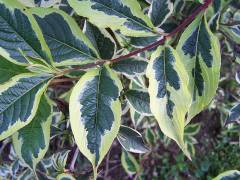
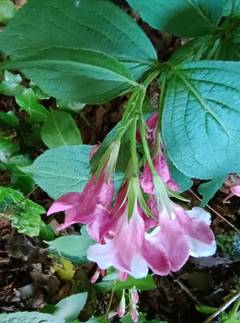
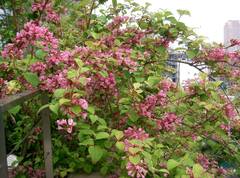
Weigela 'Bristol Ruby' is a deciduous shrub reaching 6-8 feet (1.8-2.4 m) tall and 5-6 feet (1.5-1.8 m) wide, building an upright vase-shaped framework of arching canes that lean outward with age. It was raised at Bristol Nurseries in Connecticut in 1941 from a cross involving W. florida and W. praecox. Leaves are opposite, elliptic to oval, 2-4 inches (5-10 cm) long, mid to dark green, with finely toothed margins and a drawn-out tip. Funnel-shaped flowers 1-1.5 inches (2.5-4 cm) long open ruby-red from darker crimson buds, carried in clusters of three to five along wood produced the previous season, from late May into June. The main flush lasts 3-4 weeks, and scattered secondary flowers appear on current-season shoots in August and September in most years. Flowers hold their red tone until they drop, whereas W. florida fades from rose-pink toward near-white. Stems are hollow-pithed and snap under load, and canes older than four years carry thin foliage and few flowers, so the shrub depends on regular renewal cutting. Autumn colour is limited, with leaves dropping green to dull yellow through late October. Plants sucker lightly at the base and regrow from hard cutting to 12 inches (30 cm).
Native Range
Weigela 'Bristol Ruby' is a garden hybrid raised at Bristol Nurseries, Connecticut, in 1941, and has no wild distribution. Its parent species W. florida and W. praecox are native to eastern Asia, in northern China, Korea, Japan, and the Russian Far East. Wild populations of those species grow on rocky slopes, stream banks, and woodland margins.Suggested Uses
Grown in mixed shrub borders and as an informal flowering hedge, spaced 4-6 feet (1.2-1.8 m) apart. The upright habit suits positions toward the back of a border where 6-8 feet (1.8-2.4 m) of height is available. Stems cut in bud hold 5-7 days in water.How to Identify
Appearance
Size & Dimensions
Height6' - 8'
Width/Spread5' - 6'
Bloom Information
The main flush runs from late May to late June across zones 5-8, lasting 3-4 weeks on wood produced the previous season. Clusters of three to five funnel-shaped flowers 1-1.5 inches (2.5-4 cm) long open along the length of the arching canes. A lighter second flush appears on current-season shoots from mid-August into September, carrying roughly one fifth of the spring flower count. Nectar sits at the base of the corolla tube, and the flowers are worked by bumblebees and, in North America, by ruby-throated hummingbirds.
Detailed Descriptions
Foliage Description
Mid to dark greenGrowing Conditions
Sun Requirements
Requires 6-10 hours of direct sunlight daily
• Full Sun: 6+ hours of direct sunlight
• Partial Shade: 3-6 hours of direct sunlight
• Full Shade: Less than 3 hours of direct sunlight
Care & Maintenance
Care Guide
Grows in full sun for full flower count; in part shade the canes extend further and flower numbers fall by roughly half. Any free-draining soil at pH 5.5-7.5 suits it, including clay loam, provided winter waterlogging is absent. Water demand runs near 1 inch (2.5 cm) per week for the first two seasons, after which established plants tolerate dry spells of 2-3 weeks. It is hardy through zones 4-8, though flower buds carried on last season wood are killed by late spring frosts below 25 F (-4 C). One spring application of balanced granular feed at bud break covers the season, and heavy nitrogen produces long canes with fewer flowers. Aphids feed on shoot tips in early summer, and in North America weigela scale and Japanese beetle also attack new growth.Pruning
Cutting is done immediately after the main flush ends in late June, since buds for the following year form on shoots produced across the rest of summer. One third of the oldest canes are removed at ground level each year, keeping the shrub on a three-year renewal cycle. Plants left uncut for many years can be reduced to 12 inches (30 cm) in early spring, which forfeits that season flowers and forces strong replacement canes from the base.Pruning Schedule
Prune: June–July
summer