Specialist Bees Missing? Fix Host Plants and Habitat
— Image © PlantReference.org 2026
Pets & Toxicity
Recorded toxicity for plants linked in this guide. An unknown status is not a safety assessment.
No linked plant is recorded as toxicDetailsHide
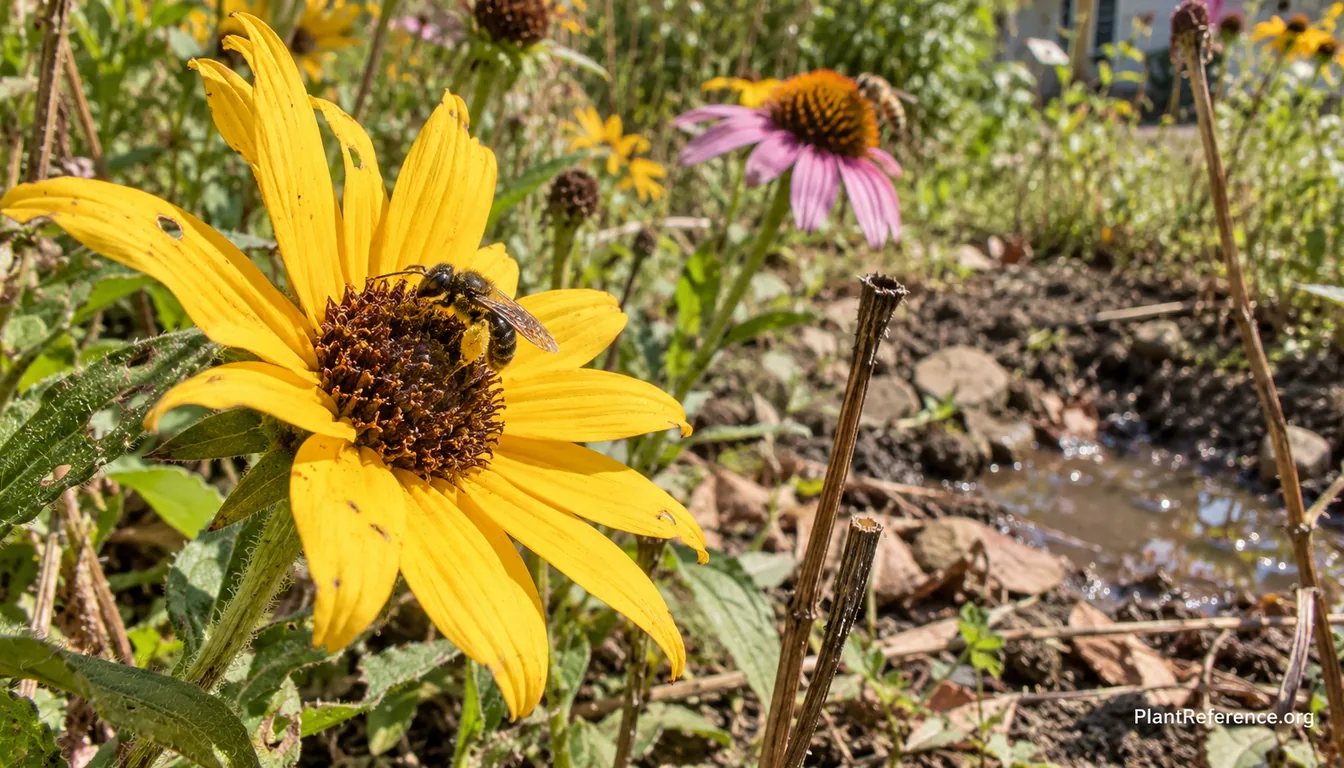
Honeybees without obvious native specialists may mean a garden supplies nectar but lacks the exact pollen host, nest, or seasonal overlap a specialist requires. The research report estimates that 35% of western U.S. native bee species are pollen specialists.
Diagnose the relationship, not flower count. Match local specialists to host plants, then check whether maintenance preserves nests. Best Perennials for Pollinators: Bees & Butterflies is a broad palette; specialists need a regional audit.
Understand Why Honeybees Are Not the Test
Honeybees are managed, nonnative North American generalists. They show forage is available, not that the regional native-bee community is supported. Specialists collect pollen from a narrow taxonomic range.
“Oligolectic” means pollen comes from a limited group, often one genus or family. “Monolectic” is tighter. Adults may sip nectar elsewhere, so a sighting does not prove that flower provisions offspring.
Another generic “pollinator mix” may add color while the missing host stays absent. Start with a regional species list from an extension office, native plant society, conservation district, or entomology resource. Pacific Northwest Native Plants: 10 Resilient Picks shows why lists require geographic filtering.
Audit Regional Specialist Bee Host Plants
List each bee, pollen host, local status, bloom period, and amount planted. The report's ten North American associations are audit examples, not county-level guarantees.
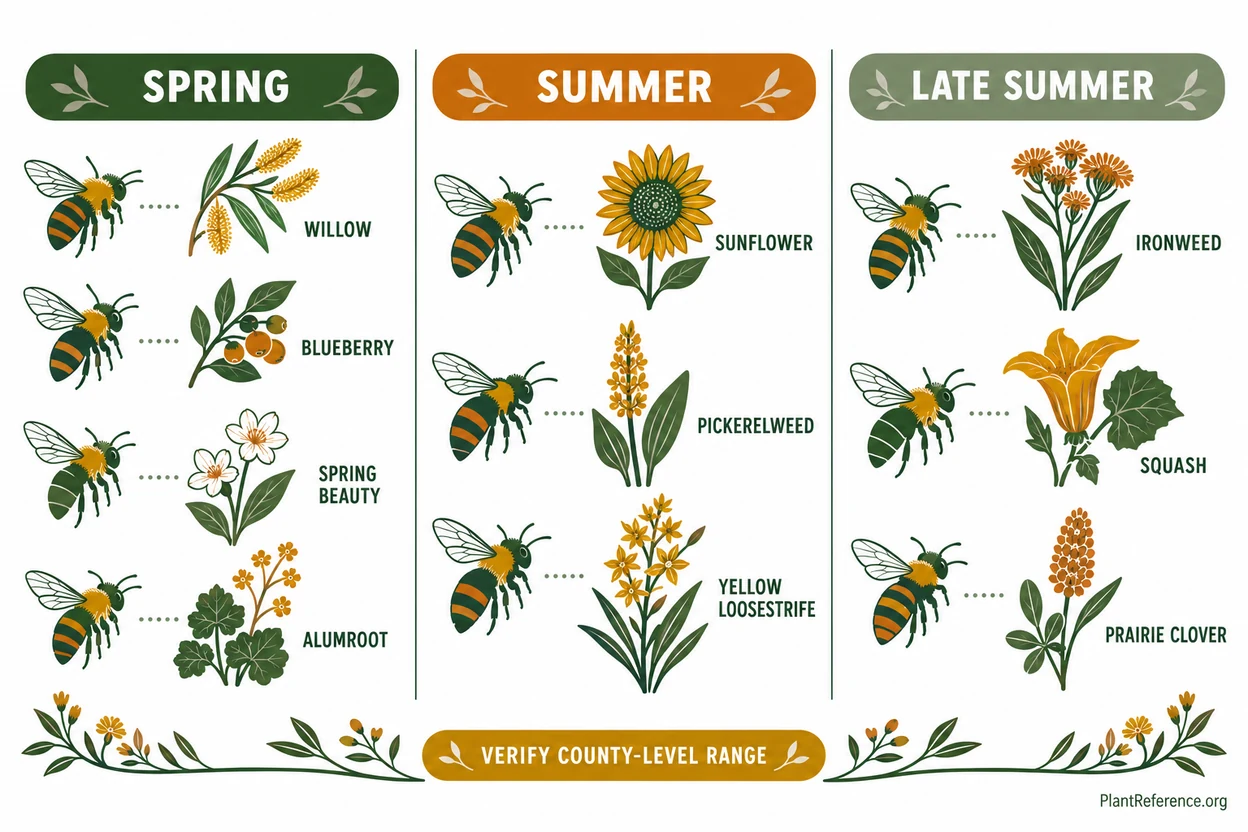
Willows 🌿Salix spp. (SAL-iks) support the colorful willow miner bee, while blueberries and huckleberries 🌿Vaccinium spp. (vak-SIN-ee-um) support the Carolina miner bee. Spring beauties 🌿Claytonia spp. (klay-TOH-nee-uh) support the spring beauty mining bee. Sunflowers Helianthus spp. (hee-lee-AN-thus) support the sunflower mining bee.
Specialist bee | Pollen host | Typical flight season in report | Garden audit question |
|---|---|---|---|
Andrena andrenoides | Willows 🌿Salix spp. | Spring | Is a locally native willow flowering nearby? |
Andrena carolina | Blueberries or huckleberries 🌿Vaccinium spp. | Spring | Does the host match soil and region? |
Andrena erigeniae | Spring beauties 🌿Claytonia spp. | Spring | Are spring ephemerals present before later perennials emerge? |
Andrena helianthi | Sunflowers Helianthus spp. | Late summer | Are native sunflowers planted in a visible clump? |
Colletes andrewsi | Alumroots 🌿Heuchera spp. | Late summer | Do locally appropriate alumroots flower during activity? |
Dufourea novaeangliae | Pickerelweeds 🌿Pontederia spp. | Summer to late summer | Is suitable wet habitat present without pesticide exposure? |
Macropis nuda | Yellow loosestrifes 🌿Lysimachia spp. | Summer to late summer | Is the correct native host present rather than an invasive lookalike? |
Melissodes denticulatus | Ironweeds 🌿Vernonia spp. | Late summer | Are enough stems blooming together to be found? |
Peponapis pruinosa | Squashes and gourds 🌿Cucurbita spp. | Summer | Are flowers open when the bee forages in morning? |
Xenoglossa albata | Prairie clovers 🌿Dalea spp. | Late summer | Is the regional host planted in suitable soil? |
Check local range and site fit before planting. Some yellow loosestrifes 🌿Lysimachia spp. are native hosts; others can be invasive. Best Perennials for Shade: 12 Species That Thrive and Perennial Combinations That Look Good Together help place verified hosts coherently.
Match Host Bloom to the Bee Flight Window
A host blooming outside the adult bee's flight window is functionally absent. Record first, peak, and last flower with weather and bee visits. Keep records for several years.
Plant hosts in clumps rather than as singletons. Concentrated flowers are easier to find and provide more pollen per trip. Repeat groups if space allows.
Audit the full season. Spring specialists need early hosts before the summer border wakes up; late-summer specialists need forage after early perennials fade. Plan a Perennial Garden That Blooms Spring to Fall, Perennials That Bloom All Summer: 12 Longest Bloomers, and How to Grow Coneflowers (Echinacea) That Feed Pollinators can reveal nectar gaps, but keep the specialist host itself at the center of the plan.
Restore Bare Ground and Standing Stems
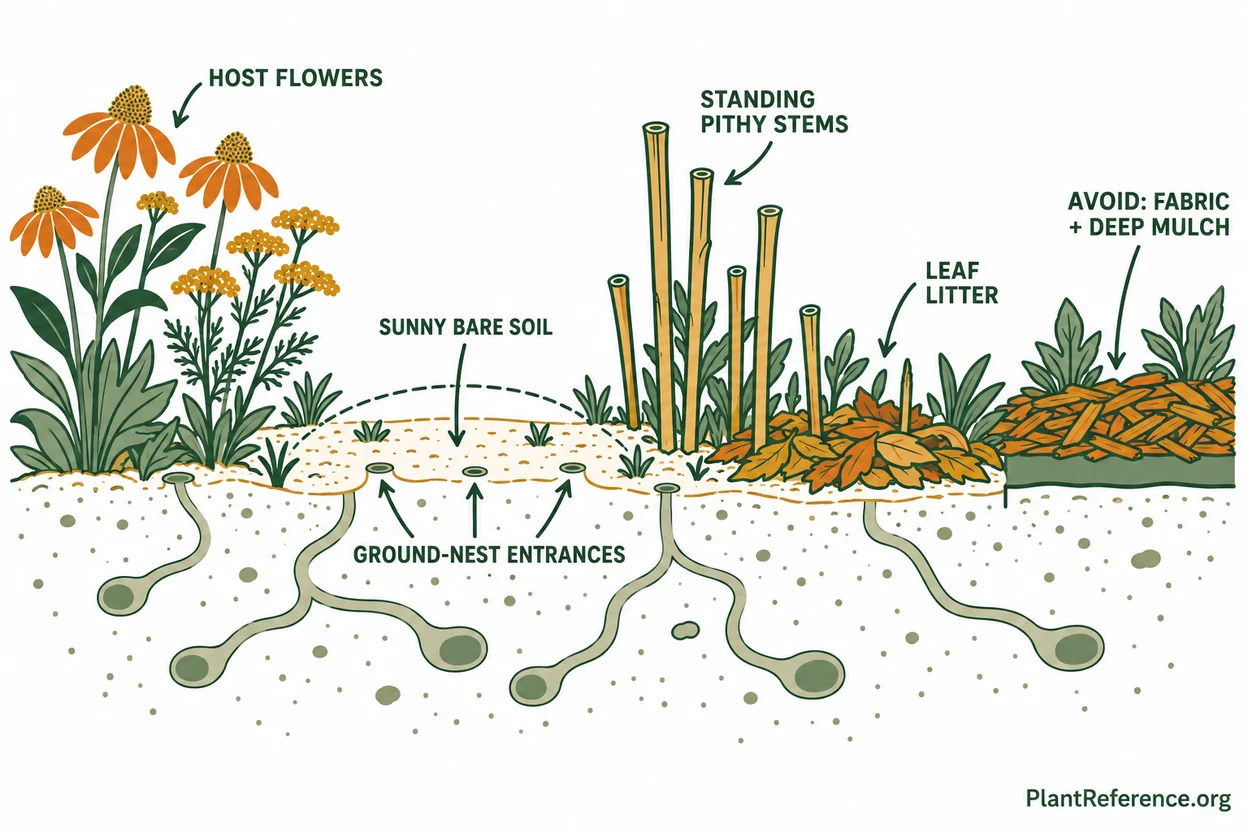
Flowers feed bees; nests let populations remain. Roughly 75% of native bees nest underground. Landscape fabric, deep mulch, dense turf, and stone may leave nowhere to excavate.
Preserve sunny, well-drained patches of undisturbed mineral soil. Do not cultivate entrances. Many ground nesters use firm, stable soil with sparse vegetation. Keep patches outside paths and irrigation spray.
Other solitary bees use standing stems. Leave them through winter and cut selected hollow stems to varied heights in spring after local guidance says it is safe. When to Cut Back Perennials in Fall (And What to Leave) and How to Prepare Perennial Gardens for Winter by Species explain why spotless cleanup removes habitat.
Remove Pesticide and Maintenance Barriers
Ask nurseries whether the exact plants were treated with systemic insecticides. A “pollinator friendly” sign does not answer that question. Buy from suppliers that can document propagation and treatment history, especially when plants will provide pollen collected for larvae.
Stop routine broad-spectrum spraying, mosquito fogging near the bed, and prophylactic treatments. Insecticides cannot separate a pest from a specialist bee. Herbicide drift can reduce host bloom, while excessive fertilizer may push leafy growth at the expense of flowers. Test soil before adding nutrients; my extension-office rule is simple: measure first, amend second.
Provide clean water without a drowning hazard. A shallow dish with stones or a small damp mineral patch works better than deep open water. Refresh it often so mosquitoes do not develop. Lawn Alternatives That Actually Work: 5 Options Beyond Grass can help reduce pesticide-dependent turf near the pollinator zone, and Best Low-Maintenance Perennials for Beginners: 10 Picks supports a manageable buffer.
Monitor the Garden Without Disturbing Nests
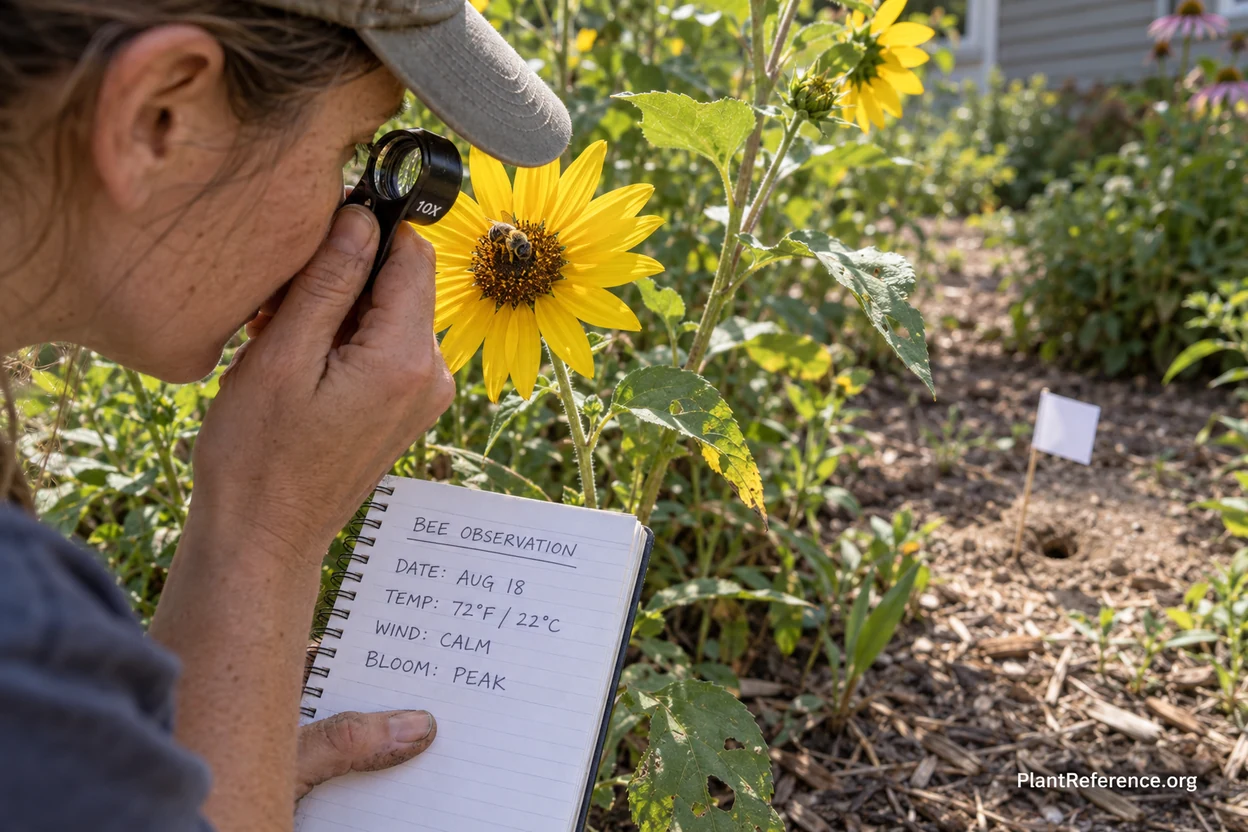
Observe host flowers in warm, calm weather when they are open. Photograph from the side and above, record pollen color and where it is carried, and note behavior. Do not grab a bee or excavate a nest for identification. Many small species require an expert and microscopic characters for a reliable name.
Watch the verified host for 10 to 15 minutes at the same time on several suitable days.
Photograph without blocking the nest entrance or flower.
Record host species, date, temperature, wind, and bloom stage.
Compare observations with a regional bee atlas or qualified identifier.
Repeat across at least two seasons before declaring the habitat unsuccessful.
The goal is not to manufacture an instant sighting. It is to rebuild the host-and-nest relationship, remove exposure risks, and gather enough observations to see whether the garden overlaps a real local population. When the right pollen plant, flight season, and nest conditions meet, specialist bees finally have a reason—and a place—to stay.
Frequently Asked Questions
Reading about plants and recognising them are different skills. These three build the second.
- Daily PlantIdentify the day’s mystery plant from a close-up photograph.
- Keyed OutWork a dichotomous key, lead by lead, to name a hidden specimen.
- Name That PlantName a specimen from botanical clues dealt hardest first.
Free to play, no account needed
Tagged with
Priya is a soil scientist at an agricultural extension office who gardens on a quarter-acre suburban lot in Indianapolis. Her professional work focuses on soil health and nutrient management, which gives her a perspective most gardening writers don't have—she thinks about what's happening underground before worrying about what's happening above it. Priya maintains a large pollinator garden, grows herbs and vegetables, and is slowly converting her conventional lawn to a mix of native grasses and low-growing groundcovers. She writes about soil health, composting, fertilizer use, and building the kind of foundation that makes plants thrive without constant intervention.