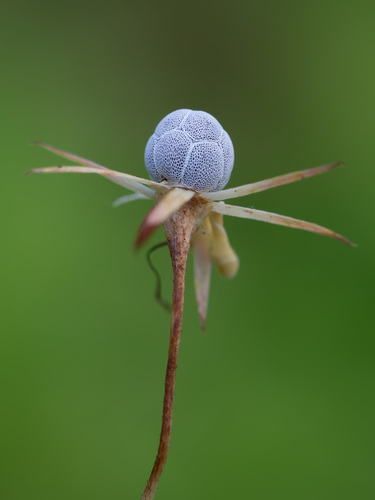
Lysimachia, Genus, spp., Multiple species,
- Genus
- Multiple species
loosestrifes
Temperate Northern Hemisphere, mainly East Asia and North America
Overview
Lysimachia is a genus of about 190 species of mostly perennial herbs in the primrose family (Primulaceae), called loosestrifes, distributed through temperate and subtropical regions with their greatest concentration in eastern Asia and North America. Despite the shared name, these plants are unrelated to purple loosestrife (Lythrum salicaria). Habit ranges from flat, creeping mats a few inches high, as in creeping jenny (L. nummularia), to upright clumps 24-36 inches (60-90 cm) tall, as in gooseneck loosestrife (L. clethroides). The leaves are simple and opposite or whorled, sometimes yellow-green or dark purple in selected forms. Flowers are five-petalled, 0.3-1 inch (8-25 mm) across, in yellow or white, carried singly in the leaf axils, in upright spikes, or in the curved one-sided racemes that give gooseneck loosestrife its name. Most species bloom through summer in moist to wet soil and full sun to part shade. Many spread strongly by rhizome or rooting stems and can overrun neighboring plants, so they are often confined or grown where vigorous groundcover is wanted. The genus includes forms grown for colored foliage, such as L. ciliata 'Firecracker' with dark bronze-purple leaves.
Native Range
The genus is distributed across the temperate and subtropical Northern Hemisphere, with the largest number of species in China and eastern Asia and a smaller group native to North America and Europe. A few species reach Africa, Australia, and South America.Suggested Uses
Creeping species are used as groundcover, between pavers, and as spillers in containers and hanging baskets, spaced 12-18 inches (30-45 cm) apart. Upright species are planted in moist borders, rain gardens, and pond edges and are cut for arrangements. Colored-leaf forms are grown for foliage contrast in mixed plantings.How to Identify
Appearance
Size & Dimensions
Height2" - 3'
Width/Spread1' - 3'
Bloom Information
Most loosestrifes flower through summer, from early summer into early autumn depending on species. Upright kinds open their spikes over three to five weeks, while creeping species produce scattered flowers over a longer span. Bloom is heaviest in full sun with steady soil moisture.
Detailed Descriptions
Foliage Description
green, yellow-green, or bronze-purple in selected formsGrowing Conditions
Sun Requirements
Requires 4-8 hours of direct sunlight daily
• Full Sun: 6+ hours of direct sunlight
• Partial Shade: 3-6 hours of direct sunlight
• Full Shade: Less than 3 hours of direct sunlight
Care & Maintenance
Care Guide
Lysimachia species grow in full sun to part shade in moist to wet soils with a pH of 5.5-7.5 and tolerate clay and pond margins. Steady moisture supports the fullest growth, and many species wilt in dry, sunny sites. They are hardy across USDA zones 3-9, dying back to the ground in winter and resprouting in spring. The main drawback is spread: rhizomatous and stoloniferous species form expanding colonies that can crowd out smaller plants. Containing the roots or planting in bounded beds keeps them in check. Few pests trouble the genus, though leaf spot and rust appear in crowded, humid plantings.Pruning
Spent flower spikes are cut after bloom to limit self-seeding and tidy the clump. Creeping species are sheared or pulled back through the season to hold them within bounds. Upright species are cut to the ground in late autumn or late winter once the foliage has died down.Pruning Schedule
Prune: August & November
summerfall
Container Growing
Suitable for container growing
Minimum container size: 2 gallons


