Lythrum, Genus, salicaria, Species,
- Genus & species
purple loosestrife
Europe, western Asia, and northern Africa; established across all lower 48 U.S. states and southern Canada with densest invasions in Great Lakes, northeastern United States, Pacific Northwest, and Intermountain West wetlands
Overview
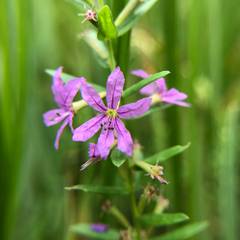
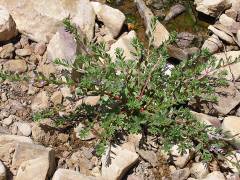
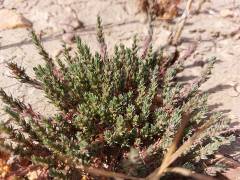
Lythrum salicaria is a robust rhizomatous perennial wetland invasive in the loosestrife family (Lythraceae) reaching 36–72 inches (90–180 cm) tall and 24–48 inches (60–120 cm) wide, forming dense multi-stemmed clumps from a woody root crown. Stems are erect, square to hexagonal in cross-section, stiff, hairy, and often branching in the upper half. Leaves are lance-shaped, 1.5–4 inches (4–10 cm) long, opposite or in whorls of 3, sessile, with rounded to slightly cordate bases clasping the stem. Flowers are magenta to purple-pink, 0.4–0.6 inch (10–15 mm) across, six-petaled, borne in dense terminal spikes 4–16 inches (10–40 cm) long. The species exhibits tristyly — three floral morphs with different style and stamen lengths (long, mid, short) that promote outcrossing by matching stamens of one morph to styles of another. A single mature plant produces 2–3 million seeds annually. Seeds are tiny, dispersed by water, wind, and on mud attached to waterfowl and machinery. The woody root crown generates 30–50 flowering stems per plant at maturity. The species converts diverse freshwater marshes to dense monocultures over 5–10 years, reducing native-plant diversity by 70–90% and habitat value for waterfowl, amphibians, and marsh birds across invaded wetlands. Listed as a Class B noxious weed in Washington State and prohibited from sale in most U.S. states. Not known to be toxic to pets or humans.
Native Range
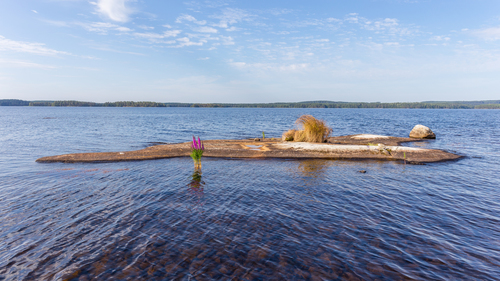
Lythrum salicaria is native to Europe, western Asia, and northern Africa, occurring in marshes, riverbanks, lake margins, and wet meadows from sea level to approximately 5,000 feet (1,500 m) elevation. The species was introduced to North America in the early 1800s through ship ballast, contaminated wool, and intentional ornamental planting. Wetland infestations are now established across all lower 48 U.S. states and southern Canada, with the densest invasions concentrated in glaciated marsh landscapes of the Great Lakes, northeastern United States, Pacific Northwest, and Intermountain West.Suggested Uses
Used as a principal case study in wetland invasive species management and classical biological control coursework across North American weed science and restoration ecology curricula. The Galerucella beetle biocontrol program is a standard teaching example of multi-agent biocontrol success integrated into weed management training at agency and university levels. The tristylous breeding system is taught in plant reproductive biology courses on heterostyly and outcrossing mechanisms in hermaphroditic plants. The species is studied in wetland ecology research on habitat conversion impacts to waterfowl nesting, amphibian breeding, and native-plant diversity, and in horticultural ethics literature on the failure of sterility claims for ornamental cultivars.How to Identify
Appearance
Size & Dimensions
Height3' - 6'
Width/Spread2' - 4'
Bloom Information
Dense terminal spikes 4–16 inches (10–40 cm) long of magenta to purple-pink six-petaled flowers 0.4–0.6 inch (10–15 mm) across appear from June through September in USDA zones 3–9. The dense spike blooms from the base upward over 4–8 weeks per stem. In the Pacific Northwest, peak bloom runs July through August. The tristylous breeding system requires cross-pollination between different floral morphs for maximum seed set — bumblebees and honey bees are the primary pollinators moving between morphs in a wetland stand. Seeds mature 3–4 weeks after pollination.
Detailed Descriptions
Flower Description
Magenta to purple-pink; six-petaled 0.4-0.6 inch across in dense terminal spikes 4-16 inches long; tristylous with three floral morphsFoliage Description
Medium green; lance-shaped 1.5-4 inches long; opposite or in whorls of 3; sessile with rounded to slightly cordate clasping basesGrowing Conditions
Sun Requirements
Requires 6-10 hours of direct sunlight daily
• Full Sun: 6+ hours of direct sunlight
• Partial Shade: 3-6 hours of direct sunlight
• Full Shade: Less than 3 hours of direct sunlight