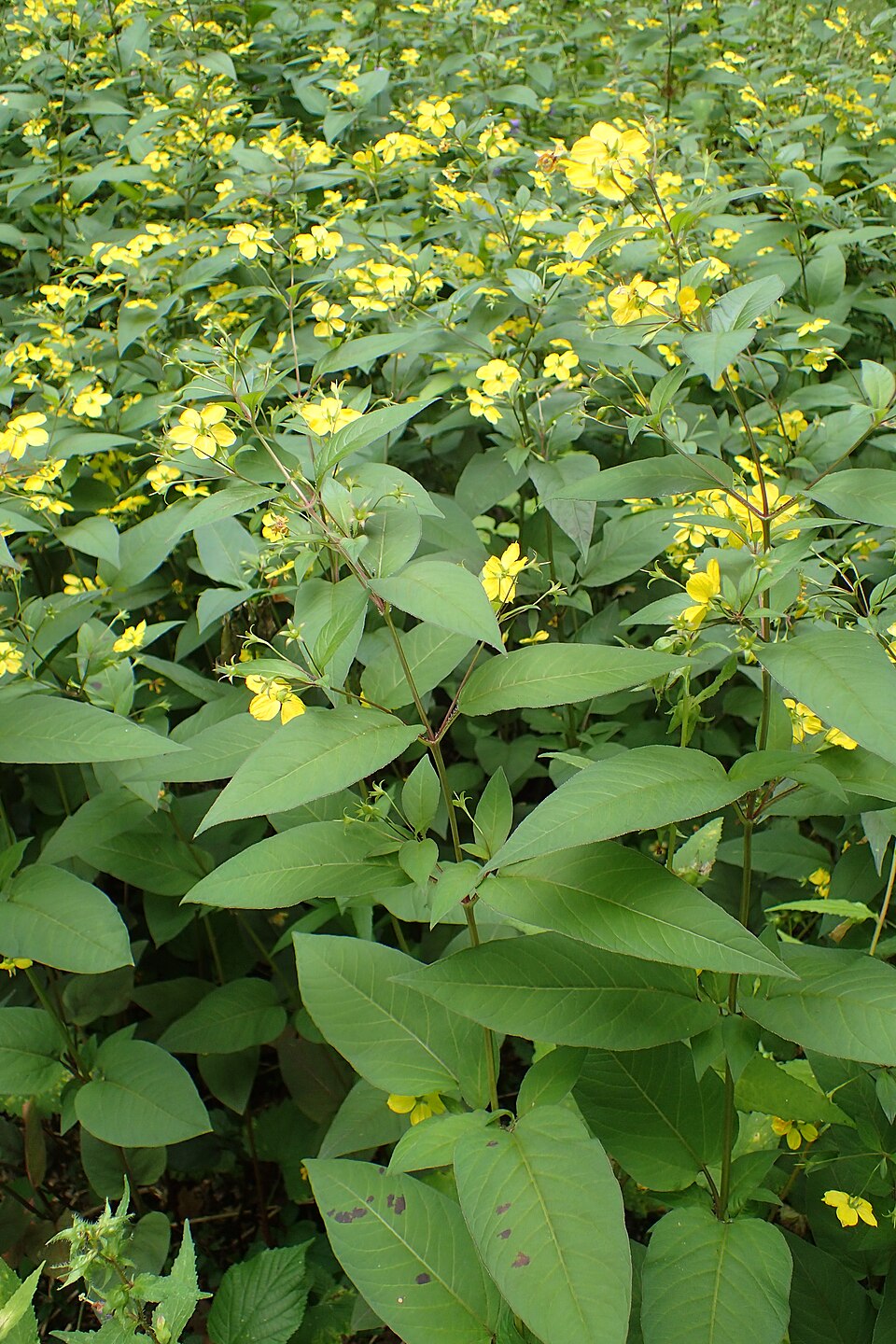
Lysimachia, Genus, ciliata, Species, 'Purpurea', Cultivar,
- Genus & species
- Cultivar
purple leaf loosestrife
Eastern North America (species); cultivar selected for purple foliage
Overview
Lysimachia ciliata 'Purpurea' is purple leaf loosestrife (fringed loosestrife), growing 24–36 inches (60–90 cm) tall and wide. Dark chocolate-purple emerging foliage maturing to burgundy-green through summer — the purple foliage color is the cultivar feature (the species type, L. ciliata, has green foliage). Yellow nodding 5-petaled flowers 0.75 inch (18 mm) in the leaf axils in early to midsummer — the yellow flowers against the dark purple-burgundy foliage create a color contrast. Opposite ovate leaves 3–5 inches (7–13 cm) with fringed (ciliate) petioles — the species name 'ciliata' refers to the hairs on the petiole. In the primrose family (Primulaceae). Not related to purple loosestrife (Lythrum salicaria, Lythraceae), which is an invasive wetland species — L. ciliata and Lythrum salicaria are in different families. Spreads by rhizomes to form colonies — can be aggressive in moist rich soil. Contains the lateral spread by edging or planting in drier soil (which limits but does not prevent spreading). Native to eastern North America from Nova Scotia to British Columbia, south to Florida and Texas, growing in moist meadows, stream margins, and open woodland. Full sun develops the deepest purple; shade shifts the foliage toward green. Non-toxic. Deer-resistant. Zones 3–8. Growth rate is fast.
Native Range
The species L. ciliata is native to eastern North America from Nova Scotia to British Columbia, south to Florida and Texas, growing in moist meadows, stream margins, and open woodland. 'Purpurea' is a cultivar selected for purple foliage.Suggested Uses
Grown in moist borders and at stream margins in zones 3–8. The purple foliage contrasts with yellow-flowered and green-leaved companions. Aggressive rhizome spread in moist rich soil — contain by edging. Not related to invasive Lythrum salicaria. Non-toxic. Deer-resistant. Native.How to Identify
Appearance
Size & Dimensions
Height2' - 3'
Width/Spread2' - 3'
Bloom Information
Early to midsummer (June–July), lasting 3–4 weeks. Yellow nodding 5-petaled flowers in leaf axils. The purple foliage — not the flowers — is the primary season-long feature (spring through fall).
Detailed Descriptions
Flower Description
Yellow, nodding, 5-petaled, 0.75 inch (18 mm), in leaf axilsFoliage Description
Emerging dark chocolate-purple, maturing to burgundy-green; opposite, ovate, 3-5 inches (7-13 cm); fringed (ciliate) petiolesGrowing Conditions
Sun Requirements
Requires 4-8 hours of direct sunlight daily
• Full Sun: 6+ hours of direct sunlight
• Partial Shade: 3-6 hours of direct sunlight
• Full Shade: Less than 3 hours of direct sunlight
Care & Maintenance
Care Guide
Part sun to full sun — full sun for deepest purple; shade shifts toward green. Moist soil. Spreads by rhizomes (can be aggressive in moist rich soil). Edge annually to contain. Not related to invasive purple loosestrife (Lythrum salicaria). Non-toxic. Deer-resistant. Native. Zones 3–8.Pruning
Cut all stems to the ground in late autumn or early spring. Edge annually to contain rhizome spread. No other pruning needed.Pruning Schedule
Prune: March
early spring
Container Growing
Suitable for container growing
Minimum container size: 3 gallons


