Lysimachia, Genus, atropurpurea, Species,
- Genus & species
Beaujolais' purple loosestrife
Native to Greece and the Balkan Peninsula where the species grows in dry rocky limestone meadows, roadsides, and disturbed ground; despite the placement in {Lysimachia} (a genus of mostly moisture-loving species), this species prefers drier conditions than most relatives and tolerates lean Mediterranean-style soils; the cultivar 'Beaujolais' is among the more widely grown forms in temperate ornamental cultivation, valued for the depth of the wine-red flower color and the gray-green foliage that pairs with silver-leaved companion plantings
Overview
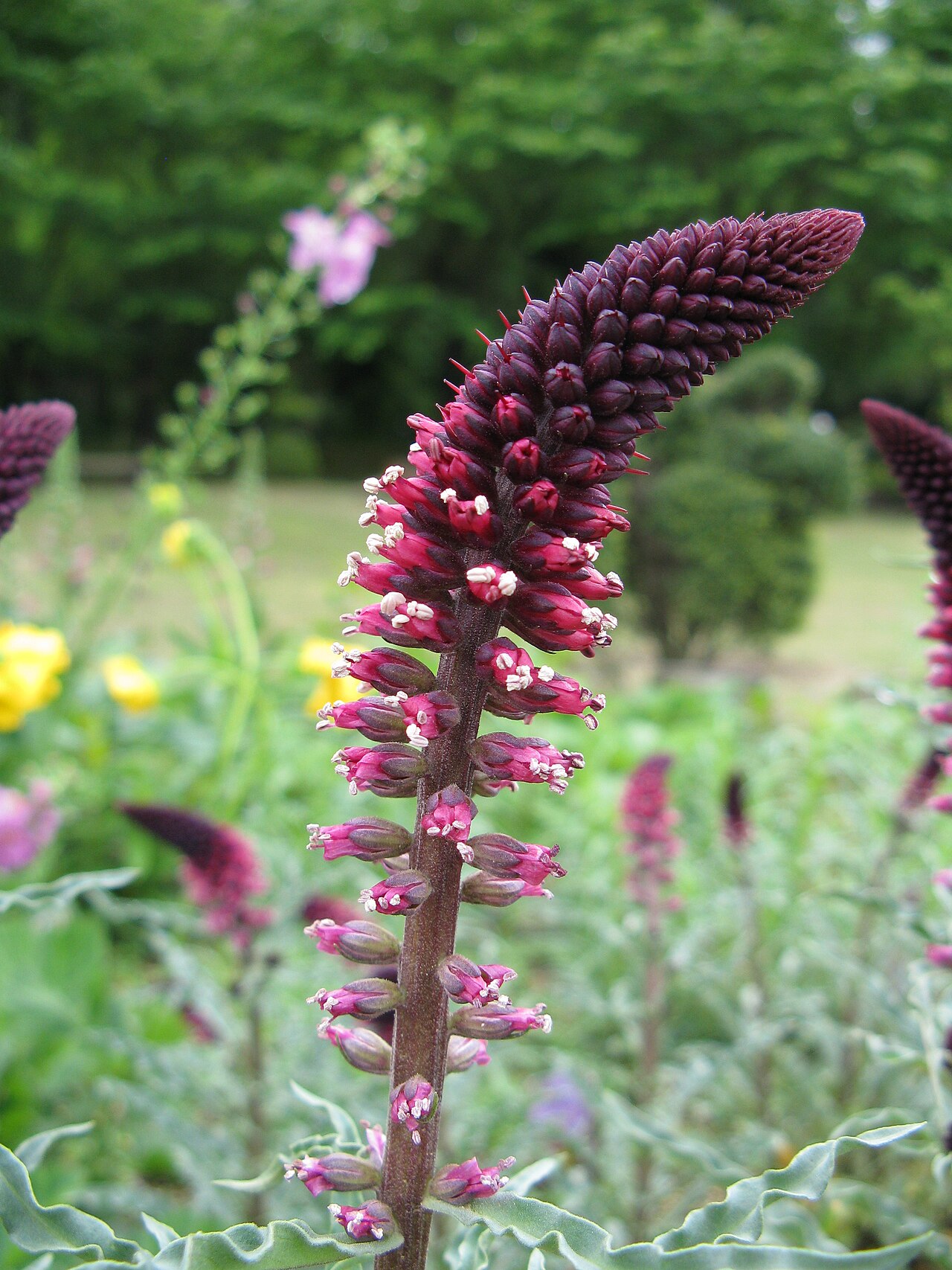
Lysimachia atropurpurea is a rosette-forming short-lived perennial or biennial in the primrose family (Primulaceae) reaching 24-36 inches (60-90 cm) tall and 12-18 inches (30-45 cm) wide in bloom. Leaves are lance-shaped to elliptic, 3-6 inches (7.5-15 cm) long, gray-green to silvery-green with a slightly glaucous surface, forming a basal rosette in the first year. In the second year, upright stems arise carrying alternate leaves and terminal flower spikes 6-12 inches (15-30 cm) long composed of densely packed small flowers with five petals in deep wine-purple to maroon-red, surrounding darker red-purple stamens. The cultivar 'Beaujolais' is among the more widely grown forms and carries especially deep wine-red flower coloration. Blooms June through August. Self-seeds reliably; treated as a short-lived perennial by allowing self-seeding to maintain the colony. Despite the common name, this species is unrelated to invasive purple loosestrife (Lythrum salicaria) and is not considered invasive.
Native Range
Lysimachia atropurpurea is native to Greece and the Balkan Peninsula, growing in dry rocky limestone meadows, roadsides, and disturbed ground. Despite its placement in Lysimachia, the species prefers drier conditions than most of the genus.Suggested Uses
Used in cottage gardens, gravel gardens, and dry borders at 12-18 inch (30-45 cm) spacing. The dark wine-red flower color and gray-green foliage combine with silver-leaved plants and soft-colored companions. Self-seeds into informal drifts. Suited to containers of 3+ gallons (11+ L).How to Identify
Appearance
Size & Dimensions
Height2' - 3'
Width/Spread1' - 1'6"
Bloom Information
Blooms June through August in most temperate climates. The terminal spike elongates over 6-8 weeks as successive buds open from the base upward. The cultivar 'Beadistimely red coloring is the depth and richness of the wine-red coloration. Plants typically bloom in their second year; first-year rosettes are vegetative only.
Detailed Descriptions
Flower Description
Deep wine-purple to maroon-red small five-petaled flowers densely packed in terminal spikes 6-12 inches (15-30 cm) long; the cultivar 'Beaujolais' carries especially deep wine-red colorationFoliage Description
Gray-green to silvery-green lance-shaped to elliptic leaves 3-6 inches (7.5-15 cm) long with a slightly glaucous surface; basal rosette in the first year, alternate stem leaves in the second yearGrowing Conditions
Sun Requirements
Requires 4-12 hours of direct sunlight daily
• Full Sun: 6+ hours of direct sunlight
• Partial Shade: 3-6 hours of direct sunlight
• Full Shade: Less than 3 hours of direct sunlight
Care & Maintenance
Care Guide
Plant in full sun to part shade in average to dry well-drained soil. Tolerates poor and lean soils; avoid heavy clay or waterlogged conditions since the species is intolerant of wet feet. Space plants 12-18 inches (30-45 cm) apart. Drought-tolerant once established and requires little supplemental water. Short-lived but self-seeds reliably in suitable conditions — leave a few spent stems to shed seed, then remove to control spread. Treat as a biennial or short-lived perennial, replanting from self-sown seedlings. No serious pest or disease problems.Pruning
Deadhead spent spikes promptly to prevent excessive self-seeding, or leave a few stems to self-seed for natural colony maintenance. Cut plants to the ground after they die back in fall. Remove parent plants after seeding as they decline since the species is short-lived.Pruning Schedule
Prune: August & October
summerfall
Container Growing
Suitable for container growing
Minimum container size: 3 gallons


