Vernonia, Genus, spp., Multiple species,
- Genus
- Multiple species
ironweeds
Americas, Africa, and Asia; ironweeds native to North America
Overview
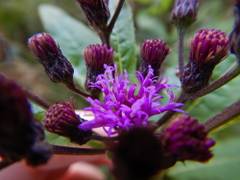
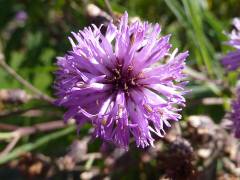
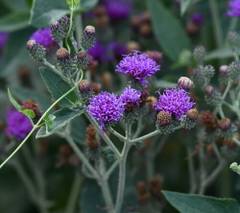
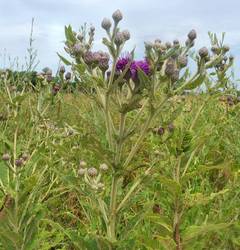
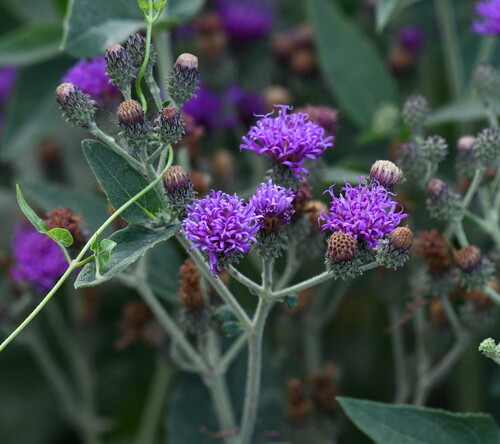
Vernonia is a genus of perennials, and some shrubs and small trees, in the family Asteraceae, with several hundred species across the Americas, Africa, and Asia. The North American perennials, known as ironweeds, form upright clumps 0.6-3 m (2-10 ft) tall on stiff, leafy stems. The leaves are alternate, lance-shaped, and toothed. Unlike many daisies, the flower heads have no ray florets; instead, each head is a tuft of 10 to 30 tubular disc florets in deep red-purple, carried in branched, flat-topped clusters at the stem tips. V. noveboracensis, New York ironweed, and V. gigantea are tall late-season bloomers of moist meadows. Flowering occurs in late summer and autumn, followed by rusty seed tufts that give the group its common name. Plants grow from tough, fibrous crowns and spread slowly by short rhizomes and seed. The genus occupies prairies, meadows, and stream banks in full sun. The deep purple colour and tall stems place ironweeds at the back of late-season plantings.
Native Range
Found across the Americas, Africa, and Asia, with the ironweeds native to central and eastern North America. V. noveboracensis occupies the eastern United States, while V. fasciculata grows in the prairies of the Midwest. The genus favours moist, open ground such as meadows, prairies, and stream banks.Suggested Uses
Grown at the back of borders, in rain gardens, and in prairie and meadow plantings, where the late purple flowers feed migrating butterflies. The tall stems are used to add height in naturalistic, moist-soil schemes.How to Identify
Appearance
Size & Dimensions
Height2' - 10'
Width/Spread2' - 4'
Bloom Information
Detailed Descriptions
Foliage Description
greenGrowing Conditions
Sun Requirements
Requires 6-10 hours of direct sunlight daily
• Full Sun: 6+ hours of direct sunlight
• Partial Shade: 3-6 hours of direct sunlight
• Full Shade: Less than 3 hours of direct sunlight
Care & Maintenance
Care Guide
Ironweeds grow in full sun in moist, fertile soil and tolerate clay and seasonal flooding, reflecting their meadow and streamside origins. They are hardy to about -35 C (-31 F) and tolerate heat and humidity. Tall stems may flop in rich soil or shade and can be shortened in early summer to keep plants compact. Plants self-seed and form colonies in open ground. Rust and leaf spot occasionally mark the foliage.Pruning
Stems are cut back to about half their height in early summer to reduce flopping and produce shorter, bushier plants. Spent flower heads are removed to limit self-seeding. Old stems are cut to the ground in late autumn or left for winter structure.Pruning Schedule
Prune: June
summer