Vernonia, Genus, missurica, Species,
- Genus & species
Missouri ironweed
Overview
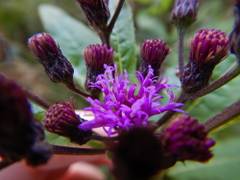
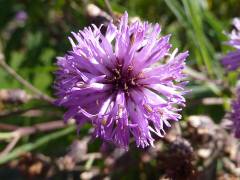
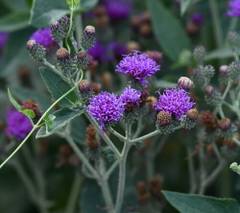
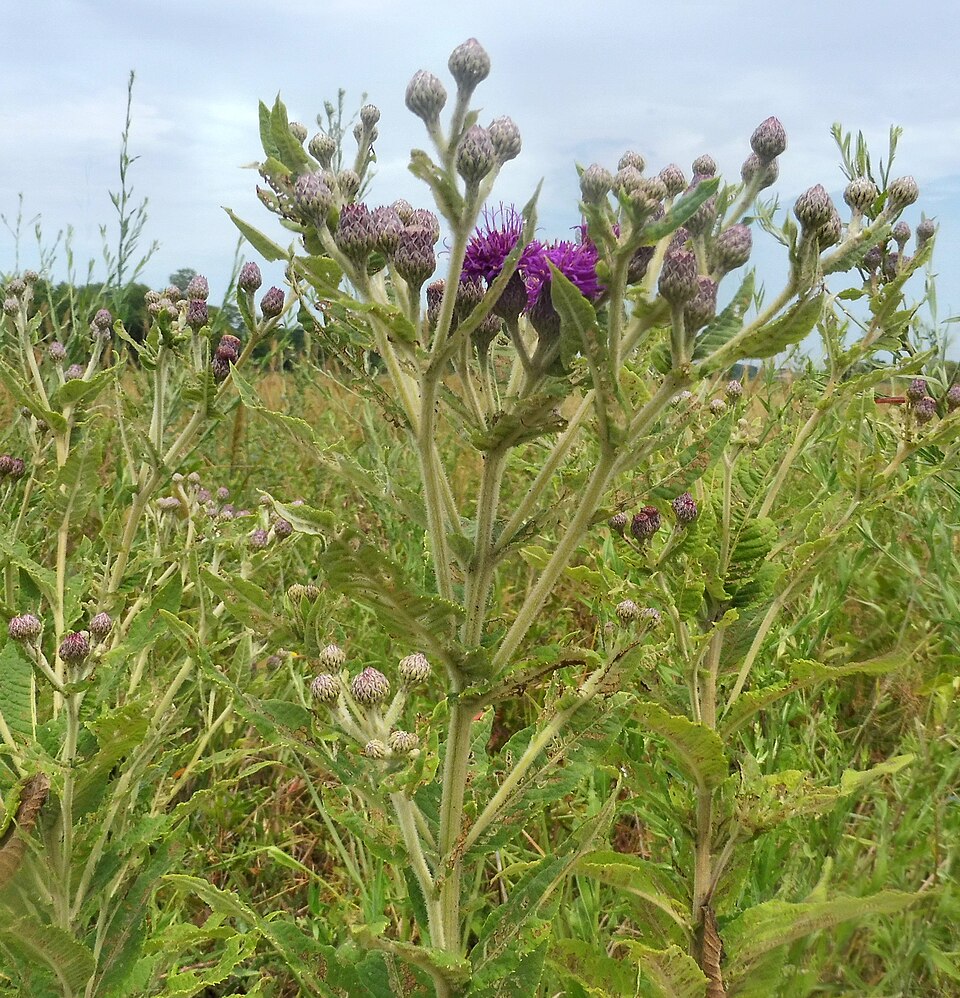
Vernonia missurica is a clump-forming herbaceous perennial of the central United States growing 3–5 feet (0.9–1.5 m) tall on stout, densely hairy stems. Flat-topped to rounded clusters of small flower heads appear at the stem tips, each head holding 30–60 red-violet to purple disc florets and measuring about 0.3 inch (8 mm) across; ray florets are absent. The lance-shaped leaves are 4–8 inches (10–20 cm) long, finely toothed, and gray-woolly on the undersides. Flowering occurs from July to September, after which the heads form tufted brown seed clusters. The species grows in moist prairies, meadows, stream banks, and open low ground from Texas and Oklahoma north to Michigan and east to Ohio. V. missurica resembles V. baldwinii but has more densely hairy stems and leaf undersides. It spreads slowly into colonies and tolerates seasonally wet soil, though it can self-seed widely and may lean in overly rich or shaded sites.
Native Range
Vernonia missurica is native to the central United States, from Texas and Oklahoma north to Michigan and east to Ohio and Alabama. It grows in moist prairies, wet meadows, stream banks, and low open ground.Suggested Uses
Used in rain gardens, native meadows, prairie restorations, and moist borders. Spaced 24–36 inches (60–90 cm) apart, it suits pollinator plantings and naturalized wet ground.How to Identify
Appearance
Size & Dimensions
Height3' - 5'
Width/Spread2' - 3'
Bloom Information
Detailed Descriptions
Flower Description
red-violet to purpleFoliage Description
green with gray-woolly undersidesGrowing Conditions
Sun Requirements
Requires 6-10 hours of direct sunlight daily
• Full Sun: 6+ hours of direct sunlight
• Partial Shade: 3-6 hours of direct sunlight
• Full Shade: Less than 3 hours of direct sunlight
Care & Maintenance
Care Guide
Grow V. missurica in full sun to part shade in moist to seasonally wet soil of average to high fertility. It tolerates clay and standing moisture and grows along pond edges and in rain gardens. Soil pH from 5.5 to 7.5 is suitable. Established plants withstand short dry spells but flower most fully in steady moisture. In rich soil or partial shade the stems can grow tall and lean. It is hardy in USDA zones 4 through 8.Pruning
Cut the stems to the ground in late winter before new growth emerges. Stems can be shortened by one-third in late spring to reduce height and limit leaning, which delays bloom slightly. Removing spent flower heads before seed set limits self-sowing.Pruning Schedule
Prune: February–March
winter