Vernonia, Genus, baldwinii, Species,
- Genus & species
western ironweed
Overview
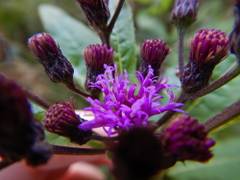
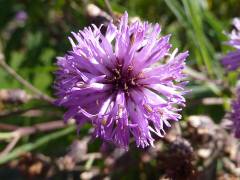
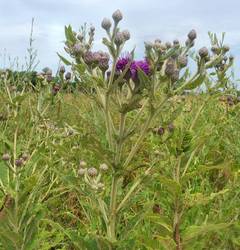
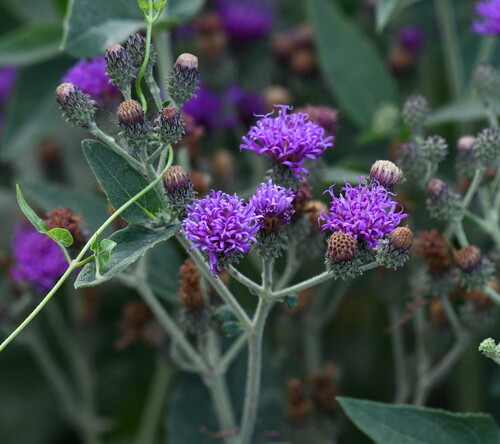
Vernonia baldwinii is an upright perennial of the central United States, growing 2-5 ft (60-150 cm) tall from a tough rootstock, with stiff, often hairy stems. The lance-shaped leaves are 3-6 in (8-15 cm) long, alternate, toothed, and rough-hairy above with woolly undersides. From midsummer into fall it carries flat-topped clusters of small fuzzy flower heads in deep red-purple at the stem tops; each head holds many disk florets and no ray petals. After bloom the heads turn to rusty seed tufts. It grows in prairies, pastures, glades, roadsides, and open disturbed ground in full sun. It tolerates poor, dry, rocky soils and spreads by seed and short rhizomes, sometimes forming colonies in grazed pastures where livestock avoid its bitter foliage. The deep purple bloom draws many butterflies and bees. It can self-sow freely on open ground.
Native Range
Native to the central United States, from Nebraska and Iowa south through the Great Plains to Texas, and east to the lower Midwest. It grows in prairies, pastures, rocky glades, roadsides, and open disturbed ground.Suggested Uses
Grown in prairie and meadow plantings, native borders, and pollinator gardens for its late-summer purple bloom. It is planted in groups spaced 18-24 in (45-60 cm) apart in sunny, open ground. The flowers draw butterflies and bees, and the seeds feed birds.How to Identify
Appearance
Size & Dimensions
Height2' - 5'
Width/Spread1'6" - 2'6"
Bloom Information
Detailed Descriptions
Foliage Description
greenGrowing Conditions
Sun Requirements
Requires 6-12 hours of direct sunlight daily
• Full Sun: 6+ hours of direct sunlight
• Partial Shade: 3-6 hours of direct sunlight
• Full Shade: Less than 3 hours of direct sunlight
Care & Maintenance
Care Guide
Vernonia baldwinii grows in full sun on a wide range of soils, including dry, rocky, and clay ground, at a pH of 6.0-7.5, and tolerates heat and drought once established. It needs no fertilizer and grows readily on poor prairie soils. It can spread by seed and short rhizomes to form colonies, so removing spent heads before seed drop limits self-sowing. Cutting plants back by half in early summer reduces height and flopping. It dies back to the rootstock in winter and returns in spring. It has few serious pests, and livestock avoid the bitter foliage.Pruning
Cut stems back by about half in late spring or early summer to limit height and reduce flopping before bloom. Remove spent flower heads before seed sets to control self-sowing. Cut old stems to the ground in late winter before new growth.Pruning Schedule
Prune: May–June
late springsummer