Pontederia, Genus, spp., Multiple species,
- Genus
- Multiple species
pickerel weeds
Overview
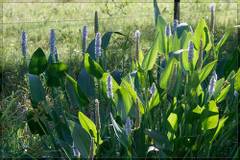
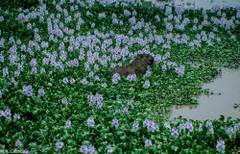
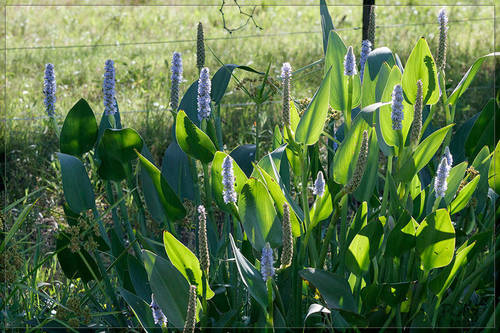
Pontederia is a genus of about six species of aquatic and marginal perennials in the family Pontederiaceae, native chiefly to the Americas. The genus includes both rooted emergent species such as P. cordata, the common pickerelweed, and free-floating species formerly placed in Eichhornia, including the water hyacinth P. crassipes. Emergent species grow from creeping rhizomes in shallow water and form clumps 0.3-1.2 m (1-4 ft) tall and 0.4-0.8 m (16-32 in) wide. The leaves are glossy, lance- to heart-shaped, 8-25 cm (3-10 in) long, held above the water on fleshy stalks. From summer into early autumn, dense spikes carry many small funnel-shaped flowers, most often violet-blue but ranging to lavender and white. The flowers are followed by starchy, edible nutlets. Several species spread aggressively: the floating P. crassipes is a serious aquatic weed and is banned or regulated in many regions. Even rooted species can choke small ponds, so they are often grown in baskets or lined margins to limit their spread.
Native Range
Pontederia is native mainly to the Americas, from Canada through the United States to South America, growing along pond edges, marshes, slow streams, and ditches; some species have naturalized on other continents.Suggested Uses
Grown in pond margins, water gardens, bog gardens, and constructed wetlands for water filtration and wildlife habitat. The flowers draw bees and butterflies, and the seeds and foliage feed waterfowl and aquatic life. Rooted plants are set in aquatic baskets spaced 0.4-0.6 m (16-24 in) apart in shallow water.How to Identify
Appearance
Size & Dimensions
Height1' - 4'
Width/Spread1'4" - 2'8"
Bloom Information
Spikes appear through summer and into early autumn, with individual flowers lasting a day and the spike blooming over several weeks. In frost-free climates the floating species flower for much of the year. Bloom is heaviest in full sun and warm, still water.
Detailed Descriptions
Flower Description
violet-blue to lavender, some whiteFoliage Description
glossy greenGrowing Conditions
Sun Requirements
Requires 6-10 hours of direct sunlight daily
• Full Sun: 6+ hours of direct sunlight
• Partial Shade: 3-6 hours of direct sunlight
• Full Shade: Less than 3 hours of direct sunlight
Water & Climate
Water Needs
Care & Maintenance
Care Guide
Most species grow in full sun in still or slow-moving fresh water, rooted in mud at the margin or floating on the surface. Rooted species hold in water 5-30 cm (2-12 in) deep over a loam or clay-rich substrate at a near-neutral pH. P. cordata is hardy in USDA zones 3-10 and overwinters as a dormant rhizome below the ice line, while the floating species are frost-tender and die at the first hard freeze. Growth is rapid through the warm season, and colonies need regular thinning to keep open water. Plants are largely free of pests but can be grazed by waterfowl and aquatic snails.Pruning
Spent flower spikes and yellowing leaves are removed at the waterline through the growing season. Rhizomes are lifted and divided in spring to control clump size and renew growth. Floating colonies are skimmed off regularly to keep them from covering the water surface.Pruning Schedule
Prune: April
spring
Container Growing
Suitable for container growing
Minimum container size: 3 gallons