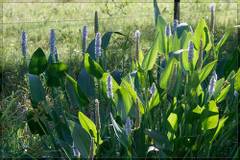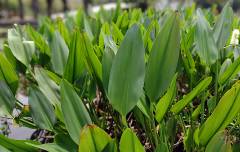
Pontederia, Genus, crassipes, Species,
- Genus & species
common water hyacinth
Overview
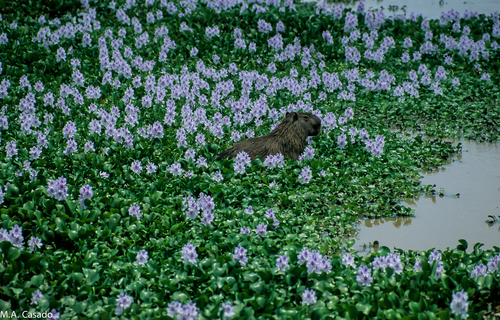
Pontederia crassipes, long known as Eichhornia crassipes, is a free-floating aquatic perennial in the pickerelweed family. It forms rosettes 4–20 inches (10–50 cm) tall, with glossy rounded leaf blades 2–6 inches (5–15 cm) wide held on spongy, inflated petioles that keep the plant afloat. Dark feathery roots hang up to 12 inches (30 cm) below the surface. In summer it sends up a spike of 8–15 lavender-blue flowers about 1.5 inches (4 cm) across, the uppermost petal marked with a yellow blotch ringed in darker blue. The plant reproduces mainly by stolons, doubling its population in as little as two weeks under warm conditions and forming dense floating mats. These mats block light, deplete oxygen, and impede boat traffic, and the species is listed as a noxious weed across much of the world. It is killed by frost and cannot overwinter where water freezes. Plants survive on still or slow-moving fresh water and tolerate a wide range of nutrient levels.
Native Range
Native to the Amazon Basin of lowland South America. It has naturalized on every continent except Antarctica and grows in tropical and subtropical fresh water worldwide.Suggested Uses
Grown in contained ornamental ponds and water-garden containers where it is legal, for its floating foliage and summer flowers. Used in some constructed wetlands and aquaculture systems to take up excess nutrients. Its use is restricted or prohibited in many warm regions because of its spread.How to Identify
Appearance
Size & Dimensions
Height4" - 1'8"
Width/Spread6" - 1'6"
Bloom Information
Detailed Descriptions
Flower Description
lavender-blue with yellow blotchFoliage Description
glossy greenGrowing Conditions
Sun Requirements
Requires 6-10 hours of direct sunlight daily
• Full Sun: 6+ hours of direct sunlight
• Partial Shade: 3-6 hours of direct sunlight
• Full Shade: Less than 3 hours of direct sunlight
Care & Maintenance
Care Guide
Grows on still or slow fresh water in full sun, at water temperatures above 54°F (12°C). It tolerates a broad pH range of 6.0–8.0 and a wide span of nutrient levels, growing fastest in nutrient-rich water. Frost kills the foliage, and the plant does not survive freezing. Because it spreads rapidly and clogs waterways, its sale and movement are banned in many regions. In contained ornamental ponds it needs regular thinning to keep it from covering the surface. It needs no soil, drawing nutrients directly from the water through its roots.Pruning
Excess rosettes are scooped out through the growing season to keep the surface partly open. Removed plant material is composted away from waterways, as fragments can re-root. Plants are cleared entirely before frost in regions where they are not permitted to overwinter.Container Growing
Suitable for container growing
Minimum container size: 5 gallons