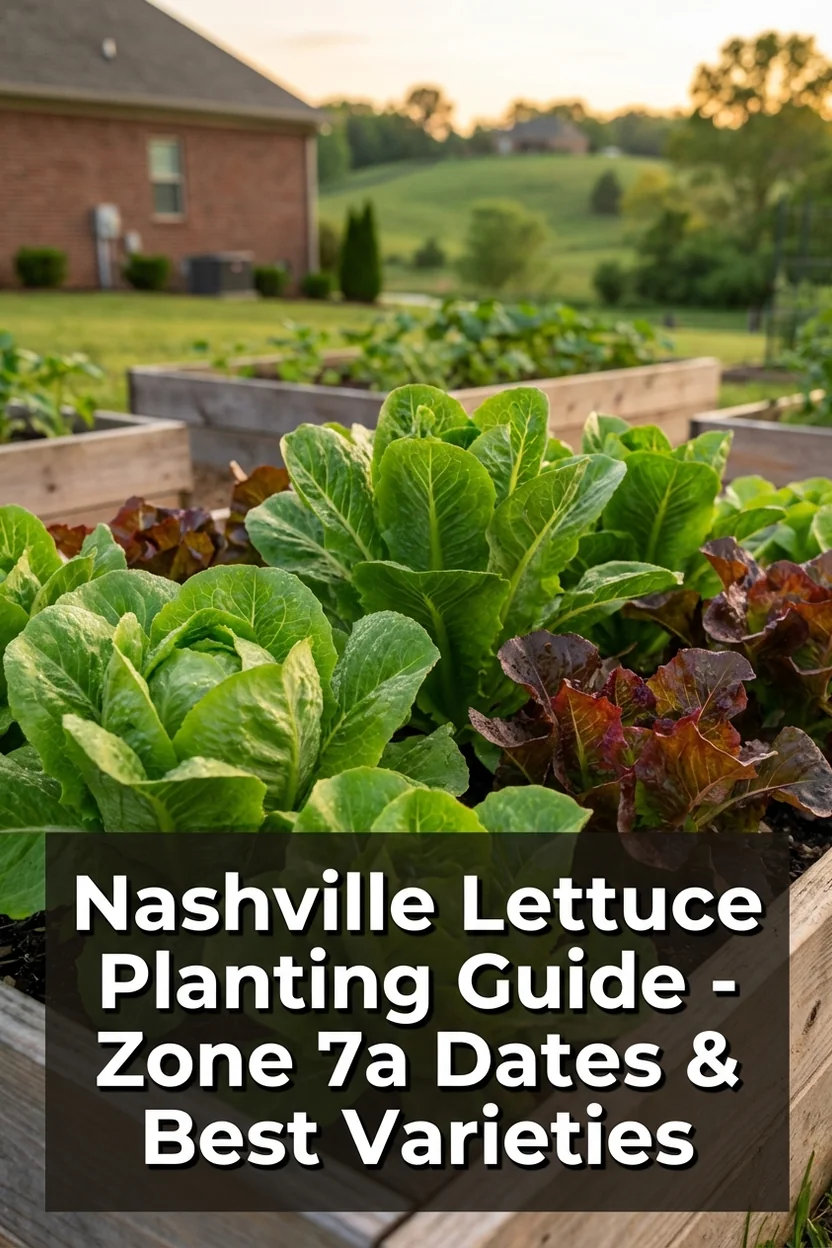
When to Plant Lettuce in Nashville: Complete Guide + Best Varieties for Zone 7a
Pets & Toxicity
Recorded toxicity for plants linked in this guide. An unknown status is not a safety assessment.
No linked plant is recorded as toxicDetailsHide
Lactuca sativa var. crispa — Toxicity: Not assessed
Lactuca sativa var. crispa is non-toxic and safe for human consumption. All parts of the plant are edible, though leaves are the primary harvest. Generally safe around pets, though large quantities may cause mild digestive upset in some animals.View Lactuca sativa var. crispa plant profile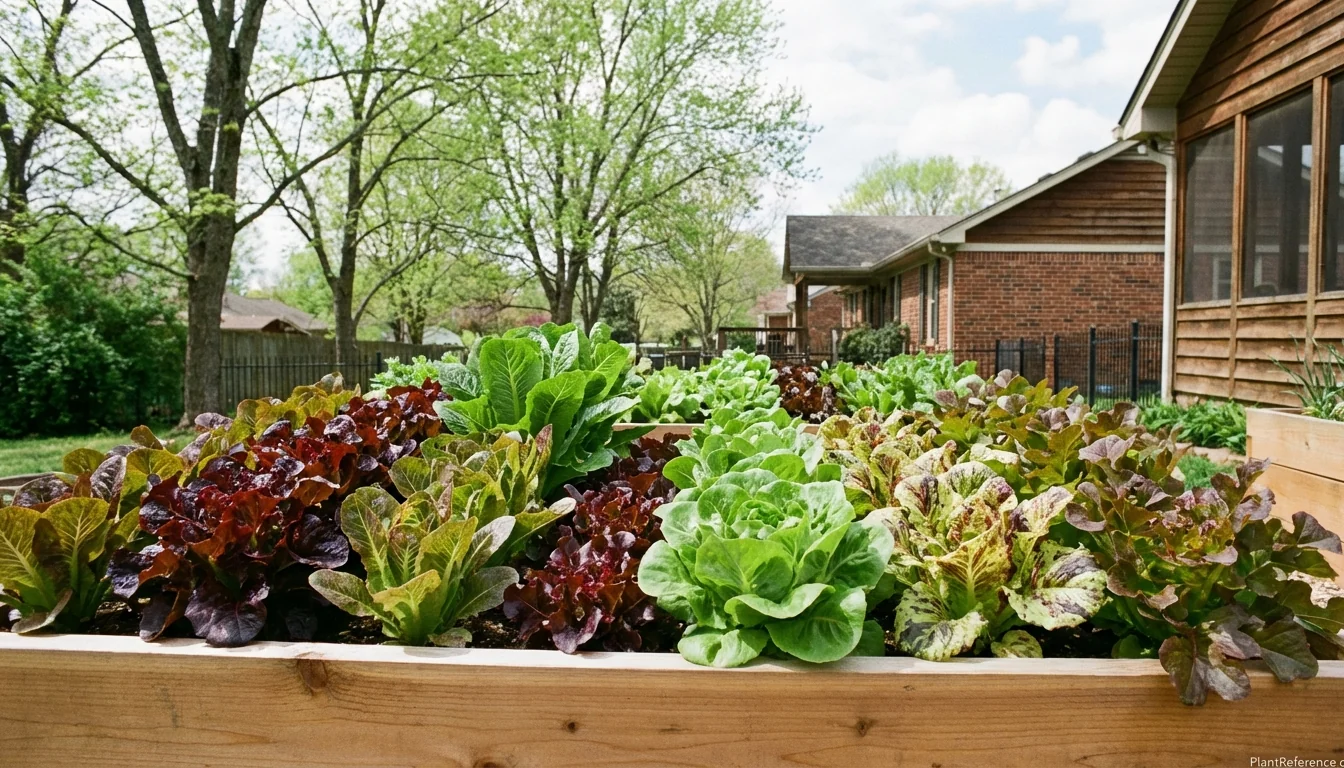
— Image © Plant Reference 2026
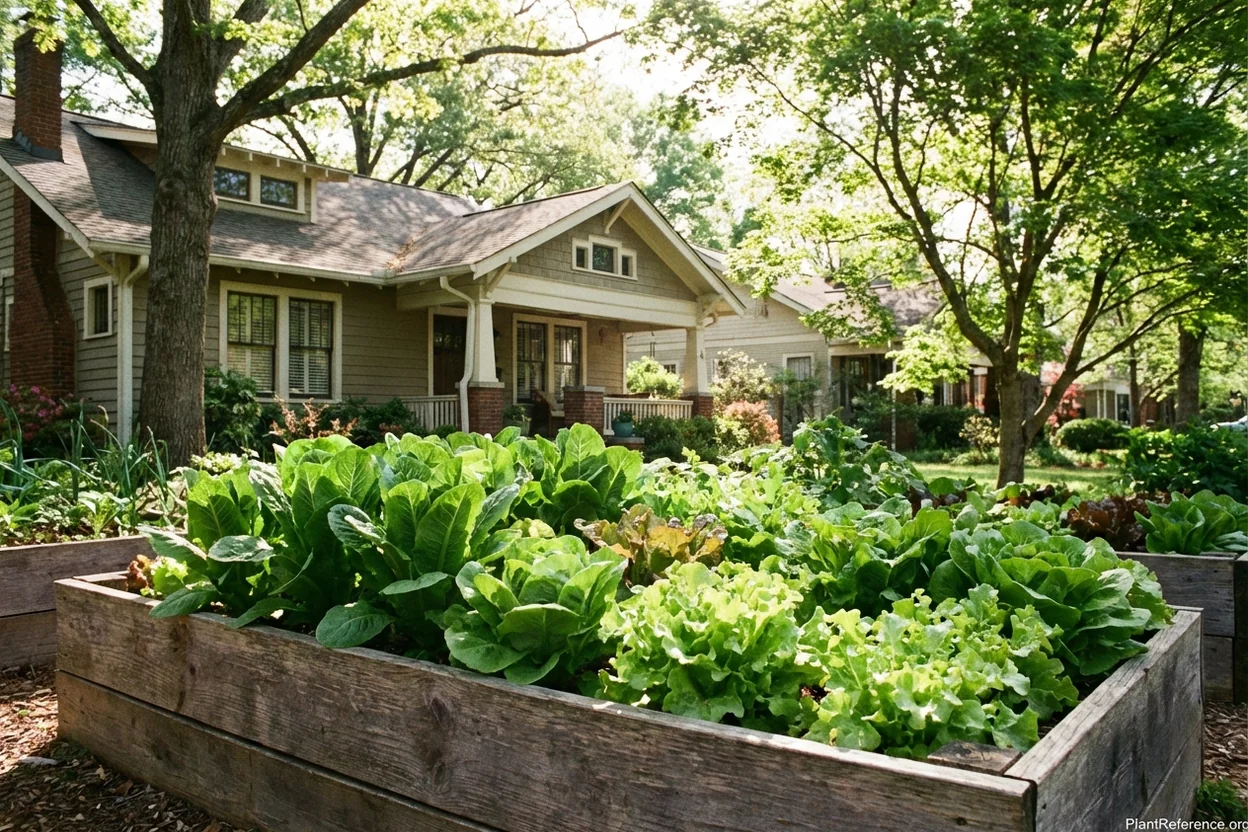
Nashville occupies a distinctive position in the Southern lettuce landscape—slightly cooler than the Carolinas at Zone 7a with a 203-day frost-free season, and built on the Cumberland Basin's limestone bedrock that creates fundamentally different soil chemistry than the Piedmont clay cities to the east. The spring window from early March through mid-June gives Nashville gardeners about three and a half months of excellent production before Middle Tennessee's humid summer heat arrives. The fall window from September through November is equally strong, with the Cumberland Basin's gradual cooling producing frost-sweetened lettuce that ranks among the best in the mid-South. The summer gap runs 8-10 weeks from mid-June through mid-August—comparable to the Carolinas and meaningfully shorter than deeper South cities like Atlanta and Dallas. Nashville's humidity during the growing windows (65-75%) creates downy mildew pressure similar to other inland Southern cities but less intense than the Gulf Coast. The Cumberland Basin's most distinctive feature for lettuce growers is the soil. Where Atlanta and Charlotte battle acidic Piedmont clay, Nashville sits on limestone-derived alkaline soil (pH 7.0-8.0) that creates the opposite challenge—iron lockout and micronutrient deficiency rather than the aluminum toxicity that acidic soils produce. This means Nashville gardeners need chelated iron rather than lime, and the heavy, slowly draining clay requires raised beds for productive lettuce growing just as Piedmont clay does, but with different amendment strategies. Nashville's food culture has transformed the city's relationship with local agriculture and homegrown produce. The Nashville Farmers Market, East Nashville's farm-to-table restaurant scene, and the expanding network of community gardens from Germantown to the Nations and Wedgewood-Houston create substantial demand for fresh, locally grown lettuce that Music City's moderate climate delivers exceptionally well across the long spring and fall windows. When to Plant Tomatoes in Nashville: Complete Guide + Best Varieties for Zone 7a
Best Lettuce Varieties for Nashville's Climate
Nashville sits in USDA Zone 7a with an April 10 last frost and October 30 first frost—203 frost-free days. Lettuce tolerates 28°F (-2°C) once established, extending the effective season from early March through late November. Nashville's moderate climate supports all lettuce types during the spring and fall windows with variety selection emphasizing bolt resistance for the warm spring transition.
Variety | Type | Days to Harvest | Heat Tolerance | Best For |
|---|---|---|---|---|
Butterhead | 55-65 days | High (for type) | Best all-around for Nashville | |
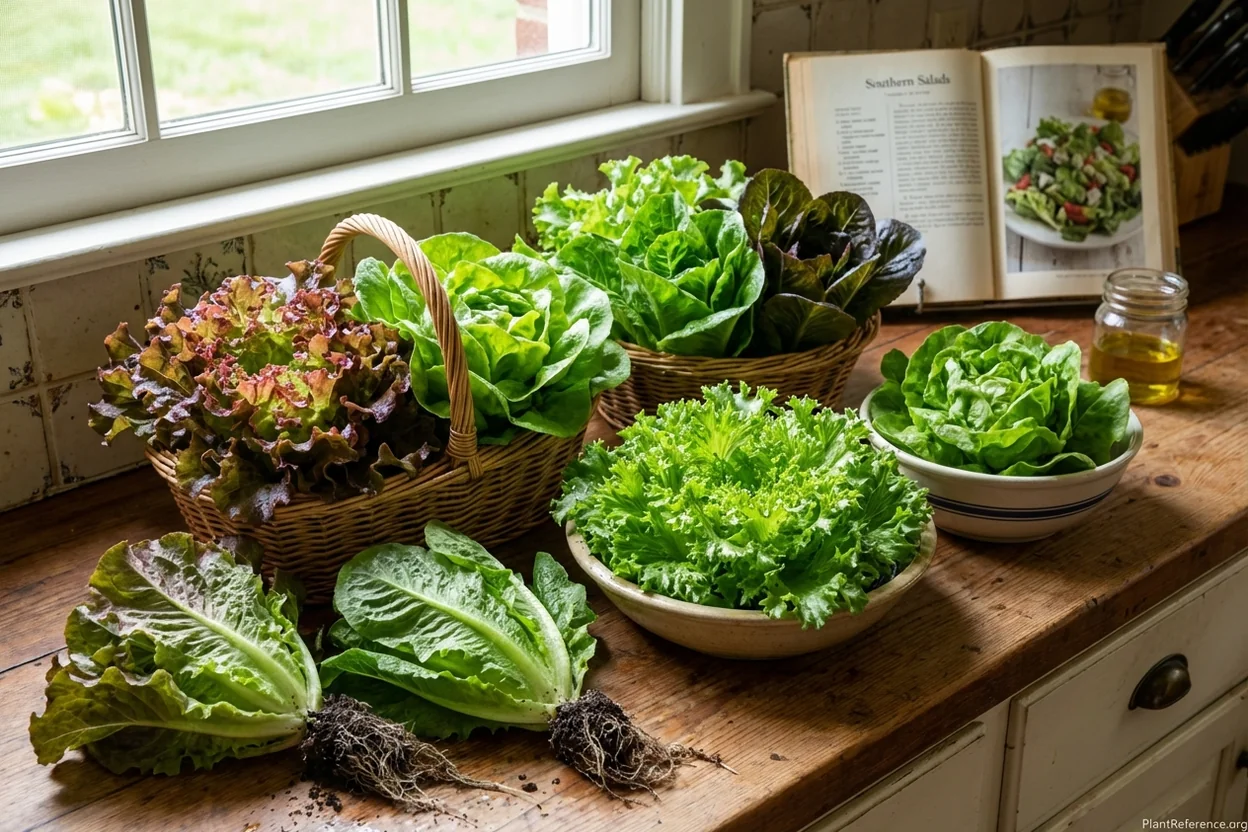
🌿Lactuca sativa var. crispa (Red Oak Leaf) | Looseleaf | 45-55 days | Moderate-High | Cut-and-come-again |
🌿Lactuca sativa var. longifolia (Romaine) | Cos | 70-80 days | Moderate | Premium fall crop |
Mesclun Mix | Seedling mix | 30-40 days | Variable | Fastest harvest, succession |
Butterhead | 55-65 days | Low | Late fall delicacy | |
🌿Lactuca sativa var. capitata (Iceberg) | Crisphead | 80-90 days | Low | Fall only |
🌿Lactuca sativa 'Buttercrunch' leads for Nashville because its bolt resistance extends the spring window 2-3 weeks past traditional butterheads—pushing production into mid-June before Middle Tennessee summer heat forces shutdown. Buttercrunch maintains sweet, mild flavor when other varieties turn bitter during the warm spring-to-summer transition that Nashville's humid climate accelerates. The compact rosettes work well in Nashville's raised beds and the thick, blistered leaves handle Tennessee's spring thunderstorms.
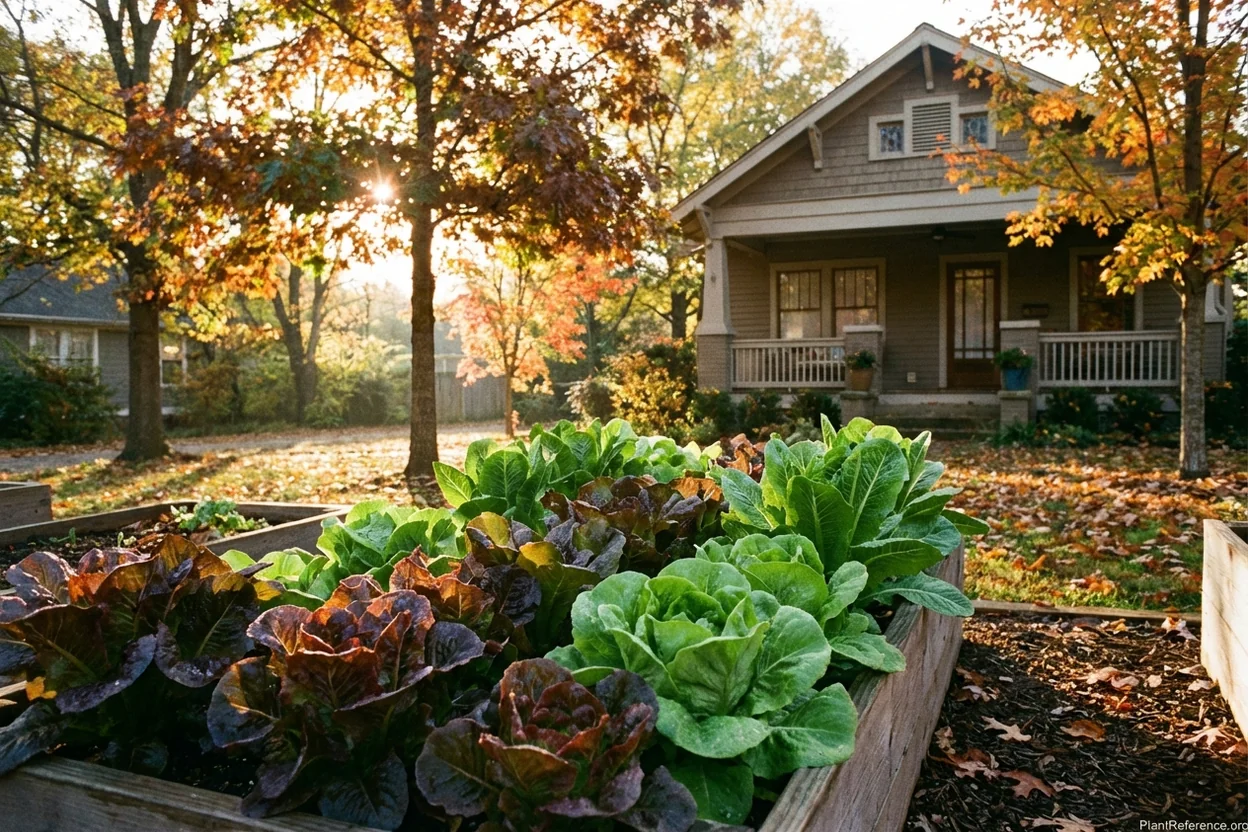
🌿Lactuca sativa var. crispa (Red Oak Leaf) at 45-55 days delivers fast production and outstanding fall color. The burgundy-tipped leaves develop vivid anthocyanin coloration during Nashville's cool October-November nights when the Cumberland Basin cools efficiently. Cut-and-come-again harvesting extends each planting across 4-6 weeks.
🌿Lactuca sativa var. longifolia (Romaine) at 70-80 days excels as Nashville's fall crop. The long maturation aligns perfectly with cooling October-November temperatures that produce dense, sweet hearts. Romaine tolerates frost to 20°F (-7°C), extending harvest well past the October 30 first frost date into December with row cover protection.
Mesclun Mix at 30-40 days provides Nashville's fastest harvest—sow in early March, harvest by mid-April. The rapid cycle allows multiple spring successions before heat arrives.
🌿Lactuca sativa 'Bibb' produces Nashville's most refined lettuce during the coolest fall weeks. Restrict to temperatures consistently below 75°F because Bibb bolts rapidly in warmth.
🌿Lactuca sativa var. capitata (Iceberg) at 80-90 days works only as a fall crop—start indoors July for late September transplanting. When to Plant Peppers in Nashville: Complete Guide + Best Varieties for Zone 7a
Specific Planting Dates for Nashville Gardens
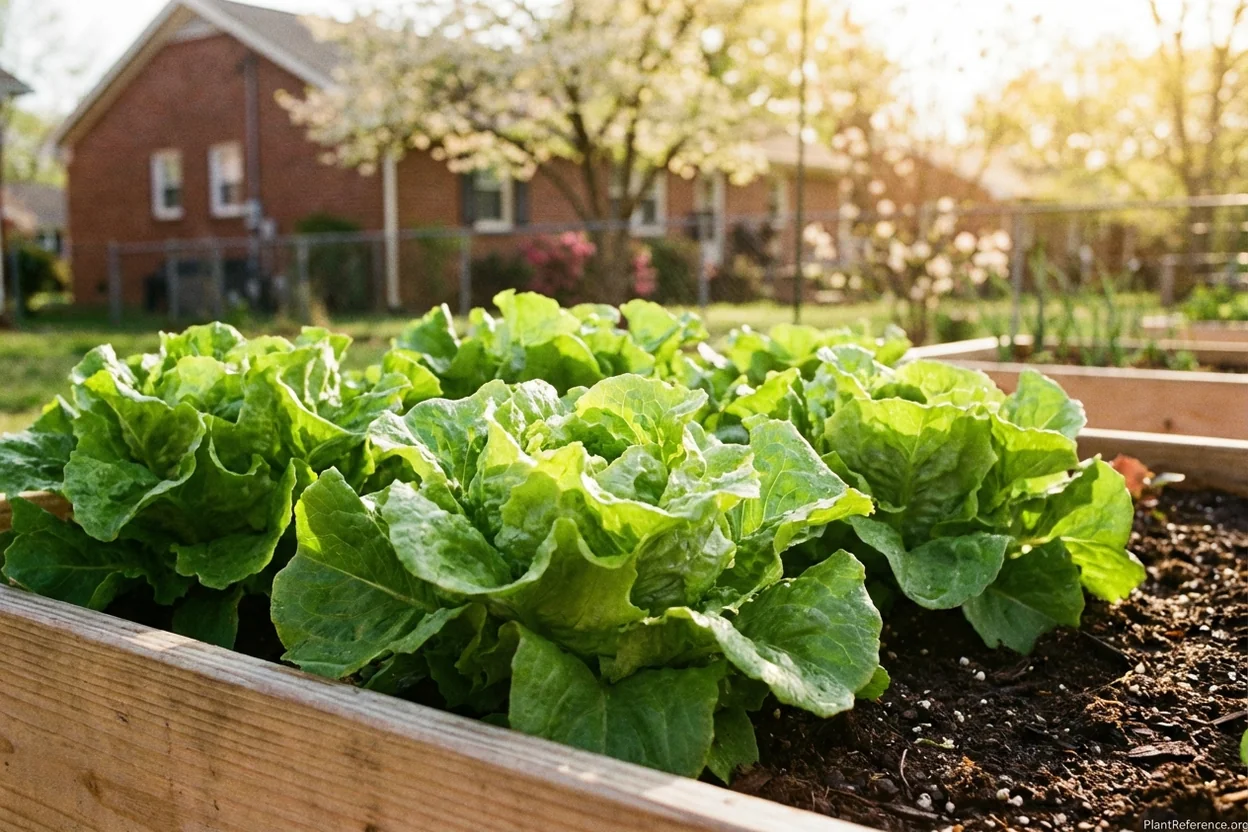
Nashville's Zone 7a provides a generous lettuce calendar—slightly shorter than Zone 7b cities like Raleigh and Charlotte but with the same excellent spring-fall pattern.
Indoor Seed Starting (Spring): February 15-March 1 (4-6 weeks before transplanting). Start at 60-70°F (15-21°C). Lettuce germinates in 5-10 days.
Direct Sow (Spring): March 5-20. Nashville soil reaches 40°F by early March. Succession sow every 10-14 days through mid-May.
Transplant Outdoors (Spring): March 20-April 10. Hardened transplants tolerate frost to 28°F. Nashville's spring can produce late frost through mid-April—row covers provide insurance.
Summer Gap (Mid-June through Mid-August): Nashville's gap runs 8-10 weeks when temperatures exceed 85°F with 65-75% humidity. With shade cloth and 🌿Lactuca sativa 'Buttercrunch', production extends into late June.
Fall Sowing: August 10-25. Start seeds indoors to bypass thermoinhibition from hot August soil. Transplant outdoors by early September under shade cloth.
Fall Production Window: September through November. Nashville's premium lettuce season with declining temperatures and October frost producing outstanding quality through Thanksgiving.
Winter Growing (Zone 7a): Row covers extend harvest into December. Cold-hardy Romaine survives Nashville's occasional hard freezes (Zone 7a lows of 0-5°F occur rarely) under cold frames, though winter production is more limited than in warmer Zone 7b and 8a cities. Raised Bed Vegetable Garden Layout: Planning for Maximum Production
Complete Growing Guide for Nashville
Cumberland Basin Limestone Soil
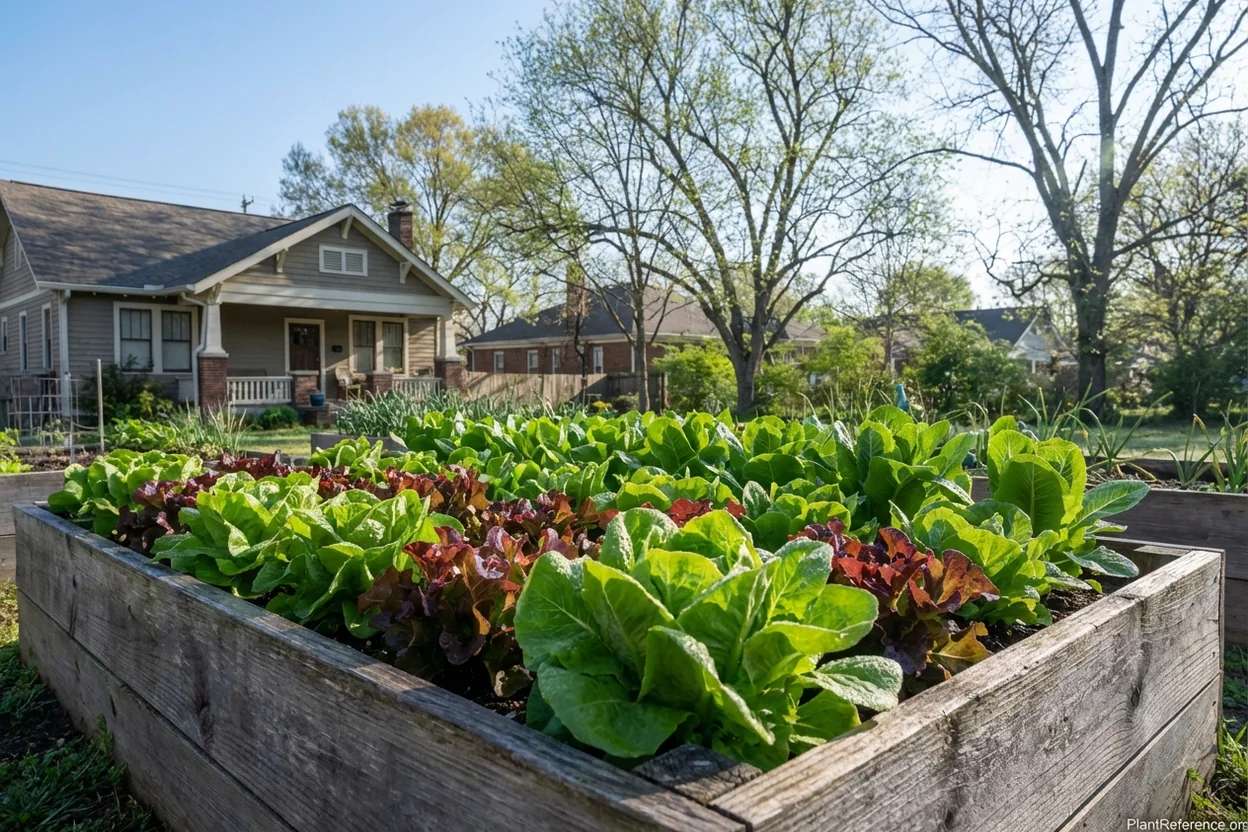
Nashville's soil is fundamentally different from Piedmont cities—limestone-derived clay that tests alkaline (pH 7.0-8.0) rather than the acidic Piedmont clay of Atlanta, Raleigh, and Charlotte. This alkaline chemistry locks up iron and micronutrients, causing yellowing (chlorosis) in lettuce even when nutrients are present in the soil. Do not add lime to Nashville soil—it's already alkaline. Raised beds are strongly recommended because the heavy limestone clay drains poorly when saturated and becomes rock-hard when dry. Fill raised beds with 50% topsoil, 30% compost, and 20% perlite. Chelated iron spray every 2-3 weeks prevents the iron chlorosis that Nashville's alkaline conditions promote. Compost naturally lowers pH over time through organic acid production. Space heading types 8-12 inches (20-30 cm) and looseleaf 4-6 inches (10-15 cm). How to Build a Raised Garden Bed: Step-by-Step Construction Guide
Watering in Nashville's Humid Climate
Nashville receives about 47 inches (119 cm) of annual rainfall—generous and well-distributed through spring thunderstorms and fall rain. Supplement with 1-1.5 inches (2.5-4 cm) per week during dry periods. Morning watering is essential because overnight moisture on foliage in Nashville's 65-75% humidity promotes downy mildew during the spring and fall growing windows. Drip irrigation delivers water to the root zone without wetting leaves—critical for heading types in Middle Tennessee's humid conditions. Mulch 1-2 inches (2.5-5 cm) with straw to retain moisture and cool roots during the spring-to-summer transition. 5 Best Drip Irrigation Kits for Raised Beds (Tested for Easy Installation)
Shade Cloth for Summer Bridge
Shade cloth (30-50%) extends Nashville's spring window by 2-3 weeks and enables earlier fall establishment. Install by late May over lettuce beds. Nashville's moderate summer heat (highs typically 88-92°F) means shade cloth is genuinely effective here—reducing temperatures 10-15°F keeps lettuce below bolting thresholds into late June. 🌿Lactuca sativa 'Buttercrunch' under shade cloth produces the best spring extension. When to Plant Squash in Nashville: Complete Guide + Best Varieties for Zone 7a
Succession Planting
Plant small batches every 10-14 days from March through mid-May and again from late August through October. Nashville's climate supports 7-8 total succession plantings across both windows. Stagger varieties by maturity: mesclun (30 days), Red Oak Leaf (50 days), Buttercrunch (60 days), and Romaine (75 days) planted simultaneously produce sequential harvests that maximize Middle Tennessee's generous growing calendar.
Feeding
Light feeder—fish emulsion every 3-4 weeks. Nashville's alkaline limestone soils require chelated iron spray every 2-3 weeks (the opposite of lime-needing Piedmont soils). Use sulfur-based amendments rather than lime to gradually lower pH toward lettuce's preferred range. Compost provides baseline nutrition while slowly acidifying alkaline soil over multiple seasons. When to Plant Cucumbers in Nashville: Zone 7a Dates + Best Varieties
Nashville's Growing Community
Nashville's food renaissance extends to homegrown lettuce through the Nashville Farmers Market (one of Tennessee's largest), East Nashville's expanding urban garden movement, and community gardens from Germantown to Wedgewood-Houston. The University of Tennessee Extension provides Middle Tennessee-specific growing guidance through the Davidson County Master Gardener program. Nashville's diverse neighborhoods from the dense urban core to the spacious suburban ring from Brentwood to Hendersonville provide growing space across the entire metro. When to Plant Kale in Nashville: Complete Guide + Best Varieties for Zone 7a
Troubleshooting Nashville-Specific Problems
Summer Gap (8-10 Weeks)
Nashville's primary lettuce challenge from mid-June through mid-August when temperatures exceed 85°F with 65-75% humidity. Prevention: harvest before bolting, bolt-resistant varieties (🌿Lactuca sativa 'Buttercrunch', Red Oak Leaf), shade cloth extending production into late June. Nashville's gap is comparable to the Carolinas and shorter than deeper South cities. Accept the gap and maximize the excellent fall window. Raised Bed Too Hot in Summer: Protecting Plants from Heat Stress
Alkaline Soil and Iron Chlorosis
Nashville's limestone-derived clay tests pH 7.0-8.0—above lettuce's preferred 6.0-7.0 range. Alkaline conditions lock up iron, causing yellowing between leaf veins even when iron is physically present in the soil. Prevention: raised beds with controlled soil mix, chelated iron spray every 2-3 weeks, sulfur amendments to lower pH gradually, and heavy compost that naturally acidifies over time. Do not add lime—Nashville soil is already too alkaline. This is the opposite problem from Piedmont clay cities. Raised Bed Pest Problems: Identification and Organic Control Methods
Downy Mildew in Humid Conditions
Nashville's 65-75% humidity during spring and fall promotes downy mildew—yellow patches on leaf surfaces with gray-white fuzz underneath. Prevention: morning watering only, 12-inch spacing for heading types, drip irrigation keeping foliage dry, and immediate removal of infected leaves. Nashville's humidity is moderate compared to Gulf Coast cities but sufficient to sustain downy mildew during extended wet periods.
Thermoinhibition for Fall Starts
Nashville's August soil temperatures routinely exceed 80°F, triggering lettuce seed dormancy. Prevention: start seeds indoors under AC, refrigerator-prime seeds, shade outdoor seedbeds. Nashville's August temperatures are comparable to the Carolinas—indoor starting is strongly recommended for reliable fall establishment. Best Soil Mix for Raised Beds: Creating the Perfect Growing Medium
Harvest & Storage
Harvest looseleaf types using cut-and-come-again—cut outer leaves 1 inch above the crown for 3-4 regrowth cycles over 4-6 weeks. Harvest heading types by cutting entire heads at the base when firm. Morning harvest before 9 AM captures peak crispness before Tennessee warmth builds and concentrates bitter compounds.
Nashville's fall lettuce benefits from light frost—temperatures in the 28-32°F range trigger starch-to-sugar conversion that sweetens leaves. The Cumberland Basin's efficient cooling produces frost-sweetened lettuce from late October through November. Zone 7a's frost events are gentle enough to sweeten without killing—established lettuce tolerates the light freezes that Nashville typically experiences during the prime fall window, though hard freezes below 20°F that occasionally occur in late November require row cover protection.
Store harvested lettuce refrigerated in damp paper towels inside a loose bag—keeps 7-10 days. Nashville's eight-plus month effective lettuce window (March-November, extended into December with row cover protection) provides fresh lettuce through most of the year. Music City's food culture—from the Nashville Farmers Market to East Nashville's innovative restaurants to the growing community garden movement across Germantown and the Nations—values the freshness and quality that homegrown Middle Tennessee lettuce delivers during the generous spring and fall production windows that make Nashville one of the best lettuce cities in the mid-South. The Complete Guide to Raised Bed Gardening for Beginners (2025)
Frequently Asked Questions
Reading about plants and recognising them are different skills. These three build the second.
- Daily PlantIdentify the day’s mystery plant from a close-up photograph.
- Keyed OutWork a dichotomous key, lead by lead, to name a hidden specimen.
- Name That PlantName a specimen from botanical clues dealt hardest first.
Free to play, no account needed
Tagged with
Marcus manages the grounds at a historic property in Memphis and runs a side business doing residential garden design. He grew up helping his grandfather maintain a large vegetable garden in the Mississippi Delta and carried that knowledge into formal training—he has a degree in landscape technology. Memphis sits in a sweet spot for growing: long warm seasons, decent rainfall, and mild enough winters that many marginally hardy plants survive. Marcus writes about Southern gardening traditions, ornamental garden design, and dealing with the humidity and heavy rainfall that define the Mid-South climate.