When to Plant Cucumbers in Nashville: Complete Guide + Best Varieties for Zone 7a
Pets & Toxicity
Recorded toxicity for plants linked in this guide. An unknown status is not a safety assessment.
No linked plant is recorded as toxicDetailsHide
Cucumis sativus 'Marketmore 76' — Toxicity
Non-toxicView Cucumis sativus 'Marketmore 76' plant profileCucumis sativus 'Straight Eight' — Toxicity
Non-toxicView Cucumis sativus 'Straight Eight' plant profileCucumis sativus 'Boston Pickling' — Toxicity
Non-toxicView Cucumis sativus 'Boston Pickling' plant profile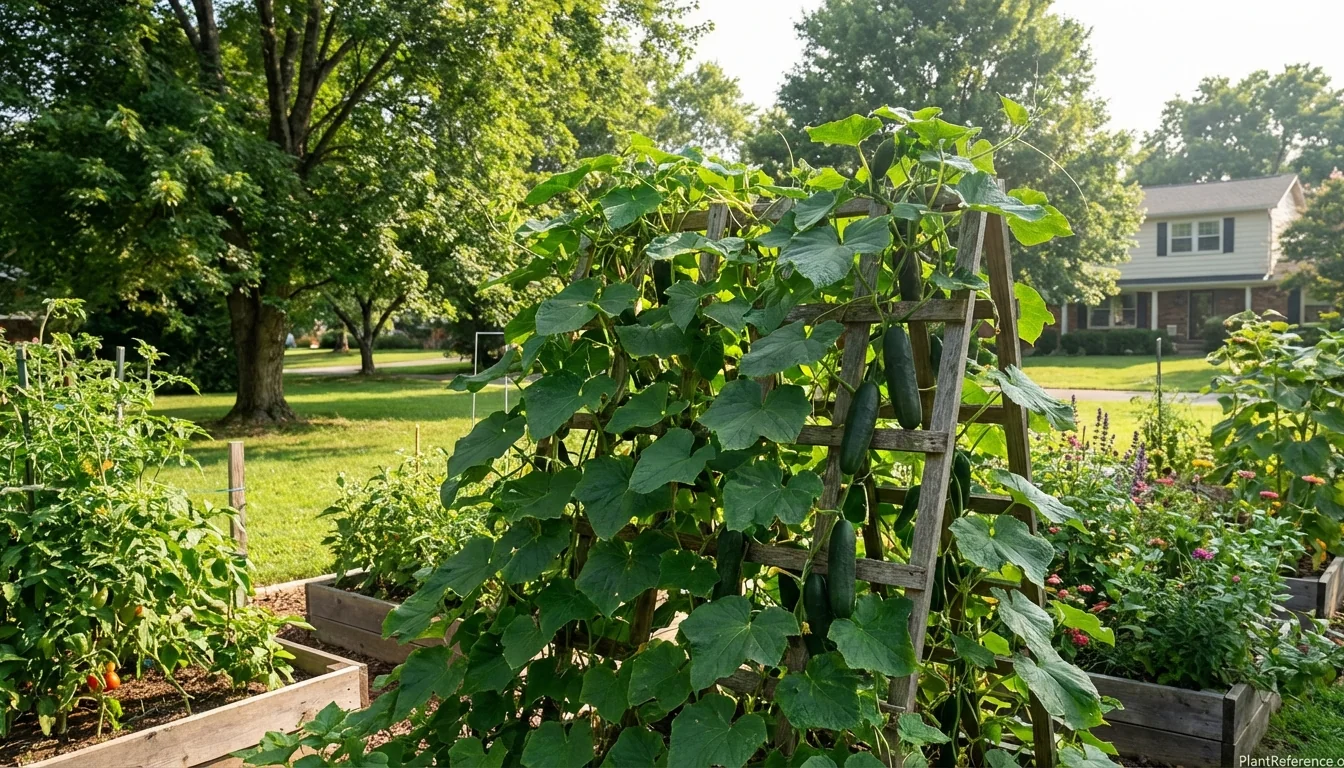
— Image © Plant Reference 2026
Nashville sits in one of the best cucumber-growing climates in the country—long, warm summers with enough heat to drive heavy production and a season long enough for multiple plantings. Growing up helping my grandfather in the Mississippi Delta, I learned that Southern cucumbers are all about two things: drainage and disease management. Nashville gets over 47 inches (120 cm) of rain annually, and that moisture drives both the vigorous growth and the aggressive disease pressure that define cucumber growing in the Mid-South. Get your drainage right and your variety selection right, and you'll harvest cucumbers from May through October without much trouble. Get either one wrong and you'll spend the summer watching vines collapse. When to Plant Tomatoes in Nashville: Complete Guide + Best Varieties for Zone 7a
Best Cucumber Varieties for Nashville's Climate
Nashville sits in USDA Zone 7a with an April 10 last frost and October 30 first frost—203 growing days. The Middle Tennessee climate combines the heat and humidity of the Deep South with enough winter cold to create a distinct warm-season growing window. Disease resistance is the primary selection factor because Nashville's rainfall and humidity drive Downy Mildew (Pseudoperonospora cubensis) and Powdery Mildew through the entire summer growing period. Varieties bred for the humid Eastern states consistently outperform those developed for drier climates.
Variety | Type | Days to Harvest | Disease Resistance | Best For |
|---|---|---|---|---|
Slicing | 65 days | High (Scab, CMV, moderate DM/PM) | Best overall for Nashville humidity | |
Pickling | 55 days | Low-Moderate | Fast harvest, fall pickling | |
🌿Cucumis sativus 'Persian' (Beit Alpha) | Specialty | 55 days | Moderate (PM) | Containers, small gardens |
Specialty | 65 days | Moderate (Rust, drought tolerant) | Heat tolerance, Southern tradition | |
Slicing | 63 days | Low (CMV tolerance only) | Early spring before disease pressure | |
🌿Cucumis sativus 'Marketmore 76' (fall crop) | Slicing | 65 days | High | August planting for fall harvest |
🌿Cucumis sativus 'Marketmore 76' is the backbone of Nashville cucumber growing. Its resistance to Scab, Cucumber Mosaic Virus, and intermediate Downy and Powdery Mildew resistance gives it staying power through our humid summers that susceptible varieties can't match. The "stay-green" gene prevents the yellowing and bitter fruit production that heat stress triggers in other varieties during Nashville's July and August heat waves. Dark green 8-inch (20 cm) slicers with consistent quality from first pick through vine decline.
🌿Cucumis sativus 'Straight Eight' works for early spring eating—April transplants produce good fruit through May before disease pressure builds. But it fades fast once Downy Mildew arrives, typically by late June in Nashville. Research confirms this variety's susceptibility in humid conditions. Plant it for the first harvest and have 🌿Cucumis sativus 'Marketmore 76' succession plantings coming behind it.
🌿Cucumis sativus 'Lemon' has a place in the Southern garden tradition. Its drought tolerance and heat-adapted genetics help it produce through the worst of Nashville's summer, and the round yellow fruit adds variety to the harvest basket. Mild, burpless flavor even under heat stress makes it popular for fresh eating.
🌿Cucumis sativus 'Boston Pickling' at 55 days is what you plant in August for Nashville's fall pickling season. The cooler nights of September and October produce the crunchiest, most flavorful pickling cucumbers of the year. This has been a Southern tradition for generations, and the practice is sound—fall-grown pickling cucumbers outperform summer-grown in both texture and flavor. When to Plant Peppers in Nashville: Complete Guide + Best Varieties for Zone 7a
Specific Planting Dates for Nashville Gardens
Nashville's April 10 last frost and October 30 first frost give you a solid 203-day window. Spring warms steadily in Middle Tennessee without the late surprises that cities further north deal with, and fall lingers long enough for a productive second-season crop.
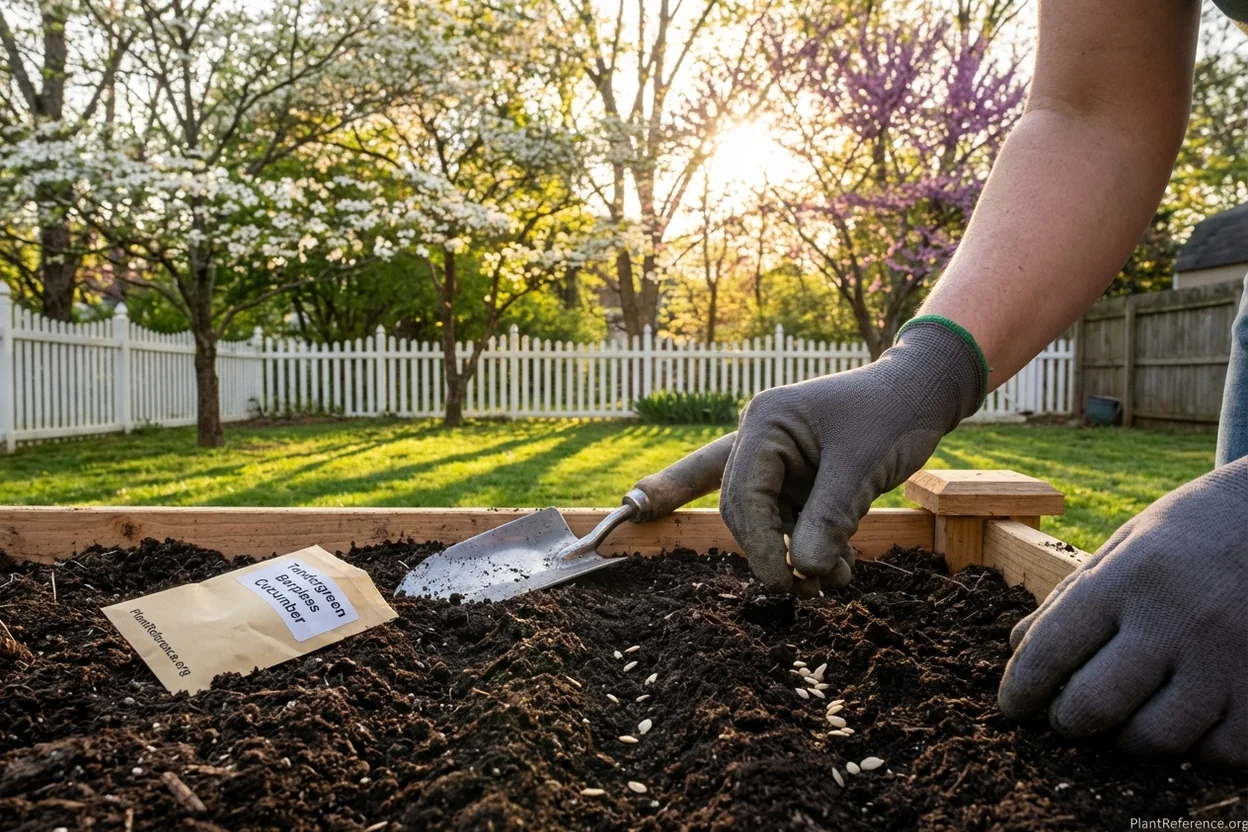
Indoor Seed Starting: March 20-27 (2-3 weeks before last frost). Start in biodegradable pots at 75°F (24°C) for 3-5 day germination. Nashville homes are warm enough by late March that a south-facing window produces good transplants without supplemental heat.
Transplant Outdoors: April 17-25 (one week after last frost, soil at 60°F/16°C). Harden off seedlings for 5-7 days. Nashville's April is generally warm but keep row covers available for the occasional cold front that drops overnight temperatures into the upper 30s.
Direct Sow (spring): April 20-May 15. Nashville's limestone-based clay soils warm steadily through April and reach 60°F (16°C) by the third week in most gardens. Check temperature at 4 inches (10 cm) with a thermometer. Direct sowing works well because our warm soil germinates cucumber seeds in 4-6 days.
Succession Plantings: Every 3 weeks from mid-April through late July. Nashville's season supports 3-4 successions. The first planting produces from late May through July. June and July successions replace declining vines and carry production into fall.
Fall Planting: August 1-15. Nashville's fall crop is reliably productive. Cooler temperatures from mid-September through October reduce disease pressure, improve pollination reliability, and produce higher-quality fruit than the heat-stressed summer harvest. 🌿Cucumis sativus 'Boston Pickling' (55 days) planted August 1 matures by late September with five weeks of harvest before frost.
Final Sowing Deadline: August 10. A 55-day variety planted August 10 matures around October 4 with nearly four weeks before the October 30 frost. Sixty-five-day varieties need to go in by August 1 to mature comfortably. Raised Bed Vegetable Garden Layout: Planning for Maximum Production
Complete Growing Guide for Nashville
Drainage: The Foundation of Nashville Cucumber Growing
Good drainage isn't optional in Nashville—it's the foundation everything else depends on. We get over 47 inches of rain annually, and those spring and summer thunderstorms can dump 2-3 inches in a single event. Nashville's limestone-based clay soil holds water and drains slowly, creating the waterlogged conditions that suffocate cucumber roots and promote the very diseases we're trying to avoid.
Raised beds solve the drainage problem definitively. Build from rot-resistant lumber (cedar lasts 12-15 years in our climate; untreated pine rots in 2-3 years in Nashville humidity) and fill with 60% topsoil, 30% compost, and 10% perlite. For in-ground plots, work 4-6 inches (10-15 cm) of compost into the top 12 inches (30 cm) and create slightly raised planting rows so water drains away from root zones after storms. Target pH 6.0-6.8—Nashville soils tend toward neutral to slightly alkaline due to the limestone bedrock, so test through the University of Tennessee Extension before adding amendments. How to Build a Raised Garden Bed: Step-by-Step Construction Guide
Trellising
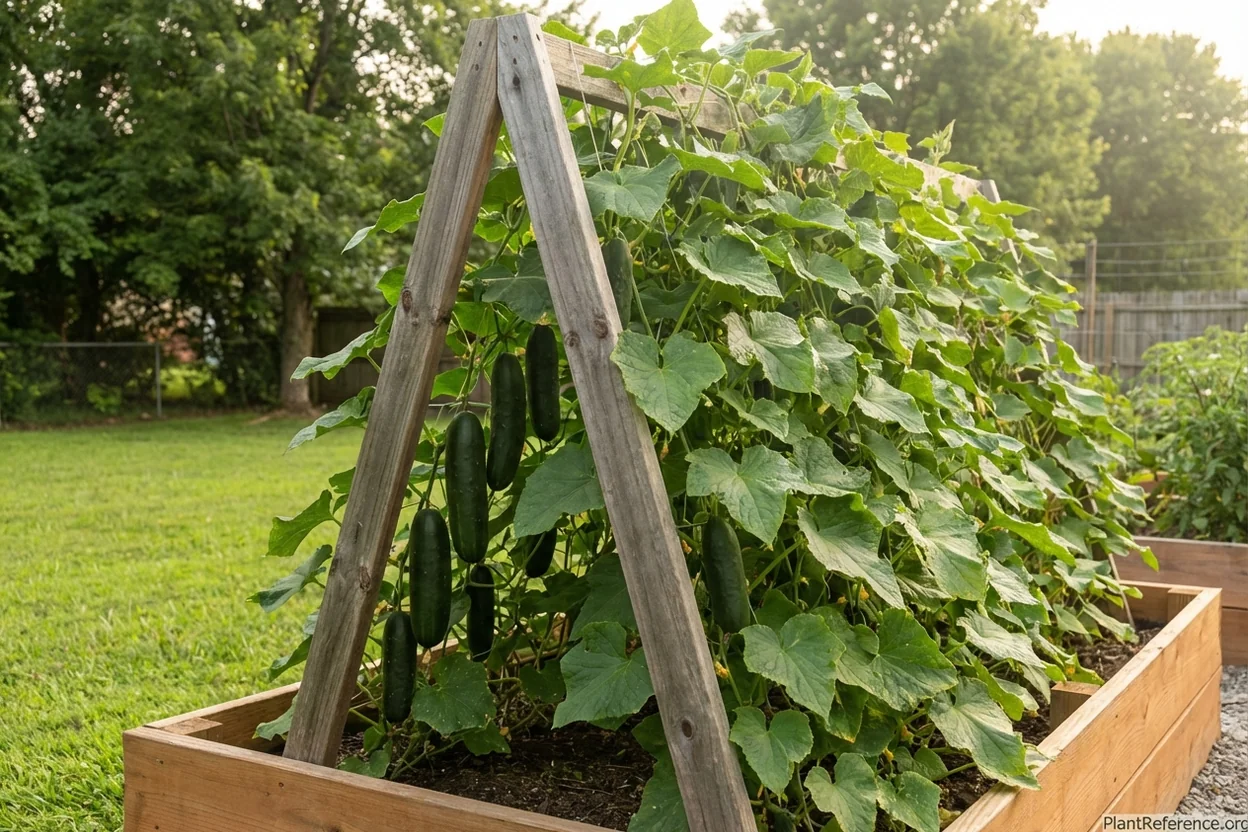
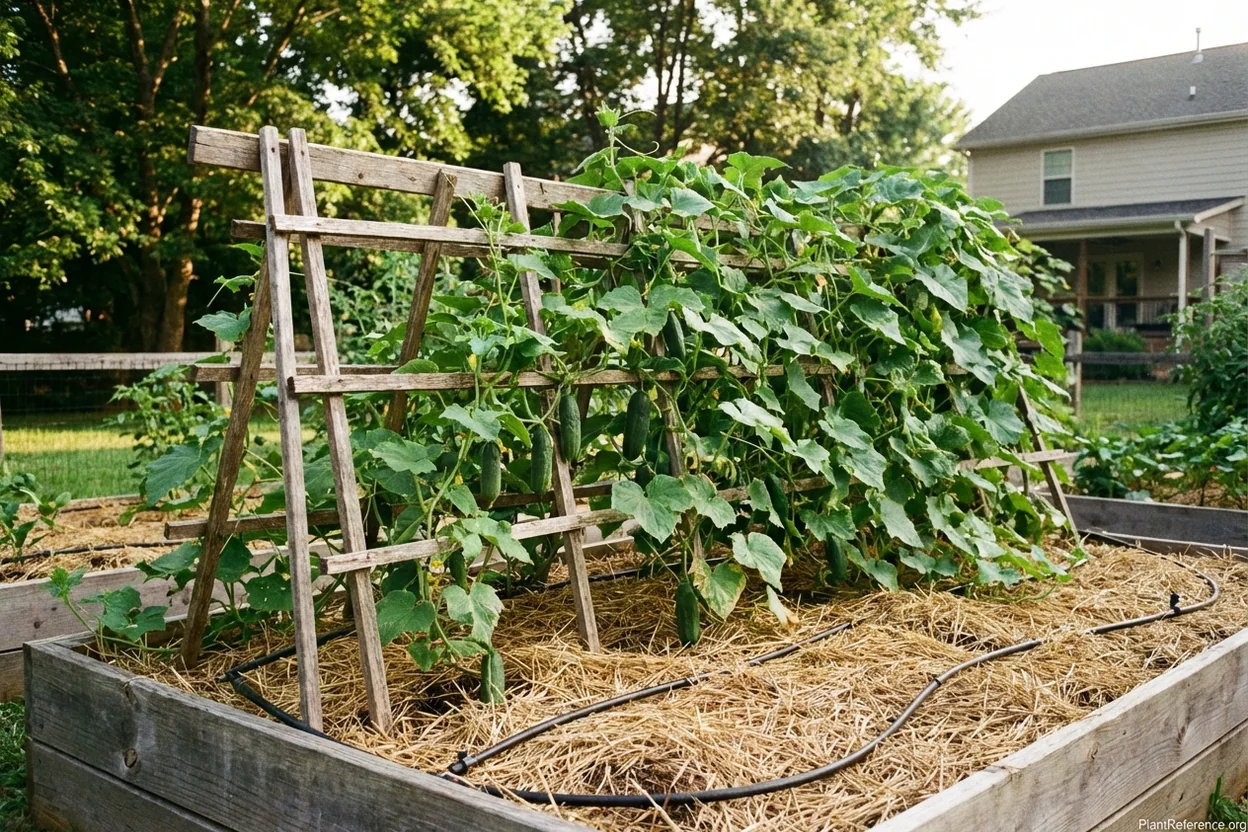
Vertical growing is essential in Nashville's humidity. Getting cucumber foliage off the ground and into moving air is the most effective cultural practice for reducing Downy and Powdery Mildew. A 6-foot (1.8 m) trellis—A-frame, cattle panel, or string system—supports vining varieties and keeps fruit clean. Nashville's summer thunderstorms produce winds that can flatten lightweight trellises, so anchor your structure with driven posts or concrete blocks. Trellised cucumbers also produce straighter fruit, yield more per square foot, and are far easier to inspect for early disease symptoms. 5 Best Drip Irrigation Kits for Raised Beds (Tested for Easy Installation)
Watering
Despite Nashville's abundant rainfall, drip irrigation is strongly recommended. The issue isn't total moisture—it's consistency and foliage management. Thunderstorms deliver too much water at once, waterlogging soil, then dry stretches follow that stress vines. Drip on a timer delivers 1 to 1.5 inches (2.5-4 cm) weekly regardless of rainfall patterns. More importantly, drip keeps foliage dry. Overhead watering in Nashville's humidity is the fastest way to accelerate Downy Mildew.
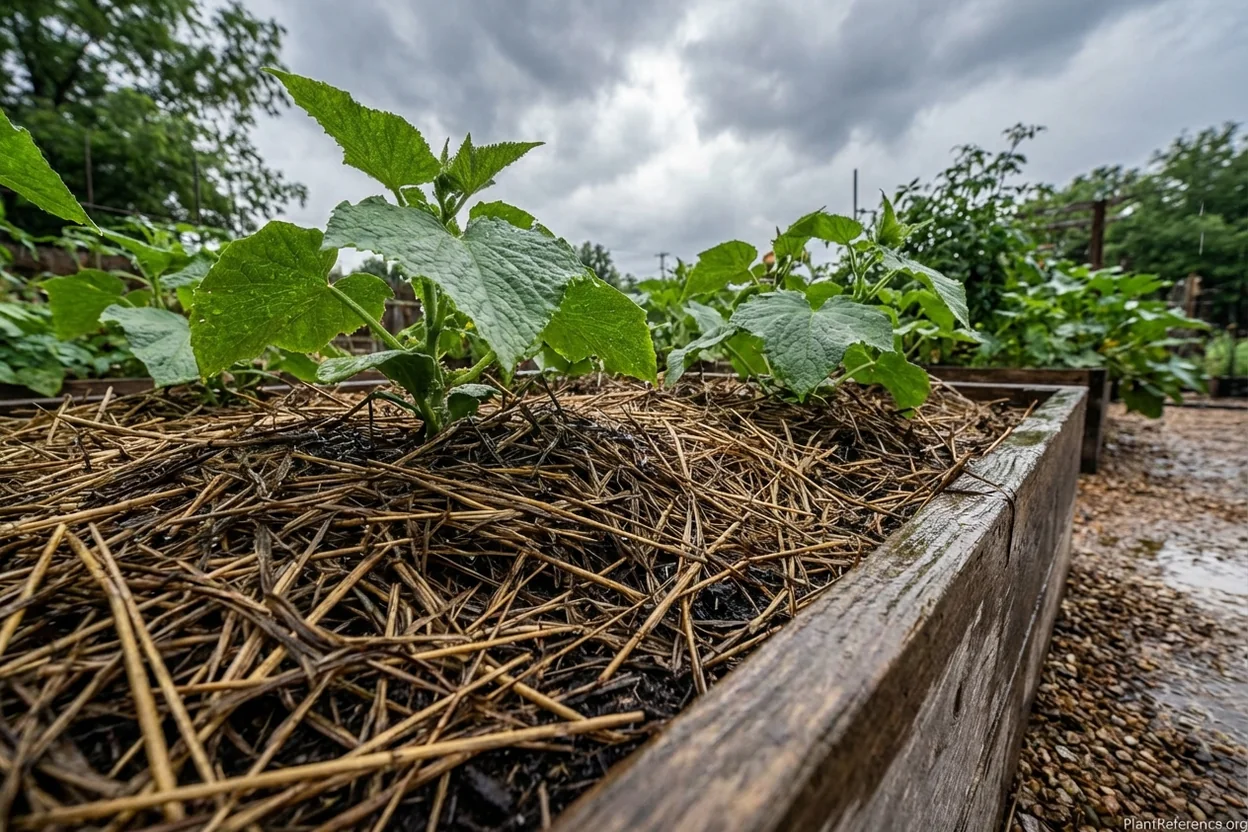
Mulch 3 inches (8 cm) with straw or shredded hardwood after transplanting. Nashville's heavy rainfall splashes soil onto lower leaves—a primary disease vector. Mulch prevents splash, retains moisture during dry spells, and moderates soil temperature during July and August heat.
Feeding
Side-dress with balanced fertilizer at flowering and again at first fruit set. Nashville's soils are generally fertile from the limestone-derived minerals, but heavy rainfall leaches nitrogen faster than in drier climates. Compost tea biweekly during production replaces lost nitrogen while supporting soil biology. Avoid heavy nitrogen after fruit begins forming—shift to phosphorus and potassium to support cucumber development over vine growth.
Pollination
Standard varieties like 🌿Cucumis sativus 'Marketmore 76' and 🌿Cucumis sativus 'Straight Eight' are monoecious and need pollinator visits. Nashville supports strong pollinator populations in most neighborhoods. During July and August when temperatures exceed 90°F (32°C), pollen viability decreases. 🌿Cucumis sativus 'Persian' types bypass this with parthenocarpic fruit set—valuable during the hottest weeks. Planting zinnias, sunflowers, and herbs like dill near cucumbers attracts and sustains pollinators through the growing season. When to Plant Squash in Nashville: Complete Guide + Best Varieties for Zone 7a
Troubleshooting Nashville-Specific Problems
Downy Mildew
Nashville's combination of heat and humidity creates ideal Downy Mildew conditions from June through September. Spores migrate north from the Gulf states and reach Middle Tennessee by late June. Angular yellow spots on upper leaf surfaces darken to brown as the disease progresses. Prevention: 🌿Cucumis sativus 'Marketmore 76' for resistance, vertical trellising, drip irrigation, and immediate removal of infected leaves. Succession planting ensures fresh vines replace those declining to disease. The fall crop benefits from reduced disease pressure as temperatures cool in September. Raised Bed Pest Problems: Identification and Organic Control Methods
Waterlogged Soil After Storms
Nashville's clay soil becomes saturated after heavy thunderstorms, suffocating cucumber roots. Symptoms look like drought—wilting and yellowing—because drowned roots can't take up water. Check soil moisture at 4 inches (10 cm) before watering a wilting plant. If it's saturated, wait for drainage rather than adding more water. Raised beds and compost-amended soil are the long-term solutions. Avoid planting in low spots where water pools after storms.
Heat Stress and Bitter Fruit
Nashville regularly hits 90-95°F (32-35°C) in July and August. Sustained heat above 90°F causes pollen sterility and triggers cucurbitacin production (bitterness) in susceptible varieties—particularly 🌿Cucumis sativus 'Straight Eight'. Consistent deep watering prevents the compounding effect of heat plus water stress. Mulch heavily to moderate root zone temperatures. 🌿Cucumis sativus 'Marketmore 76' maintains fruit quality under heat better than other varieties. Raised Bed Too Hot in Summer: Protecting Plants from Heat Stress
Cucumber Beetles
Active from April through October in Nashville. Striped and spotted cucumber beetles vector bacterial wilt and feed on all above-ground plant parts. Row covers over spring transplants exclude beetles during the critical establishment period—remove at flowering. Trap cropping with Blue Hubbard squash planted two weeks before cucumbers concentrates beetles for targeted control. Hand-picking in early morning when beetles are sluggish works in smaller gardens.
Harvest & Storage
Harvest slicing cucumbers at 6-8 inches (15-20 cm) and pickling types at 2-4 inches (5-10 cm). Check vines daily during Nashville's hot summer—humid heat drives rapid fruit development and cucumbers grow from ideal to overripe in 36-48 hours. Overripe fruit signals the plant to stop producing. In a climate where disease already limits vine lifespan, losing productive days to unharvested fruit wastes the plant's remaining vigor.
Cut with pruners rather than pulling. Harvest before 9 AM in summer when fruit is coolest and firmest. A healthy 🌿Cucumis sativus 'Marketmore 76' plant produces 10-15 slicing cucumbers per planting cycle. 🌿Cucumis sativus 'Boston Pickling' yields 15-20 smaller fruits with consistent picking. Across 3-4 successions, a Nashville garden row produces 40-60 cucumbers per season.
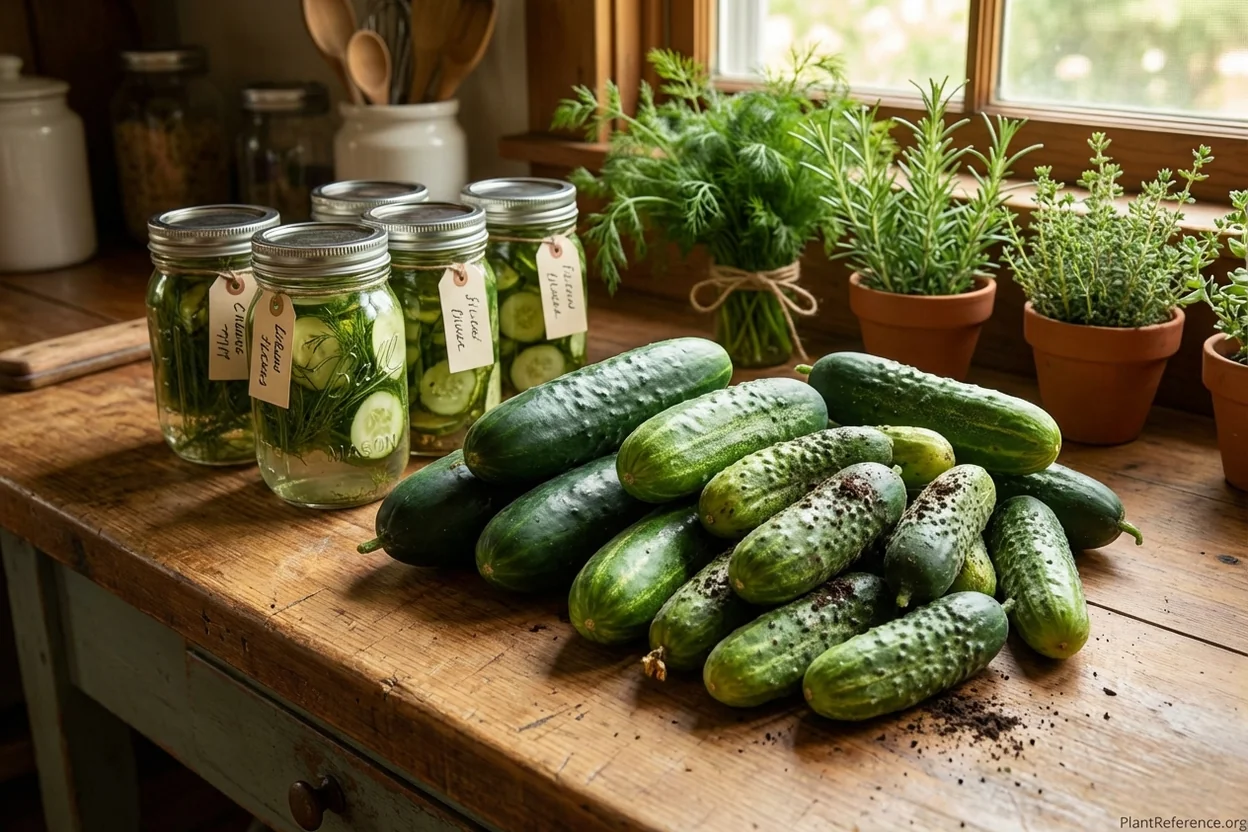
Fresh cucumbers store 7-10 days refrigerated in a towel inside a loose bag. 🌿Cucumis sativus 'Boston Pickling' from the fall planting makes outstanding refrigerator pickles—the tradition of fall pickling runs deep in Tennessee, and for good reason. Cooler autumn growing temperatures develop the crisp texture and clean flavor that have made Southern pickles famous. Processing within 24 hours of harvest produces the crunchiest results. The Complete Guide to Raised Bed Gardening for Beginners (2025)
Frequently Asked Questions
Reading about plants and recognising them are different skills. These three build the second.
- Daily PlantIdentify the day’s mystery plant from a close-up photograph.
- Keyed OutWork a dichotomous key, lead by lead, to name a hidden specimen.
- Name That PlantName a specimen from botanical clues dealt hardest first.
Free to play, no account needed
Marcus manages the grounds at a historic property in Memphis and runs a side business doing residential garden design. He grew up helping his grandfather maintain a large vegetable garden in the Mississippi Delta and carried that knowledge into formal training—he has a degree in landscape technology. Memphis sits in a sweet spot for growing: long warm seasons, decent rainfall, and mild enough winters that many marginally hardy plants survive. Marcus writes about Southern gardening traditions, ornamental garden design, and dealing with the humidity and heavy rainfall that define the Mid-South climate.