When to Plant Lettuce in Raleigh: Complete Guide + Best Varieties for Zone 7b
Pets & Toxicity
Recorded toxicity for plants linked in this guide. An unknown status is not a safety assessment.
No linked plant is recorded as toxicDetailsHide
Lactuca sativa var. crispa — Toxicity: Not assessed
Lactuca sativa var. crispa is non-toxic and safe for human consumption. All parts of the plant are edible, though leaves are the primary harvest. Generally safe around pets, though large quantities may cause mild digestive upset in some animals.View Lactuca sativa var. crispa plant profile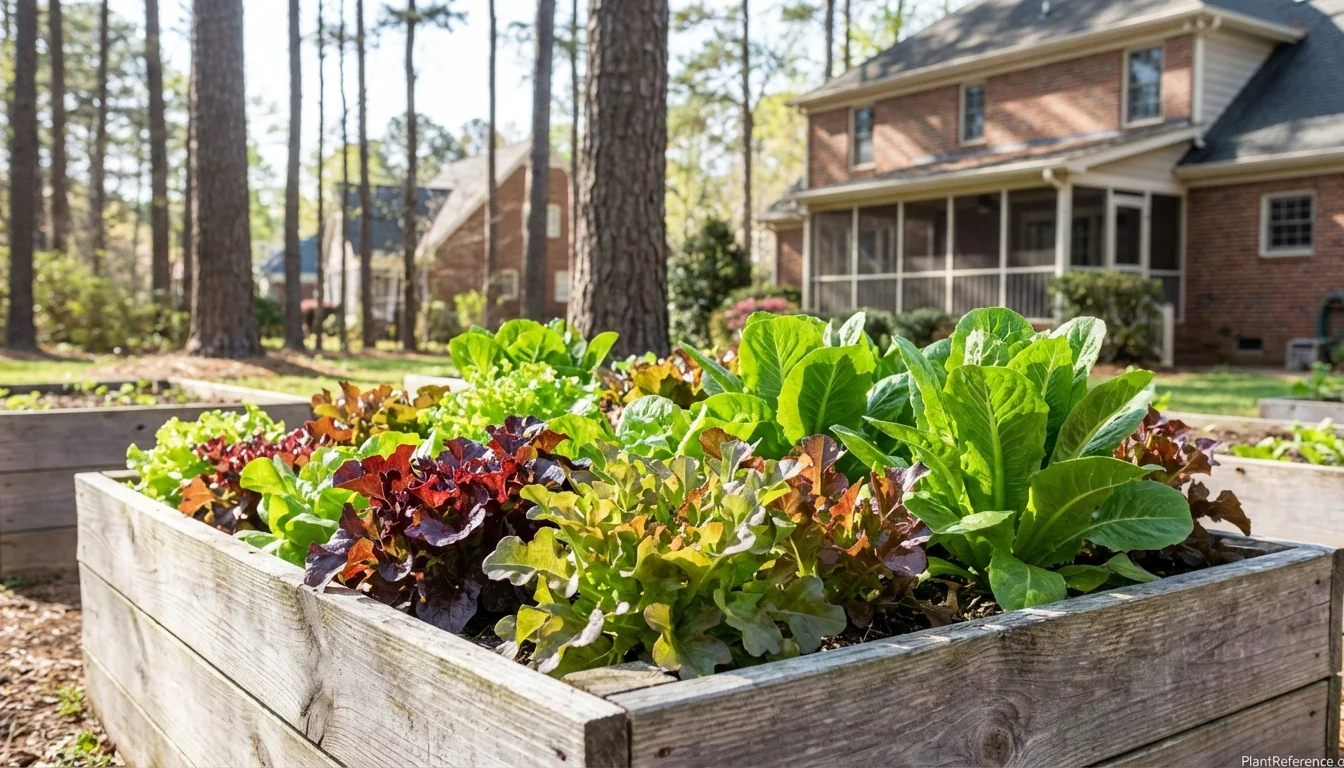
— Image © Plant Reference 2026
Raleigh sits in the sweet spot of Southern lettuce growing—warm enough for an early start and extended fall, but moderate enough that the summer gap doesn't stretch as long as Atlanta's or Dallas's brutal interruptions. The Triangle's Zone 7b Piedmont climate delivers a 214-day frost-free season from early April through early November, but lettuce's cold tolerance extends the effective window from early March through late November—nine months of potential production that Northern cities can only dream about. The spring window from March through mid-June is generous, with North Carolina's gradual warming giving Raleigh gardeners nearly four months before summer heat triggers bolting. The fall window from September through November is excellent, with Piedmont temperatures declining slowly through autumn and occasional frost sweetening November lettuce. The summer gap runs 8-10 weeks from mid-June through mid-August—shorter than Atlanta's 10-12 weeks because Raleigh's Piedmont elevation (300-400 feet) provides marginally cooler conditions than Georgia's lower terrain. Raleigh occupies a transitional position in the lettuce climate spectrum: it's warm enough that winter production is feasible with simple protection (unlike Midwest cities where winter is impossible), but cool enough that the two-season spring-fall approach works well (unlike deep South cities where lettuce is purely a cool-season winter crop). This flexibility makes Raleigh one of the most versatile lettuce cities in the guide. The Triangle's food culture—from the State Farmers Market to the Durham Farmers Market to the farm-to-table restaurants across downtown Raleigh, Durham, and Chapel Hill—creates genuine demand for locally grown greens across North Carolina's Research Triangle. The Triangle's gardening community benefits from NC State University's agricultural extension, which provides region-specific growing guidance for Piedmont conditions that few other cities can match for research-backed practical advice. When to Plant Tomatoes in Raleigh: Complete Guide + Best Varieties for Zone 7b
Best Lettuce Varieties for Raleigh's Climate
Raleigh sits in USDA Zone 7b with an April 5 last frost and November 5 first frost—214 frost-free days. Lettuce tolerates 28°F (-2°C) once established, extending the effective season from early March through late November. The Piedmont's moderate climate supports all lettuce types with variety selection driven by seasonal timing and humidity management.
Variety | Type | Days to Harvest | Heat Tolerance | Best For |
|---|---|---|---|---|
Butterhead | 55-65 days | High (for type) | Best all-around for Raleigh | |
🌿Lactuca sativa var. crispa (Red Oak Leaf) | Looseleaf | 45-55 days | Moderate-High | Cut-and-come-again |
🌿Lactuca sativa var. longifolia (Romaine) | Cos | 70-80 days | Moderate | Fall crop, overwinter potential |
Mesclun Mix | Seedling mix | 30-40 days | Variable | Fastest harvest, succession |
Butterhead | 55-65 days | Low | Late fall/early spring | |
🌿Lactuca sativa var. capitata (Iceberg) | Crisphead | 80-90 days | Low | Fall only |
🌿Lactuca sativa 'Buttercrunch' leads for Raleigh because its bolt resistance extends the spring window 2-3 weeks past traditional butterheads—pushing production into mid-June before Piedmont summer heat forces shutdown. Buttercrunch maintains sweet flavor when other varieties turn bitter during the late-spring transition. The compact rosettes handle North Carolina's spring thunderstorms better than delicate types, and the buttery texture that defines this variety thrives in the moderate Piedmont conditions.
🌿Lactuca sativa var. crispa (Red Oak Leaf) at 45-55 days provides fast spring production and outstanding fall performance. The burgundy-tipped leaves develop vivid color during Raleigh's cool October-November nights. Cut-and-come-again harvesting extends each planting across 4-6 weeks of repeated cuts.
🌿Lactuca sativa var. longifolia (Romaine) at 70-80 days excels as Raleigh's fall crop—plant in August for October-November maturity when declining temperatures produce dense, sweet hearts. Romaine's frost tolerance to 20°F (-7°C) extends harvest past the November 5 first frost into December with minimal protection. In Zone 7b, Romaine can overwinter under cold frames for February production.
Mesclun Mix at 30-40 days delivers the fastest Raleigh harvest—sow in early March and harvest by mid-April. The rapid cycle makes mesclun the most versatile variety for the Triangle's extended growing calendar.
🌿Lactuca sativa 'Bibb' produces Raleigh's most refined lettuce during the coolest weeks of late fall and early spring. Restrict to temperatures below 75°F because Bibb bolts rapidly in heat.
🌿Lactuca sativa var. capitata (Iceberg) at 80-90 days works as a fall crop—start indoors in July for October transplanting into cooling Piedmont conditions. When to Plant Peppers in Raleigh: Complete Guide + Best Varieties for Zone 7b
Specific Planting Dates for Raleigh Gardens
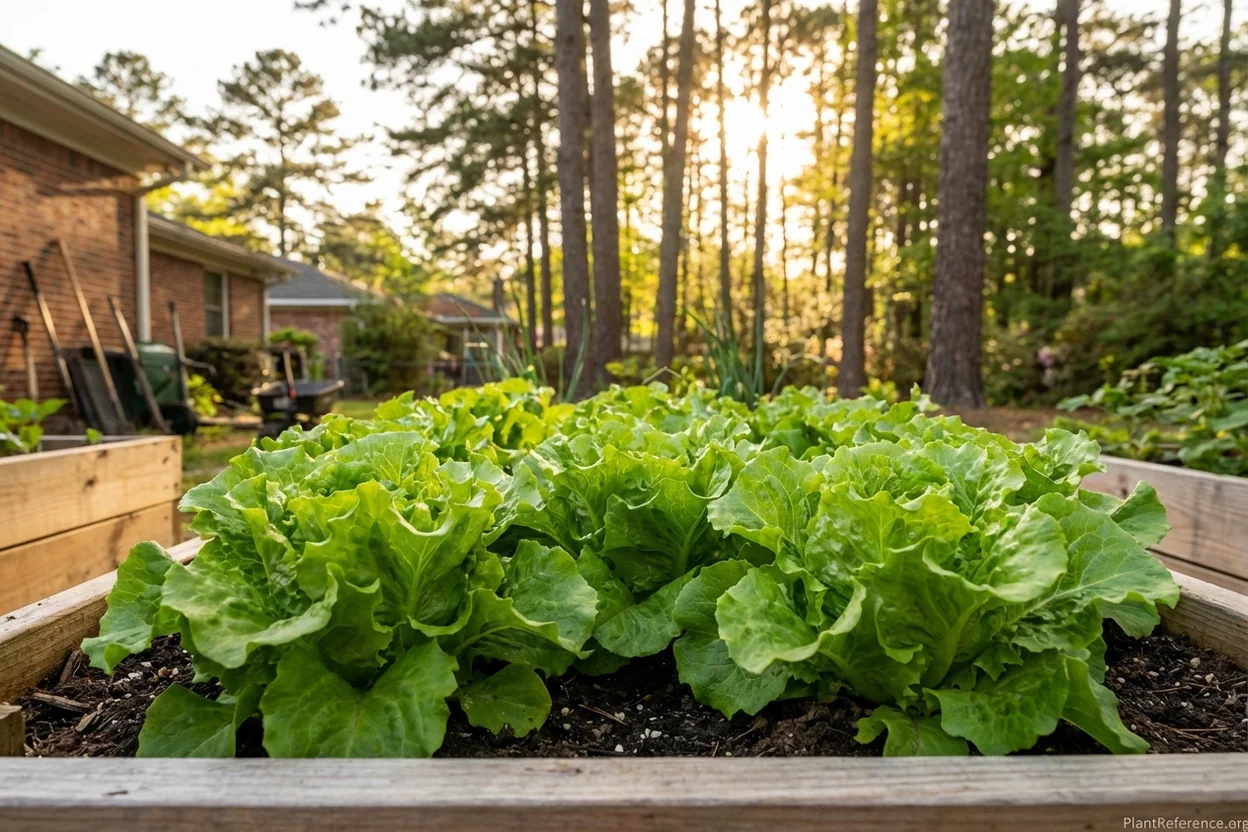
Raleigh's Zone 7b provides a generous lettuce calendar with earlier spring starts and later fall endings than Midwest cities, while avoiding the extreme summer heat that defines deep-South lettuce growing.
Indoor Seed Starting (Spring): February 15-March 1 (4-6 weeks before transplanting). Start at 60-70°F (15-21°C). Lettuce germinates in 5-10 days.
Direct Sow (Spring): March 1-15. Raleigh soil reaches 40°F by early March. Succession sow every 10-14 days through mid-May for continuous spring harvest.
Transplant Outdoors (Spring): March 15-April 5. Hardened transplants tolerate frost to 28°F. The Piedmont's gentle spring warming allows earlier outdoor planting than many gardeners expect.
Summer Gap (Mid-June through Mid-August): Raleigh's gap runs 8-10 weeks when temperatures consistently exceed 85°F with high humidity. With 30-50% shade cloth and 🌿Lactuca sativa 'Buttercrunch', production extends into late June. The gap is shorter than Atlanta's (10-12 weeks) but longer than Northern cities (6-8 weeks).
Fall Sowing: August 15-September 1. Start seeds indoors to bypass thermoinhibition from hot August soil. Transplant outdoors by early September under shade cloth for establishment.
Fall Production Window: September through November. Raleigh's premium lettuce season—declining Piedmont temperatures and occasional frost produce the year's sweetest, crispest lettuce.
Winter Growing (Zone 7b Advantage): Row covers extend harvest into December-January. Cold-hardy 🌿Lactuca sativa var. longifolia (Romaine) overwinters under cold frames in Zone 7b, resuming production in late February. Raised Bed Vegetable Garden Layout: Planning for Maximum Production
Complete Growing Guide for Raleigh
Piedmont Soil
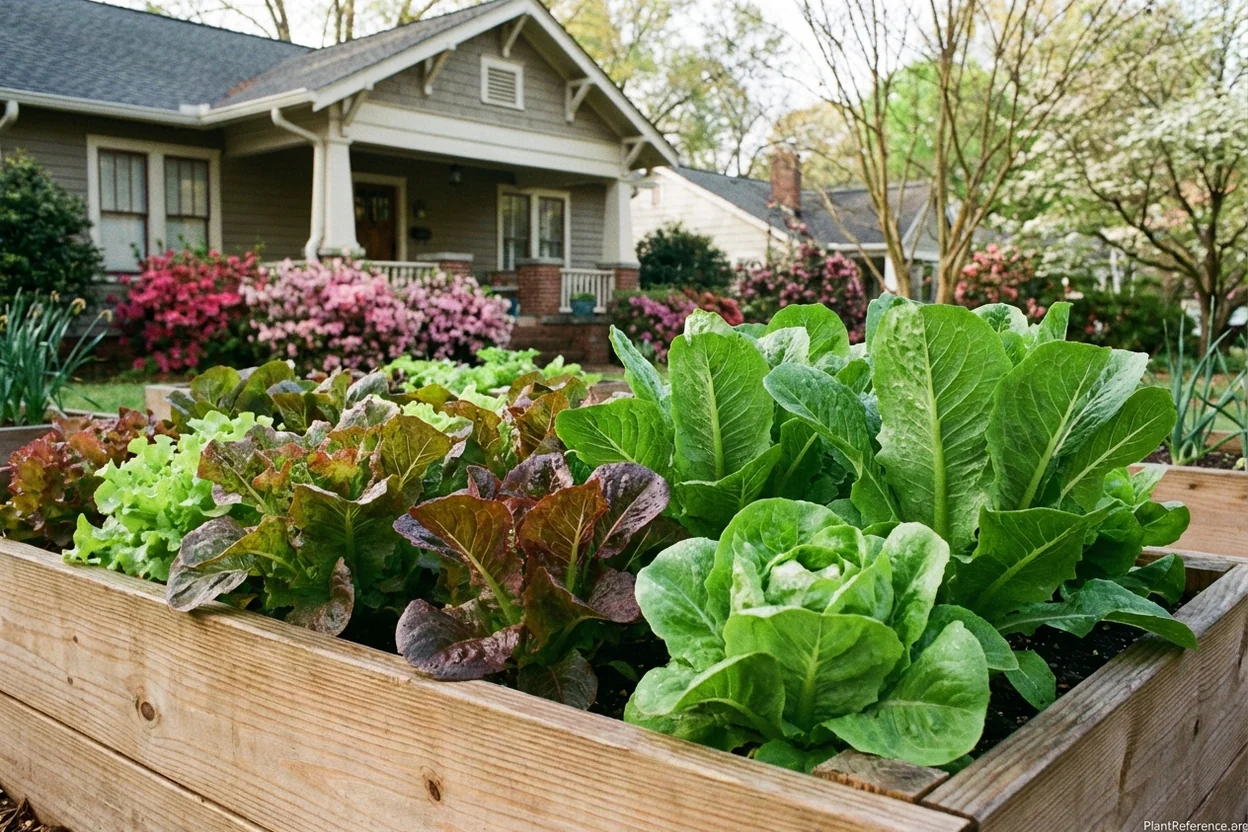
Raleigh's Piedmont soils are red clay—similar to Atlanta's Piedmont clay but generally less extreme in density and compaction. The heavy, acidic clay (pH 5.5-6.5) drains poorly when saturated and compacts when dry, creating challenging conditions for lettuce's shallow root system. Raised beds are strongly recommended though not as absolutely mandatory as in Atlanta's heavier clay. Work 2-3 inches (5-8 cm) of compost into the top 8 inches (20 cm) to improve drainage and structure. Raleigh's acidic Piedmont soils may need lime to reach lettuce's preferred pH 6.0-7.0. Space heading types 8-12 inches (20-30 cm) and looseleaf 4-6 inches (10-15 cm). How to Build a Raised Garden Bed: Step-by-Step Construction Guide
Watering in Piedmont Humidity
Raleigh receives about 46 inches (117 cm) of annual rainfall—generally adequate but delivered unevenly through intense spring and summer thunderstorms with dry stretches between. Supplement with 1-1.5 inches (2.5-4 cm) per week during dry periods to maintain the consistent soil moisture that lettuce's shallow root system demands. Morning watering is essential because overnight moisture on foliage in Raleigh's 65-75% humidity promotes downy mildew during spring and fall. Drip irrigation delivers water without wetting leaves—critical for heading types in the humid Piedmont climate. Mulch 1-2 inches (2.5-5 cm) to retain moisture and cool roots during the spring-to-summer transition. 5 Best Drip Irrigation Kits for Raised Beds (Tested for Easy Installation)
Shade Cloth for Summer Bridge
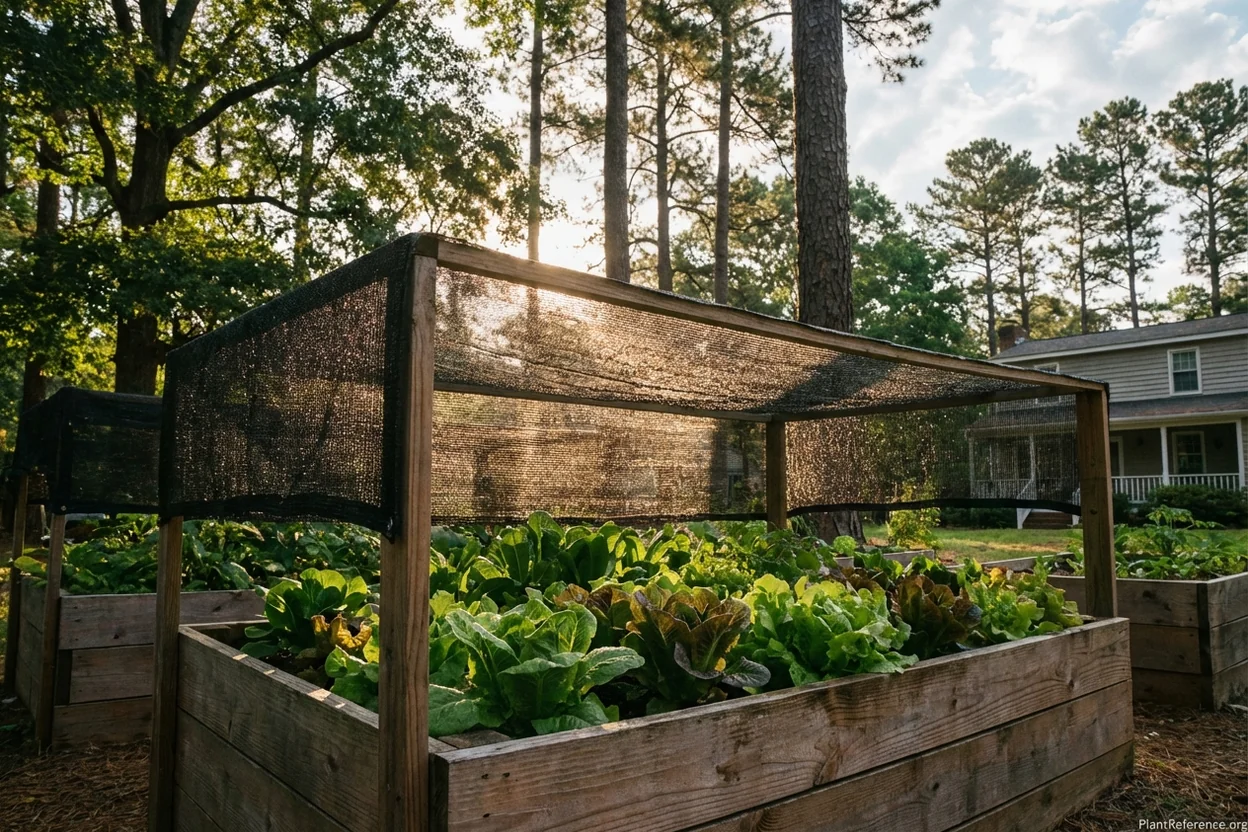
Shade cloth (30-50%) extends Raleigh's spring window by 2-3 weeks and enables earlier fall establishment. Install by late May over lettuce beds. The Piedmont's moderate heat means shade cloth is effective here—unlike deep-South cities where nighttime temperatures sustain bolting even with shade. 🌿Lactuca sativa 'Buttercrunch' under shade cloth produces into late June in Raleigh's slightly elevated Piedmont conditions. When to Plant Squash in Raleigh: Complete Guide + Best Varieties for Zone 7b
Succession Planting
Plant small batches every 10-14 days from March through mid-May and again from late August through October. Raleigh's climate supports 7-9 total succession plantings across both windows—more than most Midwest cities because both the spring and fall windows are longer. Stagger varieties by maturity: mesclun (30 days), Red Oak Leaf (50 days), Buttercrunch (60 days), and Romaine (75 days) planted simultaneously produce sequential harvests.
Feeding
Light feeder—fish emulsion every 3-4 weeks. Raleigh's acidic Piedmont soils may need lime to reach lettuce's preferred pH 6.0-7.0. Test soil through NC State Extension before planting—their soil testing service is among the most affordable and comprehensive in the country. Avoid excess nitrogen that increases downy mildew susceptibility in the humid Piedmont growing conditions. Compost provides adequate baseline nutrition in raised beds without additional chemical fertilizers for most lettuce crops. When to Plant Cucumbers in Raleigh: Zone 7b Dates + Best Varieties
The Triangle's Gardening Culture
Raleigh, Durham, and Chapel Hill form one of the South's most engaged gardening communities. The State Farmers Market, Durham Farmers Market, and Carrboro Farmers Market create strong demand for locally grown lettuce. Community gardens across the Triangle—from Raleigh's Pullen Park area to Durham's growing urban agriculture scene—provide growing space across the metro. NC State's agricultural extension provides region-specific growing guidance that benefits Triangle gardeners. When to Plant Kale in Raleigh: Complete Guide + Best Varieties for Zone 7b
Troubleshooting Raleigh-Specific Problems
Summer Gap (8-10 Weeks)
Raleigh's primary lettuce challenge from mid-June through mid-August when Piedmont temperatures exceed 85°F with high humidity. Prevention: harvest before bolting, bolt-resistant varieties (🌿Lactuca sativa 'Buttercrunch', Red Oak Leaf), shade cloth extending production into late June, and acceptance of the gap. Raleigh's gap is moderate—shorter than deep-South cities but longer than Northern locations. Raised Bed Too Hot in Summer: Protecting Plants from Heat Stress
Downy Mildew in Humid Conditions
Raleigh's Piedmont humidity promotes downy mildew during spring and fall—yellow patches on upper leaf surfaces with gray-white fuzz underneath. Prevention: morning watering only, adequate spacing (12 inches for heading types), drip irrigation keeping foliage dry, and immediate removal of infected material. 🌿Lactuca sativa var. crispa (Red Oak Leaf) and looseleaf types resist downy mildew better than heading types in Raleigh's humid conditions. Raised Bed Pest Problems: Identification and Organic Control Methods
Thermoinhibition for Fall Starts
Raleigh's August soil often exceeds 80°F, triggering lettuce seed dormancy. Prevention: start seeds indoors under AC, refrigerator-prime seeds, cover outdoor seedbeds with boards to shade and cool soil, or water seedbeds with cool water and sow in the evening. Raleigh's Piedmont elevation moderates soil temperatures slightly compared to low-elevation Southern cities.
Piedmont Clay Drainage
Raleigh's red clay can waterlog after heavy thunderstorms, suffocating shallow lettuce roots. Prevention: raised beds with well-draining mix, compost amendment improving native clay structure, and monitoring for standing water after heavy rain events. Best Soil Mix for Raised Beds: Creating the Perfect Growing Medium
Harvest & Storage
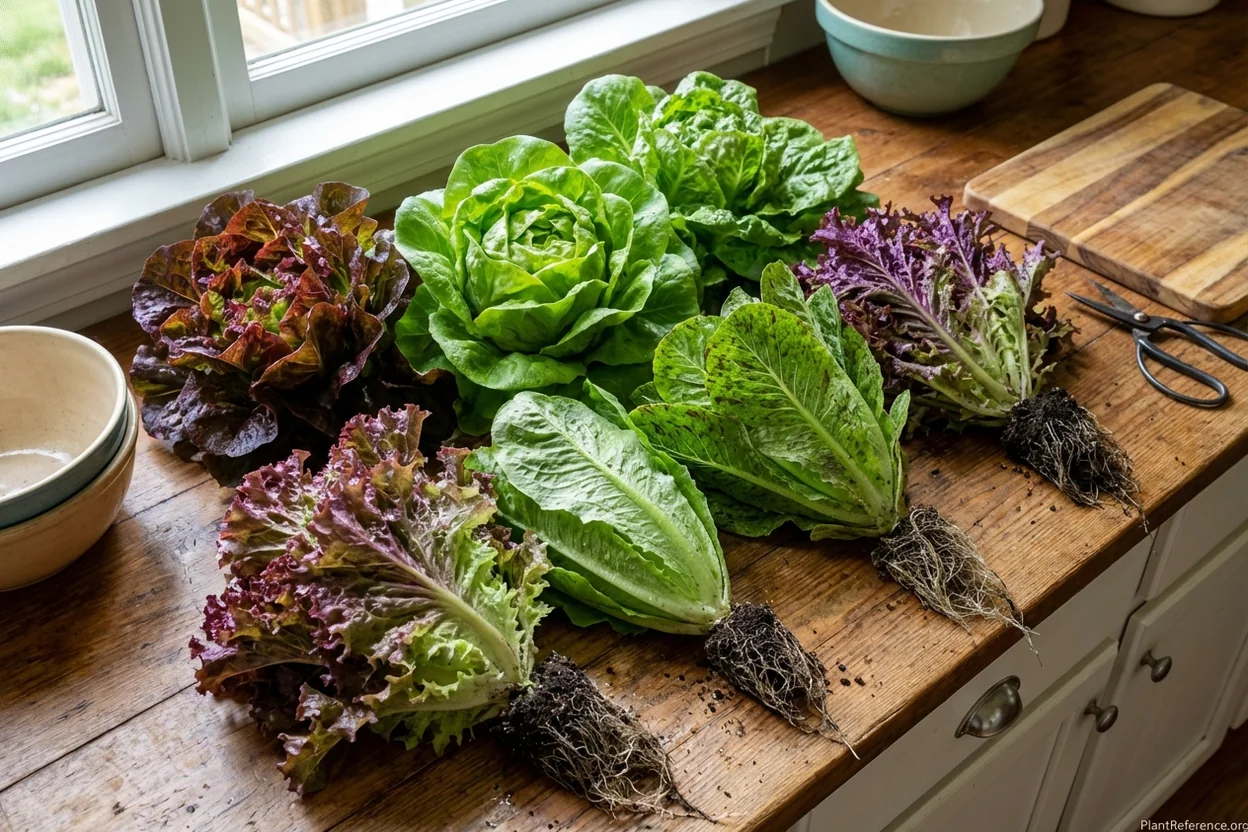
Harvest looseleaf types using cut-and-come-again—cut outer leaves 1 inch above the crown for 3-4 regrowth cycles over 4-6 weeks. Harvest heading types by cutting entire heads at the base when firm. Morning harvest before 9 AM captures peak crispness before Carolina heat builds.
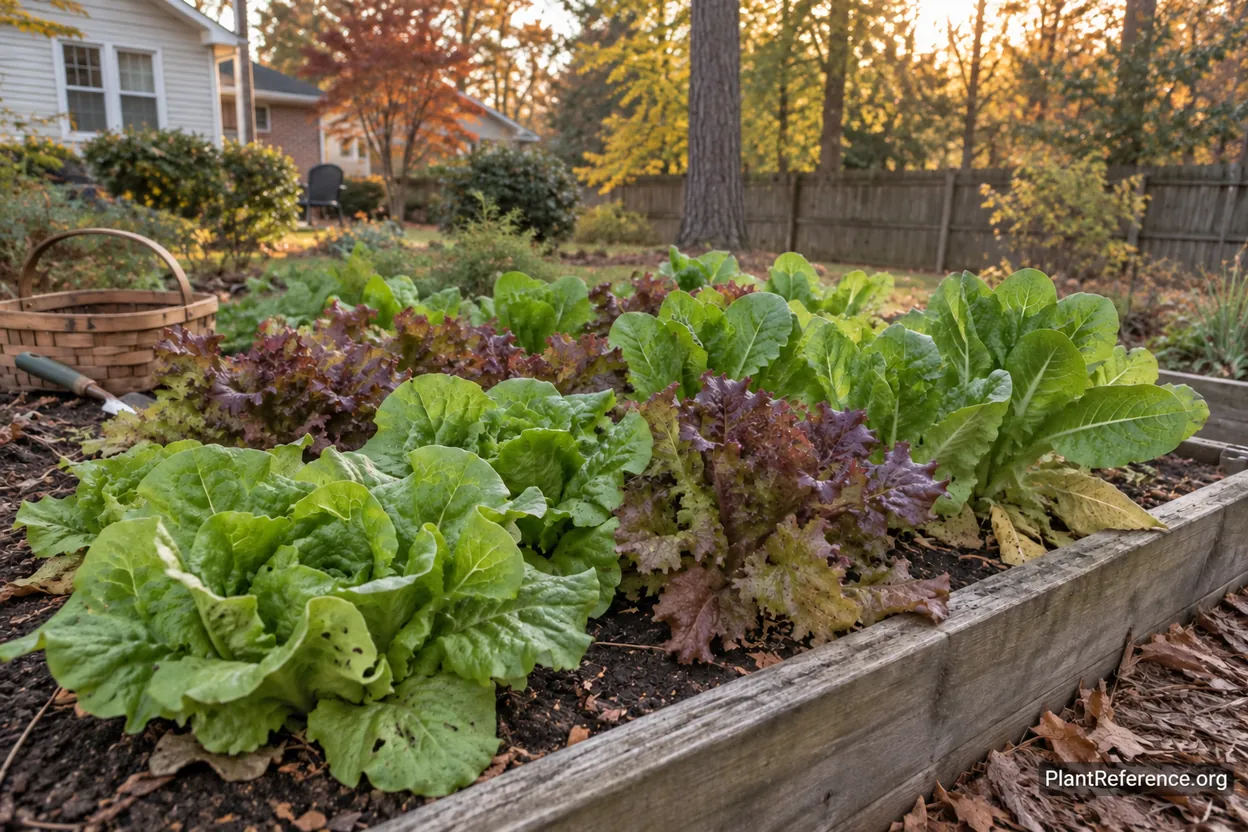
Raleigh's fall lettuce benefits from light frost—temperatures in the 28-32°F range trigger starch-to-sugar conversion that sweetens leaves. The Piedmont's gradual fall cooling produces frost-sweetened lettuce through November that rivals any Northern city's quality. Zone 7b's mild winters mean frost events are gentle, providing the sweetening benefit without killing the crop—a genuine advantage over colder Northern climates where hard freezes end the season abruptly and over deep-South cities where frost events are too rare to produce consistent sweetening across the full fall harvest window.
Store harvested lettuce refrigerated in damp paper towels inside a loose bag—keeps 7-10 days. Raleigh's nine-month effective lettuce window (March-November, extended into January with protection) provides fresh lettuce through most of the year. The Triangle's food culture—from the State Farmers Market to Durham's innovative restaurant scene to Carrboro's legendary farmers market—values the freshness and quality that homegrown Piedmont lettuce delivers. Raleigh's moderate position between Northern and deep-South growing patterns makes it one of the most versatile and genuinely productive lettuce cities in the entire 30-city guide series, offering flexibility that few other climates can match. The Complete Guide to Raised Bed Gardening for Beginners (2025)
Frequently Asked Questions
Reading about plants and recognising them are different skills. These three build the second.
- Daily PlantIdentify the day’s mystery plant from a close-up photograph.
- Keyed OutWork a dichotomous key, lead by lead, to name a hidden specimen.
- Name That PlantName a specimen from botanical clues dealt hardest first.
Free to play, no account needed
Tagged with
Rachel is a garden writer and photographer based in Raleigh who covers the Piedmont region of North Carolina. She has a journalism background and got into gardening after buying her first house and realizing she had no idea what any of the plants in her yard were. That curiosity led to a Master Gardener certification and eventually a garden writing career. Rachel is especially interested in native plants of the Southeast, seasonal color, and the challenge of gardening in red clay soil. Her photography background means she pays attention to how gardens look through the seasons—she thinks about visual composition as much as plant health. She writes clearly and directly, without the breathless enthusiasm that makes a lot of garden writing hard to trust.