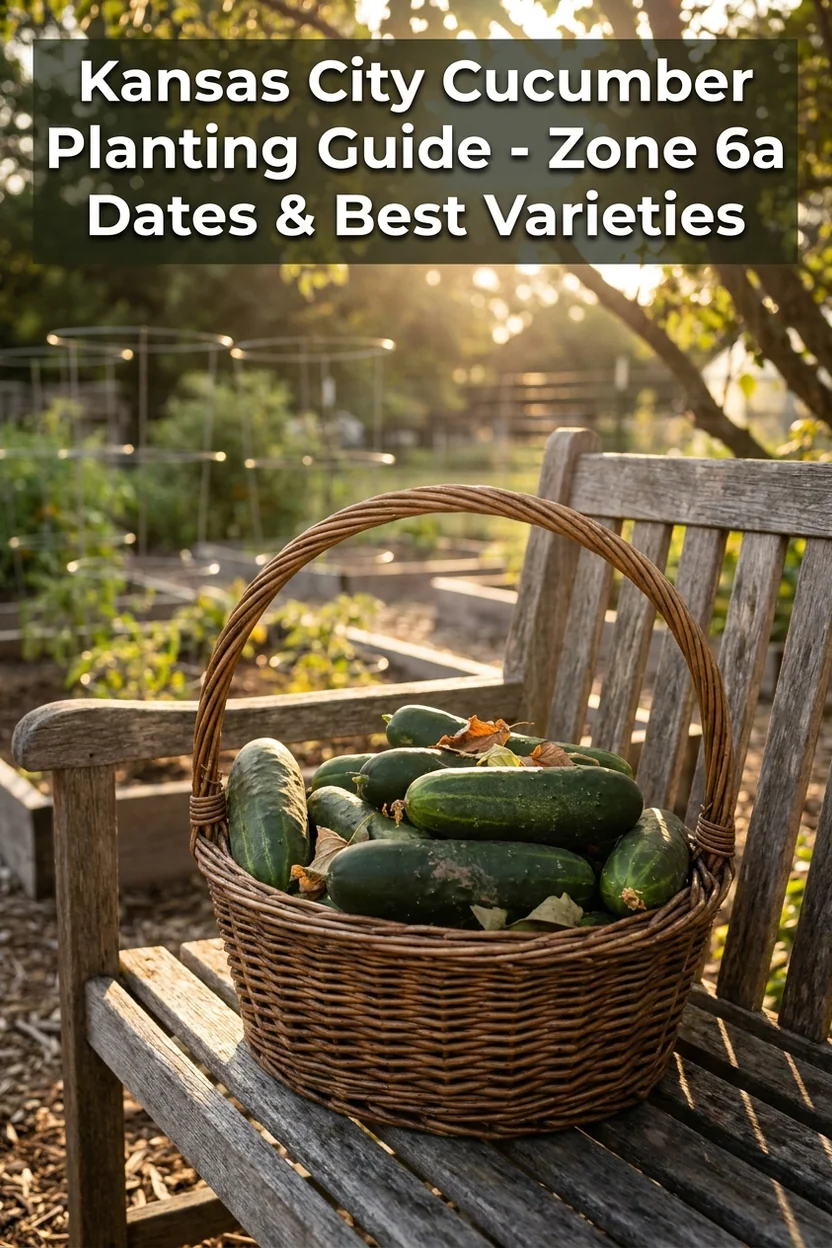
When to Plant Cucumbers in Kansas City: Complete Guide + Best Varieties for Zone 6a
Pets & Toxicity
Recorded toxicity for plants linked in this guide. An unknown status is not a safety assessment.
No linked plant is recorded as toxic (5 linked plants checked)DetailsHide
Cucumis sativus 'Marketmore 76' — Toxicity
Non-toxicView Cucumis sativus 'Marketmore 76' plant profileCucumis sativus 'Boston Pickling' — Toxicity
Non-toxicView Cucumis sativus 'Boston Pickling' plant profileCucumis sativus 'Straight Eight' — Toxicity
Non-toxicView Cucumis sativus 'Straight Eight' plant profile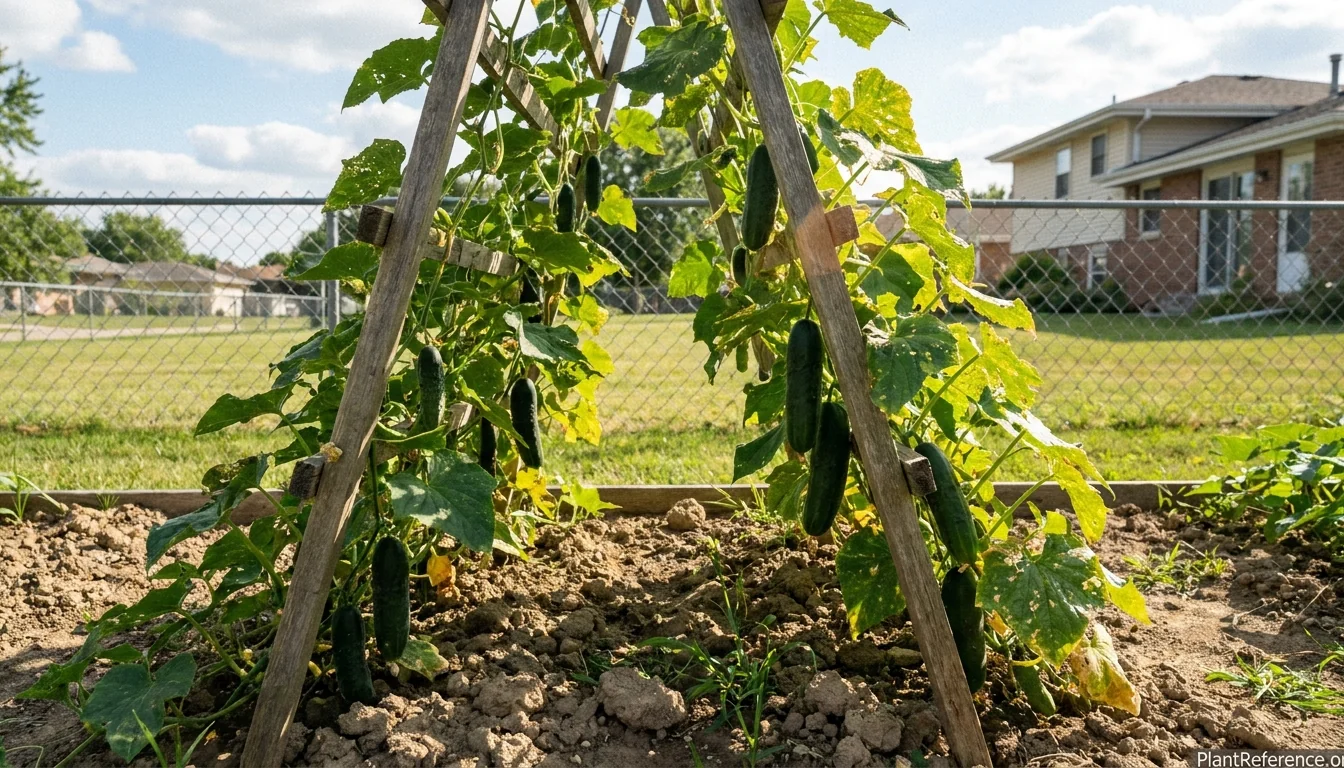
— Image © PlantReference.org 2026
Cucumbers do well in Kansas City—better than most people expect. We've got the heat they want, the long season they need, and enough rain most summers to keep them growing without running your water bill through the roof. The challenge isn't getting cucumbers to grow here. It's keeping them alive through August when humidity, disease, and heat stress converge into the toughest stretch of the growing season. I've been running a garden center in the Kansas City area for over twenty years, and every summer I see the same pattern: customers with beautiful cucumber vines in July and dead plants by mid-August. The gardeners who harvest into October are the ones who chose resistant varieties and planted in succession. That's the strategy I recommend to everyone who walks through my door. When to Plant Tomatoes in Kansas City: Complete Guide + Best Varieties for Zone 6a
Best Cucumber Varieties for Kansas City's Climate
Kansas City sits in USDA Zone 6a with an April 15 last frost and October 25 first frost—193 growing days. That's a generous window that accommodates any cucumber variety with room for multiple succession plantings. The selection factor that matters most in our climate is disease resistance. Kansas City summers are hot and humid—perfect conditions for Downy Mildew (Pseudoperonospora cubensis) and Powdery Mildew to devastate susceptible varieties. Heat tolerance matters too, because our July and August temperatures regularly push above 95°F (35°C), causing bitterness and pollen sterility in varieties that can't handle the stress.
Variety | Type | Days to Harvest | Disease Resistance | Best For |
|---|---|---|---|---|
Slicing | 65 days | High (Scab, CMV, moderate DM/PM) | Best overall for KC heat and humidity | |
Pickling | 55 days | Low-Moderate | Fast harvest, pickling, succession crop | |
🌿Cucumis sativus 'Persian' (Beit Alpha) | Specialty | 55 days | Moderate (PM) | Containers, small gardens |
Slicing | 63 days | Low (CMV tolerance only) | Early season before heat peaks | |
Specialty | 65 days | Moderate (Rust, drought tolerant) | Hot dry spots, novelty gardens | |
🌿Cucumis sativus 'Marketmore 76' (succession) | Slicing | 65 days | High | Mid-summer replanting |
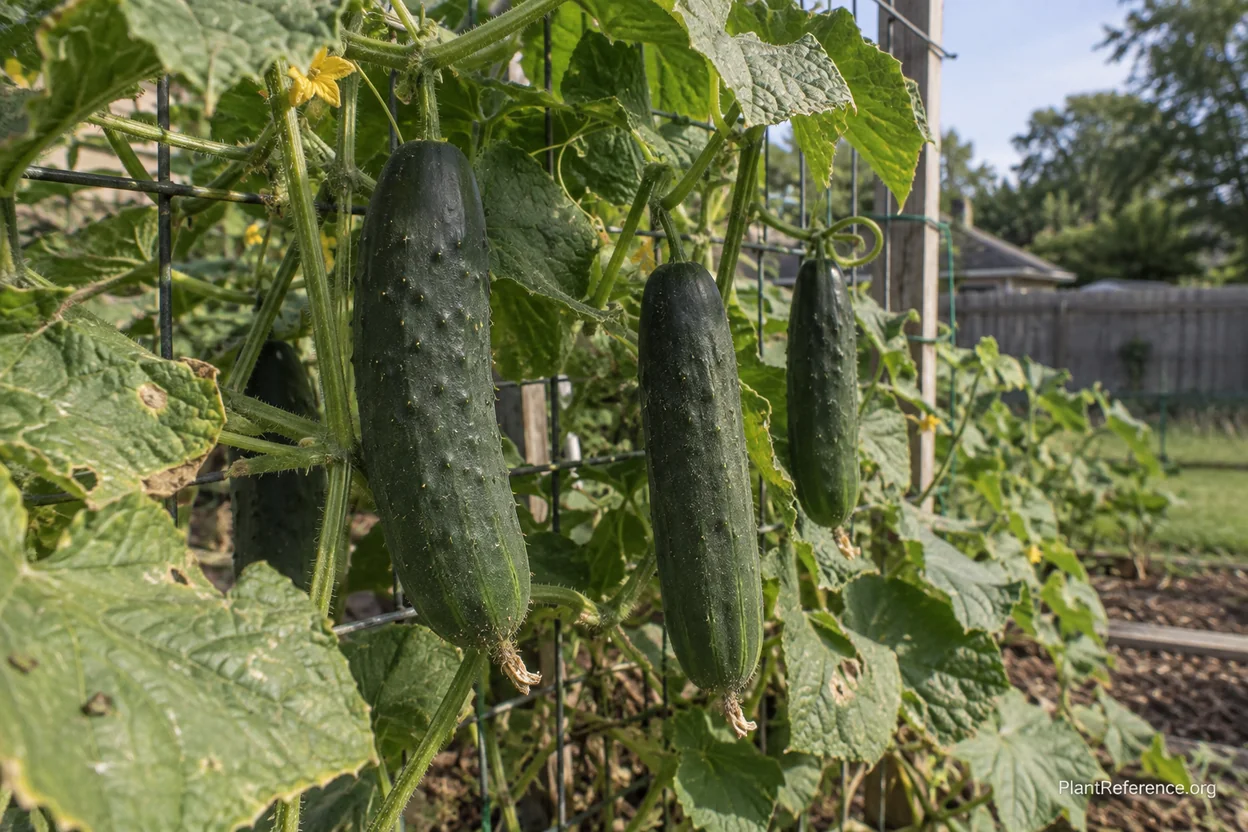
🌿Cucumis sativus 'Marketmore 76' is what I recommend to every Kansas City gardener who asks. Bred at Cornell with resistance to Scab, Cucumber Mosaic Virus, and intermediate Downy and Powdery Mildew resistance, it handles our transitional zone climate better than any other open-pollinated variety I've sold. The "stay-green" gene is particularly valuable here—it prevents the yellowing and quality loss that plagues other slicers during our brutal July heat. Consistent 8-inch (20 cm) dark green fruit from first harvest through vine decline.
🌿Cucumis sativus 'Straight Eight' works for early-season eating before disease pressure peaks, but I'm always honest with customers: it won't make it through August in Kansas City. Research confirms it succumbs to Downy Mildew in humid conditions and produces bitter fruit when heat-stressed. Plant it for your first cucumbers of the season and have 🌿Cucumis sativus 'Marketmore 76' succession plantings behind it.
🌿Cucumis sativus 'Lemon' deserves special mention for Kansas City. Its drought tolerance, inherited from ancestral lineages adapted to arid conditions, makes it uniquely suited for those dry July stretches when municipal watering restrictions kick in. The round, yellow fruit is a novelty that kids love, and it's genuinely "burpless"—no bitterness even under moderate stress. Harvest young at tennis ball size before seeds toughen.
🌿Cucumis sativus 'Boston Pickling' at 55 days is the succession planting workhorse. A July sowing produces fall pickles that mature into our cooling September and October nights—cooler temperatures actually enhance the crispness and flavor of pickling cucumbers. When to Plant Peppers in Kansas City: Complete Guide + Best Varieties for Zone 6a
Specific Planting Dates for Kansas City Gardens
Kansas City's April 15 last frost and October 25 first frost create a wide planting window. Spring can be volatile here—I've seen 80°F days in March followed by snow in April—but once we clear mid-April, the season opens up fast. Soil warms quickly in our prairie-derived soils, giving Kansas City gardeners earlier direct-sowing opportunities than the Great Lakes or Northeast.
Indoor Seed Starting: March 25-April 1 (3-4 weeks before last frost). Use biodegradable pots and maintain 70-80°F (21-27°C) soil temperature for 3-7 day germination. A heat mat helps in March when houses are still cool. Cucumber seedlings resent root disturbance, so start in pots you can plant directly into the ground.
Transplant Outdoors: April 22-30 (one week after last frost, soil at 60°F/16°C). Harden off seedlings for 5-7 days. Kansas City springs are windy—shelter transplants from persistent south and southwest winds during the first week. A temporary windbreak or planting on the lee side of a fence makes a noticeable difference in establishment.
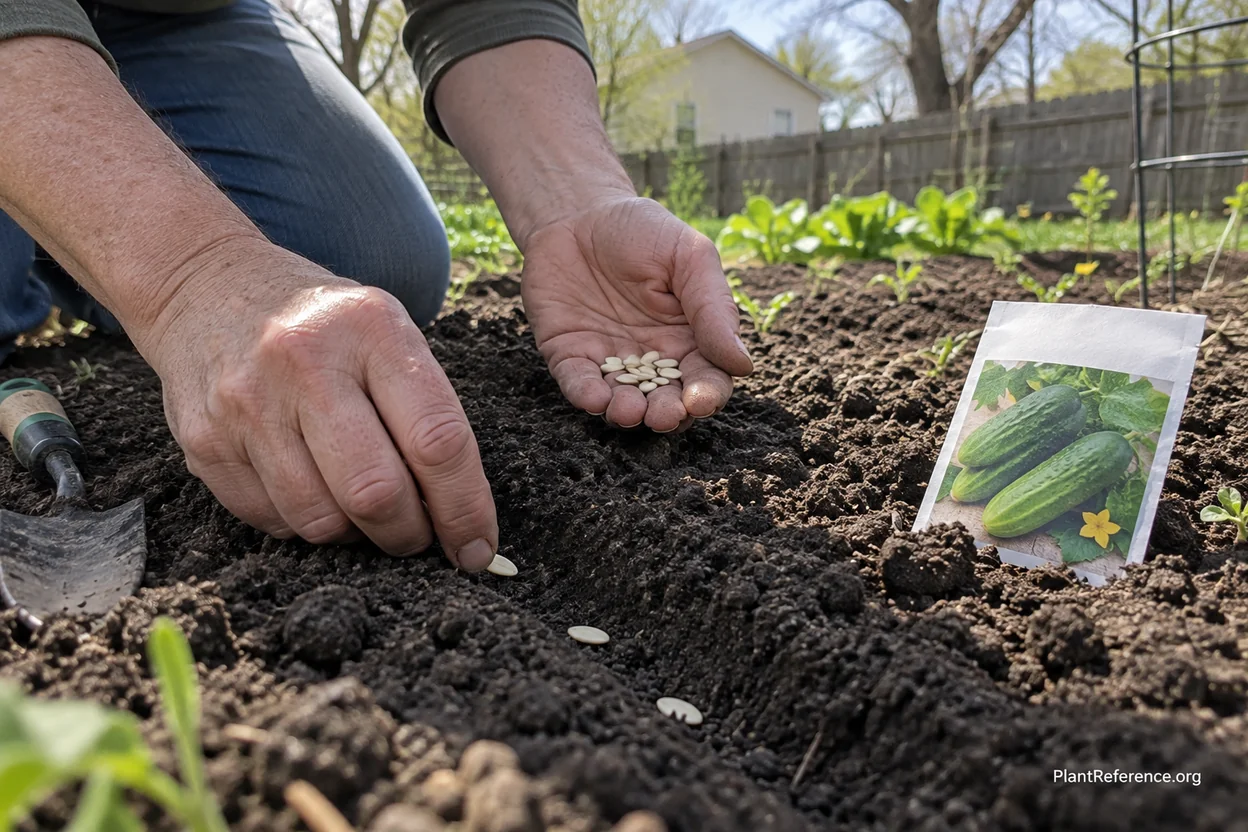
Direct Sow (first planting): April 25-May 10. Kansas City's dark prairie soils absorb heat efficiently and reach the 60°F (16°C) threshold by late April in most years. Check with a soil thermometer at 4 inches (10 cm) deep. Raised beds warm 1-2 weeks ahead of in-ground plots.
Succession Plantings: Every 3 weeks from first sowing through early July. Kansas City's 193-day season supports 3-4 succession plantings—enough for continuous harvest from late June through October. This is your best strategy for beating the mid-summer disease crash.
Final Sowing Deadline: July 5. A July 5 sowing of 🌿Cucumis sativus 'Boston Pickling' (55 days) matures around August 29 with nearly two months of harvest before the October 25 frost. Sixty-five-day varieties like 🌿Cucumis sativus 'Marketmore 76' planted by July 5 still mature by September 8 with plenty of season remaining. Raised Bed Vegetable Garden Layout: Planning for Maximum Production
Complete Growing Guide for Kansas City
Site Selection and Soil Preparation
Full sun—8 hours minimum. Kansas City's flat topography means most yards get adequate sun, but watch for shade from large trees on the north and east sides of properties. Our native prairie soils are generally fertile with good organic matter content, but urban and suburban lots often have compacted fill or disturbed subsoil. Test before planting—the University of Missouri Extension offers soil testing for under $20.
Amend with 3-4 inches (8-10 cm) of compost worked into the top 12 inches (30 cm). Target pH 6.0-6.8. Kansas City soils tend toward neutral to slightly alkaline, so sulfur amendments may be needed if pH tests above 7.0. Raised beds work well here but aren't as critical as in clay-heavy Northern cities since our prairie soils drain reasonably well. How to Build a Raised Garden Bed: Step-by-Step Construction Guide
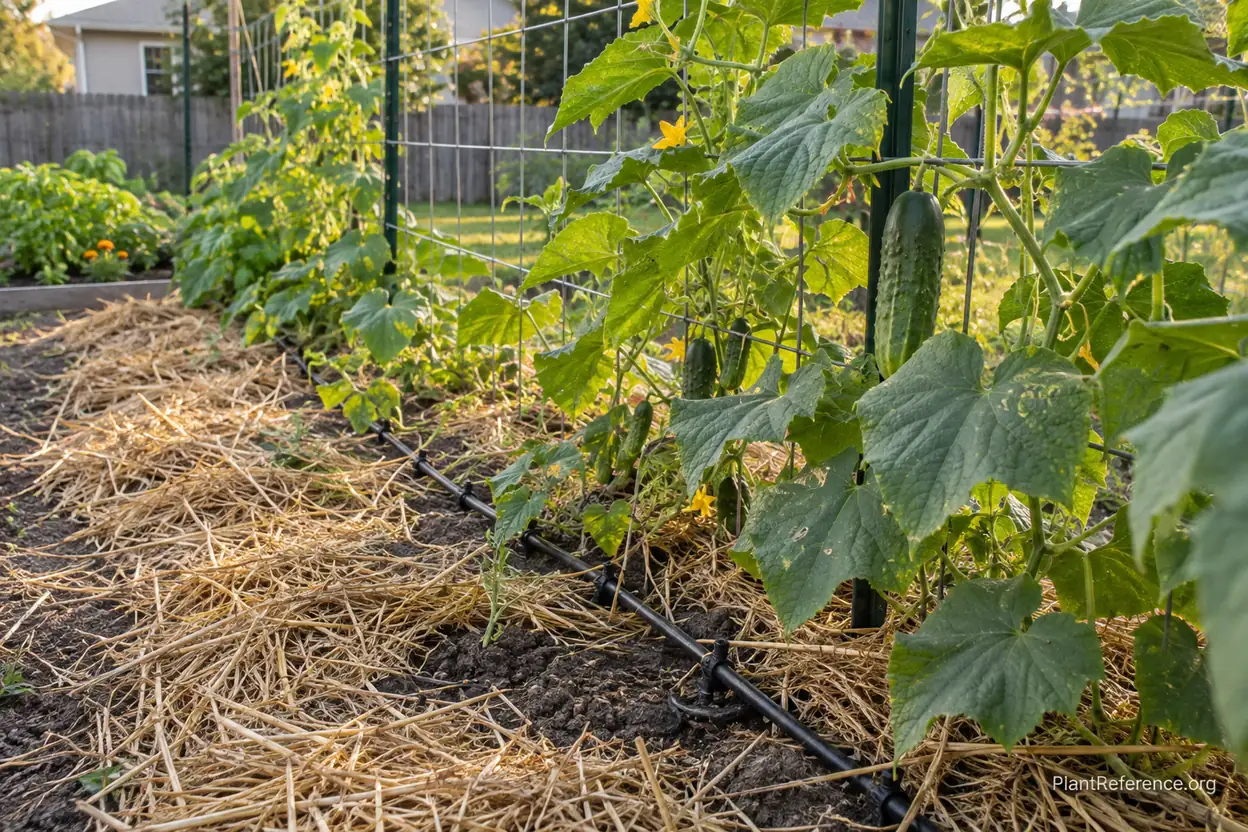
Mulch 2-3 inches (5-8 cm) after transplanting. In Kansas City's climate, mulch serves double duty: moisture retention during our dry July-August stretches and weed suppression. Straw or shredded hardwood works well. Avoid fresh wood chips directly against stems—they harbor fungal pathogens in our humidity.
Trellising
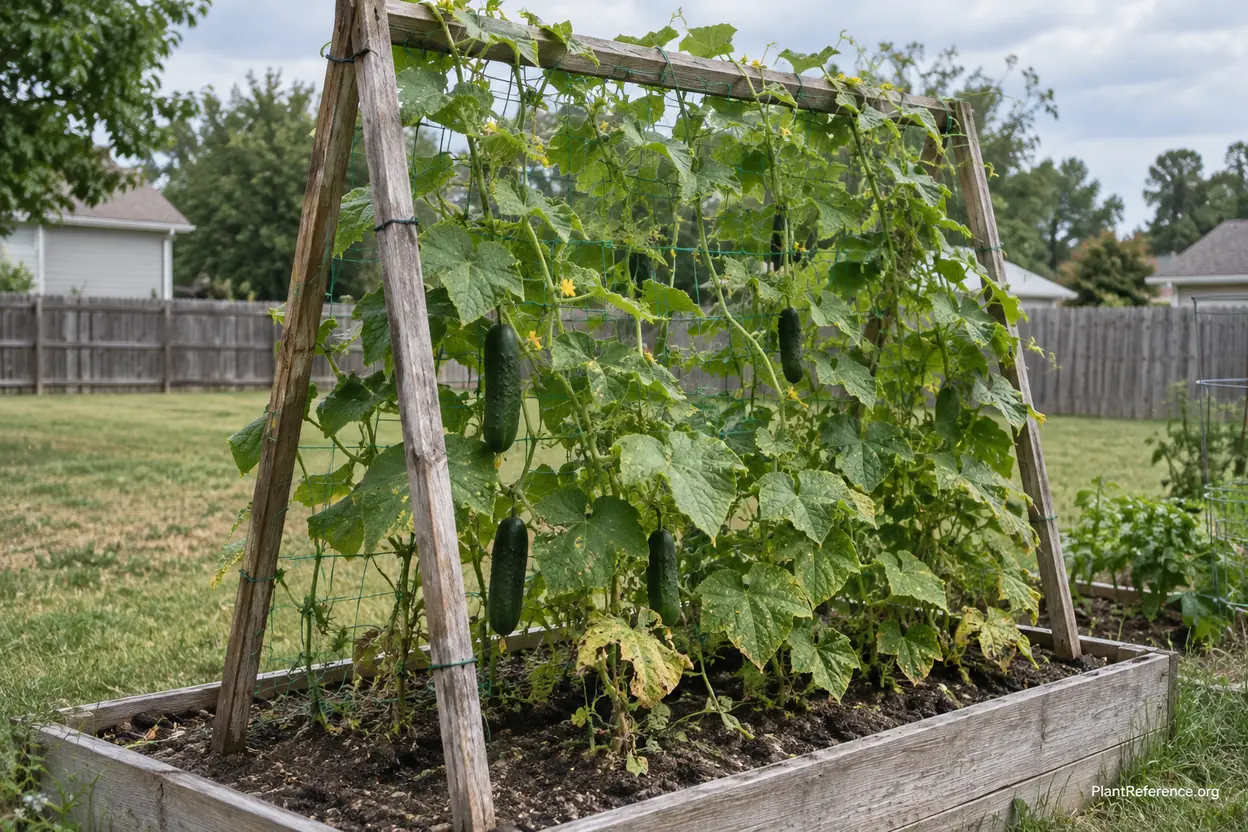
Vertical growing is essential in Kansas City. Our summer humidity from May through September creates ideal conditions for Downy and Powdery Mildew, and air circulation around foliage is the most effective cultural defense. A 6-foot (1.8 m) A-frame or string trellis supports vining varieties. Trellised cucumbers produce straighter fruit, yield more per square foot, and are dramatically easier to inspect for disease and pest damage. Our strong summer storms occasionally knock over lightweight trellises—anchor the base firmly or use cattle panels attached to sturdy posts. 5 Best Drip Irrigation Kits for Raised Beds (Tested for Easy Installation)
Watering and Feeding
Cucumbers need 1 to 1.5 inches (2.5-4 cm) of water weekly. Kansas City's rainfall pattern is feast or famine—thunderstorms deliver 2-3 inches in a day followed by dry stretches of 10 days or more. That inconsistency stresses cucumbers and causes bitter fruit. Drip irrigation on a timer provides the steady moisture cucumbers demand while keeping foliage dry for disease prevention.
Water deeply and consistently rather than frequently and shallowly. Deep watering encourages deep roots that access subsoil moisture during our dry spells. Side-dress with balanced fertilizer at flowering and again at first fruit set. Compost tea or fish emulsion every two weeks during peak production sustains the vigorous growth Kansas City's long, hot summers support.
Pollination
Standard varieties including 🌿Cucumis sativus 'Marketmore 76' and 🌿Cucumis sativus 'Straight Eight' are monoecious and require pollinator visits. Kansas City generally has strong pollinator populations—especially in neighborhoods near parks, prairies, or agricultural areas. Male flowers appear first, about a week before female flowers, so early blooms without fruit formation is normal. Female flowers have the distinctive miniature cucumber swelling at the base.
If pollination seems poor, hand-pollinate with a small brush in the morning. 🌿Cucumis sativus 'Persian' types set fruit without pollinators—useful in newer subdivisions where pollinator habitat hasn't established yet. Planting sunflowers, zinnias, and herbs like dill near cucumbers attracts native bees and improves pollination rates across the garden. When to Plant Squash in Kansas City: Complete Guide + Best Varieties for Zone 6a
Troubleshooting Kansas City-Specific Problems
Downy Mildew
Kansas City's summer humidity makes Downy Mildew the primary cucumber disease threat. Angular yellow spots on upper leaf surfaces darken to brown as the disease progresses—typically appearing mid-July through September. Prevention: 🌿Cucumis sativus 'Marketmore 76' for resistance, vertical trellising for air circulation, drip irrigation to keep leaves dry, and prompt removal of infected foliage. Organic copper sprays slow progression but won't cure established infections. Succession planting is your best strategy—when the first planting crashes in August, your July succession takes over.
Heat Stress and Bitter Fruit
Kansas City delivers extended stretches above 95°F (35°C) in July and August. Temperatures above 90°F cause pollen sterility and trigger cucurbitacin production—the compounds that make cucumbers unpleasantly bitter. 🌿Cucumis sativus 'Straight Eight' is especially prone to bitterness under heat stress, while 🌿Cucumis sativus 'Marketmore 76' maintains fruit quality significantly better. Consistent deep watering during heat waves is the most effective prevention. Mulch heavily to moderate soil temperature swings. If bitterness occurs, peel from the blossom end toward the stem where compounds concentrate least. Raised Bed Too Hot in Summer: Protecting Plants from Heat Stress
Cucumber Beetles
Striped and spotted cucumber beetles emerge in mid-May in Kansas City, vectoring bacterial wilt and causing direct feeding damage. Row covers over young transplants provide the most effective early protection—remove at flowering for pollinator access. Trap cropping with Blue Hubbard squash planted two weeks before cucumbers concentrates beetles for targeted removal with kaolin clay spray. Hand-picking in the early morning when beetles are sluggish works well in smaller gardens. Raised Bed Pest Problems: Identification and Organic Control Methods
Storm Damage
Kansas City's severe thunderstorms from May through August deliver high winds, heavy rain, and occasional hail that can flatten cucumber vines overnight. Sturdy trellising anchored with concrete blocks or driven posts withstands most storms. After severe weather, inspect vines for broken stems and remove damaged sections to prevent disease entry through wounds. Heavy rain events saturate soil—ensure drainage is adequate to prevent root rot following multi-inch downpours.
Harvest & Storage
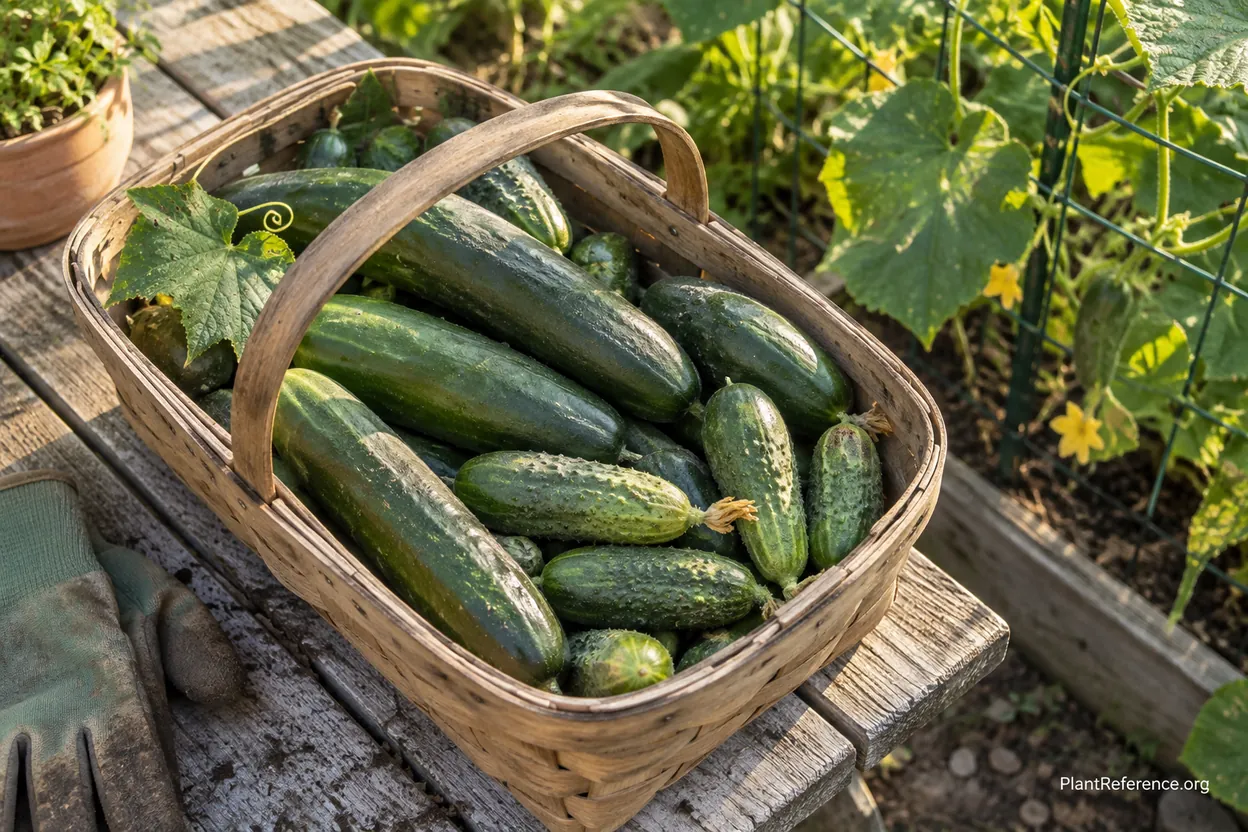
Harvest slicing cucumbers at 6-8 inches (15-20 cm) and pickling types at 2-4 inches (5-10 cm). Check vines daily during peak production in July and August—Kansas City's heat drives rapid fruit development and cucumbers go from ideal to overgrown in 48 hours. Leaving overripe fruit on the vine signals the plant to stop producing. In a season where we're fighting disease, heat stress, and storms, you need every productive day you can get. Pick everything, even fruit you can't use immediately—compost the oversized ones rather than leaving them on the vine.
Cut fruit with pruners rather than pulling. Harvest in the early morning before heat sets in—fruit picked at 95°F wilts faster and stores poorly. A healthy 🌿Cucumis sativus 'Marketmore 76' plant produces 10-15 slicing cucumbers over the season. 🌿Cucumis sativus 'Boston Pickling' yields 15-20 smaller fruits per vine with consistent harvesting.
Fresh cucumbers store 7-10 days refrigerated, wrapped loosely in a towel inside a bag. Process 🌿Cucumis sativus 'Boston Pickling' within 24 hours for the crispest refrigerator pickles. Kansas City's fall pickling crop from July succession plantings matures into cooler October nights that produce the best-textured pickles of the entire season. Those late-season pickles are worth the wait and the extra planting. The Complete Guide to Raised Bed Gardening for Beginners (2025)
Frequently Asked Questions
Reading about plants and recognising them are different skills. These three build the second.
- Daily PlantIdentify the day’s mystery plant from a close-up photograph.
- Keyed OutWork a dichotomous key, lead by lead, to name a hidden specimen.
- Name That PlantName a specimen from botanical clues dealt hardest first.
Free to play, no account needed
Tagged with
Bill is a third-generation nurseryman who runs a small family garden center on the outskirts of Kansas City. His grandfather started the business in the 1960s, and Bill took over after working as an ag teacher for a decade. He knows the plants that work in the Kansas City area better than anyone—he's grown most of them himself and watched customers succeed or fail with the rest. Bill specializes in trees and shrubs for the Midwest, perennial borders that handle the region's hot summers and cold winters, and helping customers make sensible choices rather than impulse buys. He writes the way he talks to customers: patient, knowledgeable, and honest about what's worth the money and what isn't.