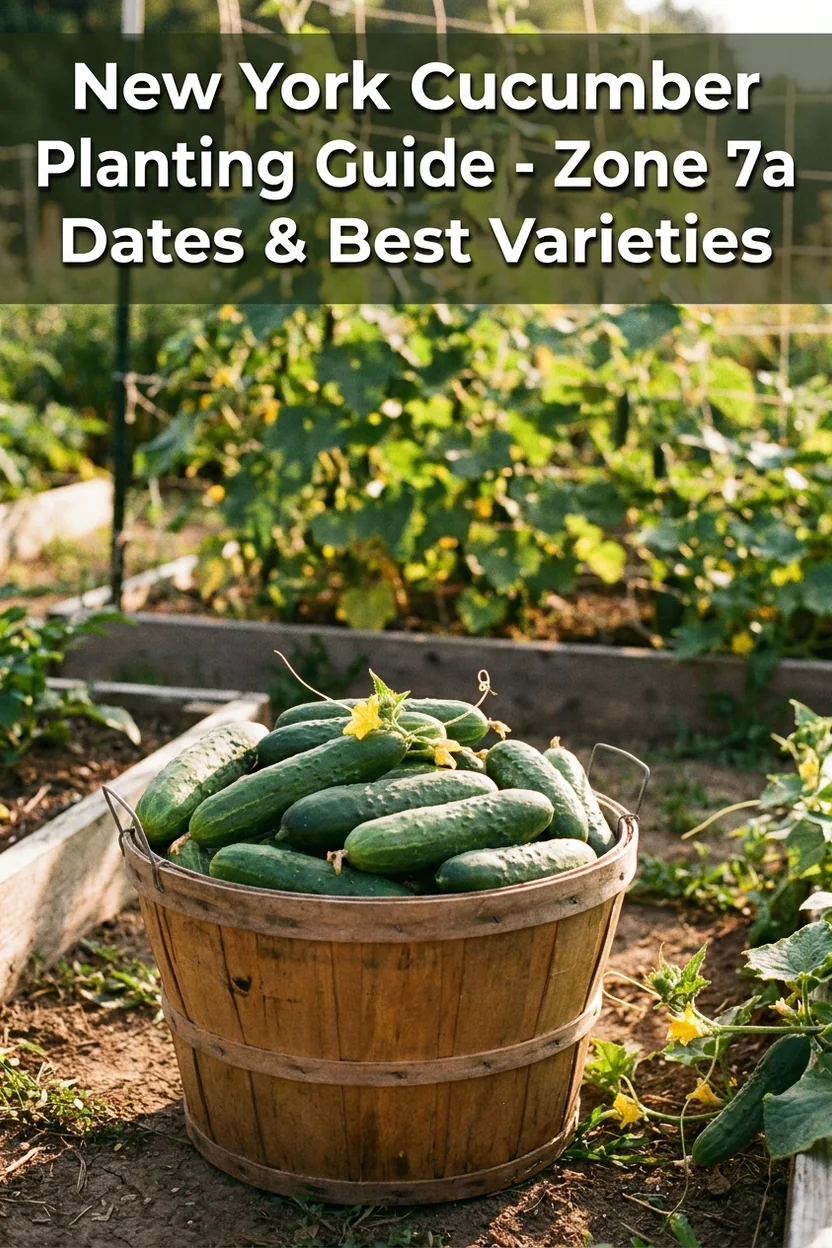
When to Plant Cucumbers in New York: Complete Guide + Best Varieties for Zone 7a
Pets & Toxicity
Recorded toxicity for plants linked in this guide. An unknown status is not a safety assessment.
Cucumis sativus 'Marketmore 76' — Toxicity
Non-toxicView Cucumis sativus 'Marketmore 76' plant profileCucumis sativus 'Straight Eight' — Toxicity
Non-toxicView Cucumis sativus 'Straight Eight' plant profileCucumis sativus 'Boston Pickling' — Toxicity
Non-toxicView Cucumis sativus 'Boston Pickling' plant profile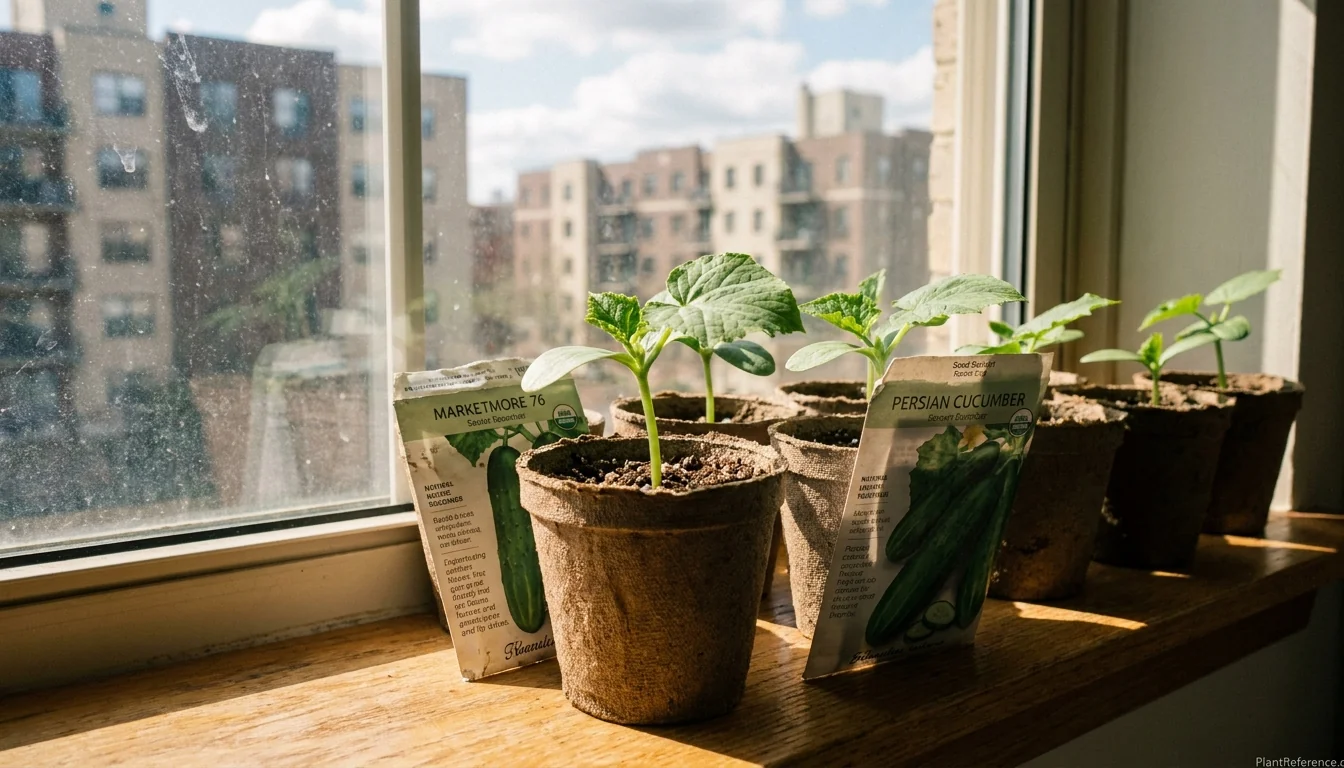
— Image © PlantReference.org 2026
Growing cucumbers in the New York metro area is straightforward if you respect two things: soil temperature and disease pressure. I spent 28 years managing parks plantings across the city, and the biggest mistake I saw home gardeners make was planting too early into cold, wet soil. Cucumbers are tropical plants—they need warm ground to germinate and warm nights to grow. Rush the timing and you'll lose seedlings to damping-off before they produce a single fruit. Wait for the right conditions and this crop practically grows itself through our long, humid summers. When to Plant Squash in New York: Complete Guide + Best Varieties for Zone 7a
Best Cucumber Varieties for New York's Climate
New York sits in USDA Zone 7a with a last frost around April 15 and first frost near November 1, giving you roughly 200 growing days. That's more than enough time for any cucumber variety, but the real selection factor here is disease resistance. Our humid summers create ideal conditions for Downy Mildew (Pseudoperonospora cubensis), which is the primary limiting factor for cucumber production in the eastern United States. Choose varieties bred to handle that pressure and you'll harvest weeks longer than gardeners who plant whatever's on the rack at the hardware store.
Variety | Type | Days to Harvest | Disease Resistance | Best For |
|---|---|---|---|---|
Slicing | 65 days | High (Scab, CMV, moderate DM/PM) | Best overall for NYC humidity | |
Slicing | 63 days | Low (CMV tolerance only) | Early season before disease pressure builds | |
🌿Cucumis sativus 'Persian' (Beit Alpha) | Specialty | 55 days | Moderate (PM) | Containers, small gardens, thin-skinned snacking |
Pickling | 55 days | Low-Moderate | Pickling, quick harvests | |
Specialty | 65 days | Moderate (Rust resistant) | Novelty, drought-tolerant spots | |
🌿Cucumis sativus 'Marketmore 76' (succession) | Slicing | 65 days | High | Mid-summer replanting when first vines decline |
🌿Cucumis sativus 'Marketmore 76' is my top recommendation for New York gardens. Developed at Cornell—right here in New York State—this variety carries resistance to Scab, Cucumber Mosaic Virus, and intermediate resistance to both Powdery and Downy Mildew. It also has a "stay-green" gene that prevents the yellowing you see in other varieties during heat waves. It produces dark green, 8-inch (20 cm) slicers consistently from July through September.
🌿Cucumis sativus 'Straight Eight' is fine for early-season planting before humidity climbs, but plan to replace it. Research shows it frequently succumbs to mid-summer Downy Mildew while 🌿Cucumis sativus 'Marketmore 76' keeps producing. The heirloom is also prone to bitterness under heat or water stress—a real problem during New York's July heat waves.
🌿Cucumis sativus 'Persian' types are excellent for container gardens on balconies and rooftops—common growing spaces in the city. These Beit Alpha strains produce prolifically on compact vines and don't need peeling. Their thin skins do require consistent watering to prevent dehydration.
🌿Cucumis sativus 'Boston Pickling' matures in just 55 days, making it ideal for succession planting. A July sowing produces a fall pickling crop that matures during cooler nights, which actually enhances crispness and flavor. Best Raised Bed Vegetables for Beginners: Top 10 Easy-Growing Crops
Specific Planting Dates for New York Gardens
New York's April 15 average last frost and November 1 first frost frame your cucumber season. But air temperature alone doesn't tell the whole story—soil temperature is what matters for germination and root establishment.
Indoor Seed Starting: March 18-25 (3-4 weeks before last frost). Use biodegradable pots to avoid disturbing roots at transplant. Cucumber seedlings resent root disturbance—I've seen transplant shock set plants back two weeks when roots are torn. Maintain 70-80°F (21-27°C) soil temperature for germination in 3-7 days.
Transplant Outdoors: April 22-30 (one week after last frost, once soil hits 60°F/16°C). Harden off seedlings for 5-7 days before transplanting. Don't rush this—a late April cold snap is common in the metro area and will stunt warm-season crops.
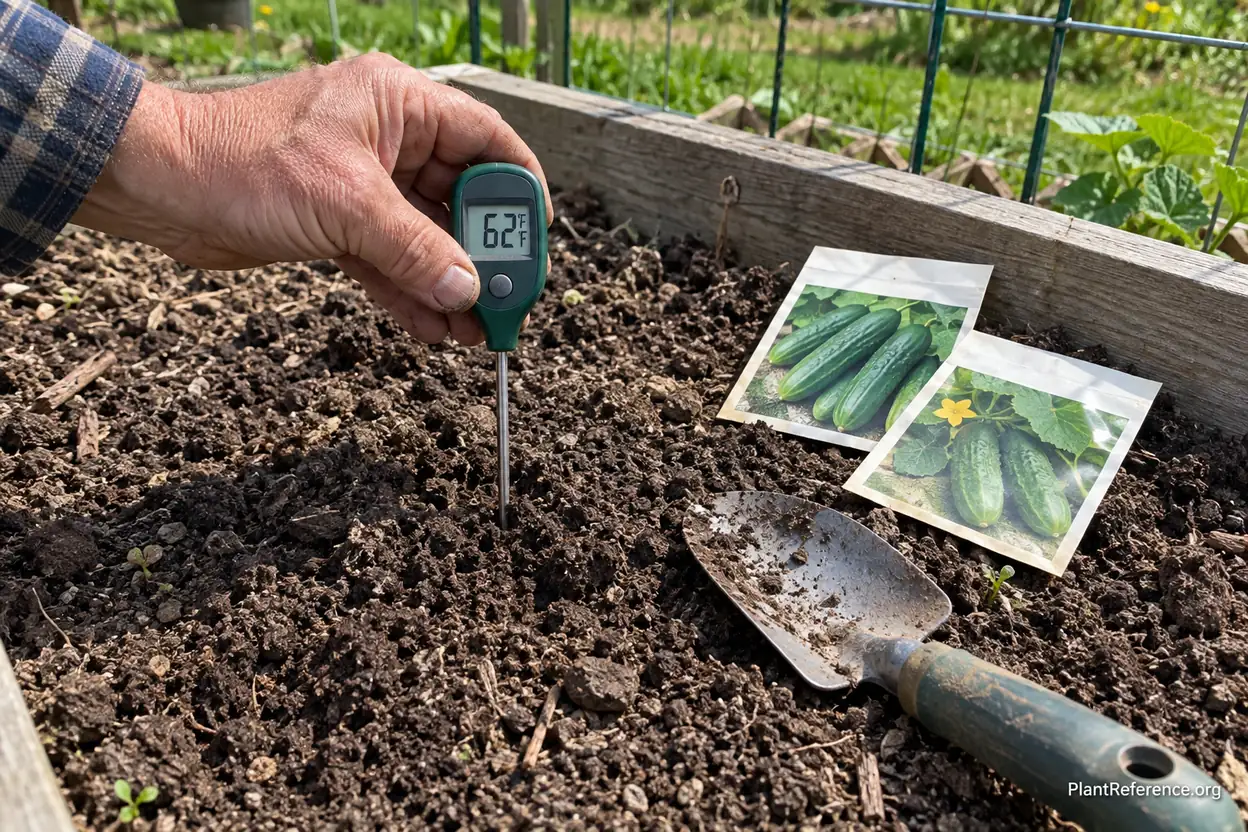
Direct Sow (first planting): April 25-May 10. Wait until soil thermometer reads 60°F (16°C) at 4 inches (10 cm) deep. In most New York gardens, this means late April in south-facing raised beds, early May for in-ground plots.
Succession Plantings: Every 3 weeks from first sowing through mid-July. A July sowing of 🌿Cucumis sativus 'Boston Pickling' or 🌿Cucumis sativus 'Marketmore 76' produces a fall crop before November 1 frost.
Final Sowing Deadline: July 15. Any later and you're gambling that fall stays warm—sometimes it does, but 65-day varieties need to mature before nighttime temperatures drop consistently below 50°F (10°C). Raised Bed Vegetable Garden Layout: Planning for Maximum Production
Complete Growing Guide for New York
Site Selection and Soil Preparation
Cucumbers need full sun—minimum 8 hours daily—and well-drained soil rich in organic matter. In New York's heavy clay soils, raised beds are strongly recommended. I've seen more cucumber failures from waterlogged clay than from any pest or disease. Amend soil with 3-4 inches (8-10 cm) of compost worked into the top 12 inches (30 cm). Target pH 6.0-6.8. A soil test through your local Cornell Cooperative Extension office costs under $20 and tells you exactly what amendments your particular plot needs before planting. How to Build a Raised Garden Bed: Step-by-Step Construction Guide
Apply 2-3 inches (5-8 cm) of mulch after transplanting to retain moisture and suppress weeds. Black plastic mulch warms soil faster in spring and doubles as weed suppression—useful for the early crop. Switch to straw or leaf mulch for summer plantings when soil temperature is already adequate. Organic mulch also feeds the soil biology as it decomposes, improving structure over successive seasons.
Trellising
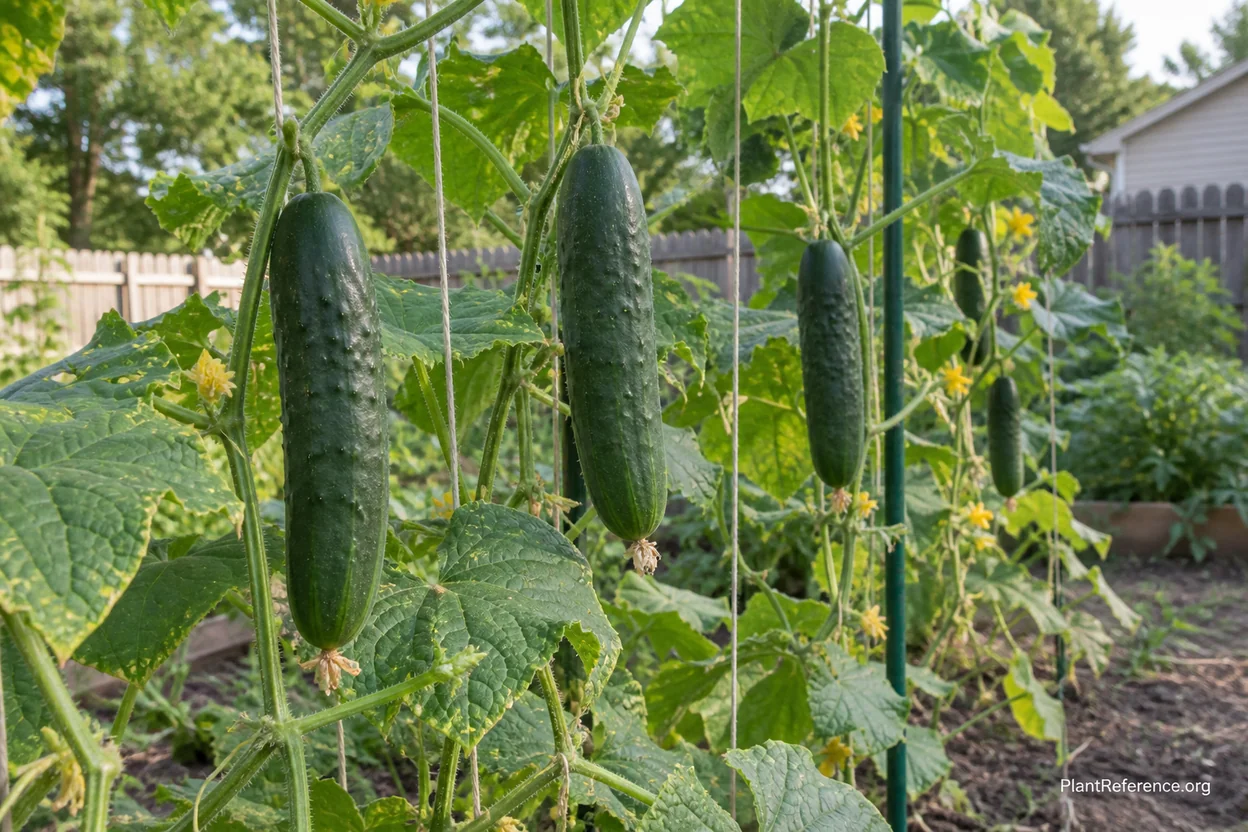
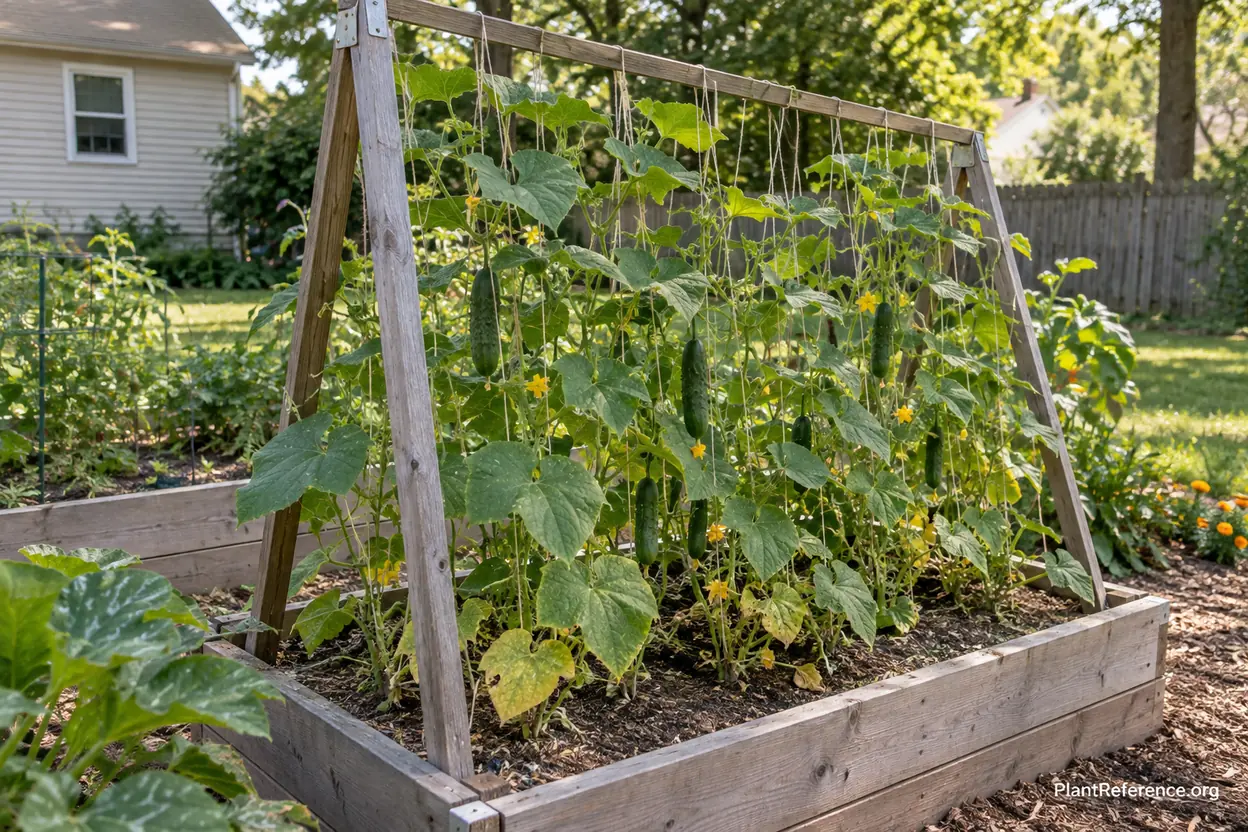
Grow cucumbers vertically. Every experienced gardener in the metro area will tell you the same thing. Vertical growing on a simple A-frame or string trellis improves air circulation—critical for disease management in New York humidity—keeps fruit clean, saves space, and makes harvesting easier. A 6-foot (1.8 m) trellis handles most vining varieties. Even bush types benefit from some vertical support to keep fruit off wet soil. 5 Best Drip Irrigation Kits for Raised Beds (Tested for Easy Installation)
Watering and Feeding
Cucumbers are 95% water and need consistent moisture—1 to 1.5 inches (2.5-4 cm) per week. Drip irrigation at the base is ideal. Overhead watering in New York's humid summers is practically an invitation for Downy Mildew. If you must use a sprinkler, water early morning so foliage dries before evening humidity climbs.
Side-dress with balanced fertilizer or compost tea when vines begin to flower, and again when first fruits set. Heavy nitrogen early promotes vine growth; shift to phosphorus and potassium once flowering begins to support fruit production.
Pollination
Most standard cucumber varieties including 🌿Cucumis sativus 'Marketmore 76' and 🌿Cucumis sativus 'Straight Eight' are monoecious—they produce separate male and female flowers on the same plant and require pollinator visits for fruit set. Male flowers appear first, usually a week before females, so don't panic when you see blooms but no fruit initially. Female flowers are recognizable by the small cucumber-shaped swelling at the base of the bloom.
New York's urban pollinator populations can be spotty, especially in Manhattan and the denser boroughs. If you're seeing flowers but no fruit after two weeks, hand-pollinate with a small brush in the morning when pollen is most viable. Simply transfer pollen from a male flower's center to the sticky stigma inside a female flower. One male flower can pollinate 3-4 female flowers.
🌿Cucumis sativus 'Persian' types are often parthenocarpic and set fruit without pollination—a real advantage for rooftop and balcony gardens with limited pollinator access. Planting marigolds, zinnias, or herbs like dill and cilantro near your cucumbers helps attract native pollinators to your growing space.
Season Extension
New York's long growing season means most gardeners don't need season extension for cucumbers, but there are two scenarios where it helps. In spring, floating row covers over transplants protect against late April cold snaps and exclude cucumber beetles during the critical establishment period. In fall, row covers over your July-sown succession crop can extend production 2-3 weeks past the first light frost, pushing your harvest well into November in warmer microclimates near buildings and pavement.
Troubleshooting New York-Specific Problems
Downy Mildew
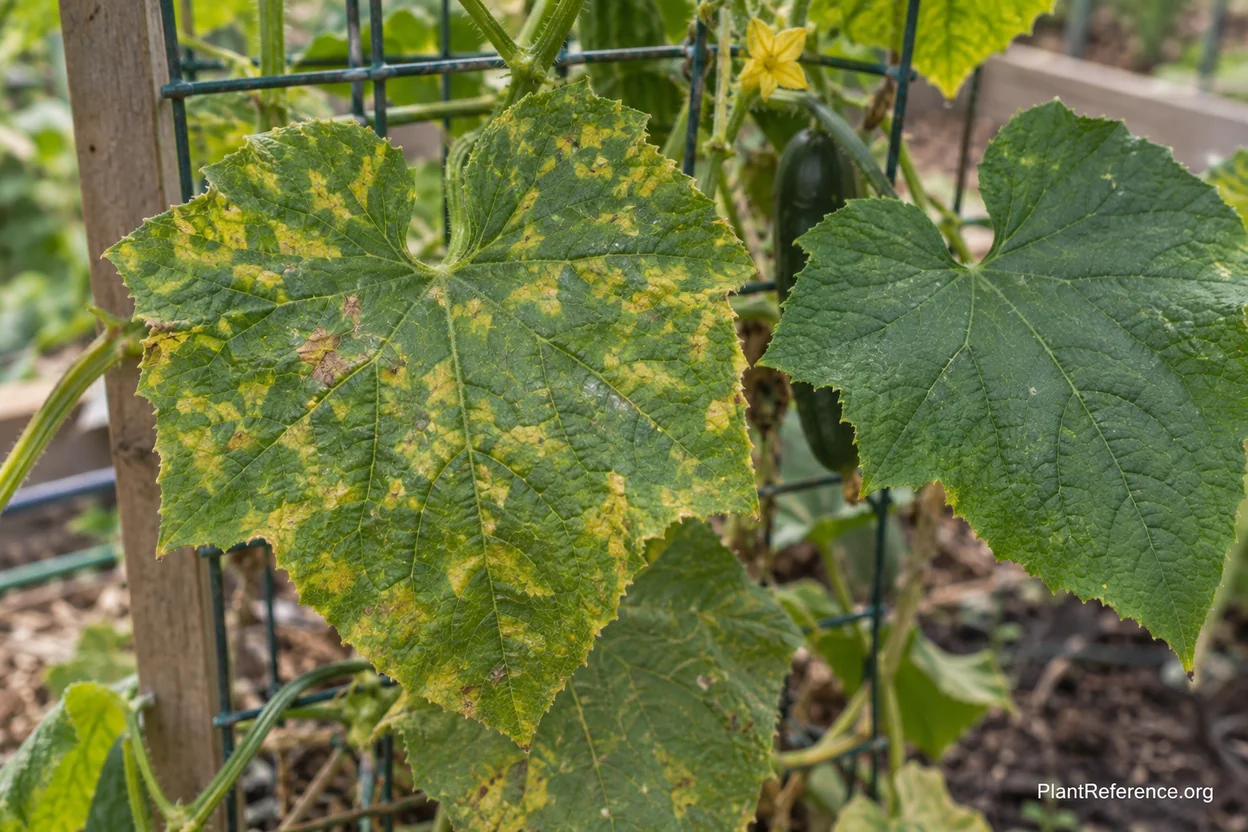
This is your number one enemy in New York. Yellow angular spots on upper leaf surfaces that turn brown as the disease progresses—you'll see it from mid-July through September. Prevention is everything: choose resistant varieties like 🌿Cucumis sativus 'Marketmore 76', trellis for air circulation, avoid overhead watering, and remove infected leaves immediately. Organic copper sprays can slow progression but won't cure an established infection. Succession planting is your insurance—when the first planting declines to Downy Mildew in August, your July-sown succession crop takes over.
Cucumber Beetles
Striped and spotted cucumber beetles transmit bacterial wilt and feed on foliage, flowers, and fruit. They arrive in waves in the New York area starting in late May. Row covers protect young transplants until flowering begins. Trap cropping with Blue Hubbard squash planted two weeks before your cucumbers concentrates beetles for targeted removal. Kaolin clay spray creates a physical barrier that deters feeding. Raised Bed Pest Problems: Identification and Organic Control Methods
Powdery Mildew
White powdery patches on older leaves typically appear in late summer. Less destructive than Downy Mildew but still reduces yield. Space plants for airflow—18 inches (46 cm) minimum between plants on a trellis. Neem oil applied preventatively every 7-10 days starting in July helps suppress the fungus before it establishes.
Heat Stress and Bitter Fruit
New York's July heat waves can push temperatures above 90°F (32°C), causing pollen sterility and bitter fruit—especially in 🌿Cucumis sativus 'Straight Eight'. Consistent watering prevents cucurbitacin production (the bitterness compound). Mulch heavily and water deeply during heat waves rather than frequent shallow watering. 🌿Cucumis sativus 'Marketmore 76' handles heat better than most, maintaining fruit quality when others start producing bitter cukes. If you notice bitterness, peel from the blossom end toward the stem—the stem end concentrates bitterness. But prevention through consistent irrigation is always better than trimming after harvest. Raised Bed Too Hot in Summer: Protecting Plants from Heat Stress
Harvest & Storage
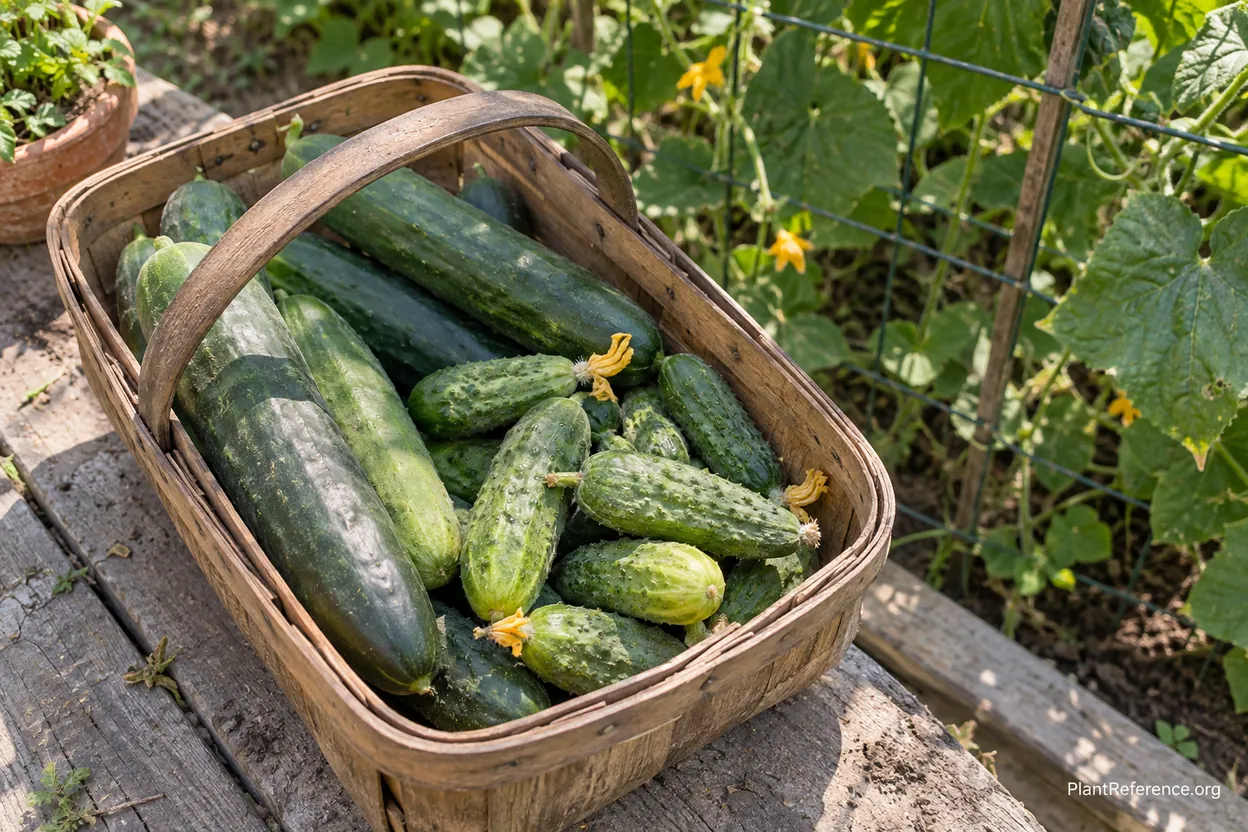
Begin harvesting slicing cucumbers when they reach 6-8 inches (15-20 cm) and pickling types at 2-4 inches (5-10 cm). Check vines daily during peak production—cucumbers grow fast in New York's warm, humid summers and can go from perfect to overgrown in 48 hours. Overripe fruit left on the vine signals the plant to stop producing, so pick everything even if you can't use it all. Compost the oversized ones or share with neighbors.
Cut fruit from the vine with pruners or a sharp knife rather than pulling, which can damage the vine and open wounds to bacterial infection. Harvest in the morning when fruit is firmest and temperatures are cool. A single healthy 🌿Cucumis sativus 'Marketmore 76' plant can yield 10-15 slicing cucumbers over the season with consistent picking.
Fresh cucumbers store 7-10 days in the refrigerator wrapped loosely in a towel inside a plastic bag. Don't wash until ready to use. 🌿Cucumis sativus 'Boston Pickling' should be processed within 24 hours of harvest for the crispest pickles—refrigerator pickles are the easiest preservation method and require no canning equipment. The Complete Guide to Raised Bed Gardening for Beginners (2025)
Frequently Asked Questions
Reading about plants and recognising them are different skills. These three build the second.
- Daily PlantIdentify the day’s mystery plant from a close-up photograph.
- Keyed OutWork a dichotomous key, lead by lead, to name a hidden specimen.
- Name That PlantName a specimen from botanical clues dealt hardest first.
Free to play, no account needed
Tagged with
Frank retired from the city parks department after 28 years, the last fifteen as a grounds supervisor overseeing park plantings and maintenance crews. He now spends his time volunteering at a local historic garden, maintaining his own half-acre property in the Roxborough neighborhood, and writing about landscape maintenance, seasonal timing, and the practical side of keeping plants healthy through Mid-Atlantic winters and humid summers. Frank knows what works at scale and what's a waste of time—he's planted thousands of trees and shrubs and watched plenty of them fail. His advice tends toward what's proven and durable rather than what's trendy.