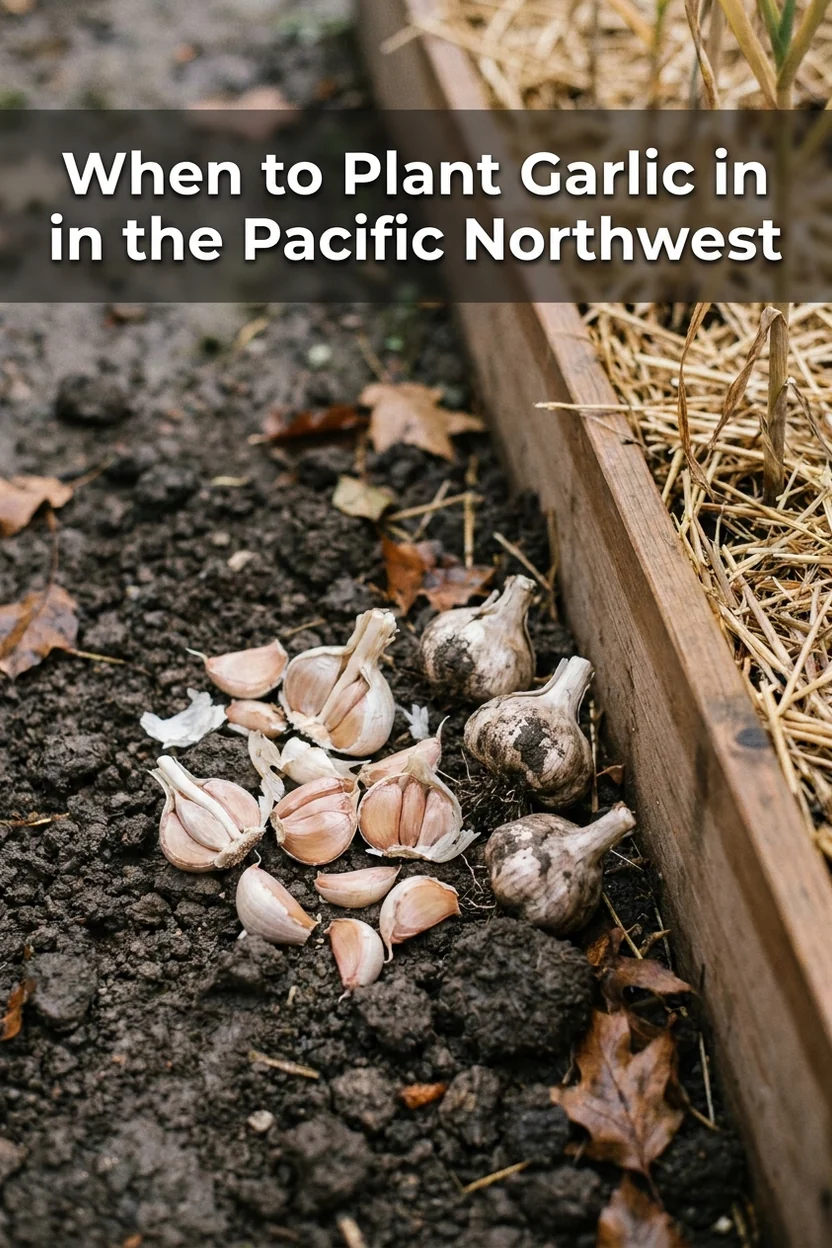
When to Plant Garlic in the Pacific Northwest
Pets & Toxicity
Recorded toxicity for plants linked in this guide. An unknown status is not a safety assessment.
Allium sativum 'German Red' — Toxicity Warning
Toxic to petsView Allium sativum 'German Red' plant profileAllium sativum 'Inchelium Red' — Toxicity Warning
Toxic to petsView Allium sativum 'Inchelium Red' plant profile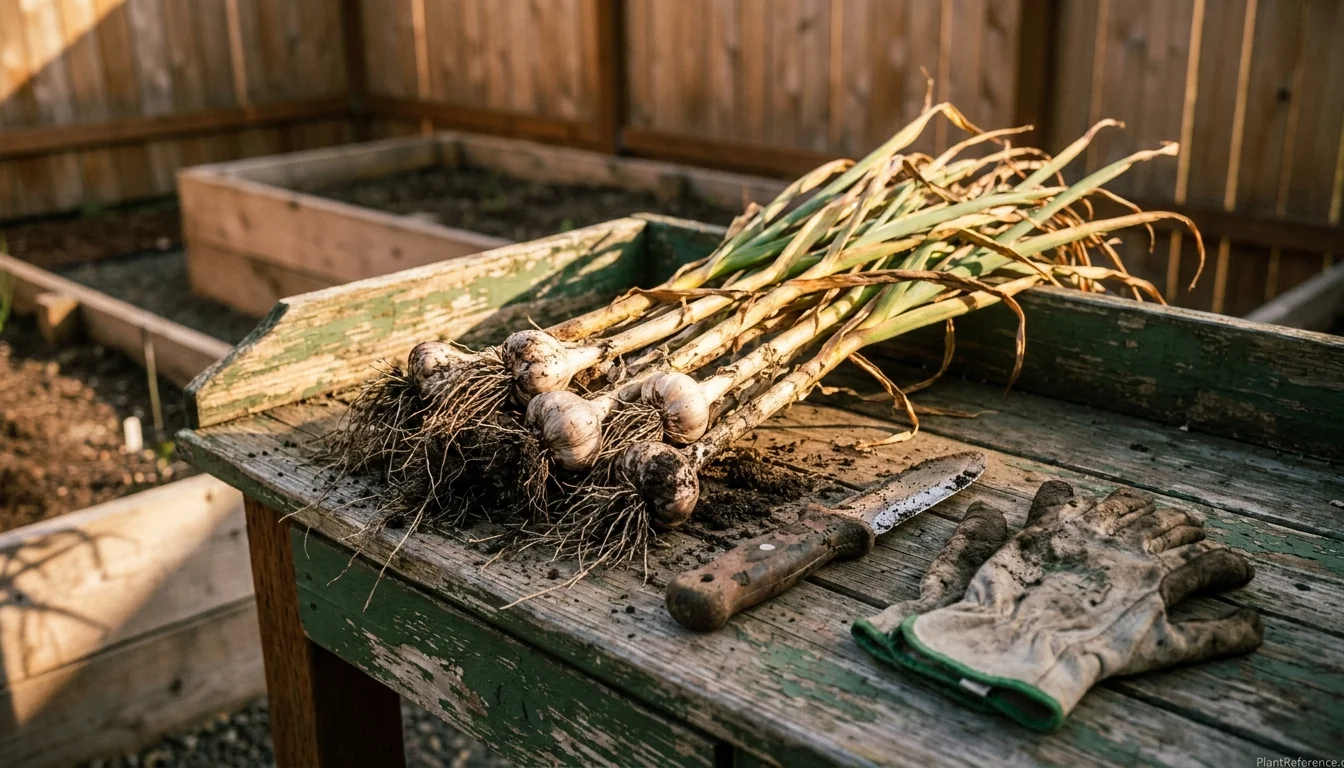
— Image © Plant Reference 2026
Knowing when to plant garlic in the Pacific Northwest comes down to one piece of plant physiology: garlic needs a cold winter to form a proper bulb. Plant a clove in fall and the chill of a maritime PNW winter triggers vernalization—the temperature signal that switches the clove from "grow a single round" to "divide into a full head." Get the timing right and the rest of the crop is remarkably forgiving.
Best Garlic Varieties for the Pacific Northwest
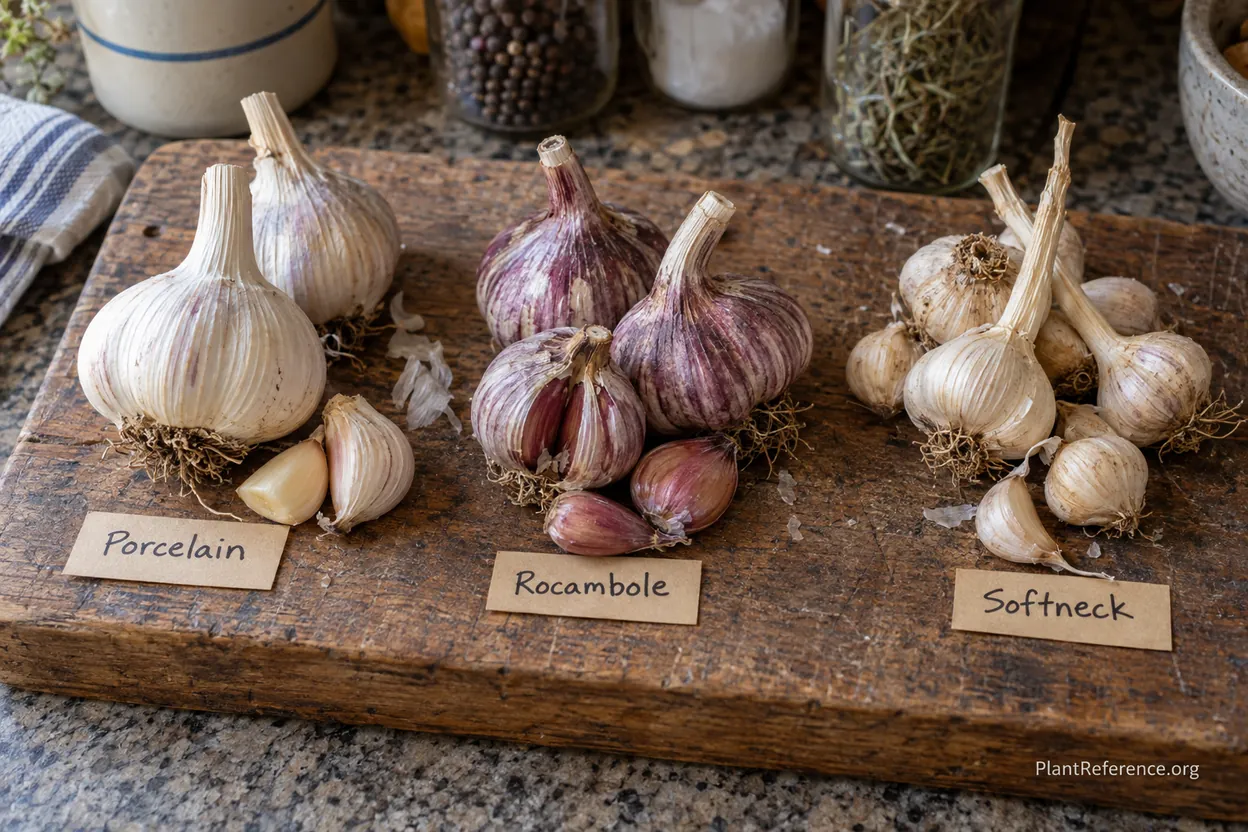
Garlic (Allium sativum, AL-ee-um sah-TY-vum) splits into two broad groups, and the choice matters more in our climate than almost anywhere else. Hardneck types send up a central flower stalk (the scape) and tend to be more cold-hardy and complex in flavor. Softneck types skip the scape, store far longer, and are the ones you can braid. The maritime PNW's cool, wet winters generally favor hardnecks, but several softnecks—especially regional heirlooms—thrive here too.
Hardneck garlic carries the better cold tolerance and the bonus of edible scapes in early summer. Porcelain types like 🌿Allium sativum 'Music' are the workhorse of PNW gardens: large, easy-to-peel cloves, reliable winter survival, and a clean, strong flavor. 🌿Allium sativum 'German Red', a rocambole, offers richer, more nuanced taste but stores for a shorter window. Allium sativum 'Spanish Roja' is another rocambole prized by Northwest growers for flavor, though it resents poorly drained ground.
Softneck garlic is your storage crop. 🌿Allium sativum 'Inchelium Red', a softneck selected in Washington's Colville Reservation, is the standout regional pick—mild, productive, and a strong keeper that holds for months. Allium sativum 'Nootka Rose', an heirloom from Washington's San Juan Islands, is a beautiful, long-storing artichoke type bred by our exact climate.
Variety | Type | Best For | Notes for the PNW |
|---|---|---|---|
Hardneck (porcelain) | All-around growing | Most reliable PNW hardneck; big cloves, edible scapes | |
Hardneck (rocambole) | Bold flavor | Excellent taste; shorter storage life | |
Allium sativum 'Spanish Roja' | Hardneck (rocambole) | Gourmet flavor | Needs sharp drainage; struggles in wet clay |
Softneck (artichoke) | Long storage | WA-bred; mild, heavy-yielding, top keeper | |
Allium sativum 'Nootka Rose' | Softneck (artichoke) | Storage & braiding | San Juan Islands heirloom; very long-storing |
Wherever you buy, start with certified disease-free seed garlic from a nursery or seed company rather than supermarket bulbs. Grocery garlic is often a warm-climate softneck poorly suited to our winters and may carry white rot, a soil disease you do not want to introduce.
When to Plant Garlic in the Pacific Northwest
Garlic is a fall-planted crop here, and the timing target is straightforward: get cloves in the ground 4-6 weeks before the soil freezes hard, so roots establish before winter without the green tops pushing up too far. In our climate that lands the planting window squarely in autumn.
West of the Cascades (Maritime PNW)
In the maritime corridor—Seattle, Tacoma, Portland, and the coast—plant from mid-October through November. Our winters are mild and the ground rarely freezes deeply, so you have a generous window. Cloves will put down roots through the cool fall and may show small green shoots before winter, which is completely normal and not a problem.
The bigger maritime challenge isn't cold; it's water. Months of winter rain can rot cloves sitting in saturated soil, so drainage is the make-or-break factor here far more than planting date. We'll cover that in the growing guide below.
East of the Cascades (Inland PNW)
In the colder, drier interior—Spokane and the Yakima Valley—plant a bit earlier, from late September through October, before the ground locks up. Inland winters are genuinely cold (Spokane sits around Zone 6b, Yakima around 7a), so the vernalization signal is strong and dependable. The trade-off is that you must mulch heavily to insulate cloves against deep freezes and frost heaving, which can push shallow cloves out of the ground.
Why Fall, Not Spring
You can plant garlic in early spring, but you'll usually be disappointed. Without a sustained cold period, cloves often fail to differentiate into a full bulb and instead produce a single undivided round. Fall planting gives garlic the long, cold dormancy it evolved to require, plus a months-long head start on root growth that translates directly into bigger summer bulbs.
Maritime PNW planting: mid-October through November
Inland PNW planting: late September through October
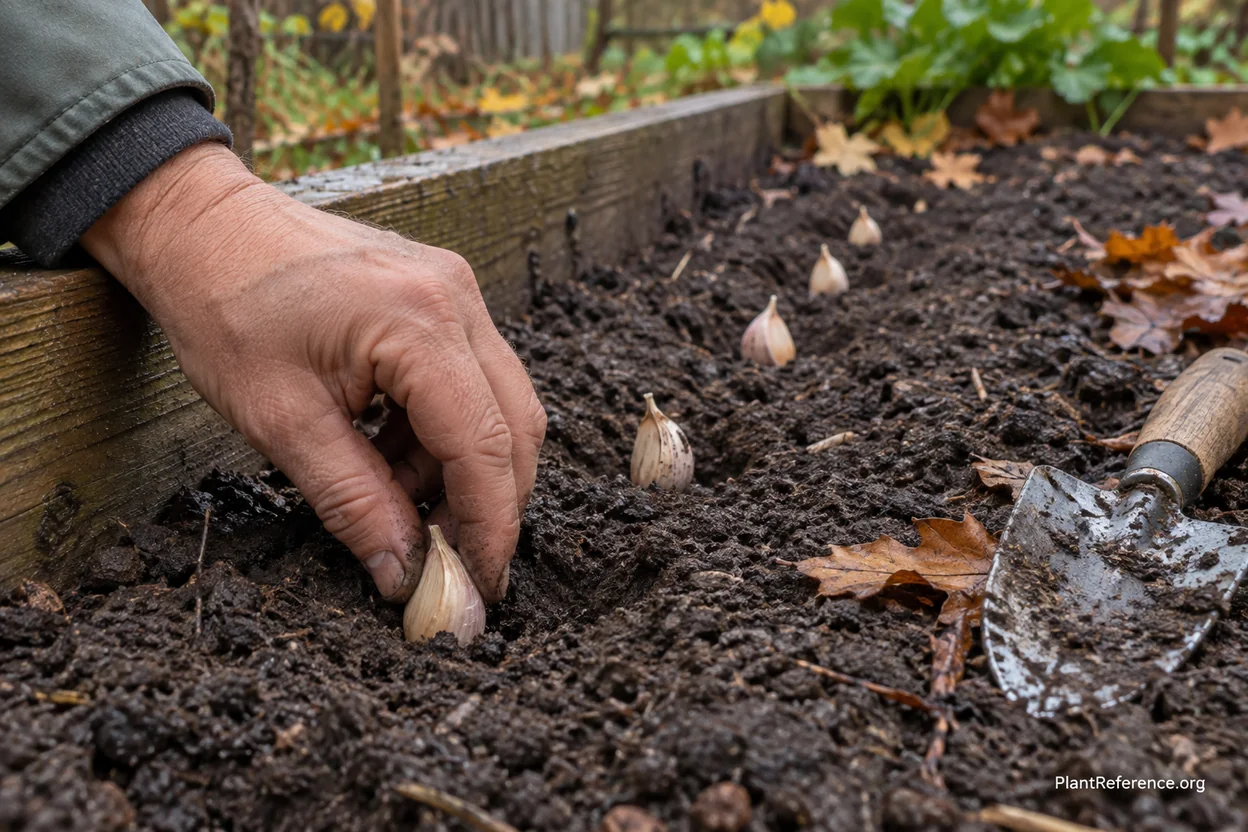
Planting depth: 2 inches (5 cm) to the tip of the clove, pointed end up
Spacing: 6 inches (15 cm) apart, rows 8-12 inches (20-30 cm) apart
Expected harvest: June through July, the following summer
Complete Growing Guide for PNW Garlic
Drainage Is Everything in the Maritime PNW
Garlic's worst enemy here is not cold but waterlogged soil. Cloves and developing bulbs sitting in saturated ground through our long wet winter are prone to basal rot and fungal disease. The single most effective fix is to plant in a raised bed or mounded row so excess water drains away from the bulb zone. If you're building beds, The Complete Guide to Raised Bed Gardening for Beginners (2025) and Best Soil for Raised Beds: 6 Commercial Mixes Tested and Compared cover the construction and fill. If your existing beds stay soggy, Too Much Water in Raised Beds: Signs and Solutions for Overwatering is worth reading before you plant.
Soil Preparation
Garlic is a heavy feeder that wants loose, fertile, well-drained soil with a pH around 6.0-7.0. Work 2-3 inches (5-8 cm) of finished compost into the bed before planting, and add a balanced organic fertilizer worked into the root zone. Loose soil also makes a real difference at harvest—compacted ground deforms bulbs and makes them harder to lift cleanly. To keep beds friable over time, Raised Bed Soil Settling and Compaction: Prevention and Solutions is a useful reference.
Mulching
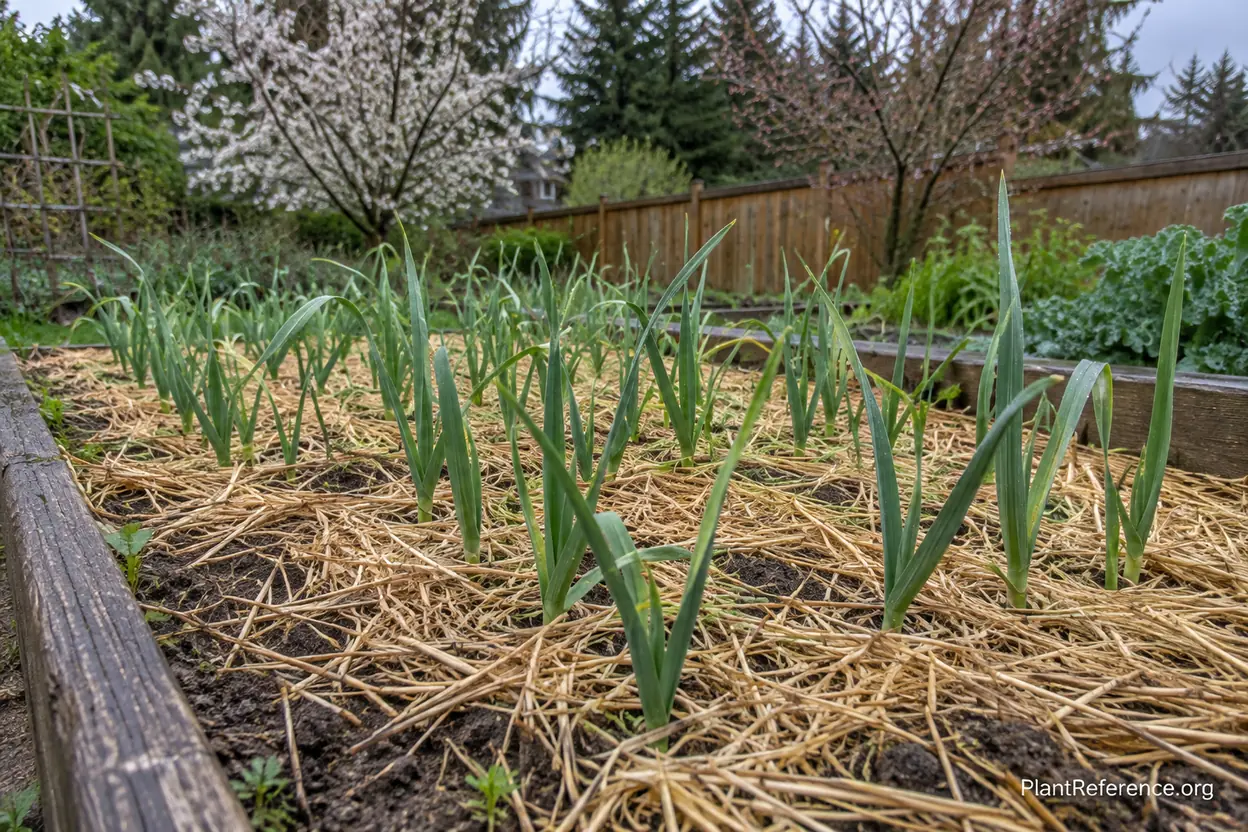
Mulch is not optional for PNW garlic. After planting, lay 3-4 inches (8-10 cm) of straw or shredded leaves over the bed. In the maritime zone, mulch moderates soil temperature and suppresses the winter weeds that otherwise get a head start in our mild climate. Inland, that same mulch layer is critical insulation against hard freezes and frost heaving. Pull mulch back slightly in spring if the soil stays cold and wet, then return it to conserve moisture as summer dries out.
Spring Feeding and Watering
When green growth accelerates in early spring (typically March), garlic enters its rapid leaf-building phase, and each leaf corresponds to a future wrapper layer on the bulb. Side-dress with a nitrogen-rich organic fertilizer in early spring, then again about a month later, and stop feeding nitrogen by May so the plant shifts energy into bulbing. If you spot pale or stunted growth, Nutrient Deficiencies in Raised Beds: Visual Diagnosis and Treatment can help you read the symptoms.
Our spring rains usually handle watering, but if April and May run dry, give the bed 1 inch (2.5 cm) of water per week. The crucial step is to stop watering 2-3 weeks before harvest—dry soil in the final stretch firms up the wrappers and dramatically improves storage life. Garlic pairs naturally with other fall and spring alliums; if you're planning the rest of the bed, see When to Plant Onions in Seattle: Complete Guide + Best Varieties for Zone 8b.
Removing Scapes (Hardneck Only)
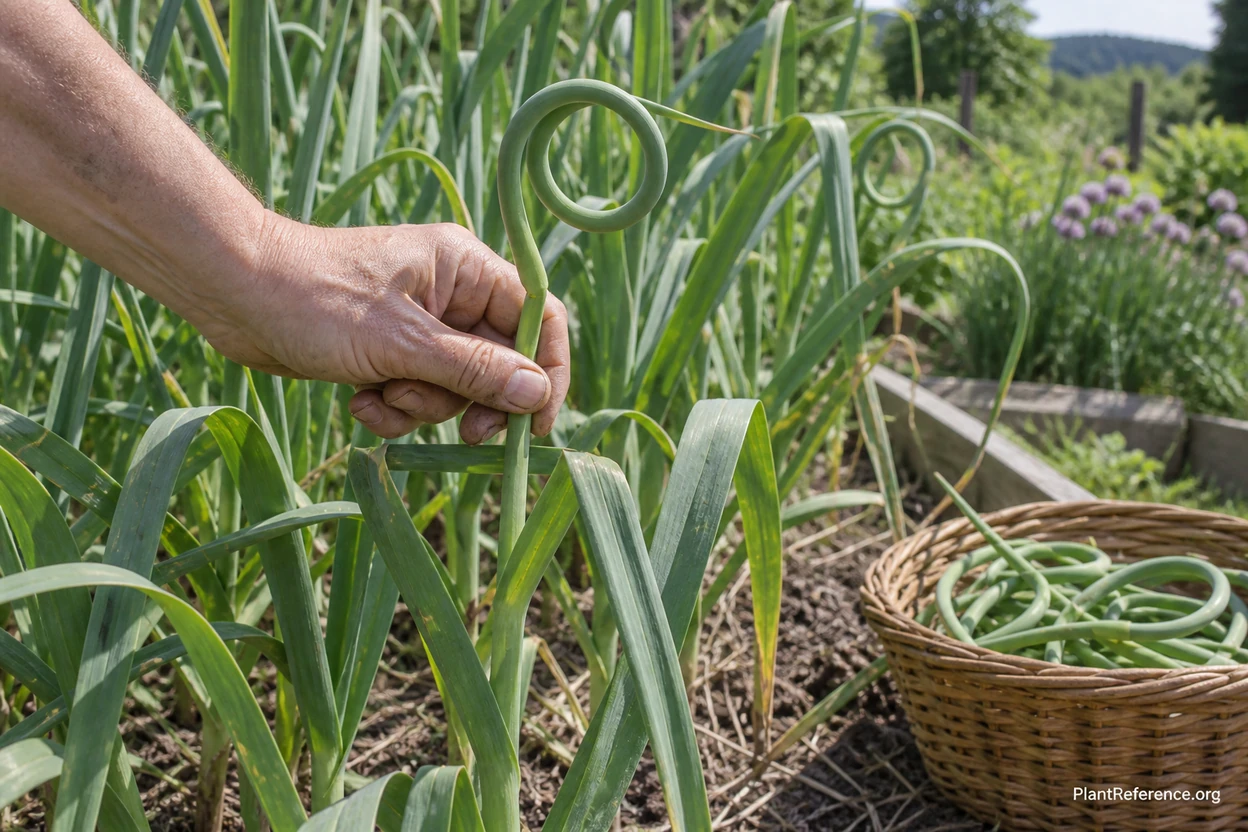
In late spring, hardneck varieties like 🌿Allium sativum 'Music' and 🌿Allium sativum 'German Red' send up a curling flower stalk called a scape. Snap or cut these off once they make one full loop. Removing scapes redirects the plant's energy from flowering into bulb growth—studies and grower experience both show meaningfully larger bulbs when scapes are removed. The bonus: scapes are delicious sautéed or made into pesto, so this is a harvest in itself. Softneck types like 🌿Allium sativum 'Inchelium Red' don't produce scapes, so there's nothing to remove.
Troubleshooting PNW Garlic Problems
Basal Rot and White Rot
These soil-borne fungal diseases are the most serious garlic threats in our wet climate. Basal rot causes yellowing tops and soft, decaying root plates; white rot produces fluffy white fungal growth and tiny black sclerotia on the bulb. Both thrive in cool, saturated soil. Prevention is the only real control: plant in well-drained raised beds, use certified disease-free seed garlic, and rotate alliums to a different bed each year on a 3-4 year cycle. White rot in particular can persist in soil for many years, so never plant grocery-store garlic that might carry it.
Rust
Garlic rust shows up as orange-brown pustules on the leaves, and our humid maritime air is ideal for it. It rarely kills the plant but reduces bulb size by damaging the foliage that feeds the bulb. Improve airflow with proper spacing, avoid overhead watering, and remove badly infected leaves. Severe cases late in the season may mean harvesting slightly early.
Frost Heaving (Inland PNW)
In the colder interior, repeated freeze-thaw cycles can push shallow-planted cloves up and out of the soil, exposing roots to lethal cold. The fix is the 3-4 inch (8-10 cm) mulch layer mentioned above, plus planting cloves at a full 2 inches (5 cm) deep. If you find heaved cloves in late winter, gently replant them and re-mulch.
Small or Single-Round Bulbs
If your garlic produces tiny bulbs or a single undivided round, the usual causes are spring planting (insufficient cold for vernalization), planting cloves too small, or skipping scape removal on hardnecks. Plant only the largest cloves from each bulb in fall, remove hardneck scapes, and feed adequately in early spring to build big, multi-clove heads.
Harvesting, Curing & Storage
Garlic is ready to harvest the following summer, typically June through July in the PNW, when the lower third of the leaves have turned brown but five or six green leaves remain on top. Those green leaves matter: each one is a protective wrapper around the bulb, and harvesting too late means the wrappers split and the cloves won't store. Don't wait for all the leaves to die back.
Lift bulbs gently with a fork rather than pulling by the stem, which can tear the plant. Brush off loose soil but do not wash the bulbs—moisture invites the rot you've worked all winter to avoid. Choose a dry day if you can; our early-summer weather usually cooperates.
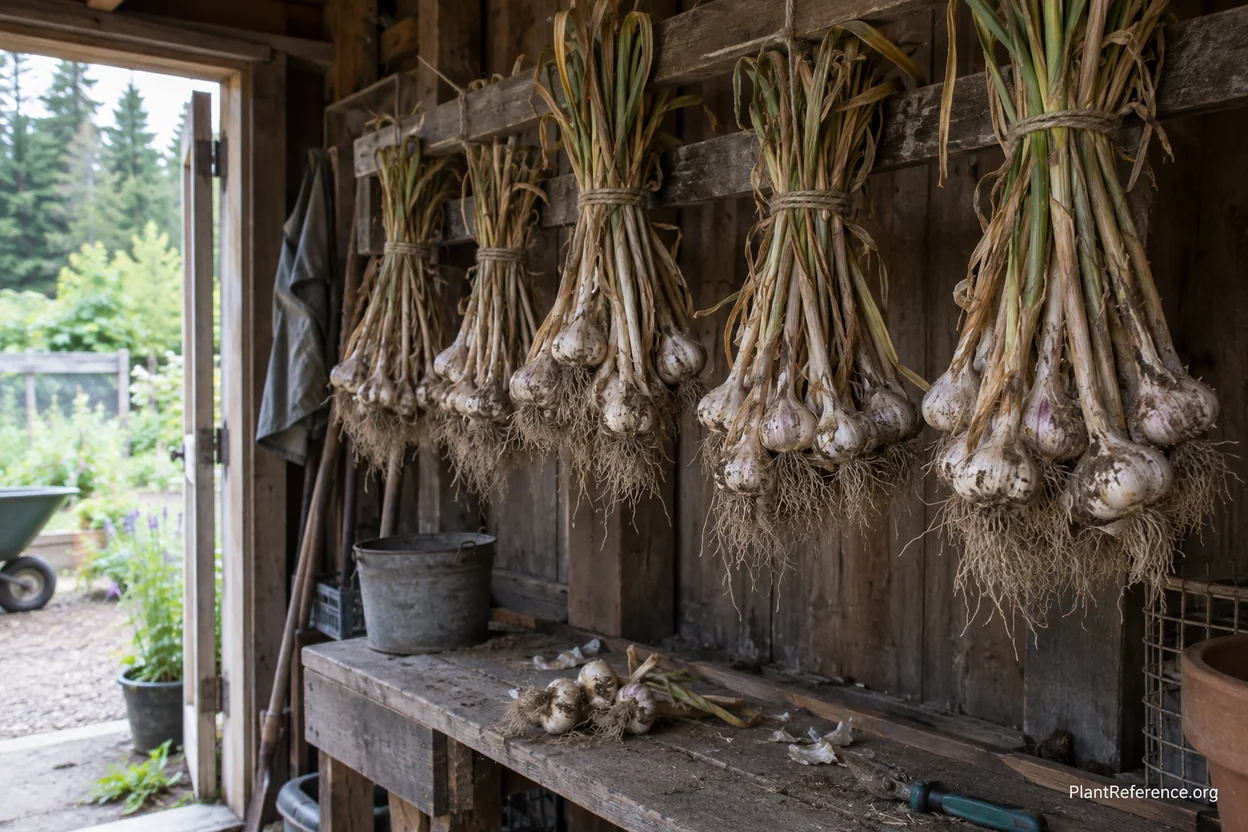
Cure the harvest by hanging bundles or laying bulbs in a single layer in a shaded, well-ventilated spot out of direct sun for 3-4 weeks. Good airflow is essential in our humid climate—a fan can help. Once the necks are fully dry and papery, trim roots and stems, and store cured bulbs in a cool, dry, dark place. Softnecks like 🌿Allium sativum 'Inchelium Red' and Allium sativum 'Nootka Rose' will keep for many months; hardnecks like 🌿Allium sativum 'German Red' are best used within a few months. Save your biggest, healthiest bulbs to replant next fall, and the cycle begins again. Looking to fill the bed after harvest? Best Raised Bed Vegetables for Beginners: Top 10 Easy-Growing Crops and When to Plant Carrots in Portland: Zone 8b Dates + Best Varieties offer good summer follow-on crops.
Frequently Asked Questions
Reading about plants and recognising them are different skills. These three build the second.
- Daily PlantIdentify the day’s mystery plant from a close-up photograph.
- Keyed OutWork a dichotomous key, lead by lead, to name a hidden specimen.
- Name That PlantName a specimen from botanical clues dealt hardest first.
Free to play, no account needed
Tagged with
Sarah earned her doctorate in plant biology and spent time working in botanical garden education before transitioning to freelance writing and consulting. Now based in Portland, Oregon, she teaches plant identification workshops at local community centers and maintains a modest collection of over 60 houseplants in her small apartment. Sarah specializes in helping beginners understand plant science without the jargon—her approach focuses on practical observation over theory. She's killed her fair share of fiddle leaf figs and finally cracked the code on keeping them alive.