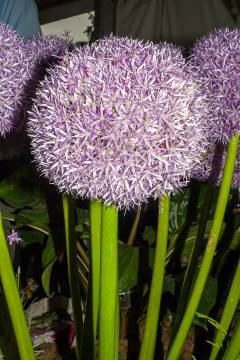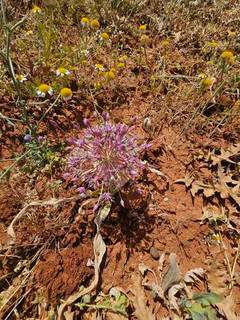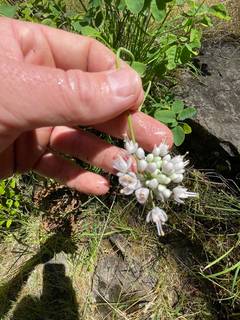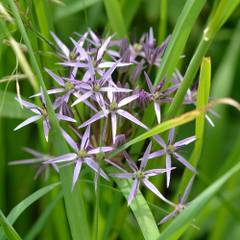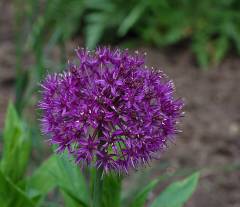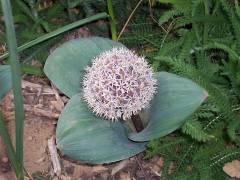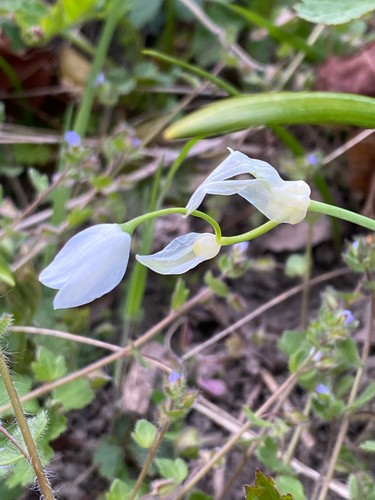
Allium, Genus, sativum, Species, 'German Red', Cultivar,
- Genus & species
- Cultivar
German red garlic
Central Asia (Allium sativum); 'German Red' is a rocambole-type hardneck cultivar of eastern European origin
Overview
Allium sativum 'German Red' is a hardneck garlic cultivar in the amaryllis family (Amaryllidaceae), classified in the rocambole group — the most intensely flavoured garlic group in commercial cultivation. Bulbs are 1.5-2.5 inches (4-6 cm) in diameter, with a loose, papery tan-brown outer wrapper that often splits or peels away during curing, revealing 8-12 reddish-brown to purple-tinged cloves arranged in a single ring around the central stalk. Clove skins are thin, loose, and easy to peel — rocambole types are the easiest garlic group to peel by hand. Flavour is rich, complex, and deeply pungent when raw, with a warm, full-bodied garlic character when cooked — widely regarded by chefs as a top-flavour garlic cultivar. As a hardneck type, the cultivar produces a flower scape in late spring that forms a double coil (characteristic of rocambole types — a full 360° loop, sometimes two loops, versus the single partial curl of porcelain types). The loose wrapper that makes rocambole types easy to peel also shortens storage life — 4-5 months under optimal conditions (55-60°F / 13-15°C, 60% humidity), shorter than porcelain types. The cultivar is cold-hardy to approximately -25°F (-32°C) with mulch. Vernalisation of 6-8 weeks below 40°F (4°C) is required. Susceptible to white rot, basal plate rot, and Fusarium.
Native Range
Allium sativum is native to Central Asia. 'German Red' is a rocambole-type hardneck cultivar of eastern European origin maintained in North American garlic collections.Suggested Uses
Grown in home vegetable gardens for gourmet-quality garlic. The complex, rich flavour suits roasting, sautéing, and raw preparations. The easy-to-peel cloves reduce kitchen prep time. In the Pacific Northwest, planting takes place in October for July harvest. The shorter storage life (4-5 months versus 6-7 for porcelain types) means planning consumption by December-January from a July harvest.How to Identify
Appearance
Size & Dimensions
Height1'6" - 2'
Width/Spread4" - 6"
Bloom Information
Detailed Descriptions
Flower Description
Green (bulbils)Foliage Description
Grey-greenGrowing Conditions
Sun Requirements
Requires 6-10 hours of direct sunlight daily
• Full Sun: 6+ hours of direct sunlight
• Partial Shade: 3-6 hours of direct sunlight
• Full Shade: Less than 3 hours of direct sunlight
Care & Maintenance
Care Guide
Cloves are planted in autumn, 4-6 weeks before hard freeze. Cloves are planted 2-3 inches (5-8 cm) deep, pointed end up, 6 inches (15 cm) apart, in rows 12 inches (30 cm) apart. Full sun, fertile well-drained soil, pH 6.0-7.0. Mulching with 4-6 inches (10-15 cm) of straw after planting insulates against freeze-thaw cycles. Irrigation is 1 inch (2.5 cm) per week spring through early June. Watering stops 2-3 weeks before harvest. Harvest takes place when lower 3-4 leaves brown — typically early to mid-July. Curing is 3-4 weeks hanging in shade. The loose wrapper means careful handling during harvest and curing — outer skin layers are not removed.Pruning
Flower scapes are removed at the double-coil stage (early June) to increase bulb size by 10-25%. Scapes are a culinary ingredient.Container Growing
Suitable for container growing
Minimum container size: 3 gallons