Allium, Genus, acuminatum, Species,
- Genus & species
Hooker's onion
Overview
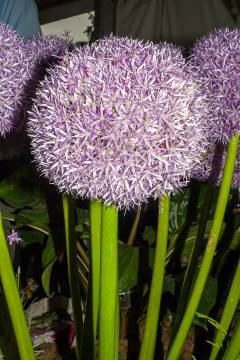
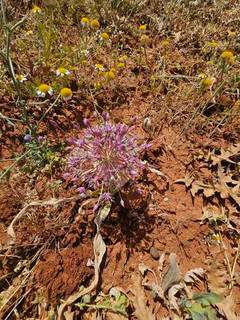
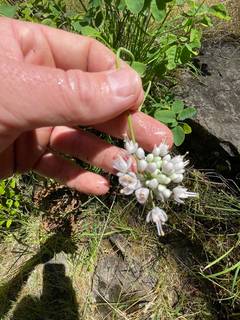
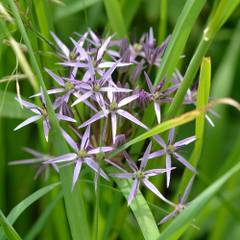
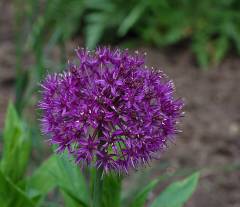
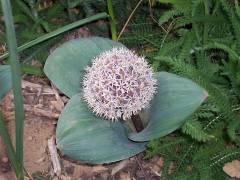
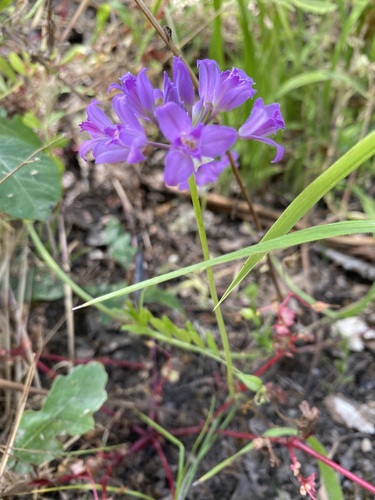
Allium acuminatum is a bulbous herbaceous perennial native to western North America, reaching 6-12 inches (15-30 cm) tall in flower and forming colonies 8-12 inches (20-30 cm) wide over 3-5 years from offset bulbs. Foliage consists of 2-4 narrow grass-like basal leaves 4-8 inches (10-20 cm) long, mid-green and often withering by the time flowers open. A single leafless scape rises from each mature bulb, terminating in a spherical or hemispherical umbel 1-2 inches (2.5-5 cm) across composed of 10-30 star-shaped flowers. Each flower is 0.4-0.6 inch (1-1.5 cm) across with six narrow tepals tapering to acuminate (long-pointed) tips, in pale to deep rose-pink with darker midveins; tepals stiffen and persist after pollination. Bloom period runs 2-4 weeks in May through early July depending on elevation. Compared with Allium cernuum (nodding onion), which carries pendulous umbels, A. acuminatum carries upright umbels with spreading flowers. Bulbs go dormant by mid- to late summer; foliage is absent for the rest of the year. Plants are sensitive to summer irrigation; bulbs rot in soils that remain wet during the dormant season.
Native Range
Allium acuminatum is native to western North America, occurring from southern British Columbia south through Washington, Oregon, Idaho, and Montana to California, Nevada, Utah, Arizona, and New Mexico. The species grows on dry rocky slopes, sagebrush flats, oak woodlands, and grassy meadows from sea level to 8,500 feet (2,600 m) elevation.Suggested Uses
Used in rock gardens, dry meadow plantings, and unirrigated parts of native plant gardens at 4-6 inch (10-15 cm) bulb spacing. Planted alongside other summer-dormant geophytes such as Camassia and Brodiaea, and with low-water perennials such as Eriogonum and Penstemon. Container culture in deep pots of at least 8 inches (20 cm) requires a dry summer regimen and a frost-free overwinter location in zones 3-4.How to Identify
Appearance
Size & Dimensions
Height6" - 1'
Width/Spread8" - 1'
Bloom Information
Mid-May through early July, with peak flowering in late May to mid-June at low elevations and shifting to mid-June through early July at 5,000+ feet (1,500+ m). In coastal British Columbia, bloom may begin in late April. Each umbel persists 10-14 days; total bloom across an established colony spans 2-4 weeks. Bulbs flower the year after offset formation; first-year offsets remain vegetative.
Detailed Descriptions
Flower Description
Rose-pink with darker midveins, star-shapedFoliage Description
Mid-green, narrow, grass-likeGrowing Conditions
Sun Requirements
Requires 6-12 hours of direct sunlight daily
• Full Sun: 6+ hours of direct sunlight
• Partial Shade: 3-6 hours of direct sunlight
• Full Shade: Less than 3 hours of direct sunlight
Care & Maintenance
Care Guide
Establish in well-drained sandy loam or rocky soil at pH 6.0-7.5 in full sun. Water during the autumn-spring growing season; established bulbs require dry conditions during summer dormancy and rot in moist summer-wet sites. Plant bulbs 3-4 inches (7.5-10 cm) deep in autumn, or transplant container-grown plants in early spring. Fertilization is rarely needed in mineral soils; an annual application of 1 inch (2.5 cm) of compost in autumn supports steady increase. Major pests are uncommon; rodents may dig and consume bulbs. Bulbs are typically left to multiply undisturbed for 4-5 years before lifting and dividing in late summer when offsets have at least 2 inches (5 cm) of spacing.Pruning
No pruning of foliage is required; leaves wither naturally before or during bloom. Remove spent flower stems at the base after seed dispersal to limit unwanted self-seeding, or leave seedheads to mature for natural increase. Cleanup is unnecessary during summer dormancy.Pruning Schedule
Prune: July
summer
Container Growing
Suitable for container growing
Minimum container size: 1 gallons