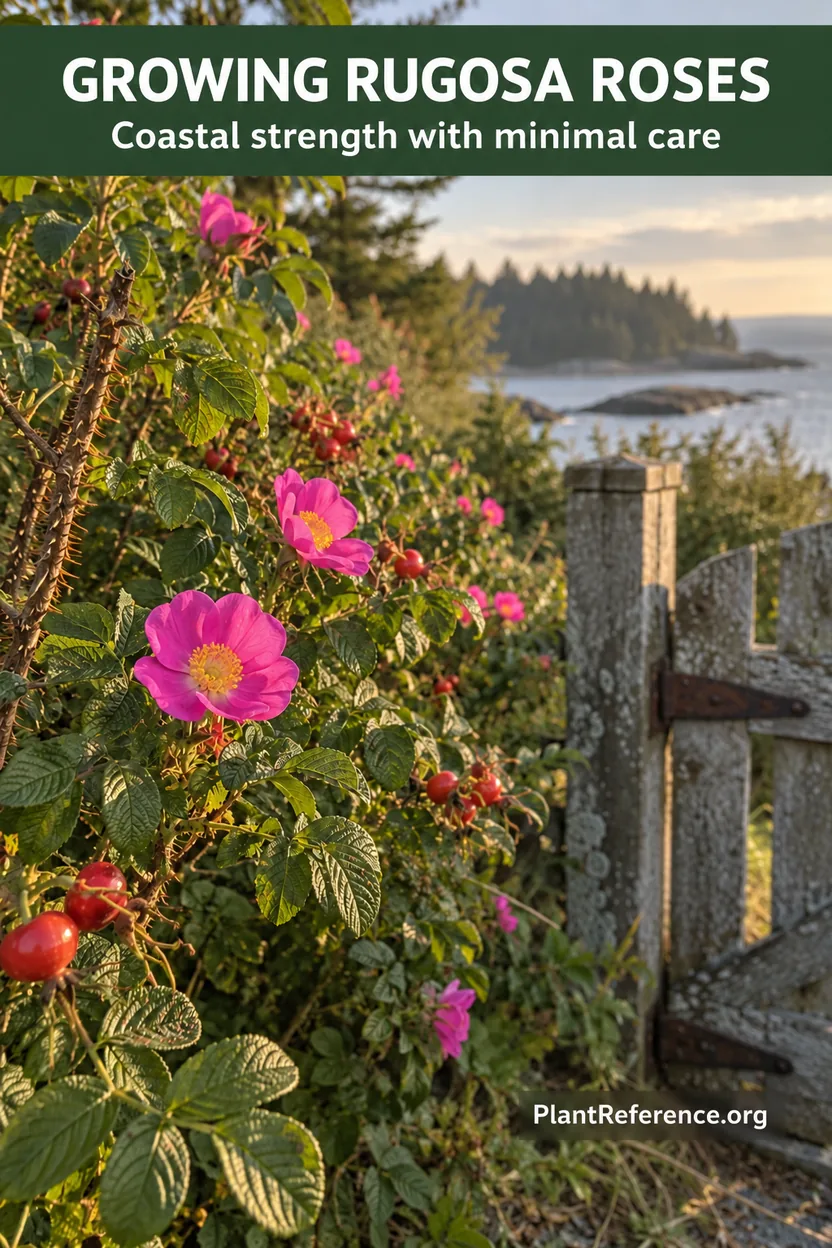
Growing Rugosa Roses in Pacific Northwest Gardens
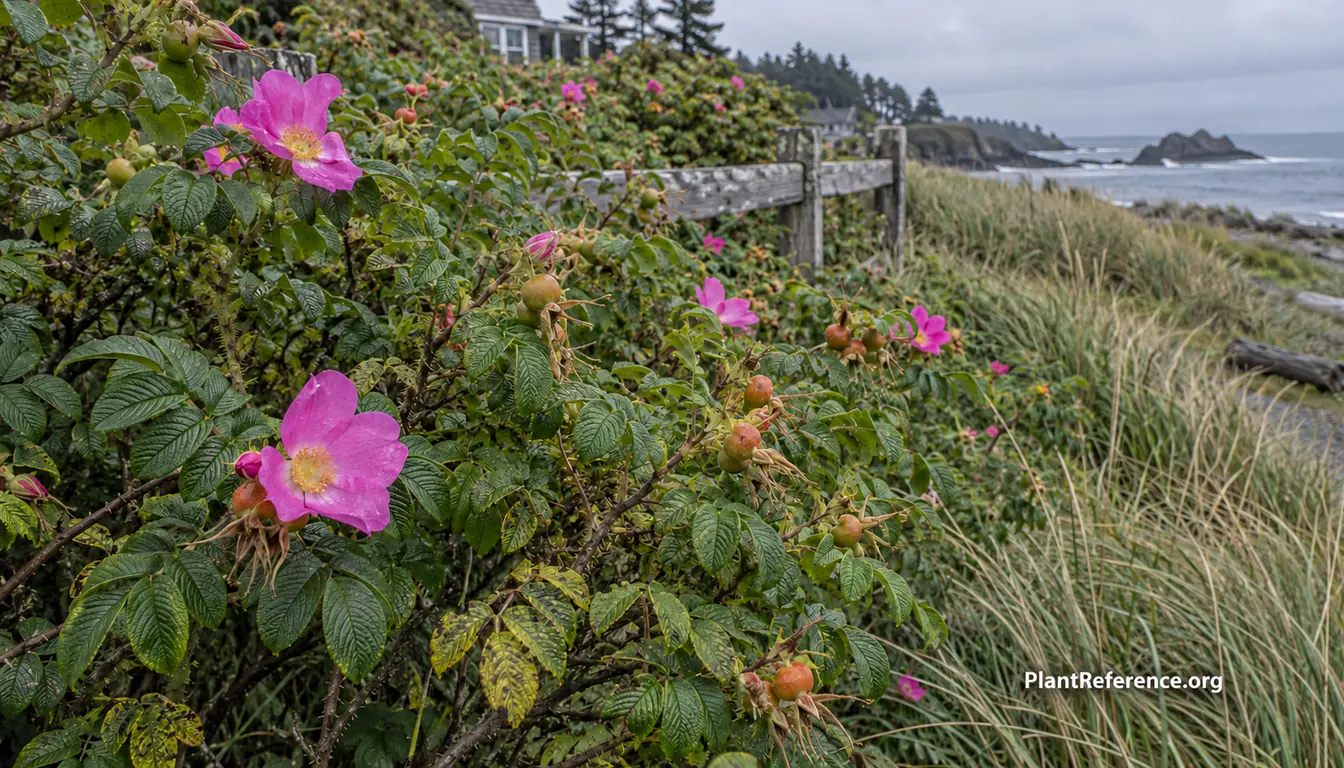
— Image © PlantReference.org 2026
Pets & Toxicity
Recorded toxicity for plants linked in this guide. An unknown status is not a safety assessment.
No linked plant is recorded as toxicDetailsHide
Growing rugosa roses works especially well in coastal Pacific Northwest gardens where salt, wind, wet springs, and dry summers punish fussier rose classes. Rugosa rose 🌿Rosa rugosa (ROH-zuh roo-GOH-suh) forms a dense, extremely thorny shrub about 4–6 feet (1.2–1.8 m) tall, flowers simply, and produces large decorative hips. Its strongest selling point is resilience: it is salt tolerant and virtually immune to the common fungal diseases that make other roses a weekly maintenance project.
That toughness does not mean “plant it anywhere and forget it.” The right site and spacing let you use its vigor instead of fighting it. Treat the shrub as permanent landscape structure, not as a delicate flowering accent, and it will earn its space for decades.
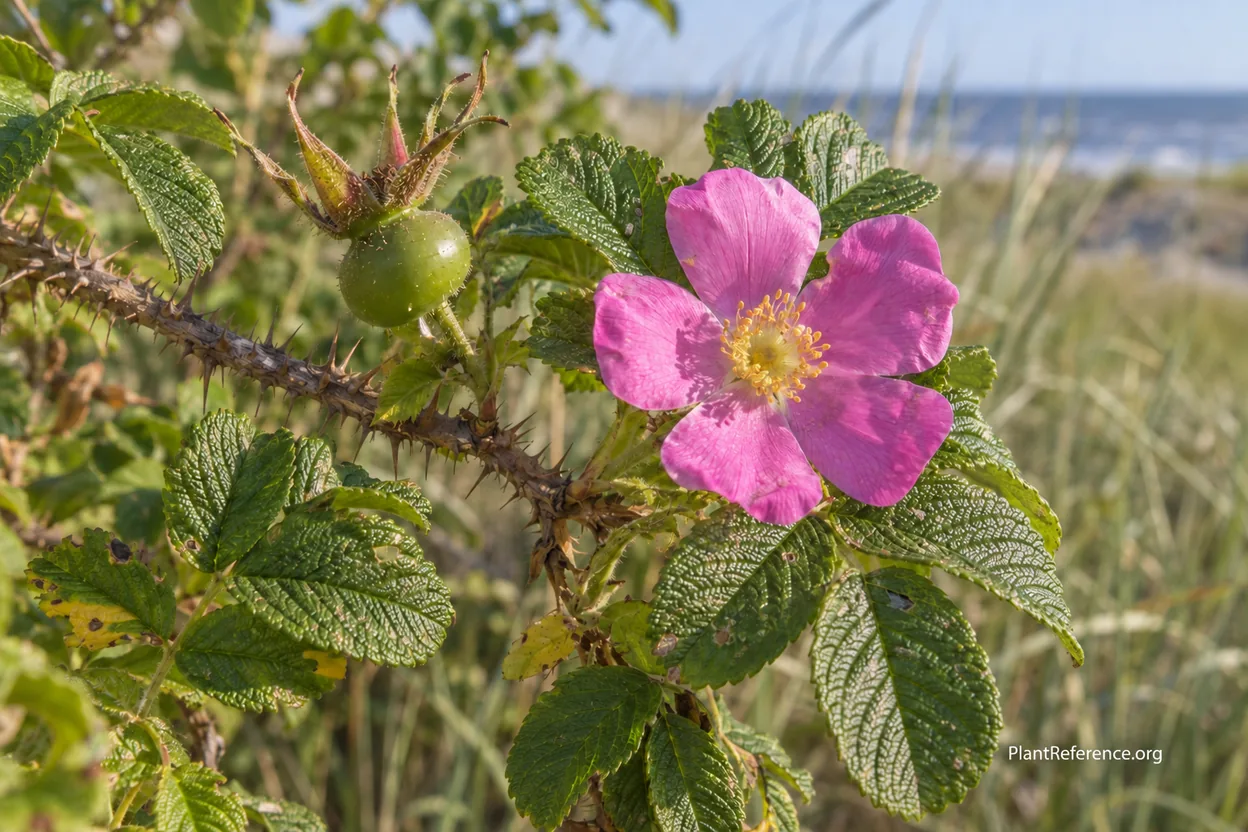
Why Rugosa Roses Handle Coastal Conditions
Most rose trouble in the maritime Northwest begins with a mismatch between plant tissue and environment. Cool, damp springs keep foliage wet long enough for black spot spores to germinate, while high humidity supports powdery mildew. Rugosa foliage has an inherited resistance that makes these diseases far less consequential than they are on hybrid teas.
Salt tolerance is equally valuable near exposed shorelines and roads receiving deicing spray. Salt draws water from plant tissues and disrupts root uptake, so “salt tolerant” never means indestructible. It means the plant can maintain function at exposures that cause leaf burn, dieback, or decline in less adapted shrubs.
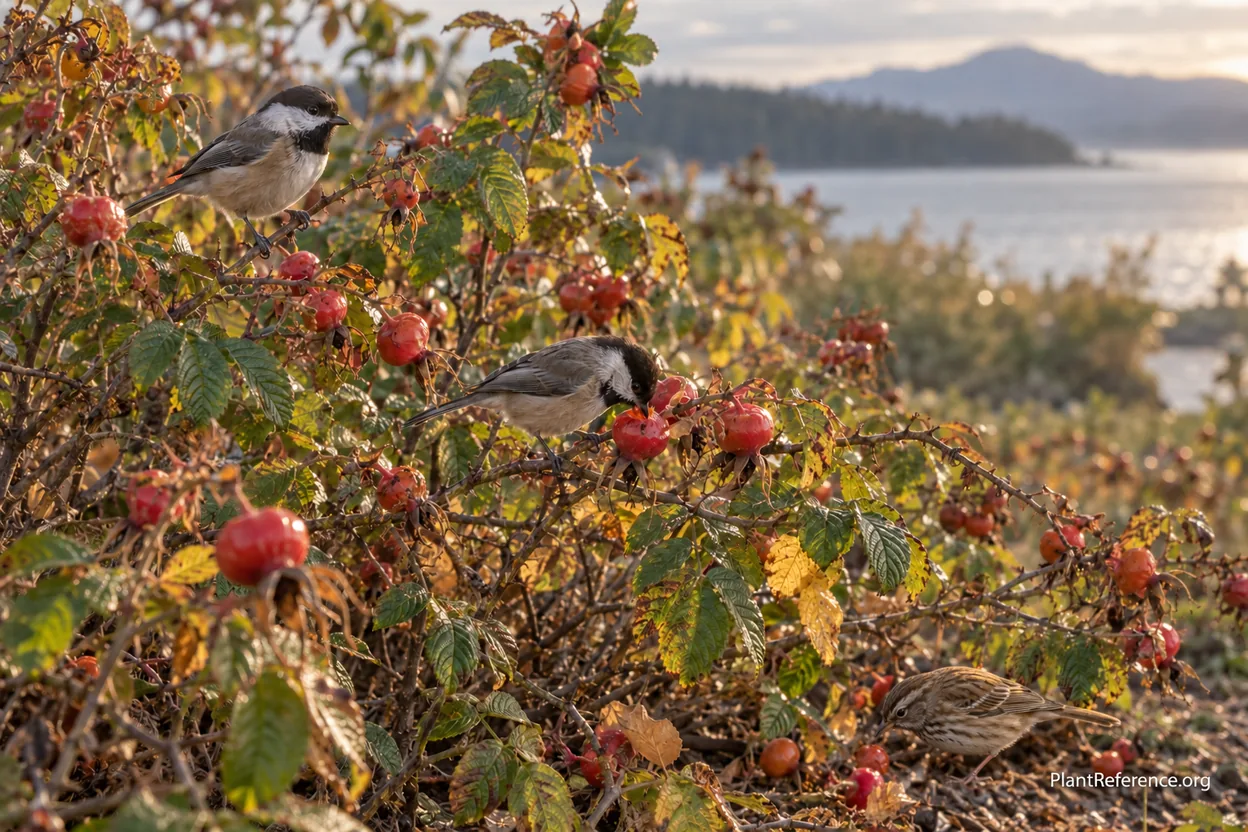
The dense cane system also handles wind better than tall, top-heavy hybrid teas, provided the plant develops a broad root zone. Its simple flowers are followed by substantial hips rich in color and seasonal value. Birds use the fruit, and the hips keep a hedge visually active after flowering ends.
Rugosa roses fit a broader strategy of choosing plants that work with regional conditions. Pacific Northwest Gardening Guide: Climate, Soil & Plant Selection explains how wet winters and summer drought create that selection pressure. Rugosas are not Pacific Northwest natives, so place them thoughtfully near natural areas and use Pacific Northwest Native Plants: 10 Resilient Picks when restoration or native habitat is the primary goal.
The plant's toughness reduces inputs, but it does not remove your responsibility to monitor spread. Dense suckering is useful in a hedge and troublesome in a narrow mixed border. Give the root system a defined zone where expansion is acceptable.
Choose the Right Rugosa Planting Role
Start by deciding what job the shrub must do. A specimen needs room to show its rounded structure. A hedge needs repeatable spacing and access from at least one side. A security barrier needs enough width that the thorny canes deter passage without reaching a sidewalk or neighboring property.
Planting role | Typical spacing | Main value | Design caution |
|---|---|---|---|
Specimen shrub | 5–6 ft (1.5–1.8 m) from large neighbors | Flowers, hips, winter structure | Allow room for suckers and arching canes |
Informal flowering hedge | 4–5 ft (1.2–1.5 m) on center | Dense screen with seasonal bloom | Do not shear into a rigid wall |
Security hedge | 3–4 ft (0.9–1.2 m) on center | Interlocking thorny canes | Set back from paths and play areas |
Coastal wind filter | 4–6 ft (1.2–1.8 m) on center | Salt and wind tolerance | Use a staggered row only where width permits |
Wildlife edge | 5–6 ft (1.5–1.8 m) on center | Hips, cover, and simple flowers | Monitor spread beyond the managed bed |
For a family garden, keep rugosas away from gates, narrow paths, and places where children chase balls. The thorns are not ornamental details; they are part of the shrub's structure. A 3-foot (90-cm) setback from a busy walkway may still be too little once canes arch under rain.
In a mixed border, pair the hedge with low plants that do not trap humidity around its base. Perennial Combinations That Look Good Together can help coordinate texture and bloom while leaving inspection access. Where wildlife value drives the design, How to Build a Pollinator Garden That Works provides a larger framework for season-long flowers, nesting sites, water, and reduced pesticide use.
Rugosa flowers are comparatively open, making their pollen more accessible than the densely doubled blooms of many modern roses. The hips then extend food value into autumn and winter. That two-season function makes the shrub more than a visual screen.
Prepare the Site and Plant Correctly
Choose full sun, ideally six to eight hours daily. Morning light dries dew and rain, although rugosas are less disease-prone than most roses. Avoid a low pocket that remains waterlogged through winter; salt tolerance does not equal tolerance of oxygen-starved roots.
Roses prefer well-drained loam with organic matter and a pH of 6.2–6.8. Regional soils often trend acidic, but test before applying lime. Why Pacific Northwest Soil Is Acidic + How to Fix It explains why rainfall history is not a substitute for a site-specific measurement.
Improve the whole bed, not one hole. Digging a cavity in clay and filling it with compost creates a bathtub where water stops at the dense surrounding wall. Spread finished organic matter across the hedge line and blend it through the upper 8–12 inches (20–30 cm) where practical.
Before planting, fill a test hole about 12 inches (30 cm) deep, let it drain, refill it, and observe. Water that remains for a day indicates compaction, hardpan, grading, or a high seasonal water table. Use Fix PNW Garden Drainage: Glacial Till, Hardpan & Raised Beds to diagnose the profile before roots are committed.
Plant bare-root stock in March when soil reaches roughly 40°F (4°C) and crumbles instead of smearing. Soak roots for 2–24 hours, trim only broken tissue, and spread roots over a low soil mound. For container stock, correct circling roots and keep the crown level with finished grade.
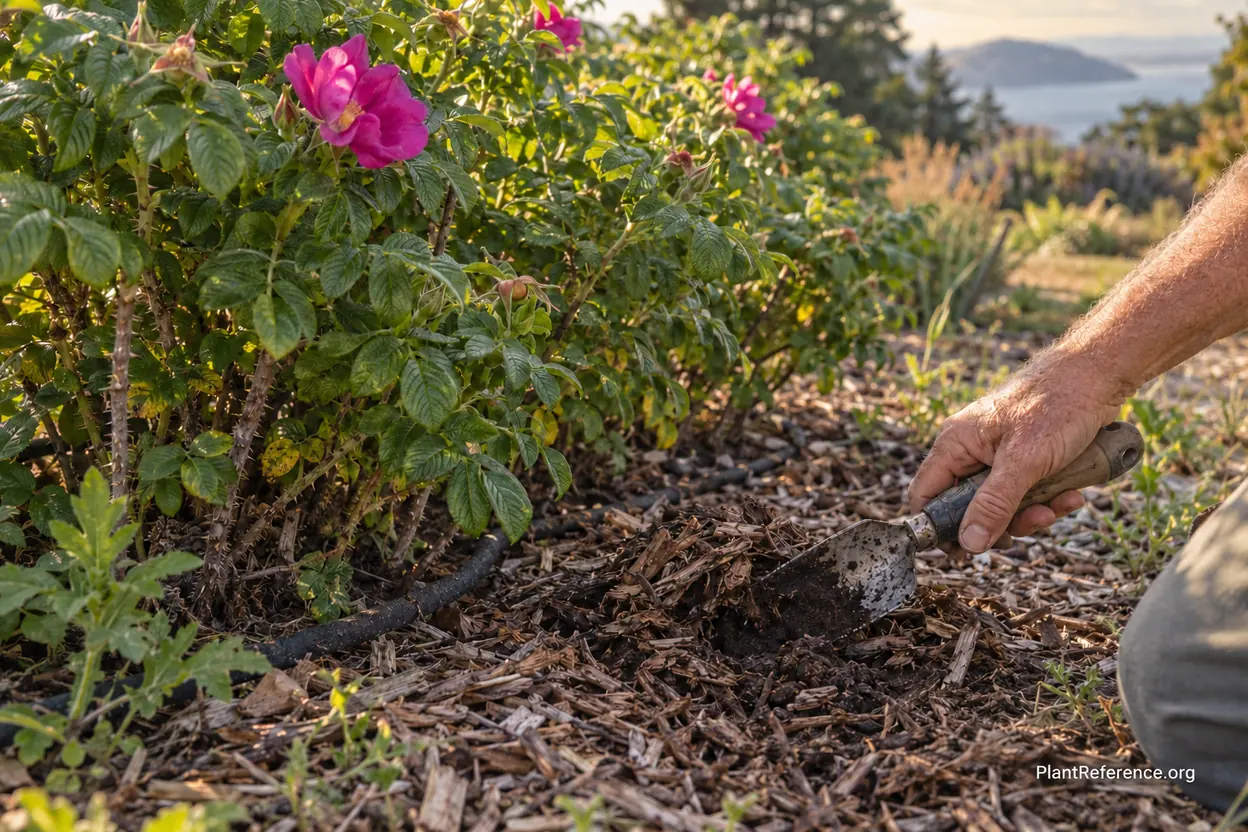
Backfill in stages, water midway to settle air pockets, finish to grade, and water again. Apply 2–3 inches (5–8 cm) of coarse organic mulch across the bed while leaving several inches clear around canes.
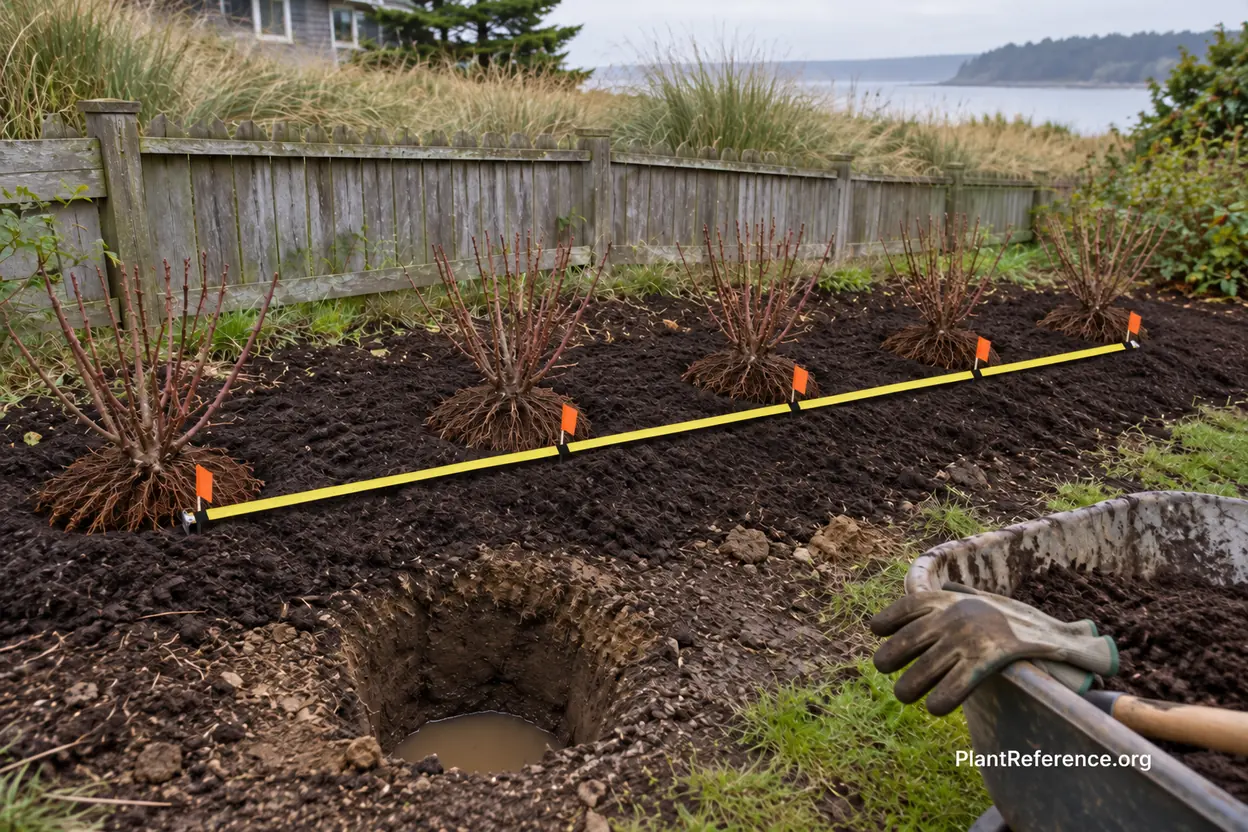
Build a Durable Rugosa Hedge
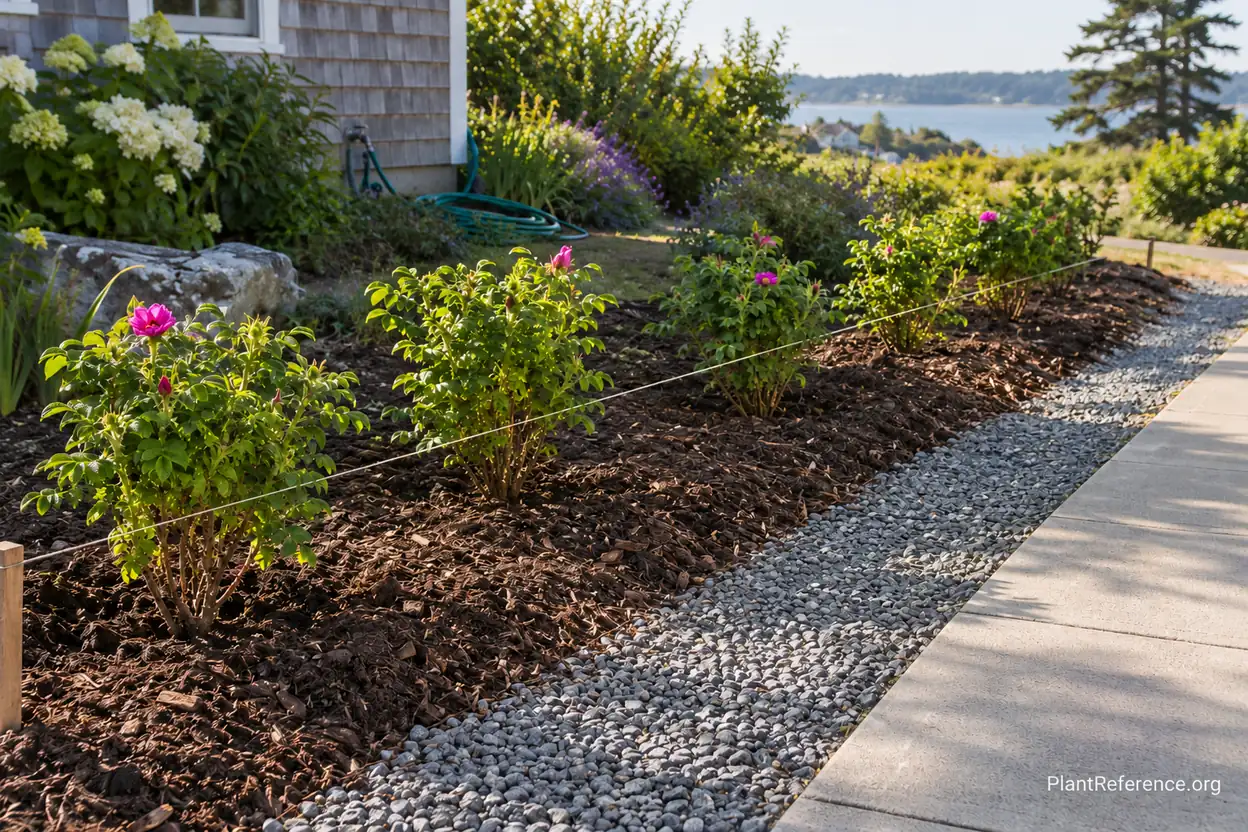
Set a straight or gently curved layout with stakes and string before digging. Measure on-center spacing from crown to crown, not from the outside edges of nursery pots. For an informal hedge, 4–5 feet (1.2–1.5 m) on center lets mature shrubs meet without immediate crowding.
A tighter 3–4 foot (0.9–1.2 m) spacing closes faster for a security hedge, but the tradeoff is more cane competition and less access. A staggered double row creates excellent screening but can occupy 8–10 feet (2.4–3 m) of depth after maturity. Do not build that width into a 4-foot (1.2-m) side yard.
Install a root edge only when you understand its limits. A shallow plastic border stops mulch, not rose suckers. A more substantial barrier can redirect roots, but it may also concentrate them and alter drainage. In many landscapes, a mown strip or accessible gravel maintenance zone is simpler because new shoots can be seen and removed.
Protect public-facing edges. Keep canes inside the property line and away from mailboxes, utility meters, and fire access. A hedge that injures people or blocks equipment is badly designed no matter how healthy it looks.
Use this build sequence:
Mark the mature hedge footprint and required setbacks.
Test drainage and correct the entire root zone.
Lay plants at exact crown-to-crown spacing before digging.
Plant each crown at consistent finished grade.
Install root-zone irrigation and mulch across the full line.
Preserve a maintenance path for pruning and sucker control.
Think long term, the same way you would with lumber or stone: size the installation for mature load. Native Plant Gardening: Ecological Design Guide offers useful principles for connecting structure, habitat, and maintenance even when your hedge includes a nonnative workhorse.
Water and Feed Without Creating Extra Work
Water new rugosas deeply enough to moisten the full root zone, then let the upper soil begin to dry before repeating. During the first dry summer, check 2–3 inches (5–8 cm) beneath mulch rather than watering by calendar. Established plants tolerate coastal exposure, but even a tough shrub establishes faster with consistent moisture.
Use a soaker hose or dripline below mulch. Root-zone irrigation keeps foliage dry and delivers water where new roots are expanding. It also avoids the waste and overspray of watering a thorny hedge from above.
Do not overfeed in pursuit of more flowers. High nitrogen produces soft, fast growth that demands pruning and can reduce the dense, durable character you selected. In mid-March, established roses may receive about 2 cups of alfalfa meal or pellets to encourage basal breaks. From April through August, use a balanced fertilizer only at its labeled rate when growth or soil testing justifies it.
Stop nitrogen by mid-September. Late succulent growth is vulnerable to winter damage and wind. The hedge should enter autumn with mature canes, not a flush of tender shoots created by one last feeding.
Heavy regional rainfall can leach nutrients, yet that does not mean every shrub needs the same correction. Check leaf color, shoot length, bloom, and soil-test results together. A rose growing steadily with healthy foliage does not need an aggressive product stack.
For broad soil-building principles, Best Soil Mix for Raised Beds: Creating the Perfect Growing Medium explains the roles of mineral soil, organic matter, drainage, and water retention. Apply those principles across the hedge line rather than turning each hole into a separate pot.
Prune Rugosa Roses Lightly
Rugosas need far less pruning than hybrid teas. Begin with the Three Ds: dead, diseased, and damaged wood. Remove crossing canes that rub, plus occasional old stems at the base when the center becomes congested. Preserve the natural rounded structure instead of forcing the hedge into a box.
Prune in late February or early March as Forsythia begins flowering and buds swell. Make clean cuts at a 45-degree angle, roughly 1/4–3/8 inch (6–10 mm) above an outward-facing bud. Wear heavy gloves and sleeves because the dense prickles make casual reaching hazardous.
Avoid routine shearing. A hedge trimmer cuts leaves and canes indiscriminately, leaving ragged wounds and a shell of growth around a shaded interior. Selective cuts take longer once, then create a healthier framework that needs less correction.
If the hedge outgrows its footprint, remove entire older canes at the base and shorten a limited number of remaining canes. Severe annual reduction defeats the reason for choosing a low-maintenance shrub. The broader techniques in How to Prune Roses: When and How to Prune Every Type of Rose help distinguish renewal cuts from simple height control.
Deadheading is optional. Remove spent flowers if you want a cleaner summer appearance and more emphasis on repeat bloom. Leave them if autumn hips and bird forage matter more. You cannot maximize both heavy deadheading and heavy hip display from the same flowers.
Sanitize pruners before work and after cutting suspicious tissue. Rugosas resist common fungi, but sanitation still limits bacterial and viral transfer between unrelated plants.
Preserve Hips and Wildlife Value
Large hips are one of the strongest reasons to grow rugosas. Let selected flowers finish naturally, then allow the fruit to color through autumn. The hips provide bright winter interest against coarse foliage and bare canes, while birds gain a seasonal food source and dense protective cover.
Do not spray open flowers or ripe hips casually. Even an organic-labeled product can harm insects through direct contact or violate harvest guidance if the label does not cover the intended use. The simplest wildlife strategy is often the most durable: choose a resistant plant, keep it healthy through siting and watering, and tolerate minor cosmetic damage.
Mix the hedge into a larger habitat plan. Nearby native flowers can supply pollen and nectar before and after the main rose bloom. Best Perennials for Pollinators: Bees & Butterflies offers candidates for extending resources through the season.
Leave enough ground access to remove invasive weeds and inspect suckers. Wildlife value does not require abandoning management. A maintained hedge can provide food and cover without spreading into paths, neighboring beds, or sensitive habitat.
Solve the Few Problems Rugosas Develop
Yellow leaves across a wet plant usually point to root-zone stress, not a sudden fertilizer shortage. Check drainage, irrigation, and crown depth before feeding. A shrub sitting in saturated clay cannot absorb nutrients normally because roots lack oxygen.
Sparse flowering often follows shade, excessive nitrogen, or severe pruning. Confirm six or more hours of sun, stop pushing soft growth, and preserve mature flowering canes. Coastal wind alone is rarely the whole explanation when the plant has healthy foliage but few buds.
Unwanted shoots outside the hedge are a boundary problem. Trace and remove suckers while small, then maintain an accessible strip where new growth is visible. Repeatedly mowing over hidden shoots in a crowded perennial bed turns a simple task into a yearly fight.
Occasional black spot, mildew, or rust does not justify a preventive spray program on a generally resistant rugosa. Remove affected leaves, improve airflow, and verify watering practice. Escalate only when symptoms spread and diagnosis is clear.
For winter, apply 2–3 inches (5–8 cm) of organic mulch in late November, keeping it away from the canes. Heavy 12-inch (30-cm) hilling is normally unnecessary in lowland maritime Zone 8b. How to Prepare Perennial Gardens for Winter by Species explains why selective cleanup protects plants without stripping every useful stem from the landscape.
Growing rugosa roses succeeds when the design respects the plant's mature size and thorny vigor. Give the shrub a job—coastal screen, wildlife edge, or security hedge—then build enough space and access for that job. You will get a tougher, more useful landscape with much less weekly maintenance than a row of high-demand roses.
Frequently Asked Questions
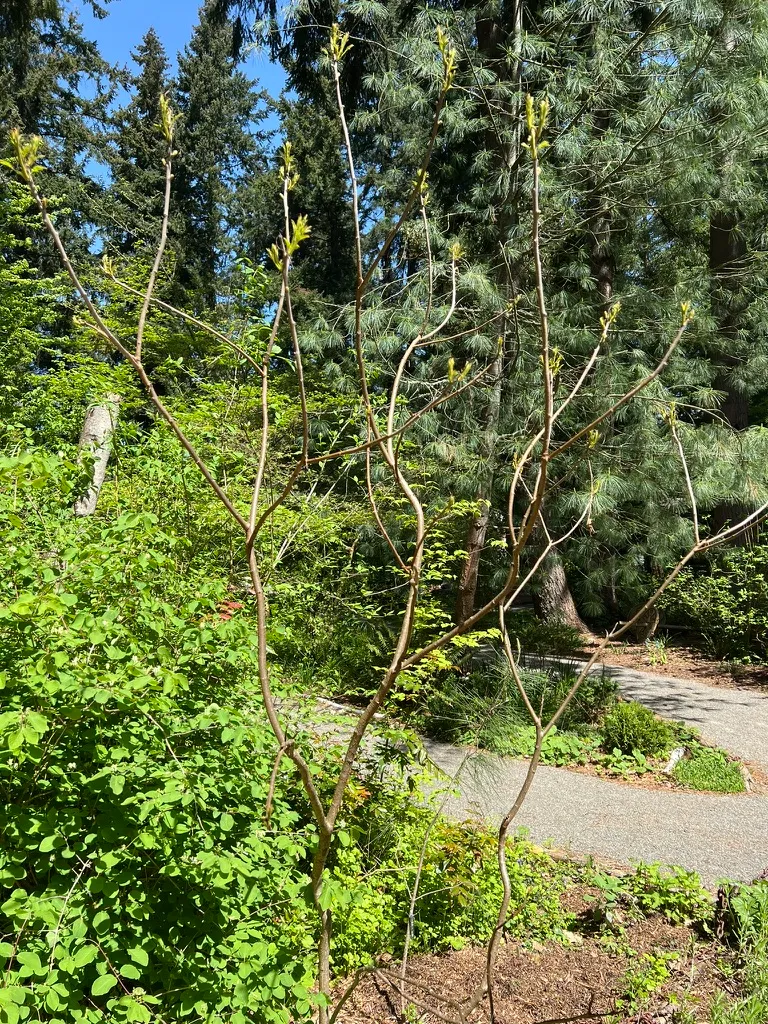
Reading about plants and recognising them are different skills. These three build the second.
- Daily PlantIdentify the day’s mystery plant from a close-up photograph.
- Keyed OutWork a dichotomous key, lead by lead, to name a hidden specimen.
- Name That PlantName a specimen from botanical clues dealt hardest first.
Free to play, no account needed
Tagged with
Mike's been designing residential landscapes in the Seattle area, with a particular focus on Pacific Northwest natives and sustainable practices. He's a Washington State Master Gardener and worked in construction before landscaping, which gives him a practical edge when it comes to building raised beds and hardscaping projects. He runs a small side business propagating and selling unusual perennials at farmers markets on weekends. His property serves as a testing ground for low-maintenance, wildlife-friendly garden designs. Mike's philosophy: if it requires weekly maintenance, it's not sustainable.