Bare-Root vs Container Roses: Which Should You Buy?
— Image © PlantReference.org 2026
Pets & Toxicity
Recorded toxicity for plants linked in this guide. An unknown status is not a safety assessment.
No linked plant is recorded as toxicDetailsHide
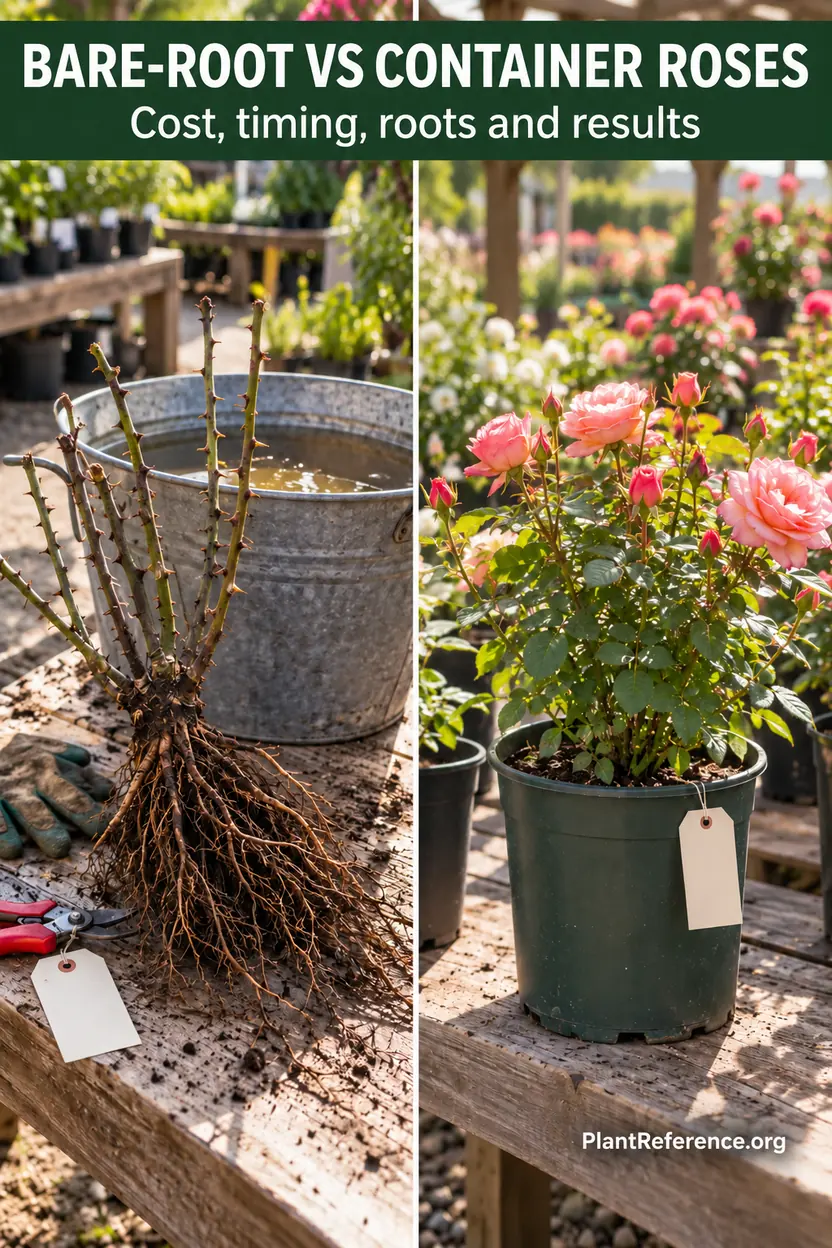
Bare-root vs container roses is not a contest with one permanent winner. Bare-root stock usually gives you more roots and more choices for less money, while a container rose gives you visible top growth and a forgiving purchase window. The right choice depends on when you are shopping, how many roses you need, and whether you can plant promptly.
In the maritime Pacific Northwest, dormant bare-root stock has a particular advantage because cool March soil lets roots establish before dry summer weather. Container stock remains useful for later purchases, replacements, and buyers who want to see the flower before committing. Think of this as choosing a delivery system, not choosing between a good rose and a bad one.
The Short Answer for Most Buyers
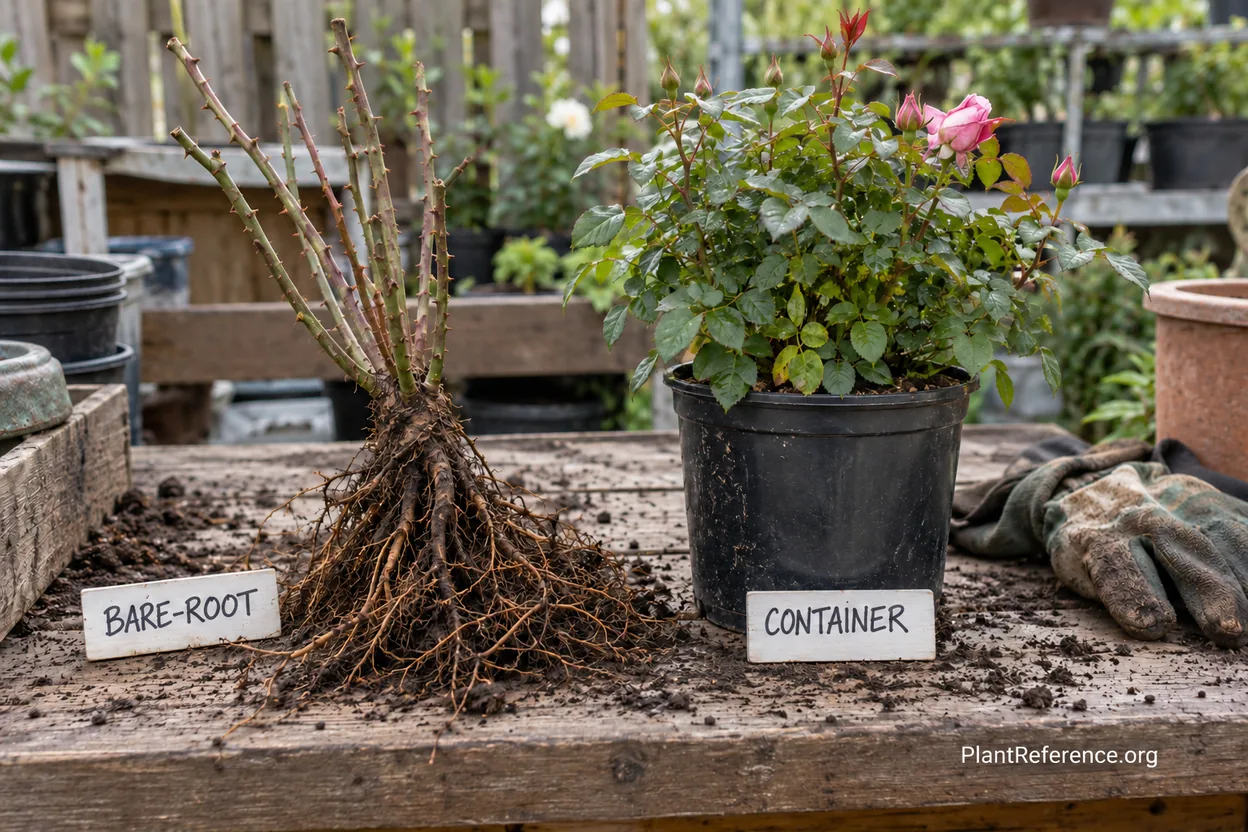
Buy bare-root if you are ordering during the dormant season, preparing a new bed, or planting three or more roses. Nurseries avoid the pot, potting mix, watering, and handling costs built into container prices, so more of your money pays for the plant. You can also inspect the complete root system before it goes into the ground.
Buy a container rose if you are shopping after bare-root season, filling one unexpected gap, or choosing by bloom color and fragrance in person. The leaves and flowers provide immediate evidence of the top growth, though they do not guarantee a healthy root ball. You still need to slide the plant partly from the pot and inspect what is happening below.
The dividing line is often labor. Bare-root stock asks you to receive, soak, and plant it while dormant. Container stock has already been potted and grown on, so it carries more nursery labor and costs more. That added work buys convenience, not automatic superiority.
If your site is not ready, do not order bare-root plants and hope the bed catches up. A dormant rose can wait briefly under correct cool storage, but roots dry quickly once unpacked. Container roses tolerate scheduling delays better as long as you keep them watered and out of punishing heat.
For regional context on cool springs and dry summers, Pacific Northwest Gardening Guide: Climate, Soil & Plant Selection explains why establishment timing matters as much as plant format.
Bare-Root vs Container Roses Compared
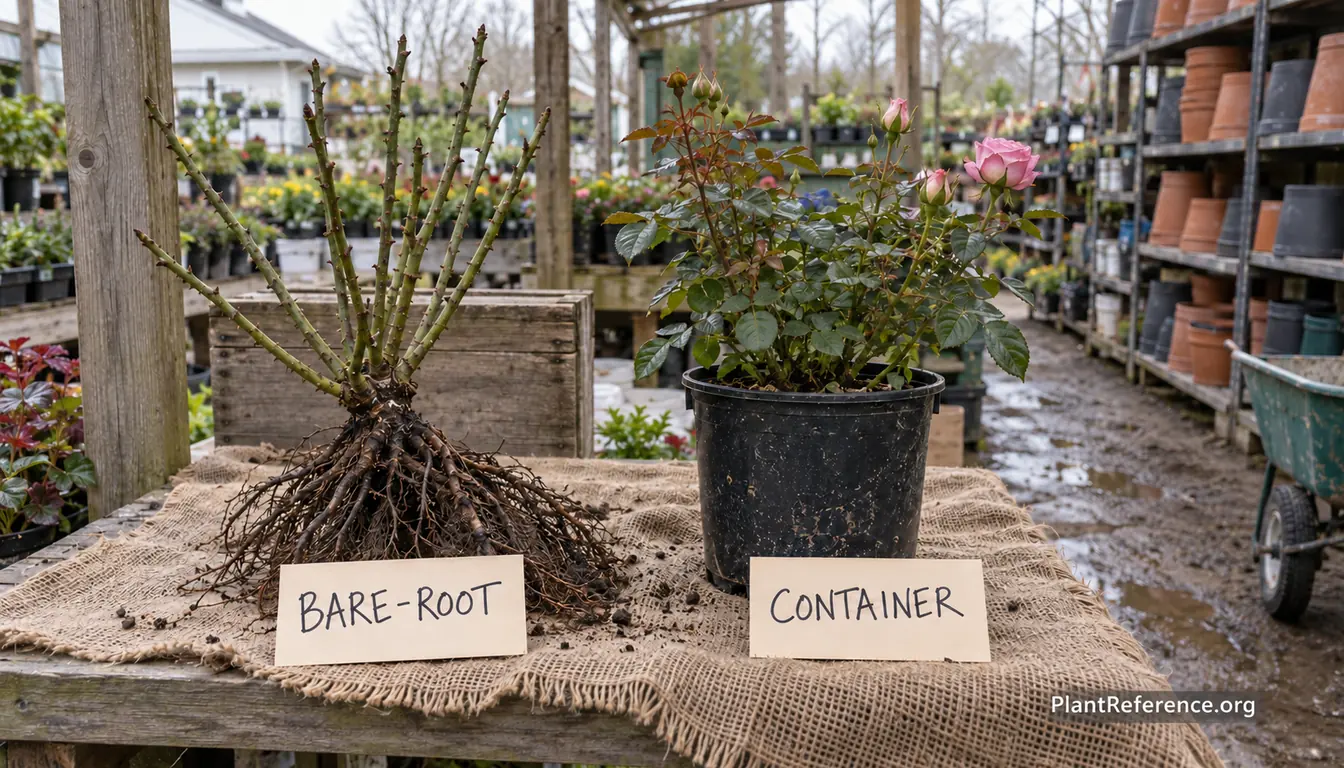
Bare-root roses are lifted from the field during dormancy, cleaned of most soil, graded, and stored cool until shipping or sale. Their canes may look unimpressive on arrival, but the full root framework is visible. Container roses grow in potting mix and may be sold dormant, leafed out, or blooming depending on the season.
Buying factor | Bare-root rose | Container rose | Better choice when |
|---|---|---|---|
Typical availability | January–March | Year-round, peak spring–summer | Match purchase to planting window |
Purchase cost | Lower | Higher due to potting and labor | Bare-root for multiple plants |
Root inspection | Entire root system visible | Root ball partly hidden | Bare-root for structural inspection |
Early top growth | Slower initial leafing | Faster visible take | Container for immediate display |
Long-term establishment | Broad mature roots when planted well | Can be limited by pot shape | Bare-root for prepared beds |
Summer planting risk | Usually unavailable dormant | Available but heat-vulnerable | Container only with careful aftercare |
Variety selection | Broad through specialist sellers | Limited to local inventory | Bare-root for specific selections |
Planting urgency | High after soaking and unpacking | Moderate with regular watering | Container for schedule flexibility |
The phrase “full mature root system” does not mean every bare-root rose is enormous. It means the roots developed in the ground rather than being constrained by the final retail pot. A properly graded bare-root plant can have fewer fine feeder roots at delivery because lifting removes some of them, yet its major roots have an outward structure ready to regenerate.
Container roses keep more active feeder roots if handled well, which explains their fast visible take. The risk is geometry. Roots may circle the pot wall, form a dense mat, or remain trapped in a peat-heavy core that dries differently from the surrounding garden soil. The top can look excellent while the root system is already asking for correction.
Neither format fixes a bad site. Roses need well-drained soil, good airflow, and a broad rooting zone. If winter water collects in the bed, review Fix PNW Garden Drainage: Glacial Till, Hardpan & Raised Beds before deciding what to buy.
When Bare-Root Roses Are the Better Buy
Bare-root stock is the sensible choice for planned projects. If you are installing a hedge, repeating one rose through a border, or ordering a hard-to-find selection, the lower unit cost adds up quickly. Shipping is also efficient because you are not paying to move wet potting mix and plastic containers.
Selection is another strong point. Specialist nurseries can store and ship many dormant roses in far less space than the same inventory would occupy in pots. You can choose by mature size, growth habit, fragrance, and disease resistance instead of settling for whatever happens to be blooming on a retail bench.
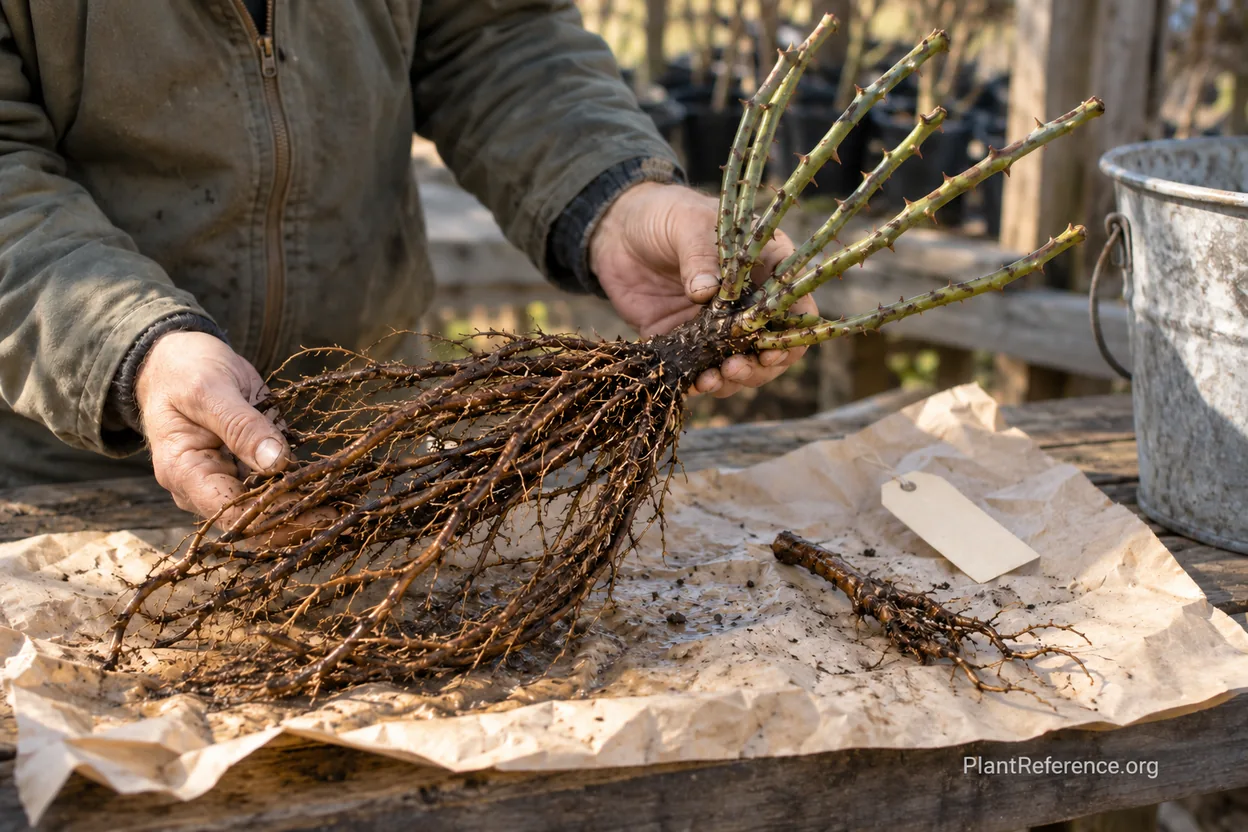
In maritime Pacific Northwest conditions, plant bare-root roses in March once soil reaches about 40°F (4°C) and is workable. Soak the roots in clean water for 2–24 hours, keeping canes above water. Plant promptly before wind or sun dries the fine tissues.
Bare-root stock also makes honesty easier. You can see broken roots, dead sections, poor balance, or evidence of desiccation. Healthy roots feel firm and pliable. Healthy canes have green tissue beneath a light scratch. Reject stock with widespread black, slimy roots or a sour odor.
Choose bare-root when these conditions align:
The bed is prepared before the delivery date.
Soil is unfrozen, near 40°F (4°C), and not saturated.
You can soak and plant within the supplier's recommended window.
You need several roses or a selection unavailable locally.
You value root inspection more than seeing flowers at purchase.
The tradeoff is delayed gratification. A bare-root rose spends early energy rebuilding fine roots before it produces a convincing canopy. That is sound construction: foundation first, visible structure second. Do not compare its April appearance with a greenhouse-forced container plant and assume you bought the weaker rose.
When Container Roses Make More Sense
Container roses earn their higher price when timing or certainty matters. If you missed the dormant season, need to replace one failed plant, or want to evaluate flower form and fragrance in person, a potted specimen solves a real problem. It can be planted through more of the growing season, provided you manage water and heat carefully.
Container stock is especially useful for renters and gardeners whose planting space is not ready in March. The plant can remain in its pot temporarily while a bed is built or drainage is corrected. It still needs regular irrigation, sun, and enough root volume; a nursery pot is a holding system, not permanent housing.
Visible growth helps beginners judge vigor. Look for evenly colored foliage, firm canes, new growth from more than one point, and a balanced shape. Avoid plants with severe leaf drop, extensive black spot, cane dieback, or weeds that indicate long neglect. A few damaged leaves are less important than a sound crown and root ball.
The biggest container risk is summer heat. Black plastic pots can become much hotter than the surrounding soil, and a root ball can dry within hours during warm, windy weather. Plant in cool morning conditions, water the pot thoroughly before transplanting, and shade the root zone with mulch afterward. Avoid buying a stressed rose during a heat wave simply because it is on clearance.
Container roses also suit long-term pot culture when you deliberately choose a sufficiently large vessel and suitable mix. Container Gardening: Pots, Soil, Water & Yields covers the basic relationship among container size, moisture, and root health. A rose eventually needs far more volume than its retail pot provides.
How to Inspect Either Rose Before Buying
Start with the label. It should identify the rose, mature dimensions, and whether it is own-root or grafted. For grafted plants, ask which rootstock was used. 🌿Rosa multiflora (ROH-zuh mul-tih-FLOR-uh) matches acidic soils and consistent rainfall well. Rosa fortuniana (ROH-zuh for-too-nee-AH-nuh) excels in warm sandy regions but is poorly suited to cold, heavy Pacific Northwest soil.
On bare-root stock, count healthy structural canes rather than demanding a tall plant. Check that major roots radiate in several directions and have not been hacked into one short club. Minor shipping damage can be pruned cleanly; widespread dryness cannot be reversed by a longer soak.
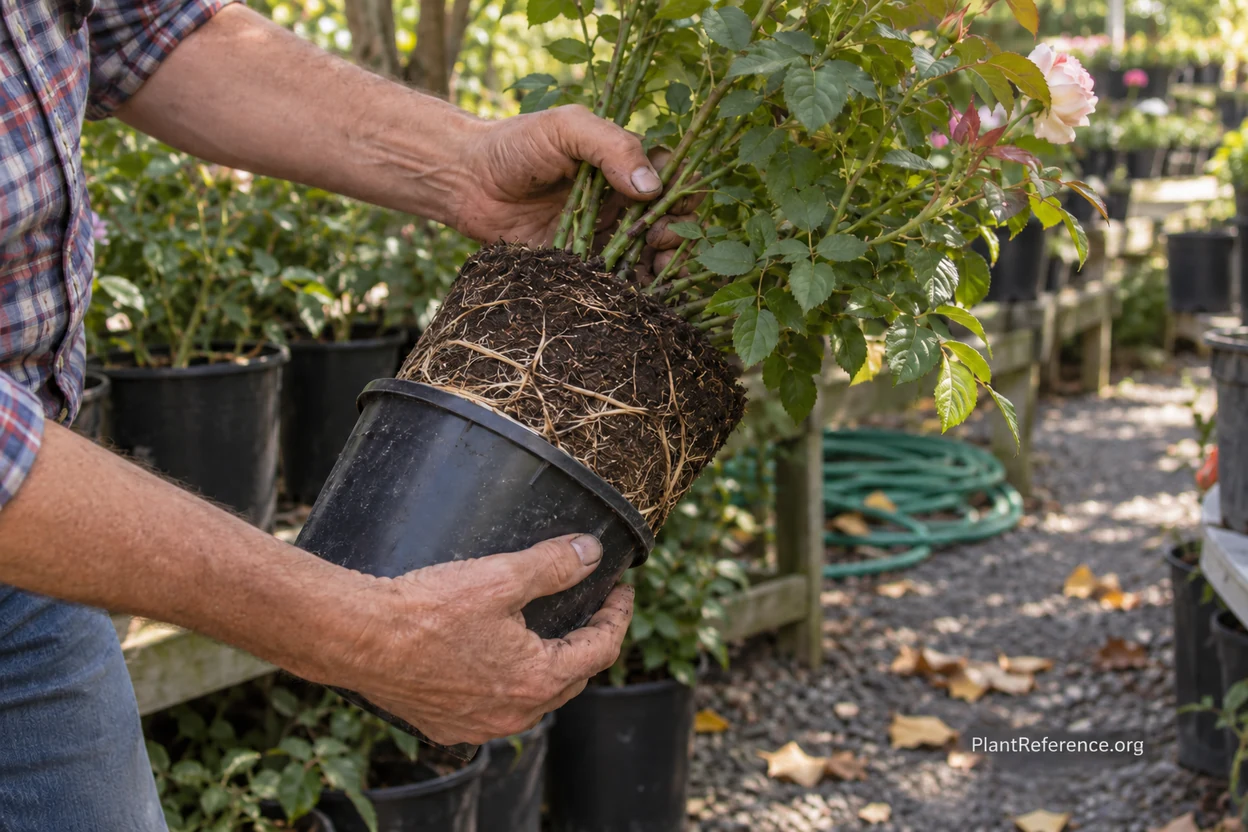
On container stock, ask permission to ease the root ball out. Fine white or tan roots near the edge indicate active growth. A few roots at the wall are normal, but thick woody roots circling repeatedly around the base need correction and may never form the broad architecture you expected. A pot-bound rose is not necessarily unsalvageable, but it should not command a premium price.
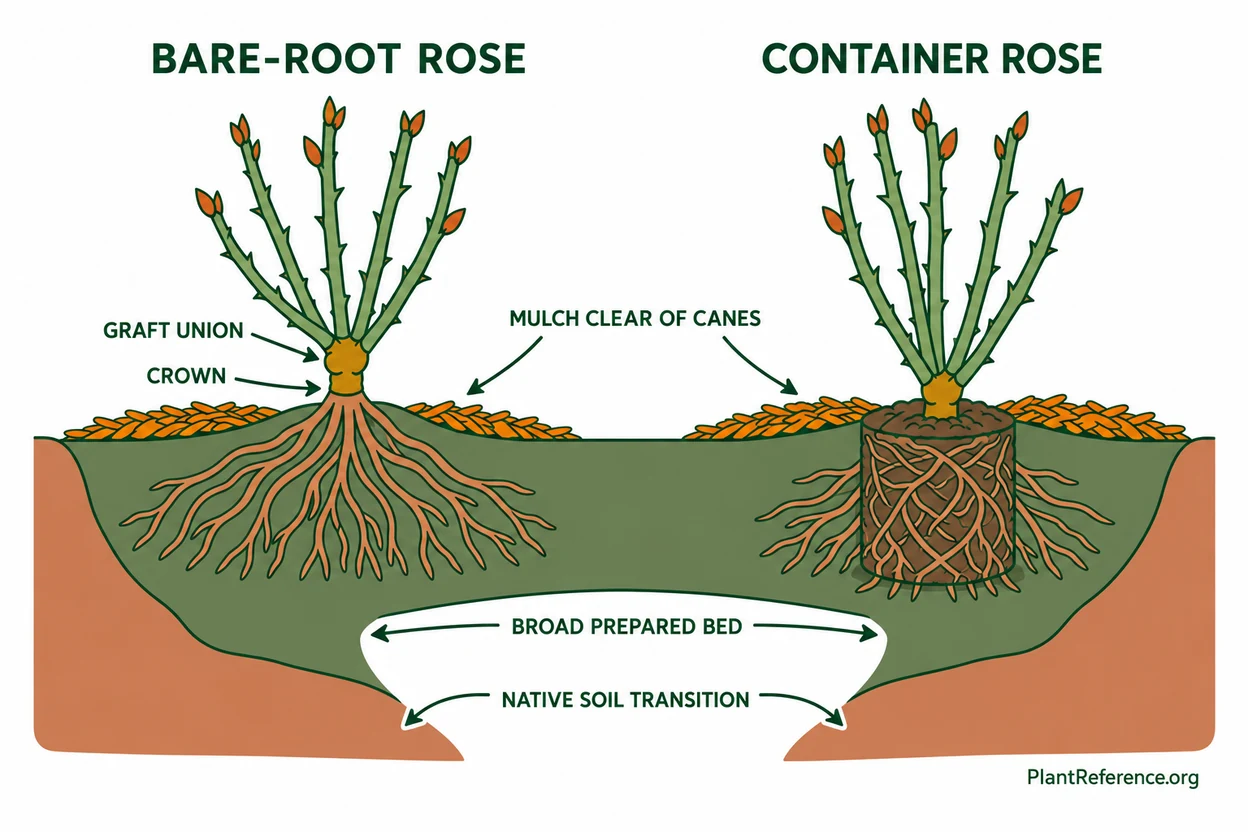
Check the graft union on both formats. It should be firm, healed, and free from cracks or soft tissue. Shoots below the union belong to the rootstock and should not be mistaken for extra vigor. Own-root roses avoid sucker takeover and return true to type after dieback, though they may need two to three years to reach mature size.
Use this buying inspection:
Confirm identity, mature size, and own-root or grafted status.
Check canes for firmness, dieback, wounds, and green tissue.
Inspect roots for flexibility, balance, circling, rot, or severe dryness.
Look for pests and disease on leaves, buds, and cane joints.
Match the plant's condition to the price and your planting schedule.
Do not let flowers distract you from structure. Blooming plants are attractive sales tools, but roots and canes determine whether the purchase still looks good three years later.
Plant Each Type Without Wasting Its Advantage
Prepare the whole planting zone before either rose arrives. Roses prefer well-drained loam with organic matter and a pH of 6.2–6.8. Test rather than adding lime automatically; Why Pacific Northwest Soil Is Acidic + How to Fix It explains why rainfall trends do not predict every individual bed.
Never dig a hole in clay and replace its contents with fluffy bagged soil. That creates a bathtub where water moves into the amended pocket and stalls at the compacted wall. Blend finished organic matter across the upper 8–12 inches (20–30 cm) of the broader bed. Best Soil Mix for Raised Beds: Creating the Perfect Growing Medium offers useful material principles, but the goal is a gradual transition into native soil.
For bare-root stock, soak for 2–24 hours, trim only dead or broken roots, and spread every major root over a low mound. Make the hole fit the roots instead of shortening good roots to fit the hole. In mild winter-wet conditions, set a graft at soil level or 1–2 inches (2.5–5 cm) above grade; a colder exposed microclimate may justify 2–4 inches (5–10 cm) below grade if drainage is excellent.
For container stock, water the pot first. Remove the root ball without pulling on canes, loosen or cut persistent circling roots, and roughen a smooth peat-bound surface. Set the original crown at finished grade. Do not bury the potting mix cylinder under several inches of native soil, and do not leave it standing above grade where it dries like a wick.
Backfill in stages and water halfway through to settle soil around roots. Finish to grade, water again, then spread 2–3 inches (5–8 cm) of mulch across the bed while keeping it away from canes. A broad mulch layer is useful; a wet collar around the crown is not.
First-Year Care and Establishment
Judge establishment by new growth quality, not by which plant leafs out first. A container rose often looks ahead because it arrived with leaves and feeder roots. A bare-root rose may appear slower while it generates roots, then catch up as temperatures rise. Neither should be pushed with concentrated fertilizer at planting.
Keep the root zone evenly moist but aerated. Spring rain can wet foliage while a sheltered root ball stays dry, so check 2–3 inches (5–8 cm) below mulch. During the dry season, water deeply at soil level. Raised Bed Irrigation Systems: Watering Solutions for Consistent Growth explains how delivery rate and scheduling affect actual root-zone moisture.
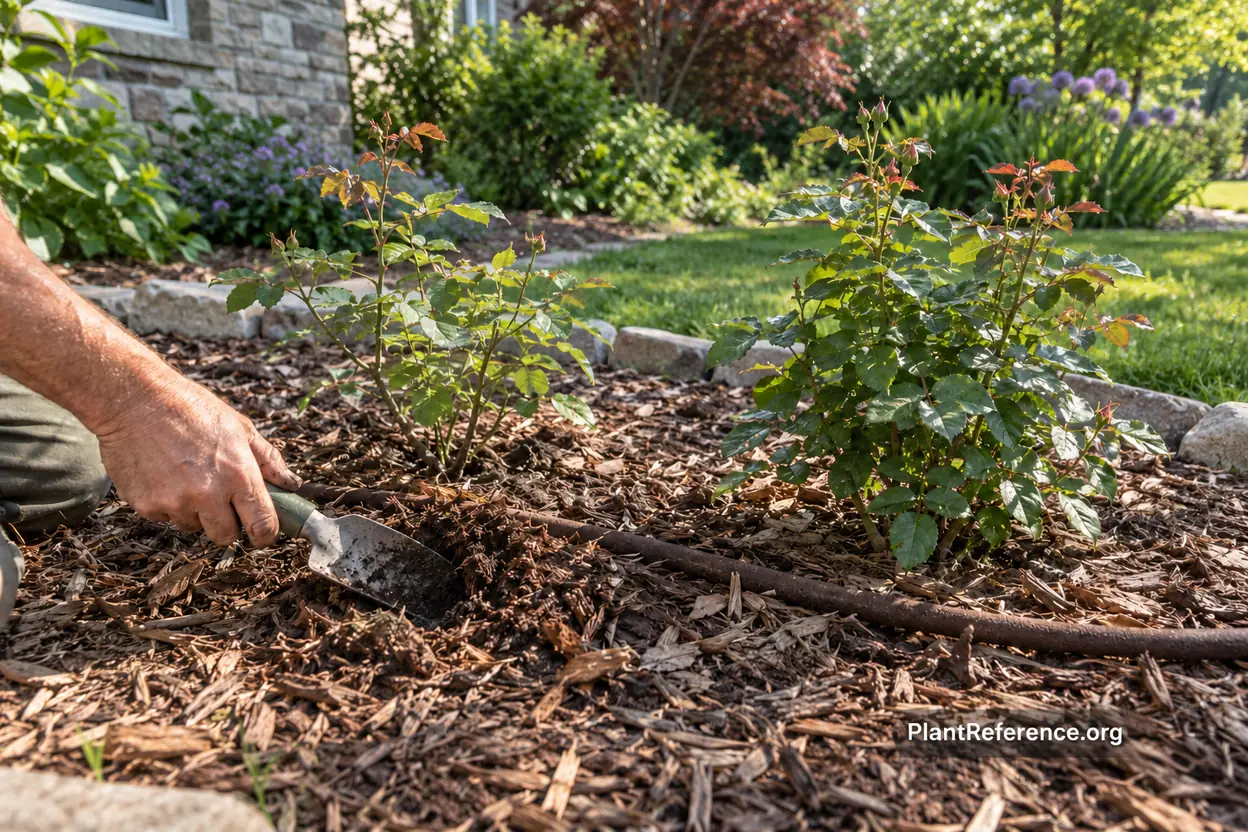
A soaker hose helps both formats because it avoids prolonged leaf wetness. Black spot spores need roughly seven hours of wet foliage to germinate, making overhead evening watering a poor trade. Lay the hose across the prepared bed rather than coiling it against the crown.
Begin feeding after active growth confirms that roots are functioning. Follow the chosen product label and plant size. A regional program may include balanced monthly feeding from April through August, followed by a hard nitrogen stop in mid-September. Late soft growth is more vulnerable to winter damage.
Container roses need one extra check: the original potting mix may dry faster or slower than the surrounding bed. Probe both zones during the first month. Bare-root roses need protection from a different mistake—digging them up repeatedly because bud break seems slow. Scratch a tiny cane area for green tissue, maintain steady moisture, and give roots time.
Delay major shaping until the plant establishes. Remove dead, diseased, and damaged wood, but preserve useful framework. How to Prune Roses: When and How to Prune Every Type of Rose gives class-specific pruning once the rose is growing normally.
Make the Final Buying Decision
Choose bare-root for a planned spring project, maximum selection, lower cost, and inspectable root architecture. Choose container stock for a later planting date, an immediate replacement, or the chance to evaluate flowers and foliage before purchase. If both are available in equal health, the prepared site and competent planting will matter more than the package.
Budget beyond the sticker price. Bare-root stock may require shipping and prompt labor. Container stock includes the cost of its pot, mix, irrigation, and nursery time. A discounted pot-bound rose can demand more corrective work than a full-price dormant plant, while a poorly stored bare-root rose is no bargain at any price.
Think in mature garden terms. Reserve room for the rose's final width and combine it with plants that do not trap wet air against the foliage. Plan a Perennial Garden That Blooms Spring to Fall can help position roses as lasting structure rather than isolated impulse buys.
My nursery rule is simple: buy the roots you can manage at the time you can plant. A healthy bare-root rose in a ready March bed is an excellent investment. A healthy container rose planted carefully in cool weather is also an excellent investment. The bad purchase is the one whose timing, roots, or site you never checked.
Frequently Asked Questions

Reading about plants and recognising them are different skills. These three build the second.
- Daily PlantIdentify the day’s mystery plant from a close-up photograph.
- Keyed OutWork a dichotomous key, lead by lead, to name a hidden specimen.
- Name That PlantName a specimen from botanical clues dealt hardest first.
Free to play, no account needed
Tagged with
Bill is a third-generation nurseryman who runs a small family garden center on the outskirts of Kansas City. His grandfather started the business in the 1960s, and Bill took over after working as an ag teacher for a decade. He knows the plants that work in the Kansas City area better than anyone—he's grown most of them himself and watched customers succeed or fail with the rest. Bill specializes in trees and shrubs for the Midwest, perennial borders that handle the region's hot summers and cold winters, and helping customers make sensible choices rather than impulse buys. He writes the way he talks to customers: patient, knowledgeable, and honest about what's worth the money and what isn't.