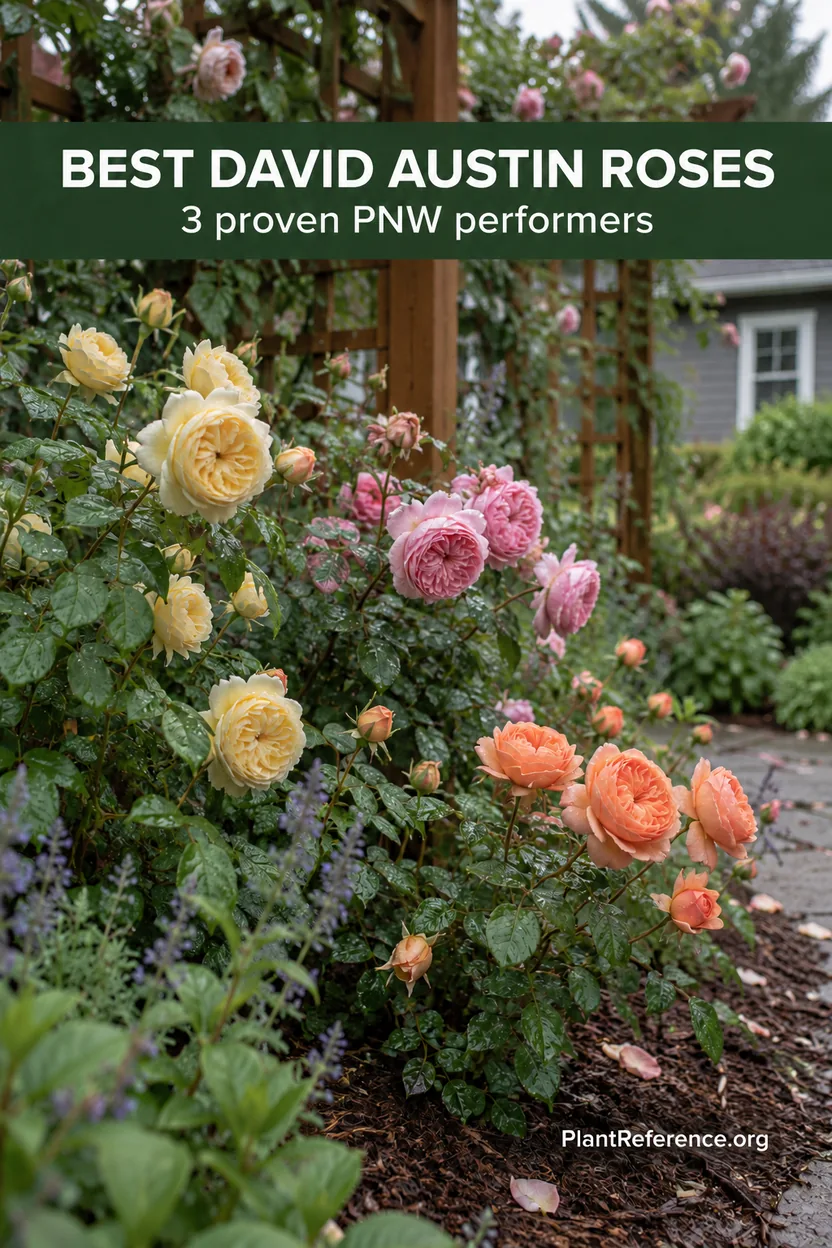
Best English Roses for Pacific Northwest Gardens
— Image © PlantReference.org 2026
The best David Austin roses for Pacific Northwest gardens balance densely petaled, old-fashioned flowers with modern repeat bloom and enough resilience for cool, damp springs. Three cultivars stand out in the research: Rosa hybrida 'Charlotte', Rosa hybrida 'Boscobel', and Rosa hybrida 'Lady of Shalott'. Your final choice should reflect garden space and desired structure, because sound siting matters more than chasing one universally “best” rose.
English roses bridge two breeding goals: the cupped or rosette flower forms and fragrance associated with old roses, plus the repeated flowering expected from modern shrubs. That combination suits mixed borders beautifully, but the region's persistent leaf wetness means your planting design must support foliage drying from the first season.
Why English Roses Suit the Pacific Northwest
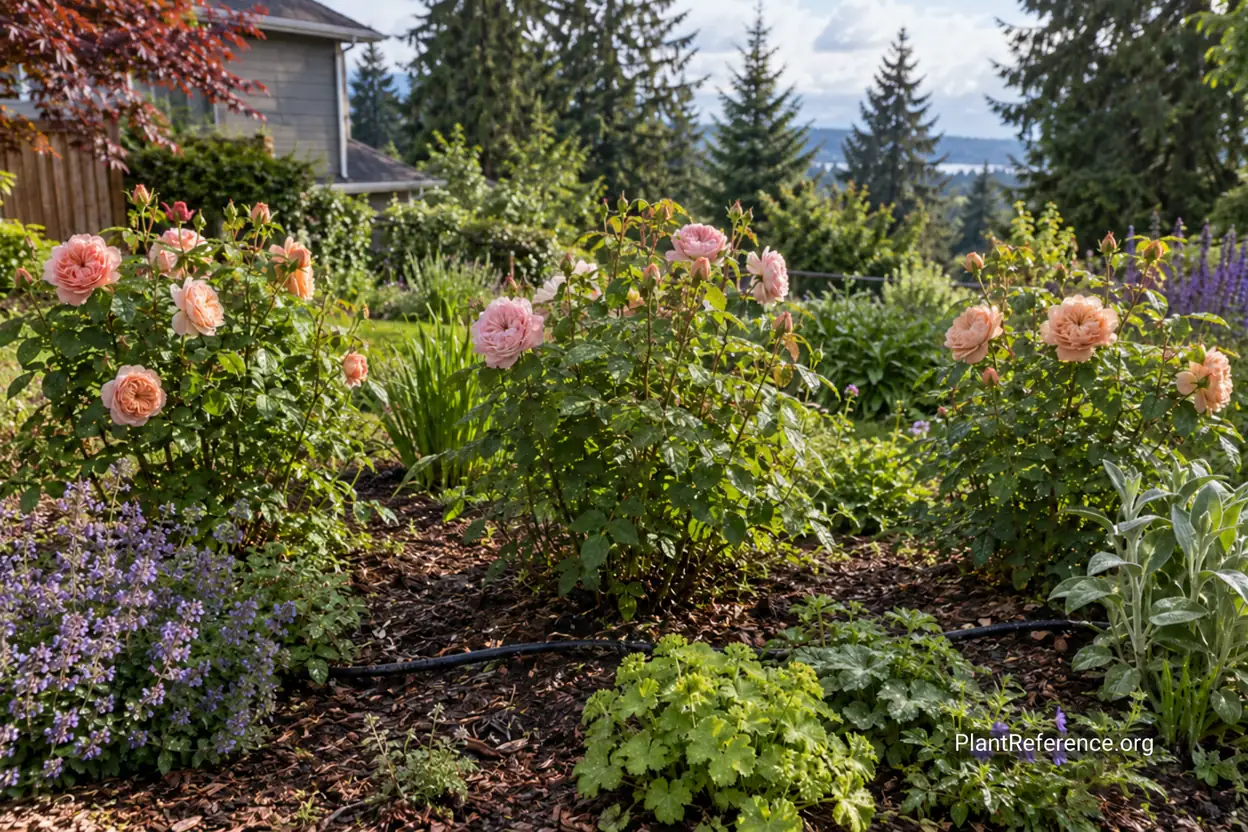
Maritime conditions extend the growing season without subjecting roses to the prolonged deep cold found in continental climates. Cool spring temperatures preserve flower color and slow the rapid petal decline that can occur in intense heat. Mild summers also allow repeat-flowering shrubs to keep building buds when water remains consistent.
The difficulty is moisture on leaves. Black spot spores need roughly seven continuous hours of leaf wetness to germinate. Spring drizzle, heavy dew, and crowded branches can easily create that window. Powdery mildew responds differently, favoring high humidity even without free water. English roses succeed when you manage these two environments rather than treating every white or black mark as the same problem.
Growth habit is another advantage. David Austin shrubs often range from roughly 3–10 feet (0.9–3 m) depending on cultivar, climate, and pruning. Some can function as rounded shrubs or short climbers. In a mild maritime setting, longer canes may survive winter and reveal more vertical potential than the same rose shows in a colder region.
That flexibility makes English roses useful in layered gardens. They can anchor a perennial border, soften a fence, or occupy the middle ground between a formal hybrid tea and a sprawling climber. Plan a Perennial Garden That Blooms Spring to Fall provides a framework for placing repeat-blooming shrubs among plants that cover seasonal gaps.
The broader regional principles in Pacific Northwest Gardening Guide: Climate, Soil & Plant Selection still apply: drainage, summer irrigation, and winter wetness shape performance more than the hardiness-zone number alone.
Three Proven David Austin Roses Compared
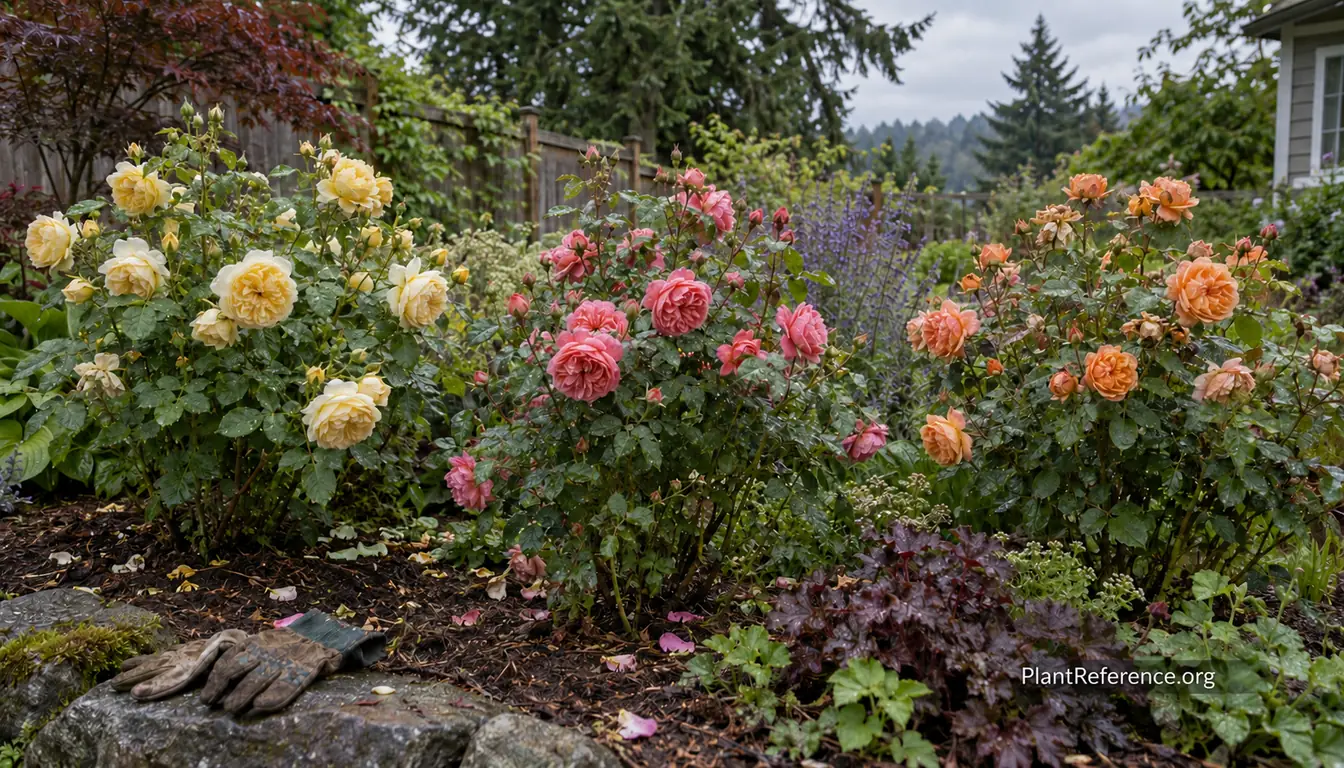
The research identifies three proven performers for cool, damp Pacific Northwest springs. Each carries the English-rose combination of fragrance, dense petal structure, and repeat bloom, but they create different visual and structural effects. Choose for the mature plant, not only the close-up flower photograph.
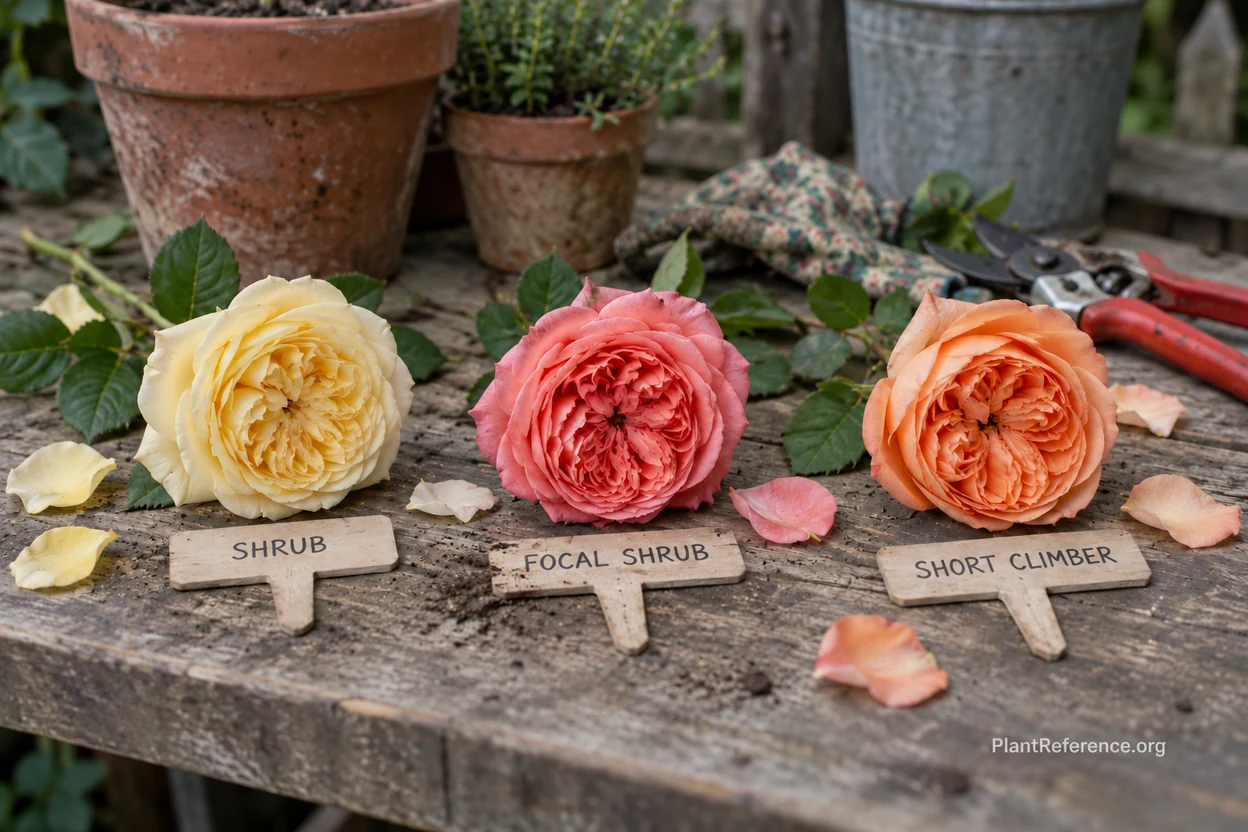
Rosa hybrida 'Charlotte' offers luminous pale-yellow flowers that read softly in mixed borders. Its upright, bushy habit makes it the easiest of the three to treat as a conventional shrub. Place it where the light flowers can brighten gray spring conditions without being swallowed by taller neighbors.
Rosa hybrida 'Boscobel' develops coral-pink to salmon rosettes with a warm, saturated presence. Its balanced shrub form works well where you want a distinct focal mass rather than a cane trained far across a support. Allow enough room around the crown for airflow; dense flowers and dense foliage should not also mean dense planting.
Rosa hybrida 'Lady of Shalott' brings apricot-orange flowers and vigorous canes. In a mild climate it can become a large shrub or be trained as a short climber, making it useful against a fence or sturdy obelisk. The support should be installed before canes need it, and its extra vigor should be guided rather than repeatedly cut away.
Cultivar | Flower color | Likely garden role | Pacific Northwest strength | Pruning approach |
|---|---|---|---|---|
Rosa hybrida 'Charlotte' | Pale yellow | Upright flowering shrub | Bright color in cool, gray springs | Maintain balanced shrub framework |
Rosa hybrida 'Boscobel' | Coral-pink to salmon | Rounded focal shrub | Strong visual mass and repeat bloom | Thin crowded wood, reduce moderately |
Rosa hybrida 'Lady of Shalott' | Apricot-orange | Large shrub or short climber | Vigorous canes offer training flexibility | Preserve long canes when training vertically |
None of these choices eliminates maintenance. “Proven performer” means the genetics and regional climate can work together; it does not mean a rose tolerates waterlogged roots, six hours of leaf wetness after every irrigation, or a crowded wall pocket with no morning sun.
Choose the Right Rose for Your Garden Role
Start with width, height, and support. A rose intended as a freestanding shrub needs enough bed depth to develop canes on all sides. A rose trained as a short climber needs a structure that can hold mature wet foliage and withstand winter wind. Matching the plant to the role reduces corrective pruning later.
Choose Rosa hybrida 'Charlotte' where you want a defined shrub with pale flowers that combine easily with blue, violet, or white companions. Keep vigorous perennials far enough away that they do not press wet foliage against the rose. The combinations in Perennial Combinations That Look Good Together can help balance flower shape, foliage texture, and season without sacrificing airspace.
Choose Rosa hybrida 'Boscobel' for a warm focal point in the middle of a border or near a path where its dense flowers can be appreciated. Its coral range pairs well with silver and deep green foliage. Give viewers access without forcing the plant into a narrow corridor where clothing, irrigation, and thorny canes conflict.
Choose Rosa hybrida 'Lady of Shalott' when you can use vigor. As a shrub, provide room for arching canes. As a short climber, tie young flexible canes to a support at an angle rather than forcing them straight upward. Near-horizontal training encourages flowering laterals along more of each cane.
Use mature dimensions as a starting point, then expect climate to modify them. A mild winter preserves cane length, and a rich, watered bed can push more growth than a dry or exposed site. Watch the plant for two seasons before making major structural decisions.
Companion plants should support, not smother, the rose. Low perennials can shade soil and extend seasonal interest while leaving the crown open. Best Perennials for Pollinators: Bees & Butterflies offers options for broadening garden value, though highly double rose flowers themselves may provide limited access to pollinators.
Plant for Drainage, Sun, and Airflow
Give English roses at least six hours of direct sun, with morning exposure preferred. Early light dries dew and overnight rain before fungal spores complete infection. Avoid narrow recesses between a fence and hedge where humidity lingers after the rest of the garden has dried.
Target soil pH 6.2–6.8. Pacific Northwest soils often trend acidic because rainfall leaches base minerals, but imported topsoil and old foundation beds can behave differently. Test before correcting; Why Pacific Northwest Soil Is Acidic + How to Fix It explains how to change pH from evidence rather than regional assumption.
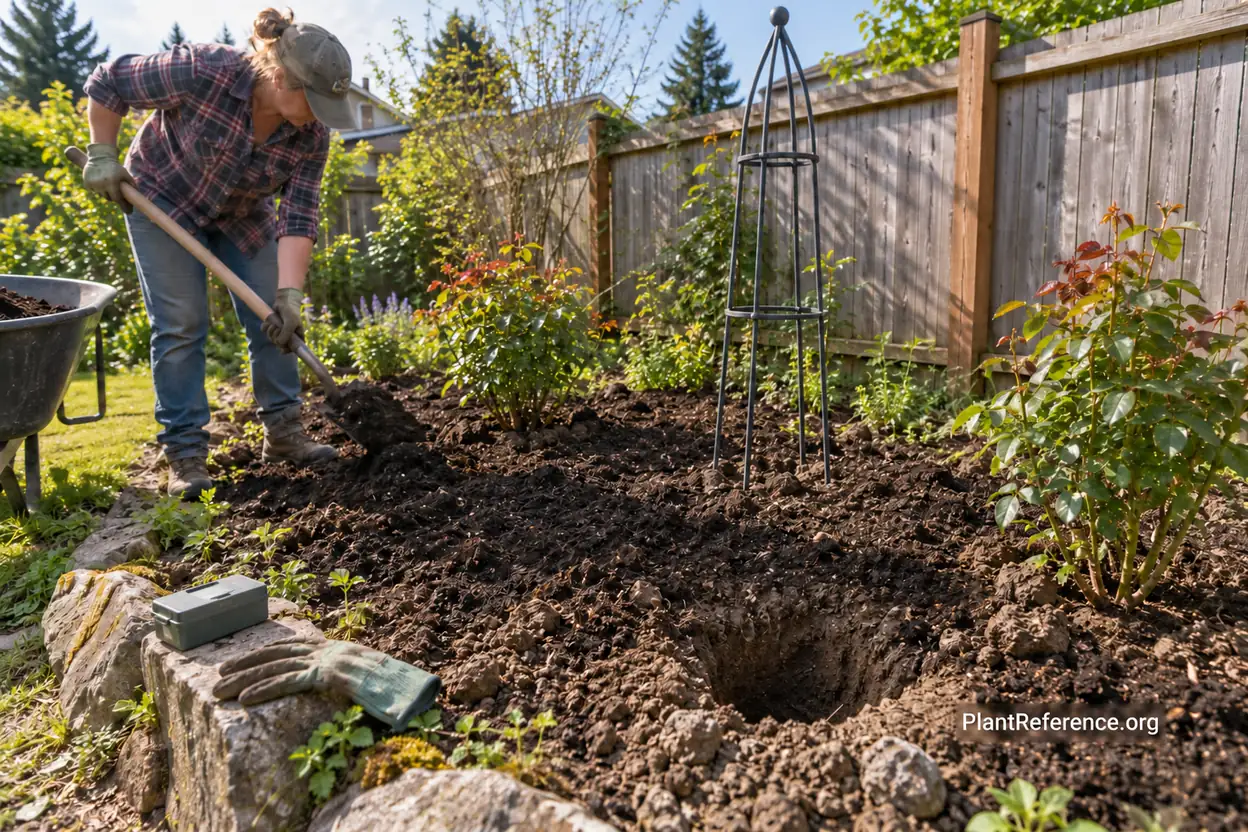
Improve the entire bed instead of filling one hole with compost. In heavy clay, a loose amended pocket collects water like a bathtub when it meets compacted surrounding soil. Spread finished organic matter across the planting zone and blend it into the upper 8–12 inches (20–30 cm) where possible.
Check drainage before planting. Fill a 12-inch (30-cm) test hole, allow it to drain once, refill it, and observe. Water remaining for a day signals a profile or grading problem. Fix PNW Garden Drainage: Glacial Till, Hardpan & Raised Beds helps identify whether broad loosening, raised planting, or a different site is the durable fix.
Plant dormant bare-root roses in March when soil reaches about 40°F (4°C) and can be worked without smearing. Soak roots for 2–24 hours, spread them over a low mound, and position a graft union at soil level or 1–2 inches (2.5–5 cm) above grade in mild winter-wet conditions. Container roses can be planted later, but avoid hot, drying weather.
Space for mature width, not nursery size:
Reserve an open ring around the crown for inspection and airflow.
Keep taller companions from leaning into damp rose foliage.
Install supports before vigorous canes become rigid and tangled.
Route irrigation beneath mulch and away from leaf surfaces.
Leave access for pruning, feeding, and disease sanitation.
Prune Shrubs Without Losing Their Character
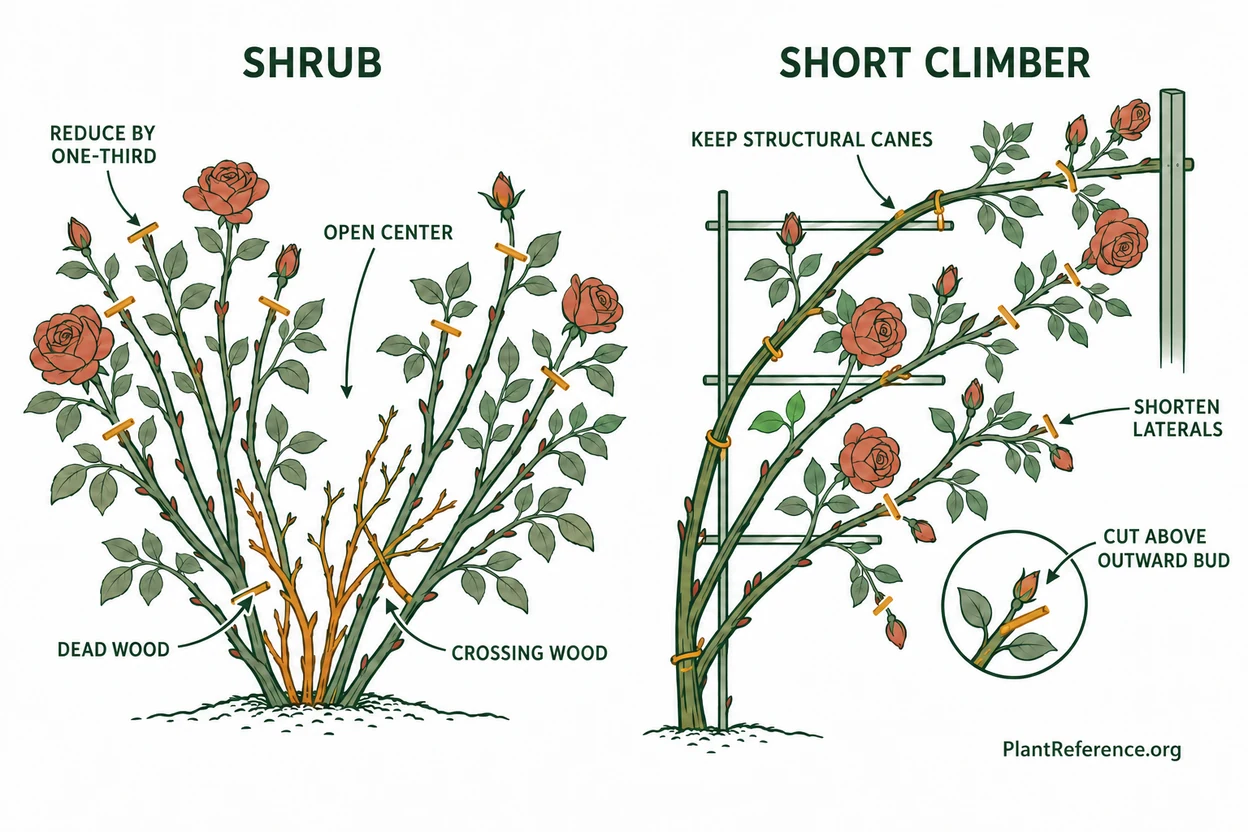
Prune established English roses in late February or early March as Forsythia begins to bloom. This regional cue aligns pruning with swelling buds and the end of the hardest winter weather. Start by removing dead, diseased, and damaged wood, then address crossing branches and congested centers.
For a freestanding shrub, reduce overall height by roughly one-third to one-half. This is a moderate reset, not the severe 12–18 inch (30–46 cm) treatment often used on hybrid teas. Preserve canes that create the plant's rounded or arching framework and remove a few older canes at the base when renewal is needed.
Prune Rosa hybrida 'Charlotte' as an upright shrub, balancing height while keeping the center open. Shape Rosa hybrida 'Boscobel' to preserve an even crown and remove inward growth that traps damp air. With Rosa hybrida 'Lady of Shalott', first decide whether you are growing a shrub or short climber. Do not cut away useful long canes and then expect vertical coverage.
When training Rosa hybrida 'Lady of Shalott', retain structural canes and tie them securely with flexible material. Shorten flowering laterals after the framework is established, but avoid severe pruning for the first two to three years. A young climber needs time to build architecture before it can support repeated flowering.
Make cuts 1/4–3/8 inch (6–10 mm) above an outward-facing bud at roughly 45 degrees. Clean, sharp bypass blades reduce crushed tissue. The class-by-class techniques in How to Prune Roses: When and How to Prune Every Type of Rose provide a useful reference once you have chosen the plant's permanent form.
Prevent Fungal Disease in Damp Springs
Disease prevention begins with drying speed. Space shrubs, maintain an open framework, and irrigate the soil instead of foliage. Remove infected leaves from the plant and ground because spores persist in debris. A clean bed reduces inoculum but does not replace good air movement.
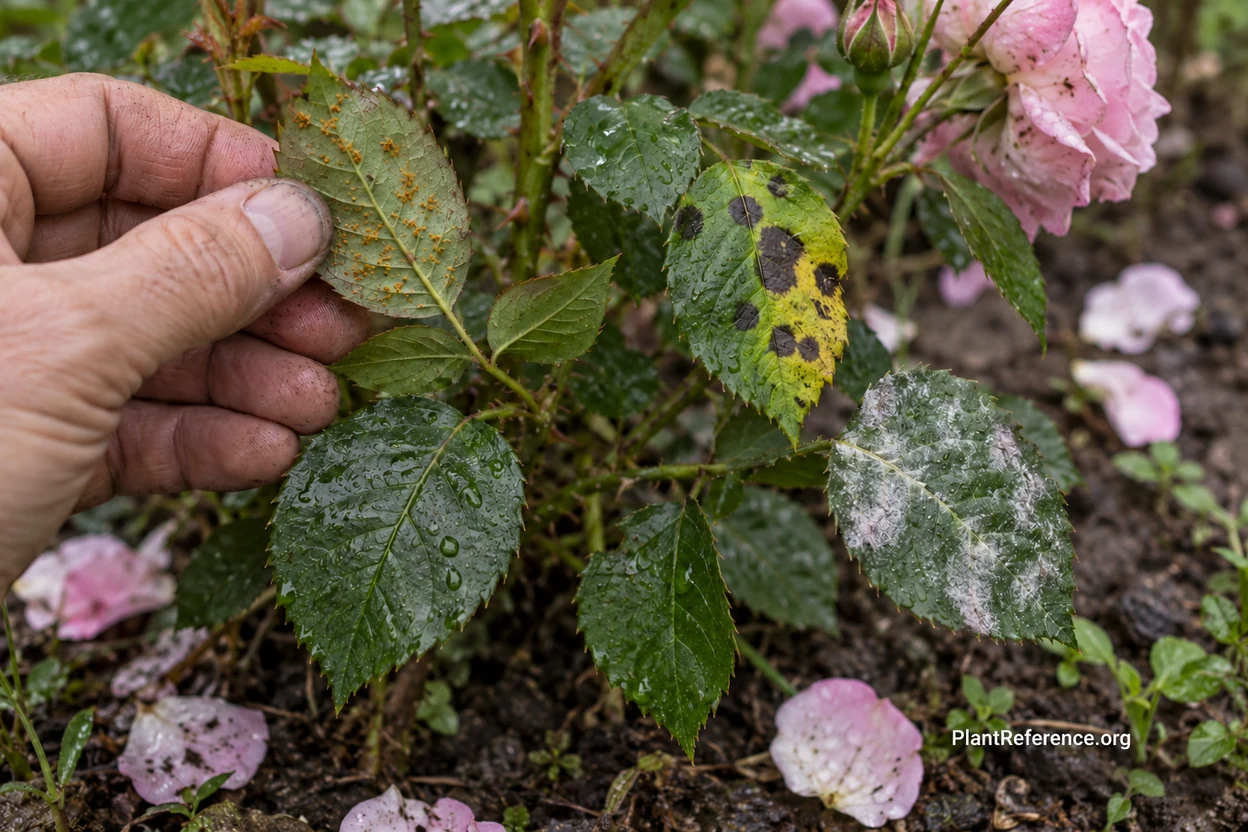
Black spot creates circular dark lesions with fringed edges, followed by yellowing and leaf drop. The seven-hour leaf-wetness threshold explains why evening overhead watering is so damaging in a damp climate. Root-zone irrigation shortens the wet period instead of restarting it every night.
Powdery mildew produces a white coating on leaves and buds. It thrives in humidity without needing standing water, so improving air movement is central. A strong water spray early in the morning can disrupt spores while allowing leaves to dry; horticultural or neem oil can act as a protectant and eradicant when labels and temperature limits are followed.
Rust shows as orange pustules, especially beneath leaves. Remove affected foliage promptly. If cultural controls are insufficient, use only a product labeled for the disease and crop, following application timing exactly. Oils, copper, sulfur, and other fungicides are not interchangeable in every temperature or growth stage.
Inspect all three cultivars weekly during spring. Turn leaves over, look into dense buds, and record whether symptoms follow rain, irrigation, or stagnant weather. Scientific diagnosis is simple pattern recognition: identify where the symptom begins, what environmental condition preceded it, and whether the damage is spreading.
Feed and Water for Repeat Bloom
Repeat flowering requires steady resources, but more fertilizer is not automatically better. In mid-March, established roses may receive about 2 cups of alfalfa meal or pellets; alfalfa contains triacontanol, associated with new basal growth. Water before and after any granular feeding.
From April through August, the regional research supports monthly balanced fertilizer at the labeled rate. A reference rate of roughly 3/4 cup per established bush applies only when the specific product label agrees. Fish emulsion, seaweed extract, or magnesium sulfate can address particular goals, but routine stacking of supplements can create imbalances.
Stop nitrogen by mid-September. Tender late growth has less time to harden before wind and cold. The cutoff is as important as spring feeding because vigorous immature tissue is not the same as healthy permanent structure.
Water deeply at soil level during the dry season. Check 2–3 inches (5–8 cm) beneath mulch before irrigating, then moisten the developing root zone rather than sprinkling daily. Maintain 2–3 inches (5–8 cm) of organic mulch while keeping it away from the crown.
Deadhead spent flowers to keep the border tidy and encourage repeat display, but stop cutting long stems late in the season. Allowing some growth to mature helps the plant transition toward dormancy. Long-lasting companion flowers from Perennials That Bloom All Summer: 12 Longest Bloomers can carry the border between rose flushes without forcing the rose to perform every week.
Prepare English Roses for Winter
Most established English roses in maritime Zone 8b need less cold protection than gardeners expect. In late November, refresh 2–3 inches (5–8 cm) of mulch, remove diseased leaves, and secure long canes. Do not mound a foot of wet soil over the crown in a mild, rainy site.
Tie the long canes of Rosa hybrida 'Lady of Shalott' so winter wind cannot whip and split them. Check that supports remain solid in saturated ground. Freestanding Rosa hybrida 'Charlotte' and Rosa hybrida 'Boscobel' mainly need sanitation, mulch, and removal of clearly damaged material; save structural pruning for late winter.
Container-grown roses need more protection because exposed roots freeze faster than roots in the ground. Group pots against a sheltered wall, insulate the containers during cold events, or move dormant plants into an unheated space where roots will not freeze solid. Water occasionally so the root ball never becomes completely dry.
Do not seal foliage or crowns under plastic. Trapped moisture supports fungal growth during mild spells. How to Prepare Perennial Gardens for Winter by Species explains the same principle across the border: protect the tissues that need protection while preserving airflow and useful habitat elsewhere.
With good drainage, morning sun, root-zone irrigation, and moderate pruning, these English roses can express what their breeding was intended to deliver: old-fashioned flower character on shrubs that bloom more than once. Choose the cultivar whose mature role fits your garden, then build the conditions that let its genetics work.
Frequently Asked Questions
Reading about plants and recognising them are different skills. These three build the second.
- Daily PlantIdentify the day’s mystery plant from a close-up photograph.
- Keyed OutWork a dichotomous key, lead by lead, to name a hidden specimen.
- Name That PlantName a specimen from botanical clues dealt hardest first.
Free to play, no account needed
Tagged with
Sarah earned her doctorate in plant biology and spent time working in botanical garden education before transitioning to freelance writing and consulting. Now based in Portland, Oregon, she teaches plant identification workshops at local community centers and maintains a modest collection of over 60 houseplants in her small apartment. Sarah specializes in helping beginners understand plant science without the jargon—her approach focuses on practical observation over theory. She's killed her fair share of fiddle leaf figs and finally cracked the code on keeping them alive.