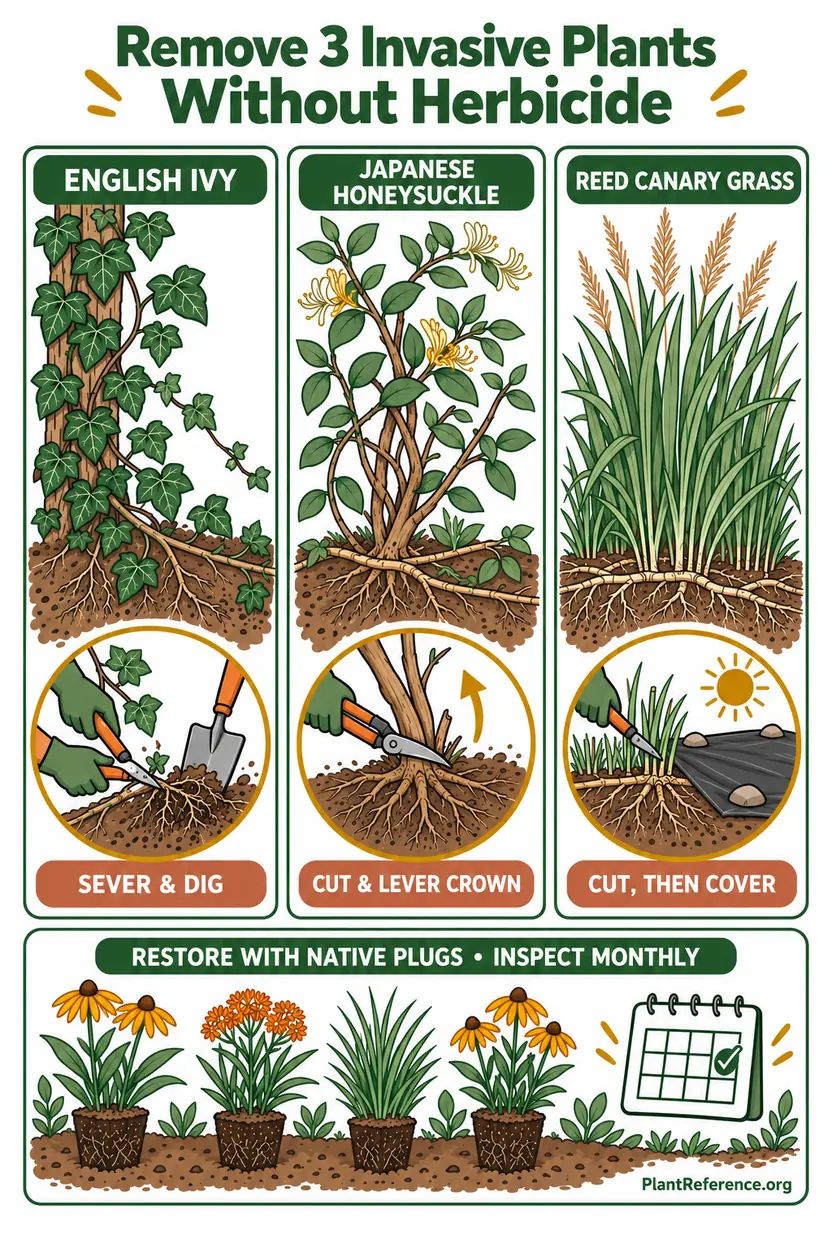
Remove 3 Invasive Plants Without Herbicide
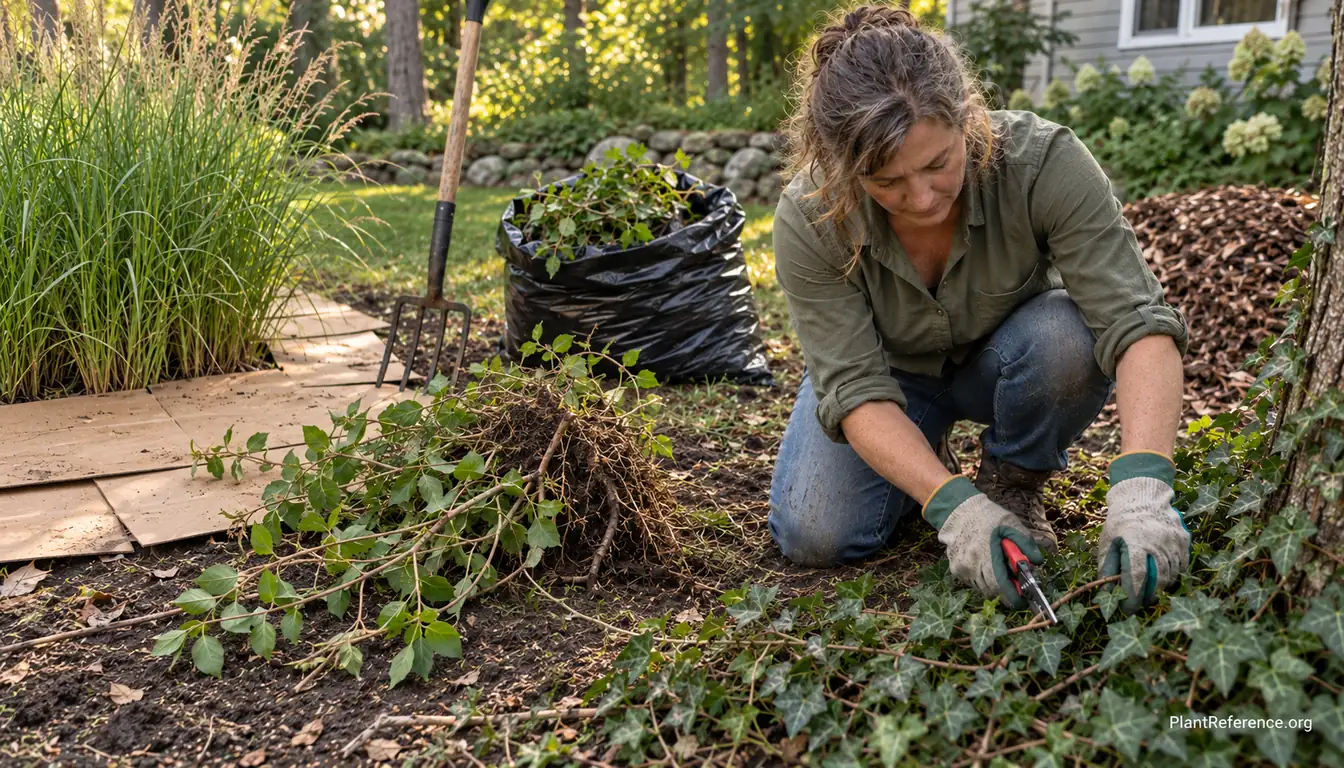
— Image © PlantReference.org 2026
Pets & Toxicity
Recorded toxicity for plants linked in this guide. An unknown status is not a safety assessment.
Toxic to pets: English ivy, Japanese honeysuckleDetailsHide
Removing invasive plants without herbicide is possible on contained residential patches, but it is not a one-day cleanup. English ivy 🌿Hedera helix, Japanese honeysuckle 🌿Lonicera japonica, and reed canary grass 🌿Phalaris arundinacea survive through rooted nodes, crowns, rhizomes, or buried fragments. Success requires repeated control, contained debris, and protected soil.
Work one section at a time. Mark the patch edge, photograph it, and create a clean route to the disposal area so boots, tarps, and wheelbarrows do not spread fragments. If identification is uncertain, compare intact specimens with Best Weed Identification Books & Guides for Homeowners before cutting.
Decide Whether Nonchemical Control Fits the Site
Measure the infestation and identify what the soil is holding together. Hand removal fits limited, accessible patches. On a steep bank, stream edge, wet meadow, or beneath mature trees, clearing everything at once can expose soil, destabilize a slope, or open more ground than you can replant.
Flag the outermost rooted stems, not merely the visible leaves.
Check for utilities, irrigation, tree flare roots, retaining walls, and drainage paths.
Divide a large patch into sections you can finish, cover, and monitor.
Schedule work before seed ripens and when damp soil releases roots without smearing.
Prepare bags, tarps, cover material, and replacement mulch before the first cut.
Inspect 4 to 6 inches (10 to 15 cm) deep at several edges; rhizomes may extend farther. If reed canary grass dominates a wetland or vines have destabilized mature trees, seek local conservation guidance. Some severely degraded sites cannot be realistically controlled by nonchemical methods alone.
The broader design principles in Lawn Alternatives That Actually Work: 5 Options Beyond Grass can help you decide what should occupy the cleared ground rather than leaving a vacuum.
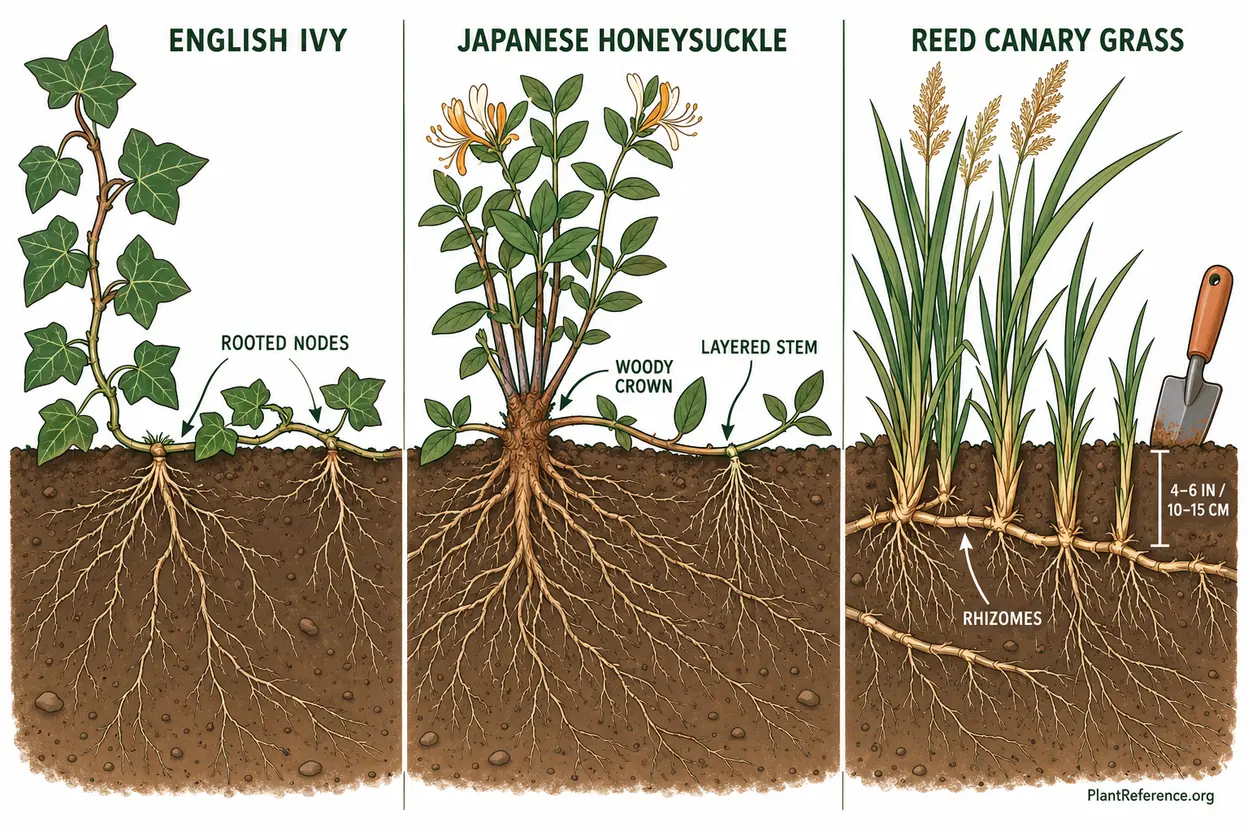
Remove English Ivy Without Damaging Trees
When English ivy climbs a tree, cut every vine at waist height and again near the soil. Remove the middle section so missed vines are obvious. Do not pull live canopy vines; let them die and release gradually.
Expose the root flare, loosen soil, follow runners, and lift every rooted node. Roll ground mats inward like carpet, but clip connections instead of levering against tree roots or desirable perennials.
Recheck monthly during active growth. New leaves usually reveal a missed rooted section. Extract it rather than tilling fragments through the soil. When to Plant Perennials: Season-by-Season Timing helps coordinate disturbance with prompt replanting.
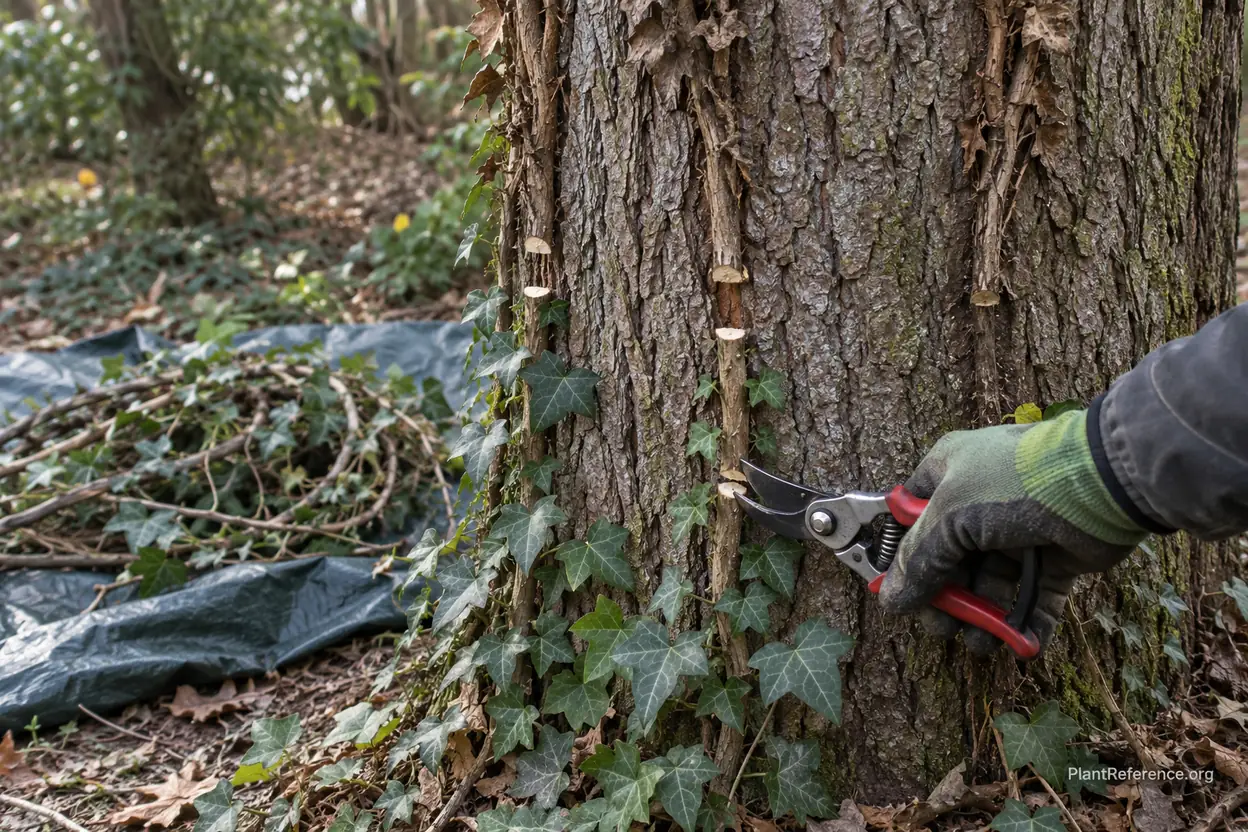
Dig Japanese Honeysuckle Crowns and Runners
Japanese honeysuckle 🌿Lonicera japonica layers where stems touch moist soil. Trace outside vines toward woody crowns. Cut top growth over a tarp and contain fruiting stems so berries do not scatter.
Expose the crown, loosen its root zone, and pull with steady leverage. A weed wrench can lift an anchored woody crown where no desirable roots or utilities lie underneath. It is not for soft reed canary grass rhizomes.
Follow every runner through leaf litter and dig rooted nodes rather than snapping stems. Inspect shrubs and fences for hidden vines. Common Lawn Weeds Identification Guide reinforces matching removal technique to growth habit.
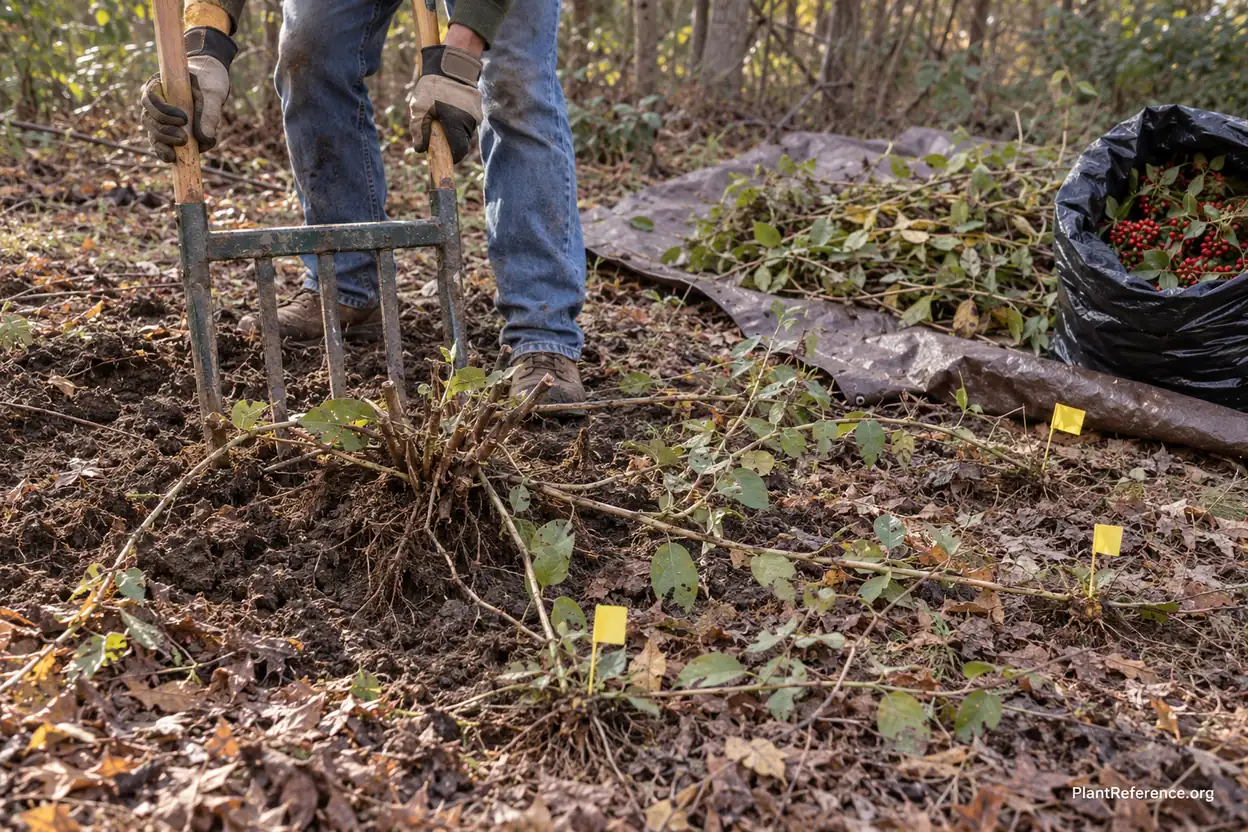
Exhaust Small Reed Canary Grass Patches
Reed canary grass 🌿Phalaris arundinacea forms rhizomatous sod, especially in moist soil. On a small upland patch, cut before seed, collect seed heads, and dig from the clean perimeter inward. Do not till; chopped rhizomes can spread it.
Repeated cutting can weaken a patch where digging would expose wet soil. Cut regrowth before it replenishes rhizomes and record every pass. Where bare soil would wash, leave controlled stubble and work in narrow strips.
After cutting, solarize or sheet-mulch the patch. Extend coverage 12 to 18 inches (30 to 45 cm) beyond visible shoots when possible. For wetlands, drainage corridors, or broad infestations, obtain site-specific help rather than draining, excavating, or covering habitat.
Choose Solarization or Sheet Mulching
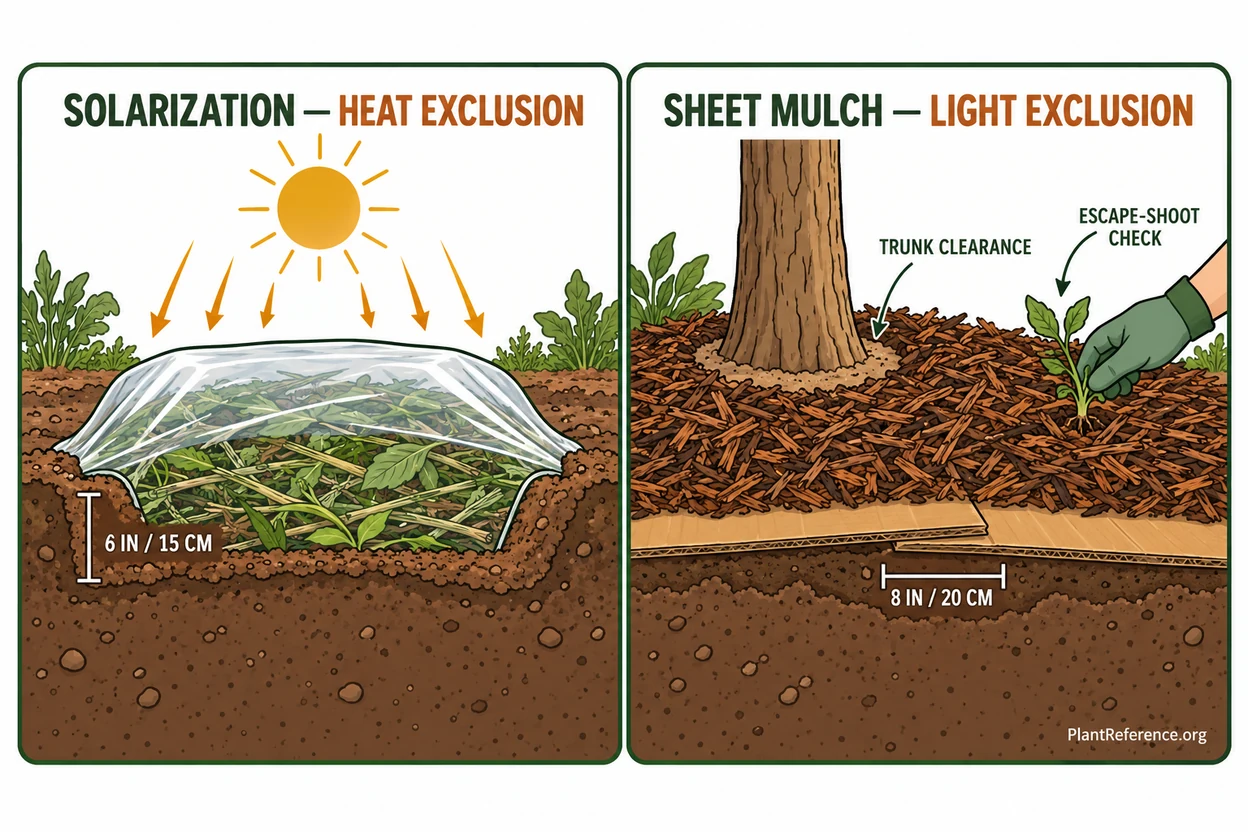
Solarization uses clear, UV-stabilized plastic during the hottest summer weather. Cut the patch, remove sharp stems, moisten the soil, stretch plastic tightly, and seal every edge. Inspect after storms because holes and loose edges release heat.
Sheet mulching suits beds where solar heat is unreliable. Overlap plain cardboard, wet it against the ground, add organic mulch, and maintain it for a full growing season. Keep materials away from trunks and crowns. Raised Bed Weeds: Prevention Strategies and Control Methods offers related tactics, while Fix PNW Garden Drainage: Glacial Till, Hardpan & Raised Beds explains why cover must not block drainage.
Method | Best fit | Installation | Main limitation |
|---|---|---|---|
Hand digging | Small, accessible patches | Loosen soil and lift complete crowns, nodes, or rhizomes | Repeated follow-up is required |
Repeated cutting | Erosion-prone or hard-to-dig areas | Cut regrowth before seed and before leaves rebuild reserves | May take multiple seasons |
Solarization | Open, sunny ground during hot weather | Seal clear UV-stabilized plastic over moist, cut vegetation | Shade, tears, and cool weather reduce heating |
Sheet mulching | Beds and level ground suitable for long coverage | Overlap wet cardboard and add organic mulch | Gaps and edges allow escape shoots |
Dispose, Monitor, and Restore the Site
Do not backyard-compost viable crowns, rhizomes, nodes, or seed heads. Bag them on site, seal them, and leave them in the sun to bake and dry where animals cannot tear the bags. Use the landfill stream according to local rules; never dump material elsewhere.
Brush soil from tools over the original work zone, then clean boots, tarps, blades, and wheelbarrow tires before moving elsewhere. A clean exit is part of removal. Small fragments carried into a finished bed create tomorrow's patch.
Monitor monthly through the first growing season and after major rain. Remove shoots while roots are small, then inspect seasonally for several years. When to Cut Back Perennials in Fall (And What to Leave) helps distinguish habitat from neglected regrowth.
Stabilize exposed soil with weed-free mulch or an approved temporary cover. Add site-matched plants closely enough to occupy space without crowding mature growth. Pacific Northwest Native Plants: 10 Resilient Picks illustrates regional selection. Perennial Combinations That Look Good Together, Plan a Perennial Garden That Blooms Spring to Fall, and How to Divide Perennials: A Species-by-Species Guide help build and maintain the replacement community.
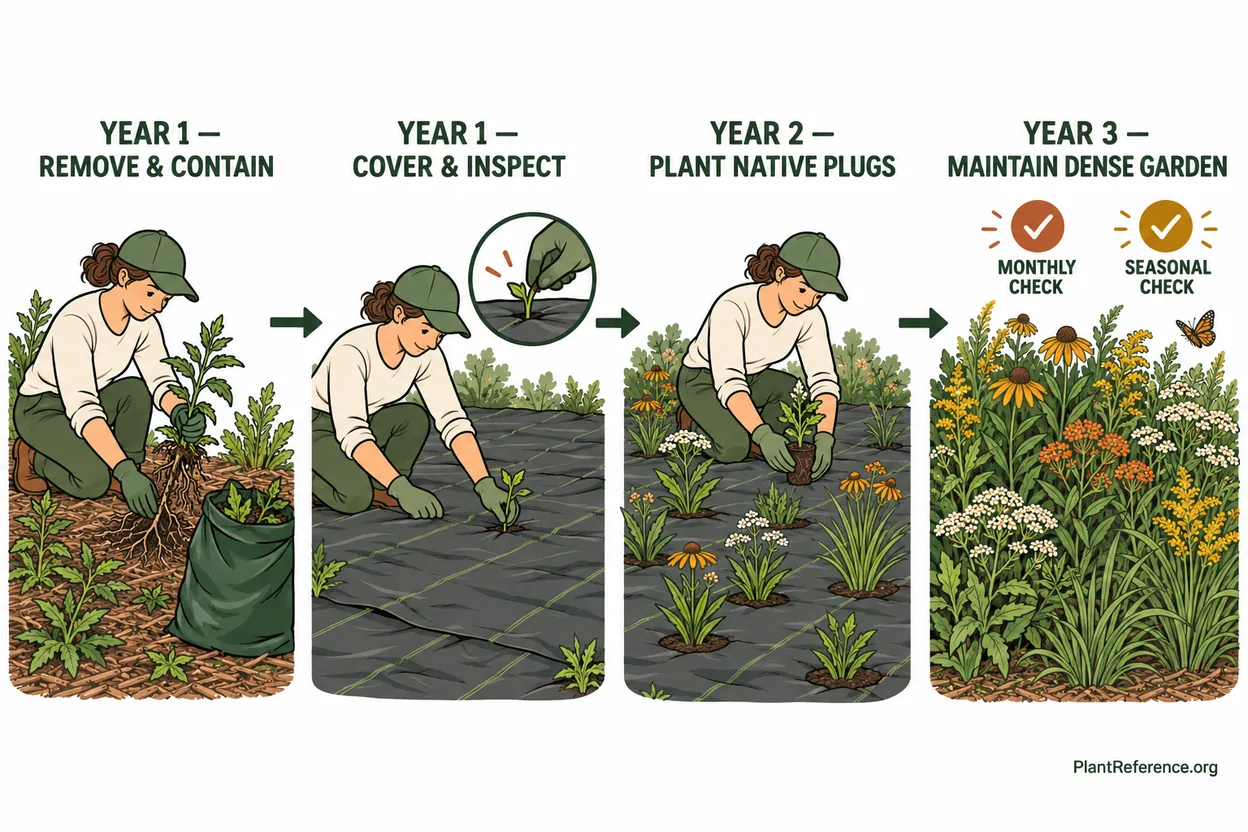
The durable result is not an empty patch. It is a monitored planting in which desirable roots, shade, and mulch leave fewer resources for reinvasion. Treat the first removal as the beginning of restoration, not the finish line.
Frequently Asked Questions

Three daily games
Can you name a plant on sight?
Sunday’s specimenCrocosmia × crocosmiiflora 'Lucifer'Reading about plants and recognising them are different skills. These three build the second.
- Daily PlantIdentify the day’s mystery plant from a close-up photograph.
- Keyed OutWork a dichotomous key, lead by lead, to name a hidden specimen.
- Name That PlantName a specimen from botanical clues dealt hardest first.
Free to play, no account needed
Tagged with
Mike's been designing residential landscapes in the Seattle area, with a particular focus on Pacific Northwest natives and sustainable practices. He's a Washington State Master Gardener and worked in construction before landscaping, which gives him a practical edge when it comes to building raised beds and hardscaping projects. He runs a small side business propagating and selling unusual perennials at farmers markets on weekends. His property serves as a testing ground for low-maintenance, wildlife-friendly garden designs. Mike's philosophy: if it requires weekly maintenance, it's not sustainable.