Image 1 of 5
1 / 5
Plant Reference
Overview
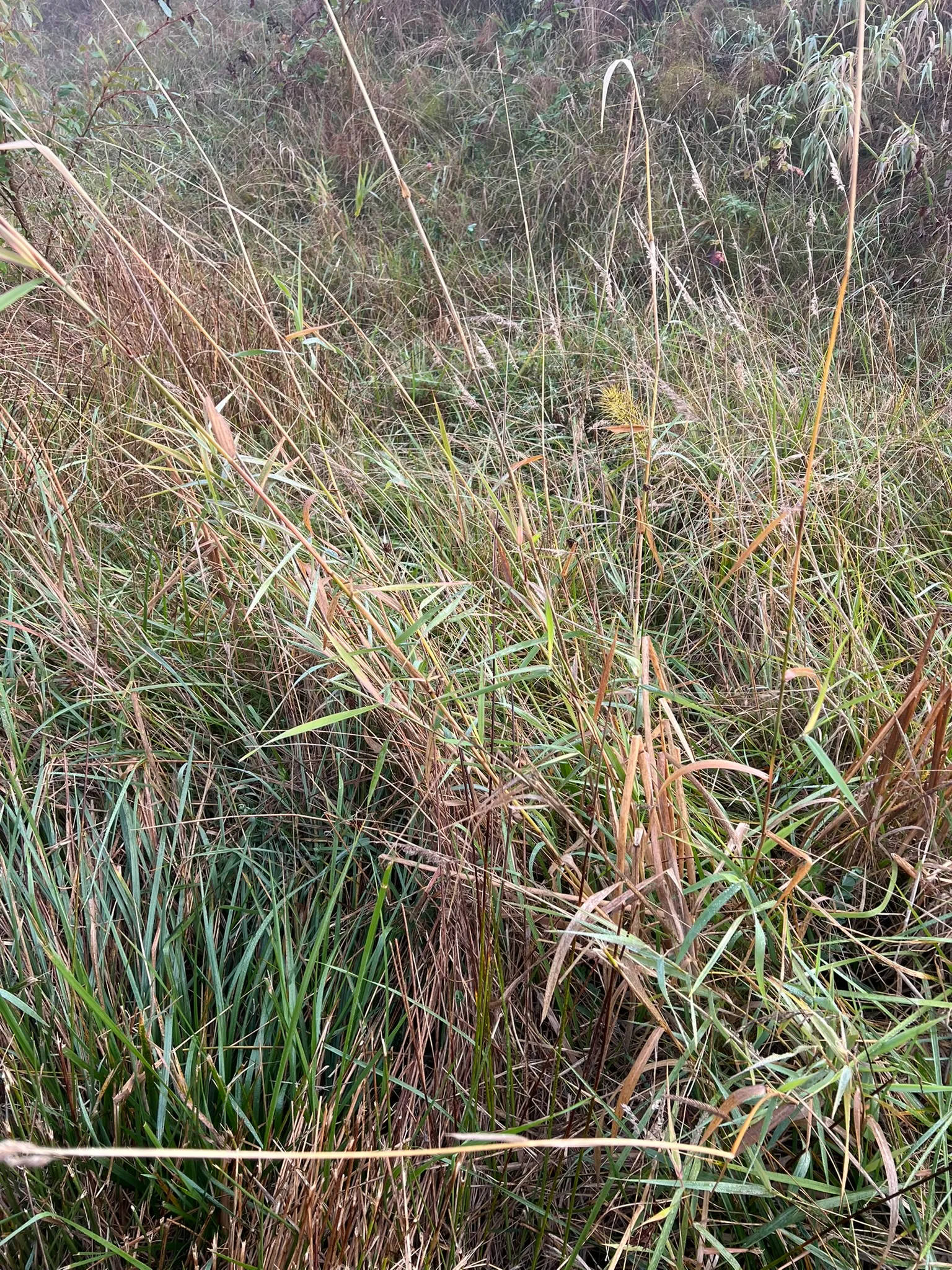
Phalaris arundinacea is a robust rhizomatous perennial grass in the family Poaceae reaching 3-7 feet (0.9-2.1 m) tall and 2-5 feet (0.6-1.5 m) wide, forming dense monoculture stands in wetlands and riparian areas. Stems (culms) are erect, stout, smooth, hollow, with 3-5 nodes. Leaves are flat blue-green 0.3-0.8 inch (8-20 mm) wide, rough on the margins, with a characteristic gradual taper from a broad base to a narrow tip. The ligule is membranous 0.2-0.4 inch (5-10 mm) long, rounded, often torn. Panicles are compact 3-8 inches (8-20 cm) long, erect, dense, green to purplish at flowering, becoming open and tan at maturity. Spikelets carry one flower with two sterile lemmas at the base of the fertile floret, a diagnostic character for the genus Phalaris. Rhizomes are thick and creeping, forming dense mats that exclude other vegetation. A single stand can expand 3-6 feet (0.9-1.8 m) per year via rhizomes. Both native North American genotypes and introduced Eurasian forage cultivars exist; the invasive populations in the Pacific Northwest are predominantly of Eurasian origin, selected for vigor and persistence as forage. The species is listed as a Class C noxious weed in Washington State. It dominates more wetland acreage in the Pacific Northwest than any other invasive plant, converting diverse emergent marshes to dense monocultures.
Native Range
Circumboreal: native genotypes occur in North America, Europe, and Asia. The invasive populations in the Pacific Northwest are predominantly Eurasian cultivars introduced for forage and erosion control beginning in the 1800s, which are more vigorous and competitive than native genotypes. The species occupies wet meadows, marshes, stream margins, floodplains, and ditches from sea level to approximately 6,500 feet (2,000 m), and dominates more wetland acreage in the Pacific Northwest than any other single invasive species.Suggested Uses
Used as the primary case study in Pacific Northwest wetland restoration for teaching the challenges of rhizomatous grass invasion. The native-versus-introduced genotype question is studied in invasion genetics. Studied in wetland hydrology (the dense rhizome mat alters water flow and sediment deposition), wildlife habitat conversion (reduces habitat for ground-nesting birds and amphibians), and long-term restoration planning. The forage-cultivar introduction history is a standard case in unintended consequences of agricultural introductions.How to Identify
Appearance
Size & Dimensions
Height3' - 7'
Width/Spread2' - 5'
Bloom Information
Compact panicles 3-8 inches (8-20 cm) long emerging green to purplish and becoming open and tan as seeds mature, borne May through July over 2-3 weeks. Wind-pollinated. Seeds mature by July in the Pacific Northwest. Seed viability is variable; vegetative spread via rhizomes is the primary expansion mechanism.
Detailed Descriptions
Flower Description
Green to purplish at flowering, becoming tan at maturity; compact dense panicles 3-8 inches (8-20 cm); May-JulyFoliage Description
Blue-green to medium green; flat rough-textured blades 0.3-0.8 inch (8-20 mm) wide with a gradual taper from broad base to narrow tip; deciduousGrowing Conditions
Sun Requirements
Requires 4-12 hours of direct sunlight daily
• Full Sun: 6+ hours of direct sunlight
• Partial Shade: 3-6 hours of direct sunlight
• Full Shade: Less than 3 hours of direct sunlight