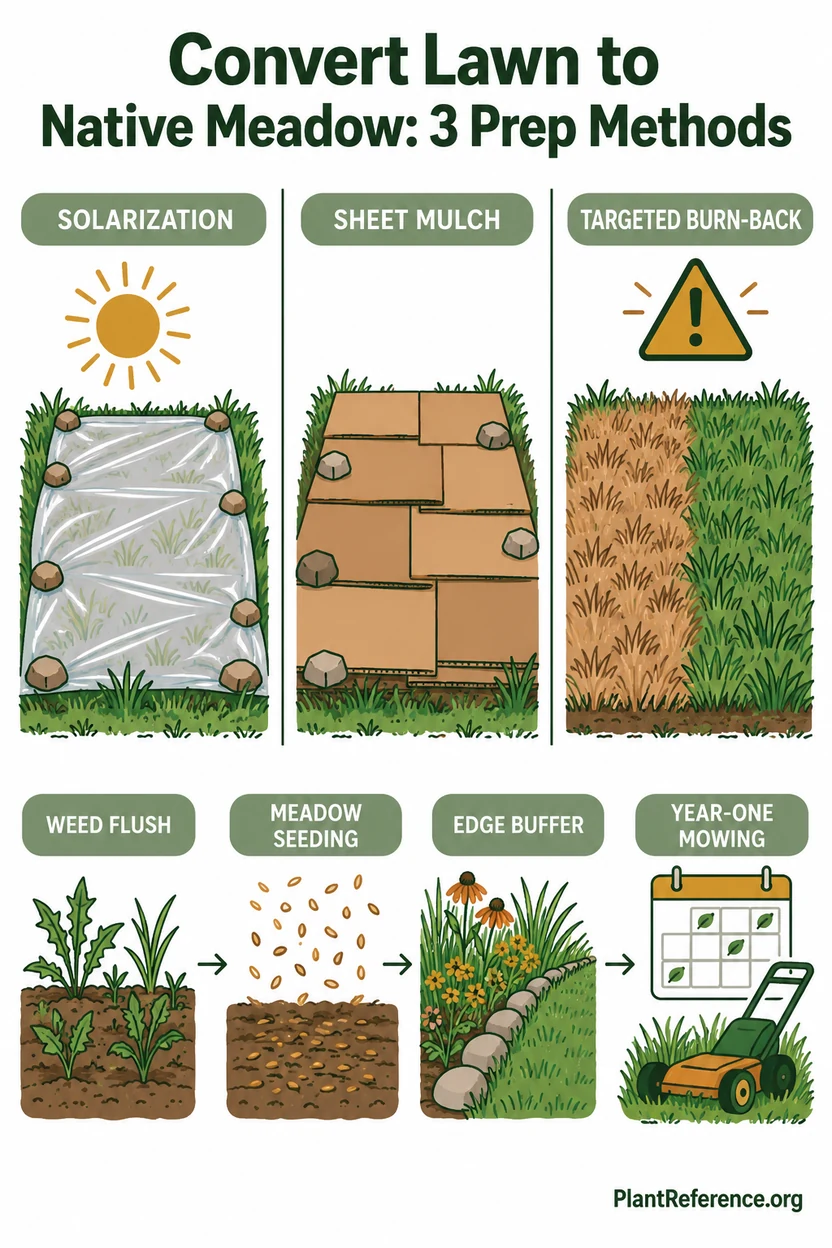
Convert a Lawn to Native Meadow: 3 Prep Methods
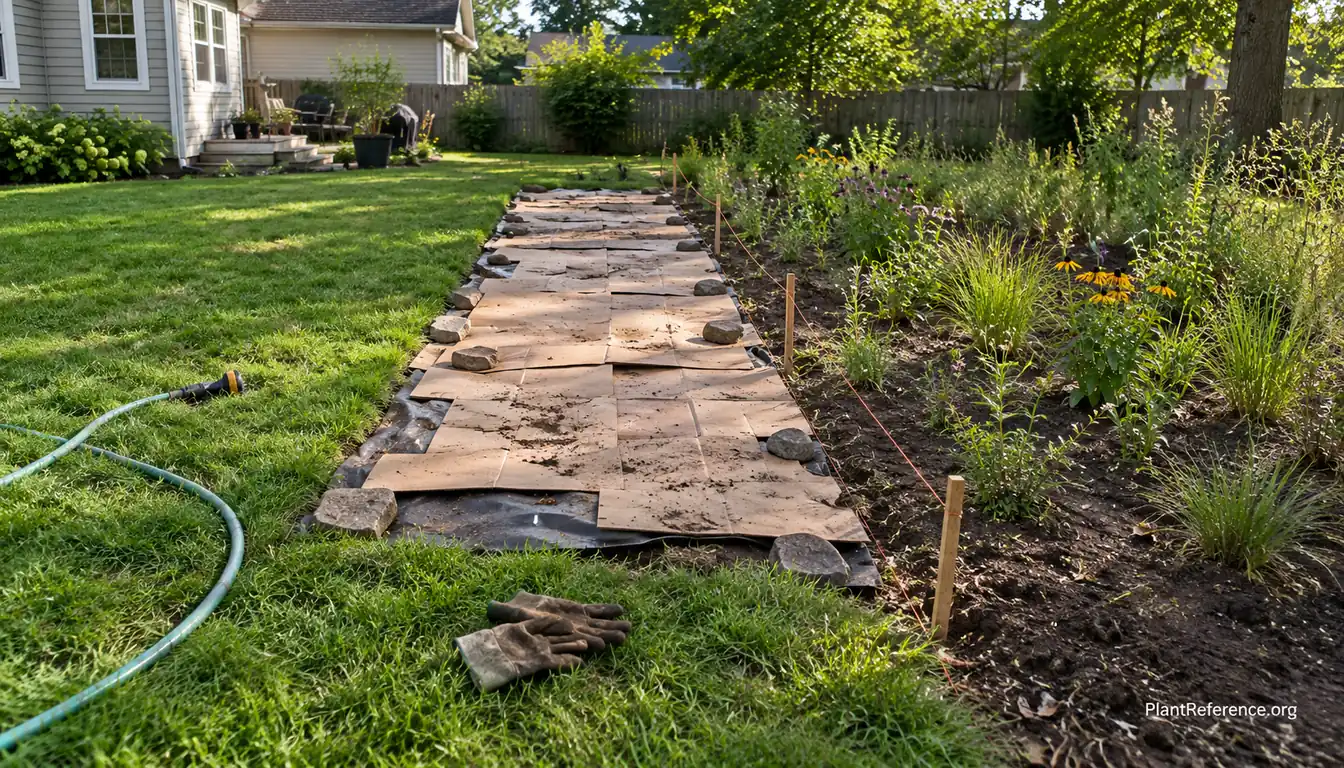
— Image © PlantReference.org 2026
To convert lawn to native meadow, do not scatter wildflower seed over living grass. Turf already owns the light, water, and root space. Kill it, control weed flushes, sow or plug, then manage the first year.
Give site preparation an entire season when possible. That delay separates a meadow from an expensive patch of weeds. Lawn Alternatives That Actually Work: 5 Options Beyond Grass helps confirm whether meadow is the right replacement.
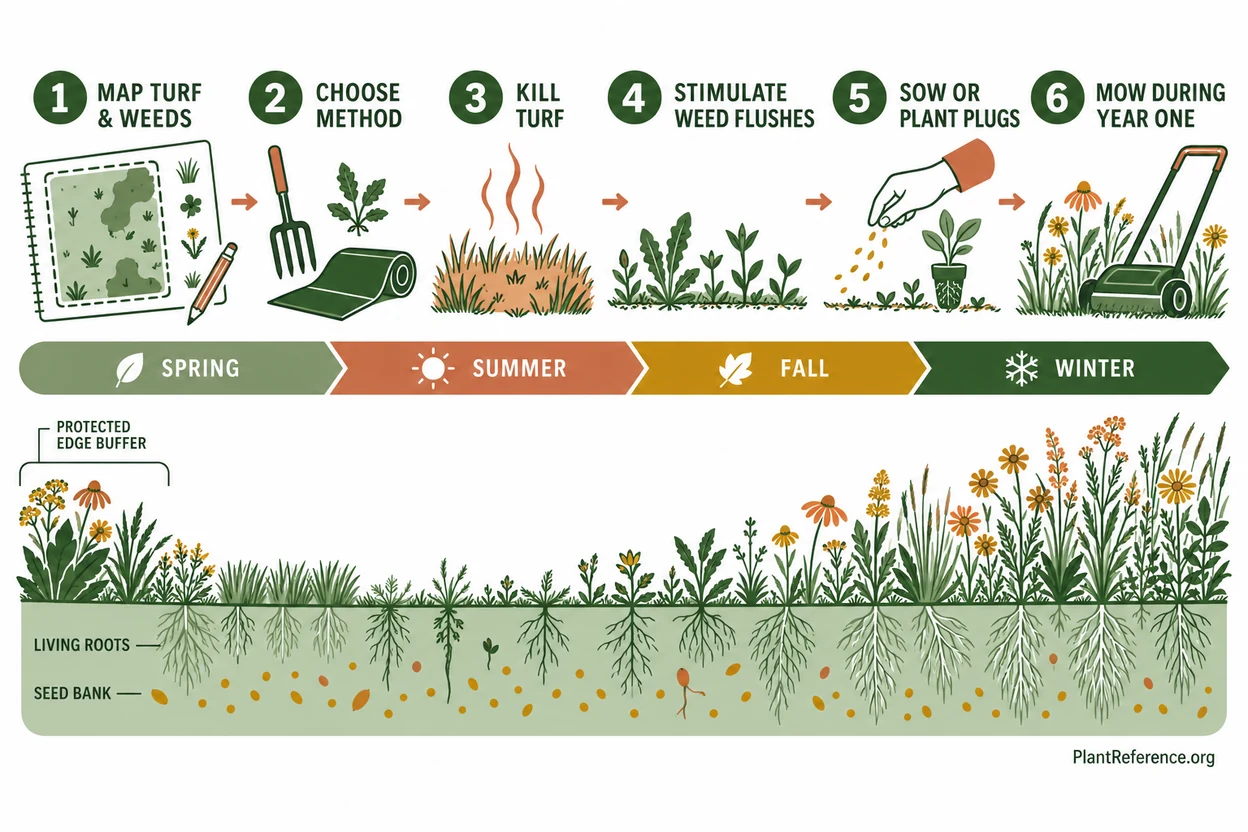
Map the Lawn Before Killing Turf
Identify the turf first. Rhizomatous grasses and perennial weeds survive many surface treatments. Use What Type of Grass Do I Have? Identify Your Lawn in 5 Steps, Common Lawn Weeds Identification Guide, and Best Weed Identification Books & Guides for Homeowners before everything turns brown.
Mark irrigation, utilities, drains, tree roots, slopes, and property edges. Do not cover tree flares or block drainage. A flat 250-square-foot (23-square-meter) lawn is different from a half-acre (0.2-hectare) slope.
Photograph the lawn in spring and again before site preparation.
Flag patches of persistent perennial weeds for separate treatment.
Test soil drainage and correct active erosion before exposing ground.
Reserve a 12-to-24-inch (30-to-60-cm) managed buffer along sidewalks and neighboring lawns.
Decide whether seed, plugs, or a combination will follow preparation.
The report estimates about $16 in seed for 250 square feet (23 square meters), with two to four years to fill and three years of heavy weed work. Plugs may cost around $750 but establish in one to two years with better layout control. These are planning comparisons, not quotes.
Compare the Three Site-Prep Methods
No method wins everywhere. Solarization needs hot sun. Sheet mulching suits manageable beds. Nonselective herbicide burn-back is faster on persistent turf but requires strict label compliance and protection of water, plants, people, and wildlife.
Method | Typical timeline | Main strength | Main tradeoff |
|---|---|---|---|
Clear-plastic solarization | Hottest summer period, often several weeks | Uses trapped solar heat without herbicide | Weak in shade, cool weather, or under torn plastic |
Cardboard sheet mulch | Full growing season | Adds organic cover and suppresses light | Thick layers can complicate direct seeding and miss escape edges |
Label-directed herbicide burn-back | Multiple treatment and observation cycles | Fastest on actively growing, persistent turf | Chemical exposure, drift, timing, and legal label constraints |
Do not till living turf. Tillage raises buried seed, chops perennial roots, and leaves erodible soil. Loosen compaction only after turf and weed flushes are controlled. Raised Bed Soil Settling and Compaction: Prevention and Solutions explains the structural risk.
Solarize Turf Through the Hottest Weather
Mow low, remove thick clippings, water, and stretch clear UV-stabilized plastic over the lawn. Seal every edge so wind cannot pump cool air underneath. Clear, not black, plastic traps solar radiation.
Inspect after storms, patch punctures, and remove pooled water. Solarization performs poorly in shade or mild weather. When treatment ends, lift plastic carefully, avoid deep cultivation, and water once to expose survivors.
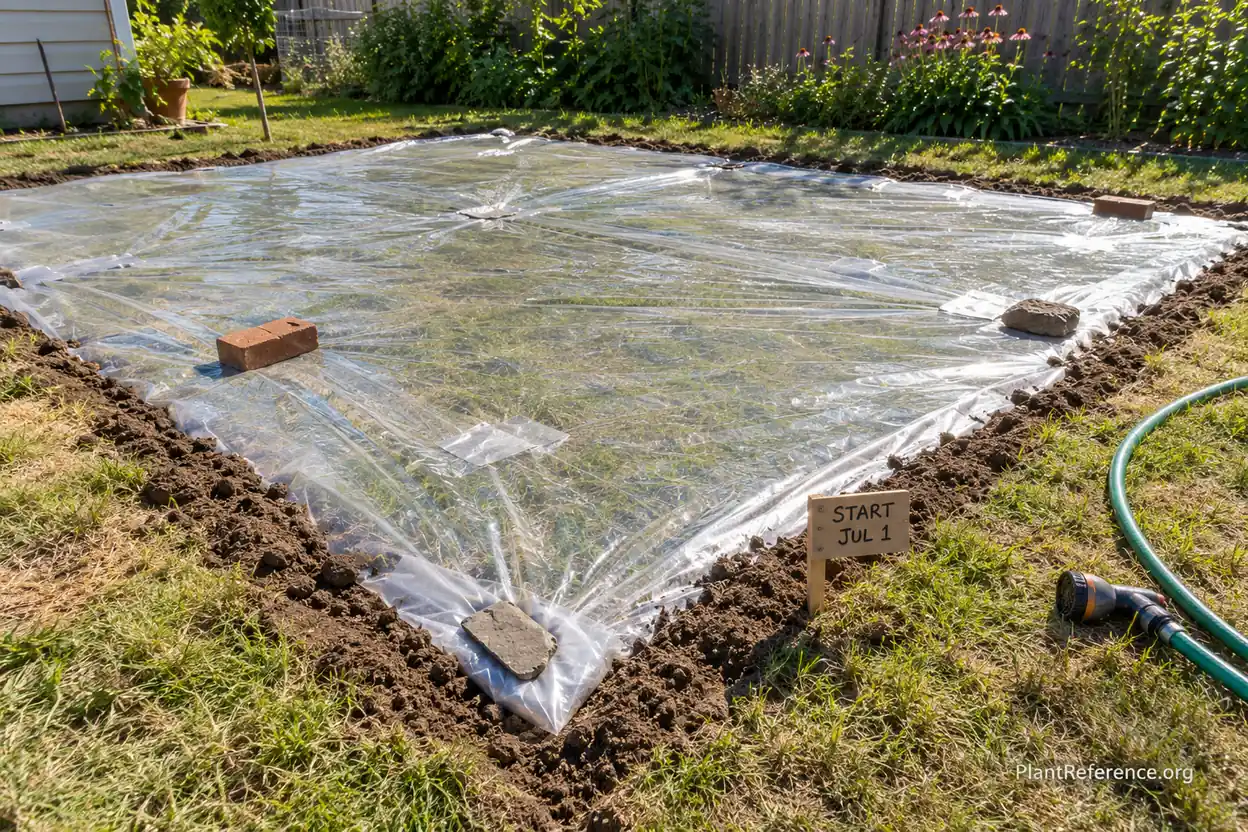
Solarization reduces vegetation and some surface weed seed but does not sterilize the seed bank. Expect and control a seedling flush before adding meadow seed.
Smother Lawn With Cardboard and Mulch
Sheet mulching blocks light and oxygen. Mow low, wet turf, overlap plain cardboard, and cover it with aged mulch. Maintain it for a full growing season, checking seams and edges.
Keep material away from trunks and crowns. Avoid glossy cardboard, plastic tape, or layers that divert water. Before direct seeding, remove coarse excess so seed reaches firm soil. Raised Bed Weeds: Prevention Strategies and Control Methods offers useful edge-control principles.
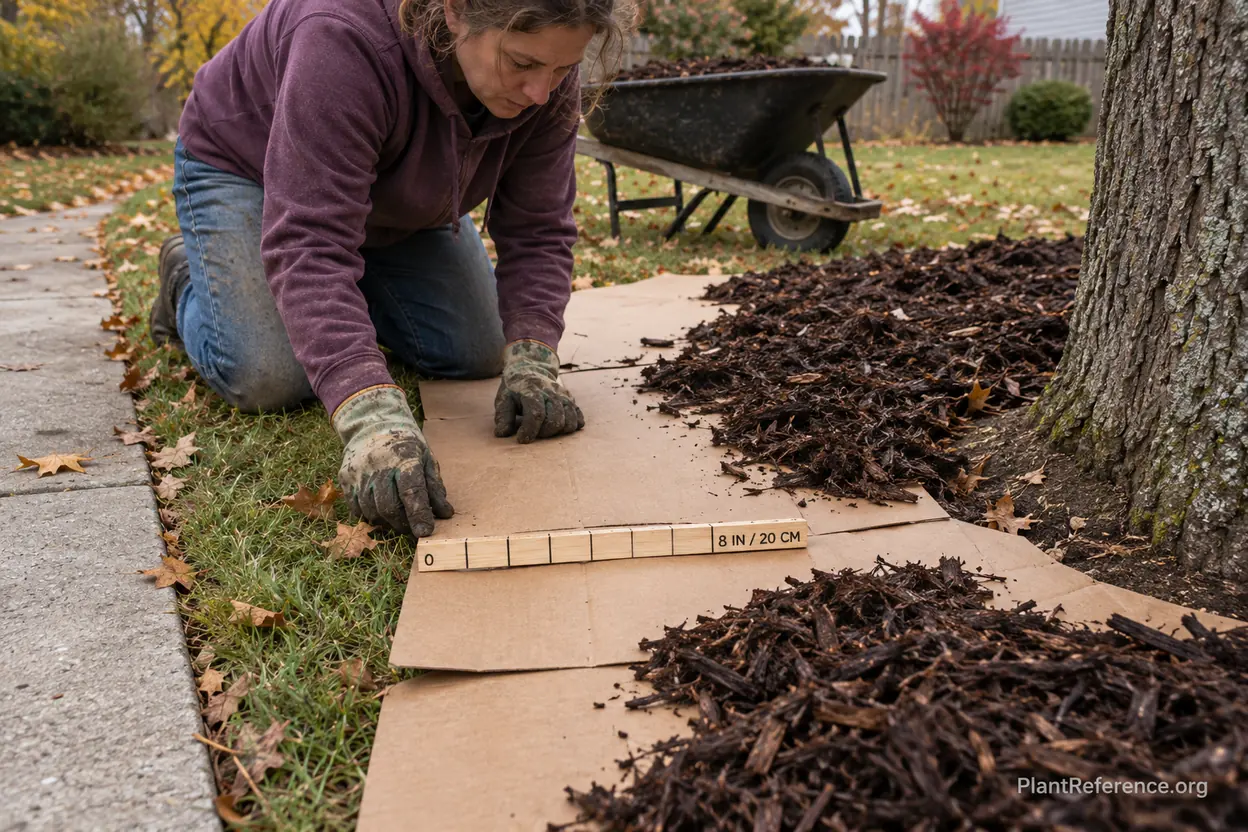
Sheet mulch fits small conversions you can monitor. On large sites, cost and labor climb quickly. Build only as much as you can inspect.
Use Herbicide Burn-Back Only With Care
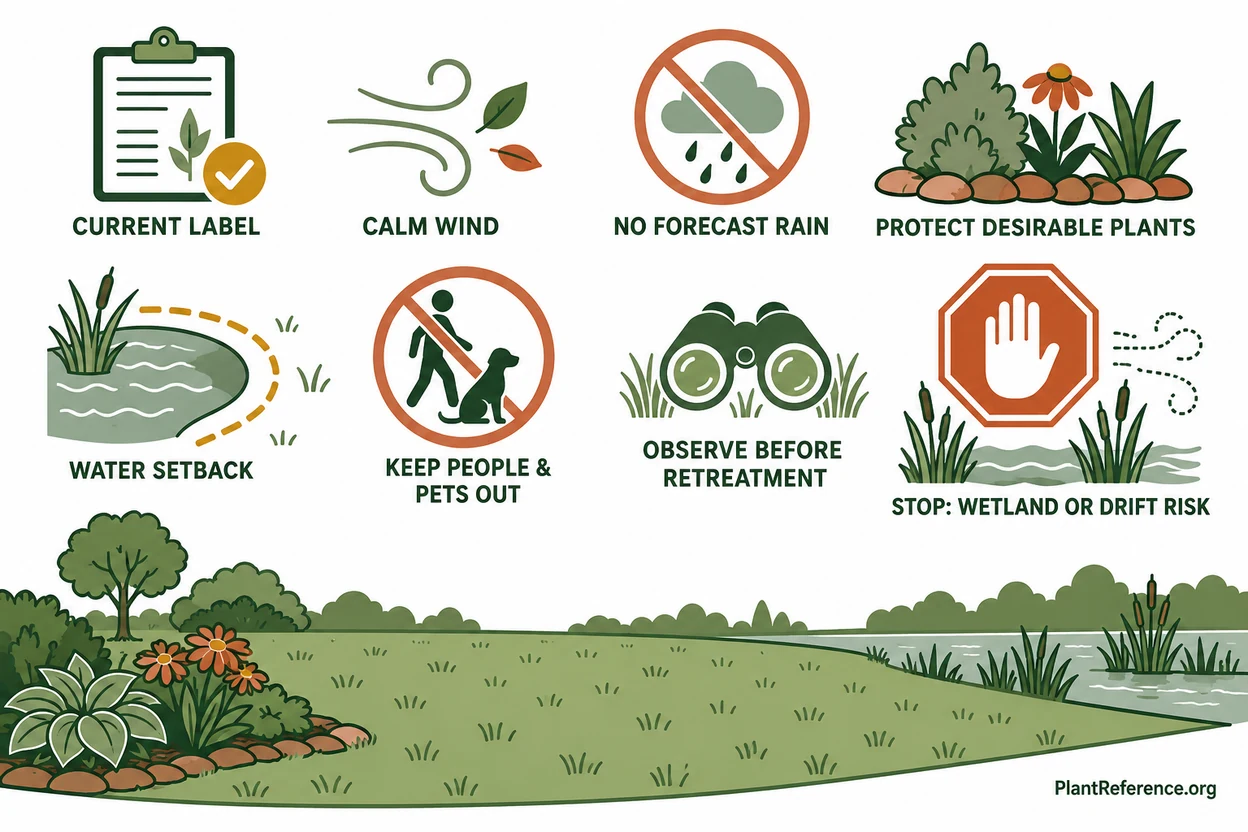
The third option is targeted, label-directed nonselective herbicide on actively growing turf, followed by observation. It is fastest on extensive rhizomatous turf and carries the greatest responsibility.
Follow the current label; it is the law. Prevent drift and runoff, keep people and pets out for the labeled interval, and seek local guidance near water, wells, schools, food gardens, or sensitive habitat.
Brown leaves are not a finished seedbed. Wait through the label's interval, remove obstructive dead thatch, then water to reveal survivors. A second targeted pass may fit the plan; random spraying does not.
Manage the Seed Bank and First Meadow Year
After removal, water the site and let weeds emerge. Shallowly remove annual seedlings and perennial regrowth without turning deeper soil. Repeat until the major flush slows.
Sow in the regional mix's recommended season, often dormant fall or late winter for cold-stratified species. Press seed into firm soil. Plugs establish faster on small sites. When to Plant Perennials: Season-by-Season Timing and Pacific Northwest Native Plants: 10 Resilient Picks connect timing with regional choice.
In year one, mow annual weeds before flowering when they overtop meadow seedlings. Protect low natives, remove invasive perennials individually, and stop once meadow plants occupy the upper canopy. Follow the mix supplier's schedule.
Stage | What to watch | Action |
|---|---|---|
First weed flush | Dense annual seedlings | Shallowly remove before sowing |
Early meadow emergence | Slow, uneven native seedlings | Keep evenly moist and identify before pulling |
Weeds overtop natives | Fast annual canopy | Mow high before weed flowers open |
Perennial turf returns | Coarse grass patches or runners | Dig or spot-treat by the original method |
Meadow begins filling | Native roots and crowns expand | Reduce mowing and maintain the perimeter buffer |
Keep sidewalks and neighboring lawns tidy with the managed buffer. It catches turf and signals intentional care. Use Plan a Perennial Garden That Blooms Spring to Fall and Perennial Combinations That Look Good Together to add bloom sequence and structure.
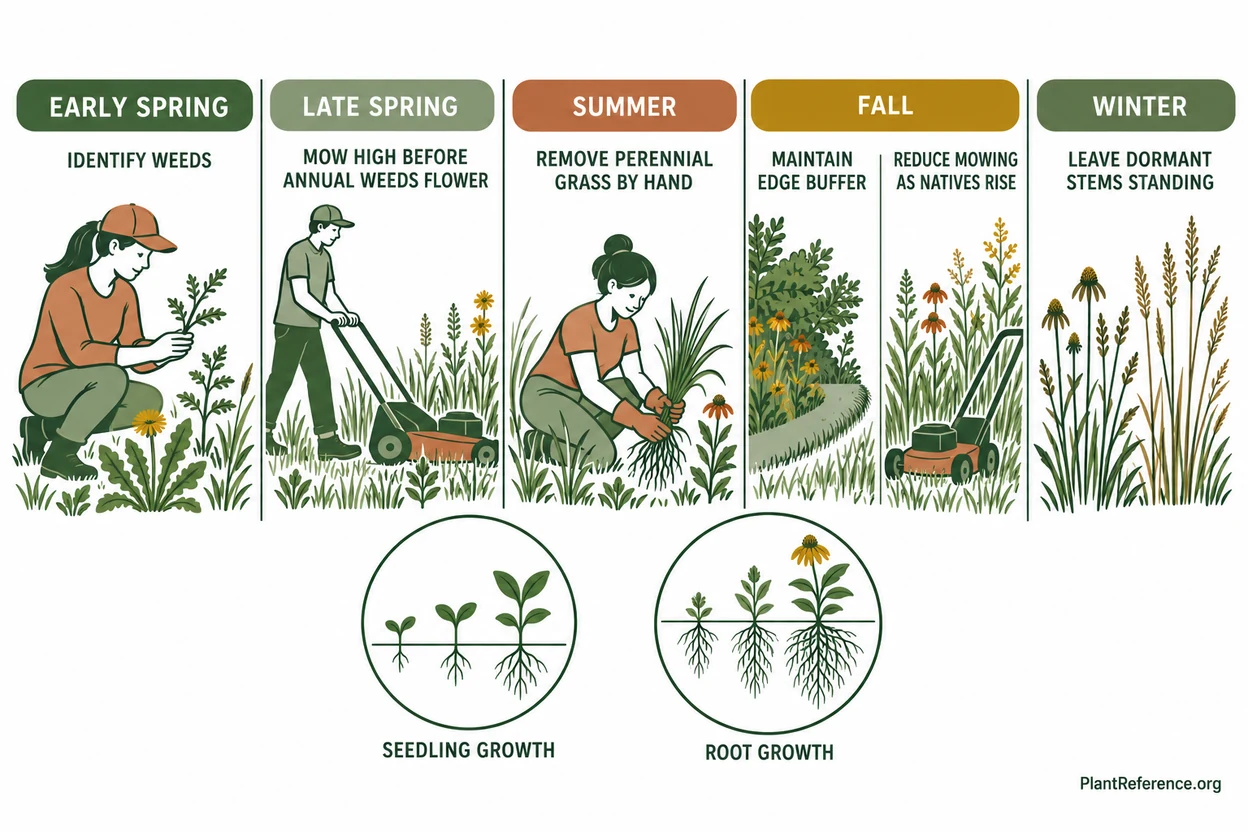
Meadow establishment is measured in years, not weekends. How to Overseed Your Lawn: Timing, Seed Selection, and Technique applies to maintaining turf, not creating a meadow; do not borrow its dense-grass assumptions. Best Low-Maintenance Perennials for Beginners: 10 Picks can supplement plugs at visible edges, but the core job remains the same: protect the new community from turf and weeds until it can hold the ground itself.
Frequently Asked Questions
Reading about plants and recognising them are different skills. These three build the second.
- Daily PlantIdentify the day’s mystery plant from a close-up photograph.
- Keyed OutWork a dichotomous key, lead by lead, to name a hidden specimen.
- Name That PlantName a specimen from botanical clues dealt hardest first.
Free to play, no account needed
Tagged with
Pat has been gardening in Milwaukee for over thirty years, through every kind of Wisconsin weather. She worked as a school librarian and started gardening seriously when her kids were small—she wanted them to know where food came from. Now retired, she's a certified Master Gardener and runs the plant sale at her local garden club every spring. She specializes in cold-hardy perennials, native wildflower meadows, and the art of getting a vegetable garden producing in Wisconsin's short but intense growing season. Pat is practical and patient—she's seen enough Wisconsin winters to know that gardening here is a long game, and she writes with the steady confidence of someone who's been doing this a long time.