Image 1 of 4
1 / 4
Plant Reference
Crocosmia, Genus, ×, Hybrid, crocosmiiflora, Species, 'Lucifer', Cultivar,
- Genus & species
- Hybrid
- Cultivar
red crocosmia
Hybrid of garden origin; parent species native to South Africa; cultivar raised by Alan Bloom of Bressingham Gardens, Norfolk, England, introduced 1966
Overview
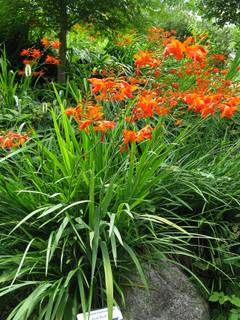
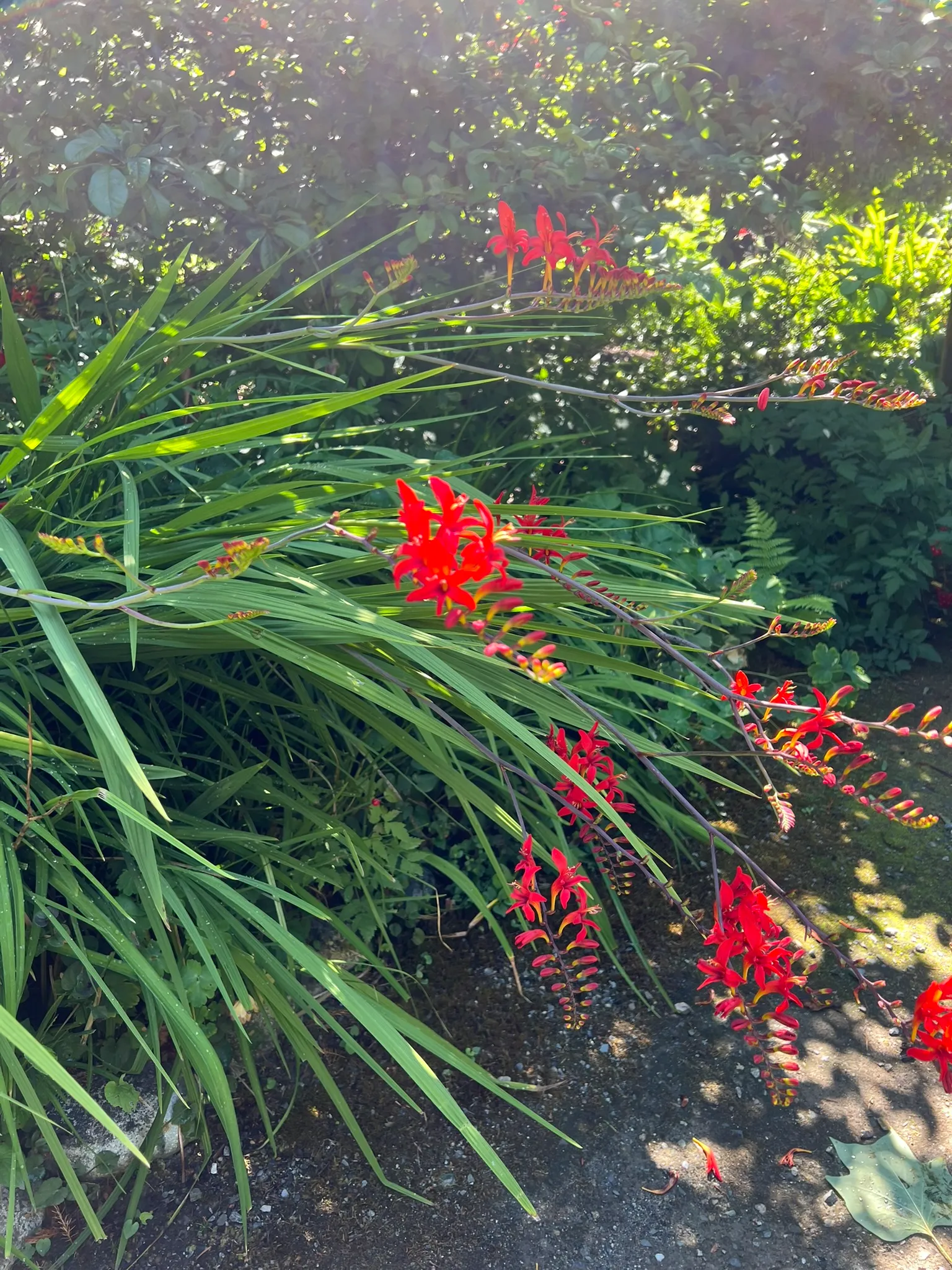
Crocosmia × crocosmiiflora 'Lucifer' is a vigorous cormous perennial cultivar reaching 3–4 feet (90–120 cm) tall in bloom and 1–2 feet (30–60 cm) wide, forming dense clumps from chains of interconnected small corms 0.5–1 inch (13–25 mm) in diameter. Plants produce upright sword-shaped pleated leaves 24–36 inches (60–90 cm) long in a fan-like arrangement from each corm chain, the foliage medium green through the growing season. In midsummer, strong branching flower stems rise 3–4 feet (90–120 cm) above the foliage fan, each stem bearing 2–3 arching lateral branches holding rows of tubular flowers 1.5–2 inches (4–5 cm) long in vivid flame-red arranged in a zigzag pattern along each lateral. Individual flowers open from the base of each spike upward over 2–3 weeks, giving a sequential bloom progression rather than simultaneous opening. 'Lucifer' is hardy to USDA zone 5 with winter mulching — a broader cold-hardiness range than many hybrid montbretias, which fail below USDA zone 7 without tuber lifting. Corms multiply rapidly; established clumps become congested within 3–4 years and require division to maintain flowering vigor. The cultivar naturalizes readily in mild climates and can spread beyond intended planting areas by rhizomatous corm-chain extension at 6–12 inches (15–30 cm) per year. The cultivar was raised by Alan Bloom of Bressingham Gardens, England, and introduced to commerce in 1966. All plant parts are mildly toxic to pets if ingested in quantity.
Native Range
Crocosmia × crocosmiiflora is a hybrid of garden origin, derived from a cross between Crocosmia aurea and Crocosmia pottsii, both native to South Africa. The cultivar 'Lucifer' was raised by Alan Bloom at Bressingham Gardens in Norfolk, England, and introduced to commercial horticulture in 1966.Suggested Uses
Used in mixed perennial borders, naturalized meadow plantings, or cutting gardens at 6–8 inch (15–20 cm) spacing for mid-border color from July through August. The vivid flame-red flowers combine with yellow and orange late-season perennials in warm-palette border compositions — pairing with yellow-flowered Rudbeckia fulgida 'Goldsturm' or orange-flowered Helenium 'Moerheim Beauty' extends the warm-palette late-summer display through September when 'Lucifer' bloom has passed but the seed capsules remain ornamental. Arching stems cut for indoor arrangements last 7–10 days in water and pair well in red-orange-yellow mixed bouquets. The cultivar can naturalize in informal meadow settings in USDA zones 7–9 where mild winters allow corm chains to spread freely; in more formal plantings, the spread requires monitoring to keep the clump within its intended footprint. The plant does not grow well in heavy waterlogged soils, deep shade, or climates below USDA zone 5 without winter corm lifting.How to Identify
Appearance
Size & Dimensions
Height3' - 4'
Width/Spread1' - 2'
Bloom Information
Branching flower stems 3–4 feet (90–120 cm) tall each carrying 2–3 arching lateral branches of tubular flowers 1.5–2 inches (4–5 cm) long in vivid flame-red appear in July–August in USDA zones 5–8, with peak bloom typically in mid-July. Flowers open from the base of each spike upward over 2–3 weeks. In USDA zones 8–9, bloom may begin in late June. Individual stems remain showy for 3–4 weeks and established clumps with multiple stems bloom over a 4–6 week total window. Persistent orange-red seed capsules extend ornamental interest through September.
Detailed Descriptions
Flower Description
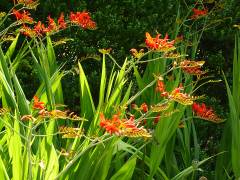
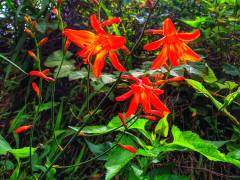
Vivid flame-red; tubular 1.5-2 inches long in zigzag rows along 2-3 arching lateral branches on 3-4 foot branching stems; July-AugustFoliage Description
Medium green; upright sword-shaped pleated 24-36 inches long in a fan arrangementGrowing Conditions
Sun Requirements
Requires 5-8 hours of direct sunlight daily
• Full Sun: 6+ hours of direct sunlight
• Partial Shade: 3-6 hours of direct sunlight
• Full Shade: Less than 3 hours of direct sunlight
Care & Maintenance
Care Guide
Grow in full sun to partial shade with 5–8 hours of direct light in moist well-drained loam or sandy loam at pH 6.0–7.0. Plant corms 3–5 inches (8–13 cm) deep and 6–8 inches (15–20 cm) apart in spring after frost. In USDA zones 5–6, a 3–4 inch (8–10 cm) mulch layer over the planting area after the first hard frost improves winter survival from 60–70% without mulch to 90%+ with mulch applied. In USDA zone 4 and colder, lift corms after the first frost, dry for 2–3 days, and store at 40–50°F (4–10°C) in barely moist peat or vermiculite through winter. Water during dry spells in the first growing season as plants establish; established clumps tolerate brief dry periods but produce fuller flower spikes with consistent moisture during the June bud-development window. Divide congested clumps every 3–4 years in early spring before growth begins by lifting the entire corm mass and separating individual corm chains; replant immediately at the original planting depth. Clumps left undivided beyond 4 years develop progressively fewer flowers as the inner corms compete for root space.Pruning
Leave foliage intact through fall to allow the leaves to photosynthesize and recharge the underground corms for the following year's bloom; green foliage is not cut back while photosynthetically active. Remove spent flower stems at the base after seed capsules have finished their ornamental display (through September), or leave stems in place for seedhead interest and bird foraging. Cut all foliage to ground level in late fall after it has died back naturally from frost, or remove dead foliage in early spring before new growth emerges. Lift and divide every 3–4 years as described in care.Pruning Schedule
Prune: March & October
fallearly spring
Container Growing
Suitable for container growing
Minimum container size: 5 gallons