Image 1 of 10
1 / 10
Plant Reference
Crocosmia, Genus, spp., Multiple species,
- Genus
- Multiple species
crocosmia
Southern and eastern Africa — South Africa, Lesotho, Zimbabwe, Mozambique, Madagascar, and tropical East Africa; grassland, forest margins, and rocky slopes
Overview
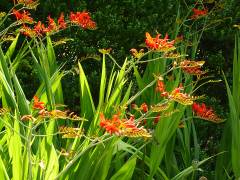
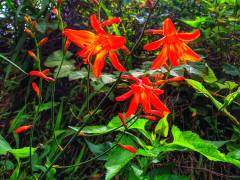
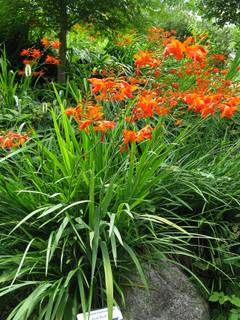
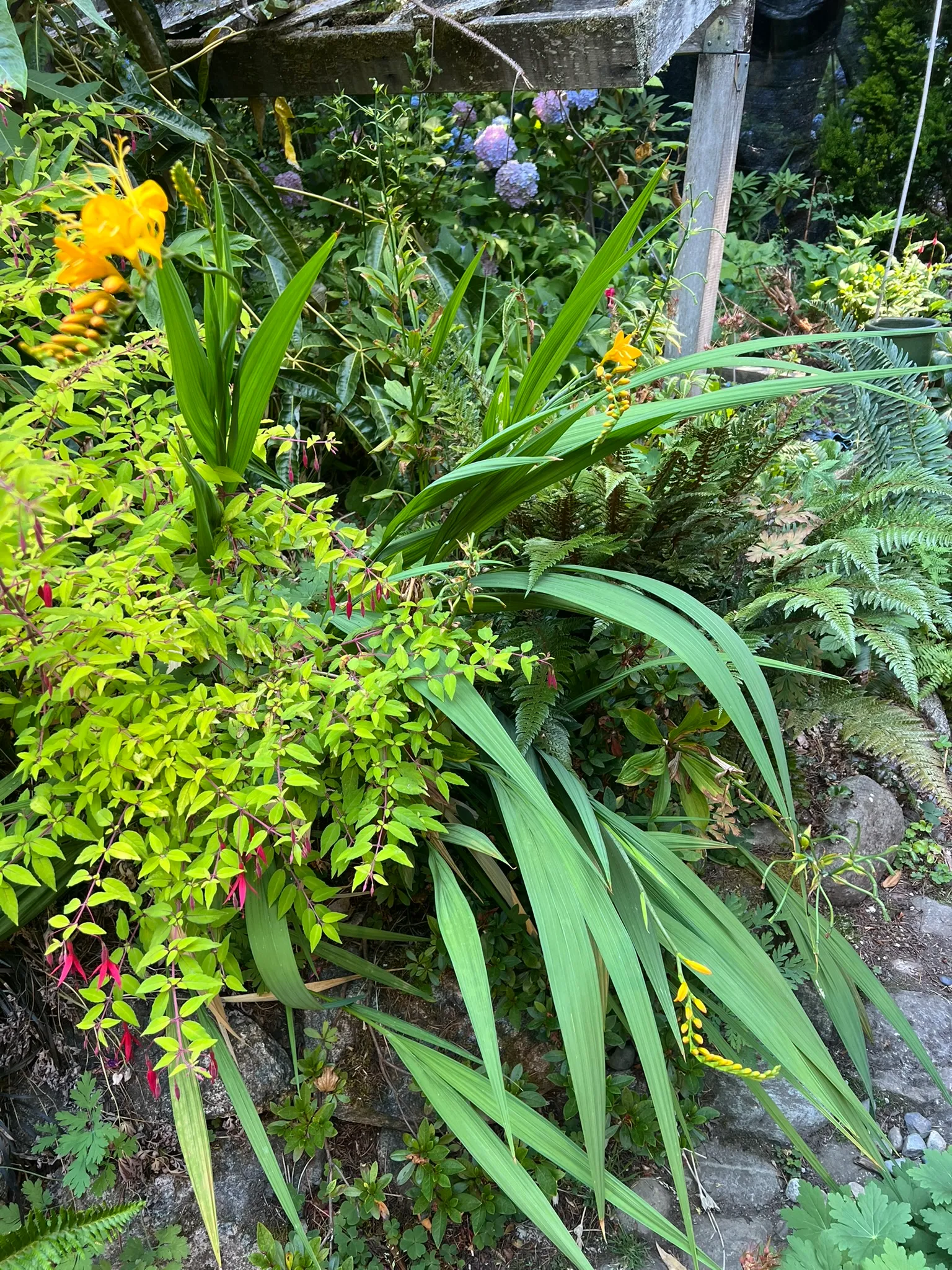
Crocosmia spp. is an upright cormous perennial growing 2-4 feet (60-120 cm) tall and 1-2 feet (30-60 cm) wide. Tubular to funnel-shaped orange, red, or yellow flowers, 1-2 inches (2.5-5 cm), are carried in arching one-sided spikes on wiry stems in July-August for about 6 weeks. Sword-shaped medium green ribbed leaves, 18-36 inches (45-90 cm), arise in fans from basal corms — the fan-like foliage habit is characteristic of the iris family. The plant grows from corms (not true bulbs). Most cultivated plants are C. × crocosmiiflora hybrids (C. aurea × C. pottsii) or modern large-flowered hybrids such as 'Lucifer' (tall red, bred by Alan Bloom in 1966). Native to southern and eastern Africa. C. × crocosmiiflora is classified as invasive in parts of the Pacific Northwest (Washington, Oregon), California, and Hawaii — the species spreads by corm proliferation and escapes into riparian areas. This invasive status is the primary ecological limitation, and local regulations should be checked before planting. Corms are toxic to pets. Deer-resistant. Hummingbird-pollinated. This entry represents the genus.
Native Range
Native to southern and eastern Africa — South Africa, Lesotho, Zimbabwe, Mozambique, Madagascar, and tropical East Africa. Found in grassland, forest margins, and rocky slopes.Suggested Uses
Grown in mixed borders, cut-flower gardens, hummingbird gardens, and in containers of at least 5 gallons (19 L), with corms spaced 6-9 inches (15-23 cm) apart in groups. Hummingbird-attracting. Invasive in parts of the US — local status should be checked. Toxic to pets. Hardy in zones 5-9.How to Identify
Appearance
Size & Dimensions
Height2' - 4'
Width/Spread1' - 2'
Bloom Information
Mid to late summer (July-August). Tubular to funnel-shaped orange, red, or yellow flowers, 1-2 inches (2.5-5 cm), in arching one-sided spikes on wiry stems. 6 weeks. Hummingbird-pollinated. Persistent orange-red seed capsules follow in fall.
Detailed Descriptions
Flower Description
orange, red, or yellow (cultivar-dependent); tubular to funnel-shaped, 1-2 inches (2.5-5 cm), in arching one-sided spikes (zigzag rachis) along the tips of wiry stems; July-August; hummingbird-pollinatedFoliage Description
medium green, sword-shaped (ensiform) with longitudinal ribbing, 18-36 inches (45-90 cm), arising in fans from basal corms — the fan-like iris-family foliage habit is diagnostic for the genusGrowing Conditions
Sun Requirements
Requires 4-8 hours of direct sunlight daily
• Full Sun: 6+ hours of direct sunlight
• Partial Shade: 3-6 hours of direct sunlight
• Full Shade: Less than 3 hours of direct sunlight
Care & Maintenance
Care Guide
Site in full sun to partial shade (4-8 hours direct sun) in moist well-drained loam or sand with a pH of 6.0-7.0. Corms are planted 3-4 inches (7-10 cm) deep in spring. C. × crocosmiiflora is invasive in parts of the Pacific Northwest, California, and Hawaii — local regulations should be checked before planting. Corms are toxic to pets. Deer-resistant. Hummingbird-attracting. Hardy in zones 5-9.Pruning
Cut foliage to the ground in late fall (October) after yellowing, or in early spring (March) before new growth emerges. Divide crowded clumps every 3-4 years in early spring to maintain flowering vigor.Pruning Schedule
Prune: March & October
fallearly spring
Container Growing
Suitable for container growing
Minimum container size: 5 gallons