Hydrangea Wilting Even When Watered? 6 Causes
Pets & Toxicity
Recorded toxicity for plants linked in this guide. An unknown status is not a safety assessment.
Toxic to pets: bigleaf hydrangeaDetailsHide
Hydrangea macrophylla — Toxicity Warning
Toxic to pets and humansView Hydrangea macrophylla plant profile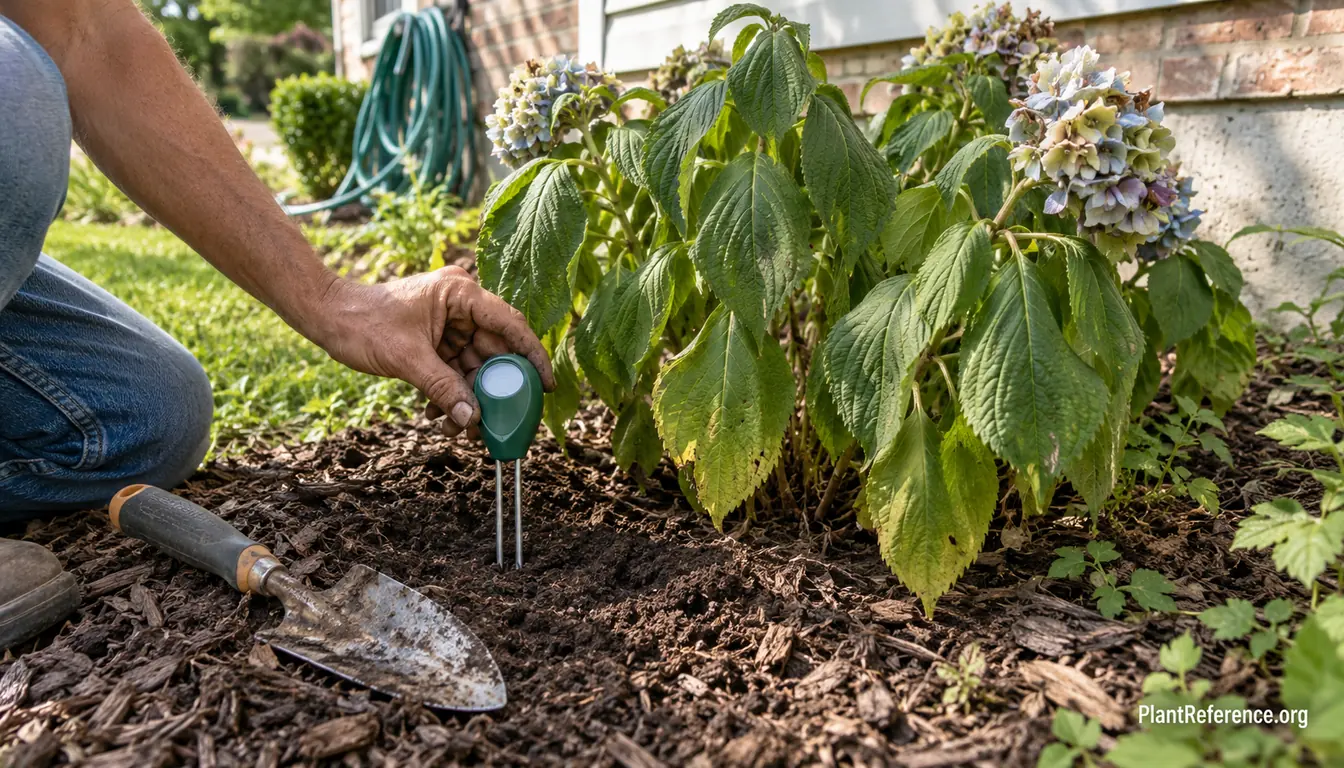
— Image © PlantReference.org 2026
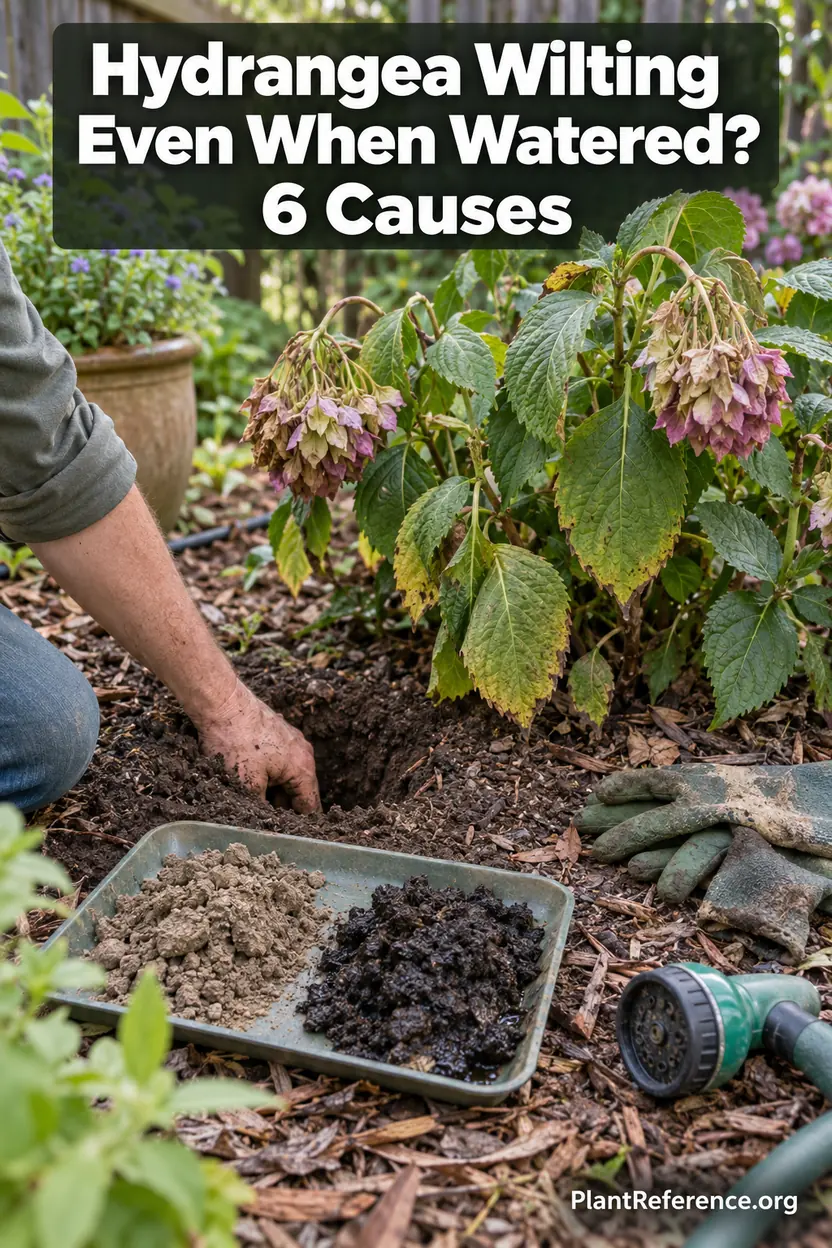
Hydrangea wilting even when watered is a diagnosis problem, not permission to soak the plant again. The most common cause is still dry soil, but heat stress, saturated roots, transplant shock, compacted soil, and heavy bloom heads can all produce the same drooping silhouette. Check what happens overnight and what the soil feels like 4 inches (10 cm) down before you touch the hose.
First Decide Whether the Wilt Is Temporary
The bigleaf hydrangea 🌿Hydrangea macrophylla (hye-DRAN-jee-uh mak-roh-FIL-uh) loses water quickly through broad leaves. When roots cannot keep pace on hot afternoons, foliage droops without necessarily indicating root failure.
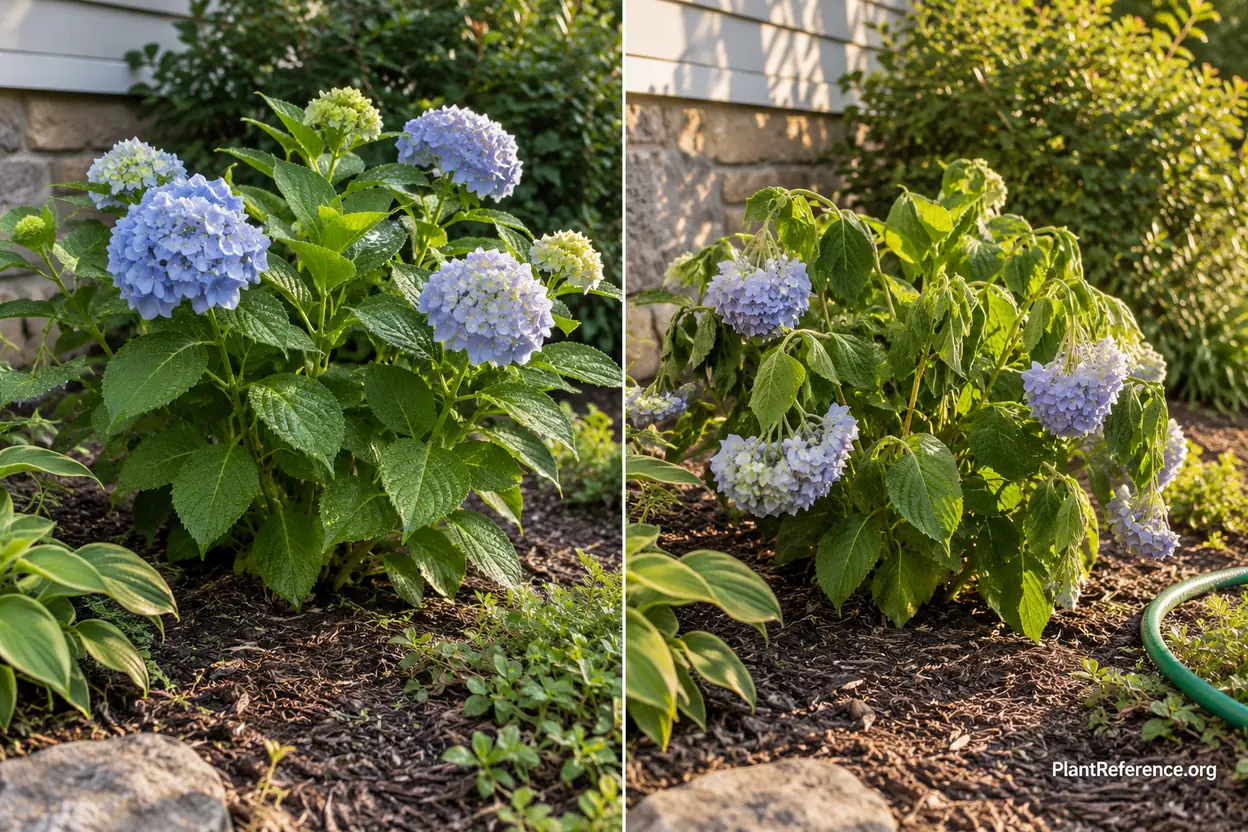
Check at dawn. Overnight recovery points to normal heat stress, especially with afternoon sun. Water deeply only when roots are dry, maintain mulch, and add shade during severe heat. Do not keep soil wet because leaves droop at 3 p.m.
Wilt that persists through the night needs investigation. It means the roots cannot supply water even after heat and evaporation fall. The cause may be genuinely dry soil, but it can also be oxygen-starved roots sitting in water. Browning at leaf margins adds another clue, and Hydrangea Leaves Turning Brown: Causes and Solutions helps separate scorch, drought, and disease patterns. The same wet-versus-dry logic described in Overwatering vs Underwatering Container Tomatoes: How to Tell the Difference applies at the root level here.
Check the Root Zone, Not the Soil Surface
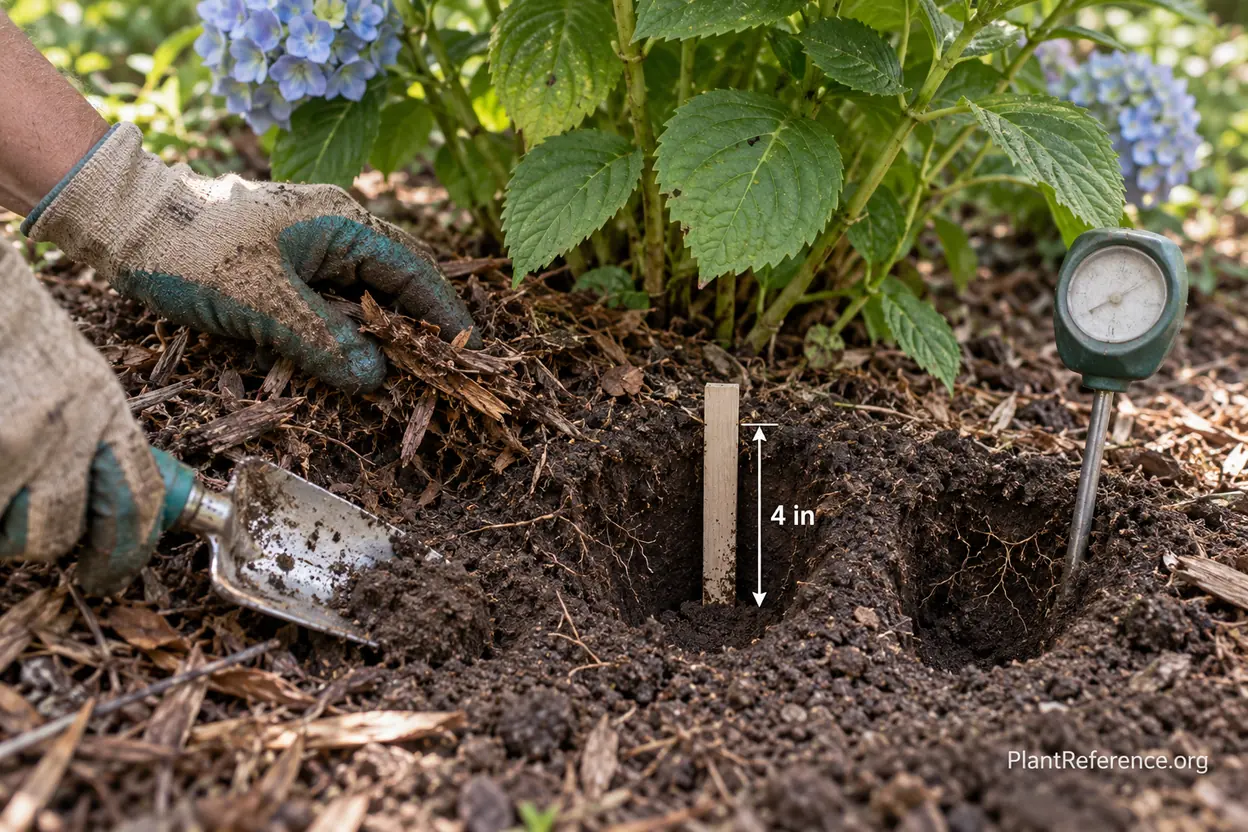
Surface soil lies. It can dry while roots stay soaked, or look damp while water runs sideways. Pull mulch back and test 4-6 inches (10-15 cm) deep near the drip line in several spots.
Lightly damp soil holds briefly, then crumbles. Dusty soil needs a slow soak; glossy soil that releases water is too wet. Compare moisture-meter readings across several positions and confirm by touch.
Next, watch how irrigation moves. Apply water slowly across the root zone, wait 10 minutes, then recheck depth. If the top is wet but the layer beneath is dry, runoff or hydrophobic soil is defeating the watering. If a test hole fills and stays full, drainage is the problem. Poor Drainage in Raised Beds: Causes and Fixes for Waterlogged Soil explains how perched water and restricted outlets keep roots saturated, while Raised Bed Irrigation Systems: Watering Solutions for Consistent Growth covers slower, more even delivery.
Underwatering Versus Overwatering
Underwatered hydrangeas have dry soil, limp leaves, and sagging flowers. Water slowly across the root area to 6-8 inches (15-20 cm) deep. Established plants need roughly 1-2 inches (2.5-5 cm) weekly, adjusted for heat, wind, and establishment.
Overwatered plants look limp because saturation excludes oxygen and stops root uptake. Warning signs include wet soil, soft yellowing leaves, sour odor, overnight decline, and dark soft roots instead of firm pale ones.
Stop watering a saturated root zone and correct the reason it stays wet. Redirect downspouts, clear blocked drainage, reduce automatic irrigation, and avoid piling mulch against the crown. Do not add gravel beneath a planting hole; it creates an abrupt texture boundary rather than a reliable drain. The rescue principles in Fiddle Leaf Fig Root Rot: How to Save Your Plant and Monstera Root Rot: Emergency Rescue Guide explain why oxygen and removal of decayed tissue matter, even though an outdoor shrub requires different handling.
Use this order instead of guessing:
Check whether leaves recover by morning
Test moisture 4-6 inches (10-15 cm) deep in several places
Confirm that applied water penetrates rather than running away
Inspect drainage if soil remains wet for days
Change one condition, then watch the plant for 48 hours
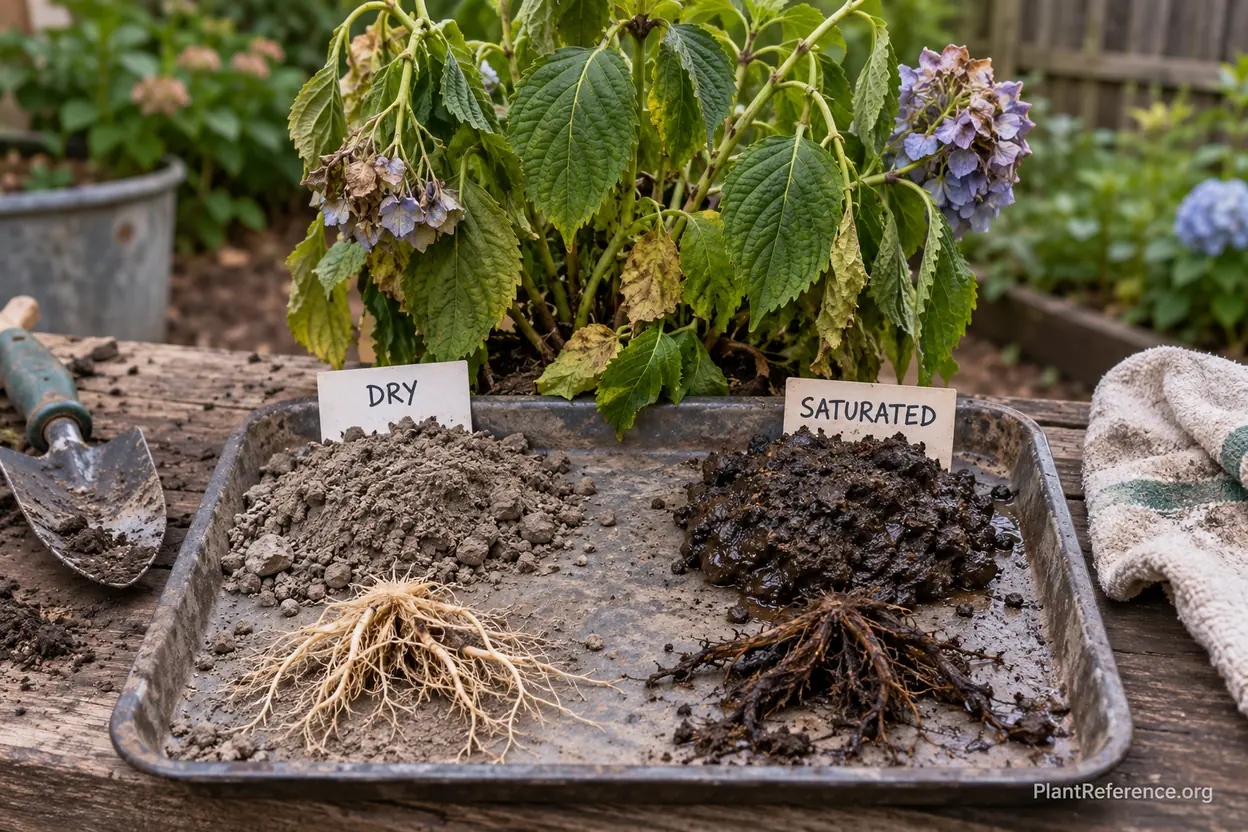
Transplant Shock and Compacted Soil
A moved hydrangea can wilt in moist soil because digging removes feeder roots. Expect 2-4 weeks of shock after a spring or fall move. Summer transplanting is riskier because heat increases water loss.
Keep the root ball and surrounding soil evenly moist, add temporary afternoon shade, and delay fertilizer until growth resumes. How to Repot a Monstera: Complete Step-by-Step Guide reinforces root contact principles, though shrubs need wider holes and site-scale watering.
Compacted soil creates a slower version of the same problem. Dense clay or foot traffic compresses the pores that should carry air and water. Irrigation puddles at the surface, yet roots below remain poorly aerated and may not expand beyond the original root ball. Loosen a broad area outside the crown with compost incorporated into the native soil, but never bury the shrub deeper or cultivate aggressively through established roots.
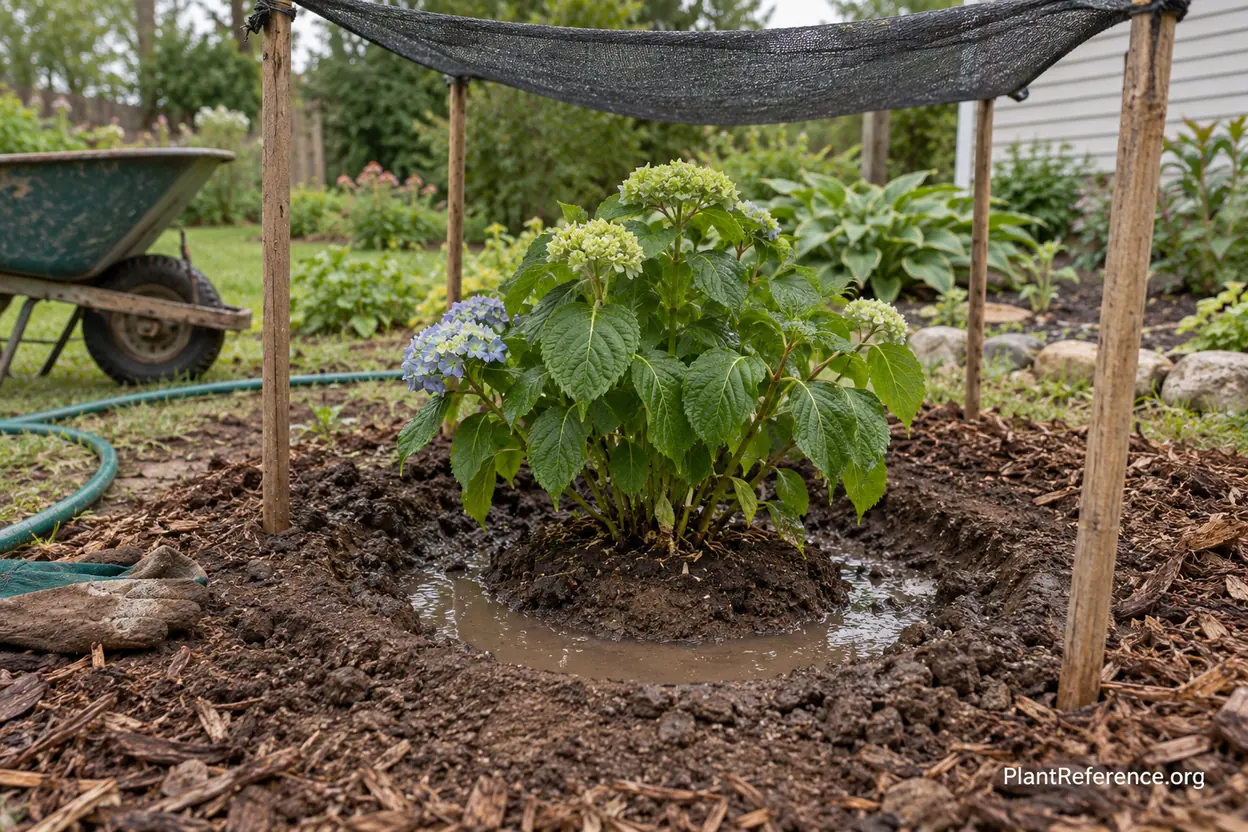
Heavy Blooms Can Mimic Wilting
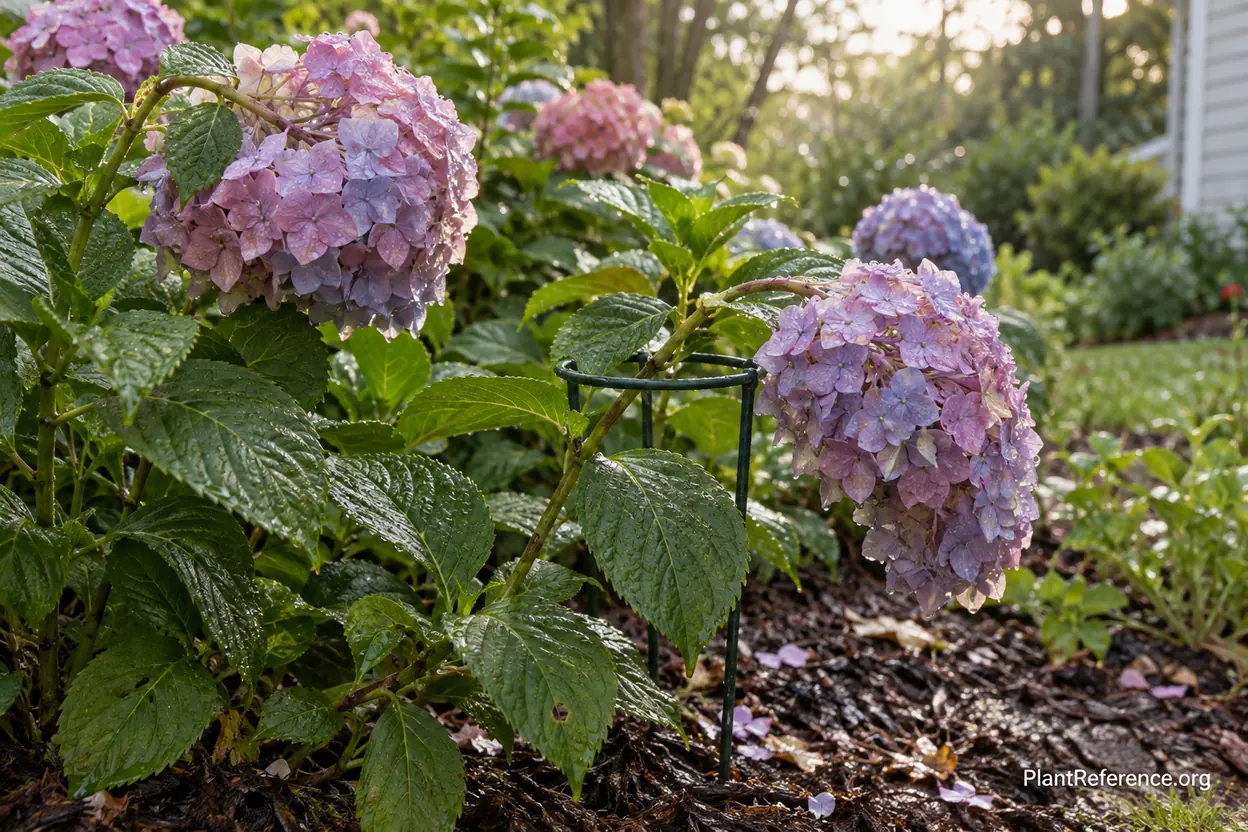
Sometimes roots are fine and rain-heavy flowers simply bend flexible stems while leaves stay firm. Support outer stems, shake off water, or cut selected blooms.
Look at where bending begins. A stem arcing from the weight of a flower head is different from a limp leaf petiole across the entire shrub. Do not prune the whole plant impulsively, because some hydrangeas form next year's flower buds on old wood. Remove only broken stems and damaged blooms until the species and its pruning habit are confirmed. Clean-cut principles from How to Prune Roses: When and How to Prune Every Type of Rose are relevant, but hydrangea timing must match the species.
A Recovery Plan That Does Not Make Things Worse
Once you identify the likely cause, change one variable at a time. Dry roots get a slow, thorough soak. Heat-stressed foliage gets afternoon shade and a correctly watered root zone. Saturated soil gets less irrigation and better drainage. Transplants get time, shade, and consistent moisture. Heavy flowers get support, not emergency watering.
Monitor for 48 hours at dawn and late afternoon, recording moisture and rain. Improvement means firmness returns in cool hours. Persistent overnight wilt, black stems, or sour soil justifies root inspection.
After recovery, keep 2-3 inches (5-7.5 cm) of organic mulch over the root zone but hold it several inches away from the crown. Water deeply at soil level instead of sprinkling leaves, and adjust automatic systems after rain. A schedule cannot see the weather or the soil; your diagnosis can.
Frequently Asked Questions

Reading about plants and recognising them are different skills. These three build the second.
- Daily PlantIdentify the day’s mystery plant from a close-up photograph.
- Keyed OutWork a dichotomous key, lead by lead, to name a hidden specimen.
- Name That PlantName a specimen from botanical clues dealt hardest first.
Free to play, no account needed
Tagged with
TJ stumbled into plant parenthood when a coworker gave him a neglected pothos. That single plant sparked an obsession that led him to quit his corporate marketing job and start a plant care service for busy professionals in Chicago. TJ maintains over 150 plants for residential clients and runs monthly plant swap meetups at local coffee shops. He's self-taught through YouTube, plant forums, and plenty of expensive mistakes (RIP to his variegated monstera). TJ specializes in troubleshooting common houseplant problems and is known for his blunt, no-BS advice: "Your plant isn't dying because Mercury is in retrograde—you're overwatering it." He's particularly skilled with finicky tropical plants like fiddle leaf figs and calatheas.