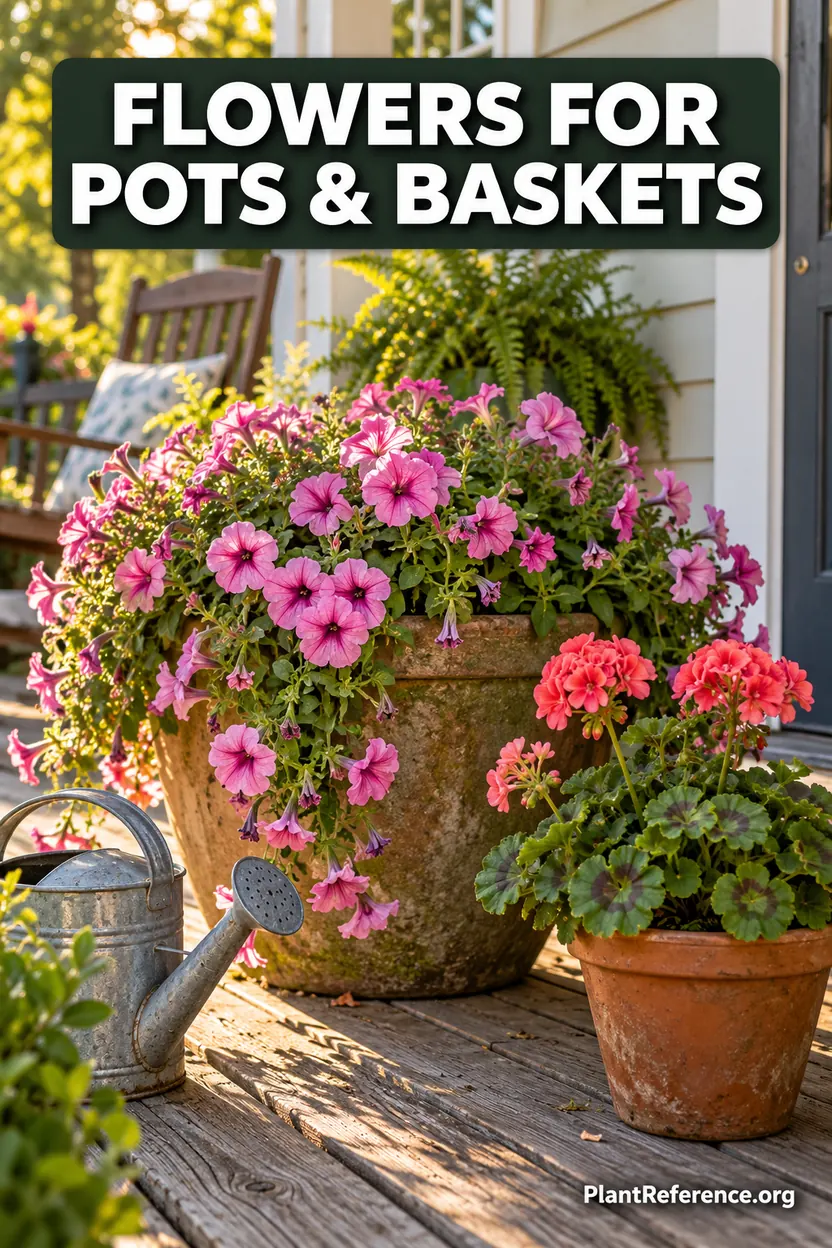
Best Annual Flowers for Containers: Pots and Baskets
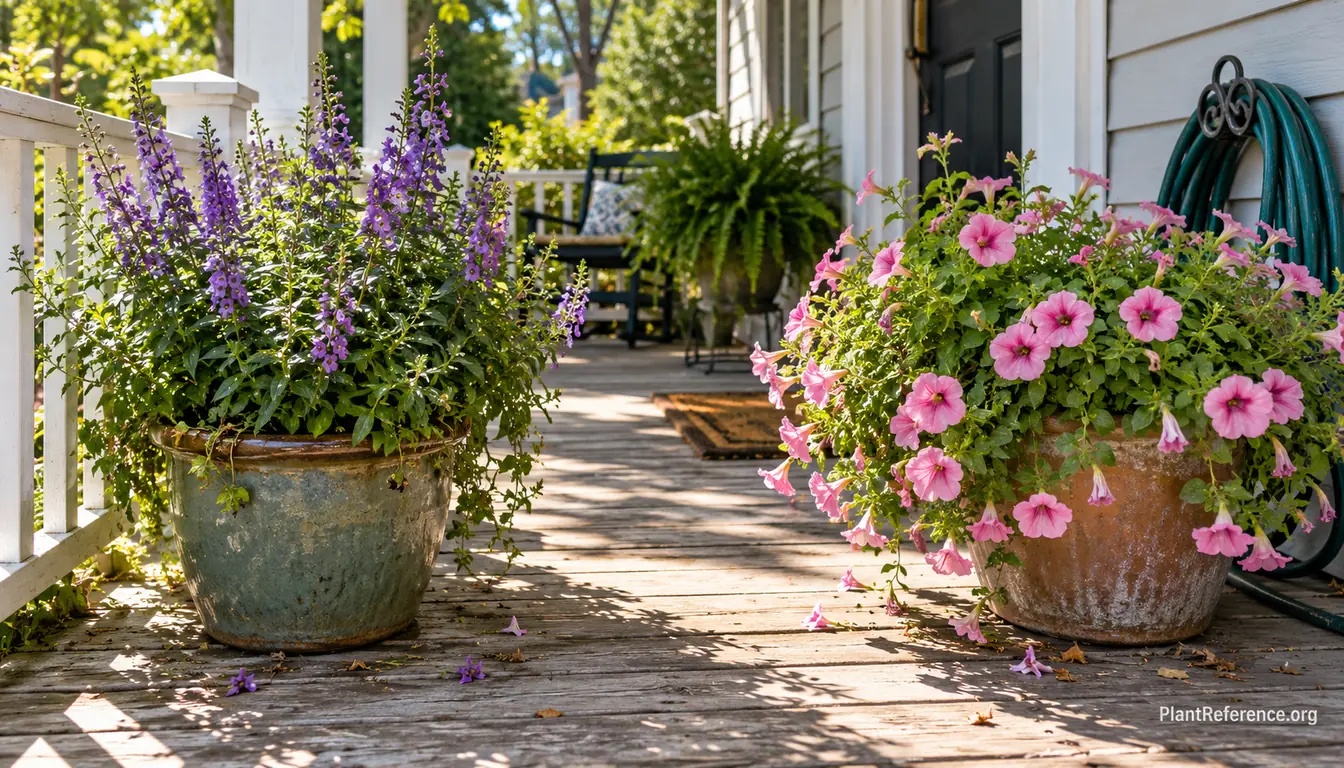
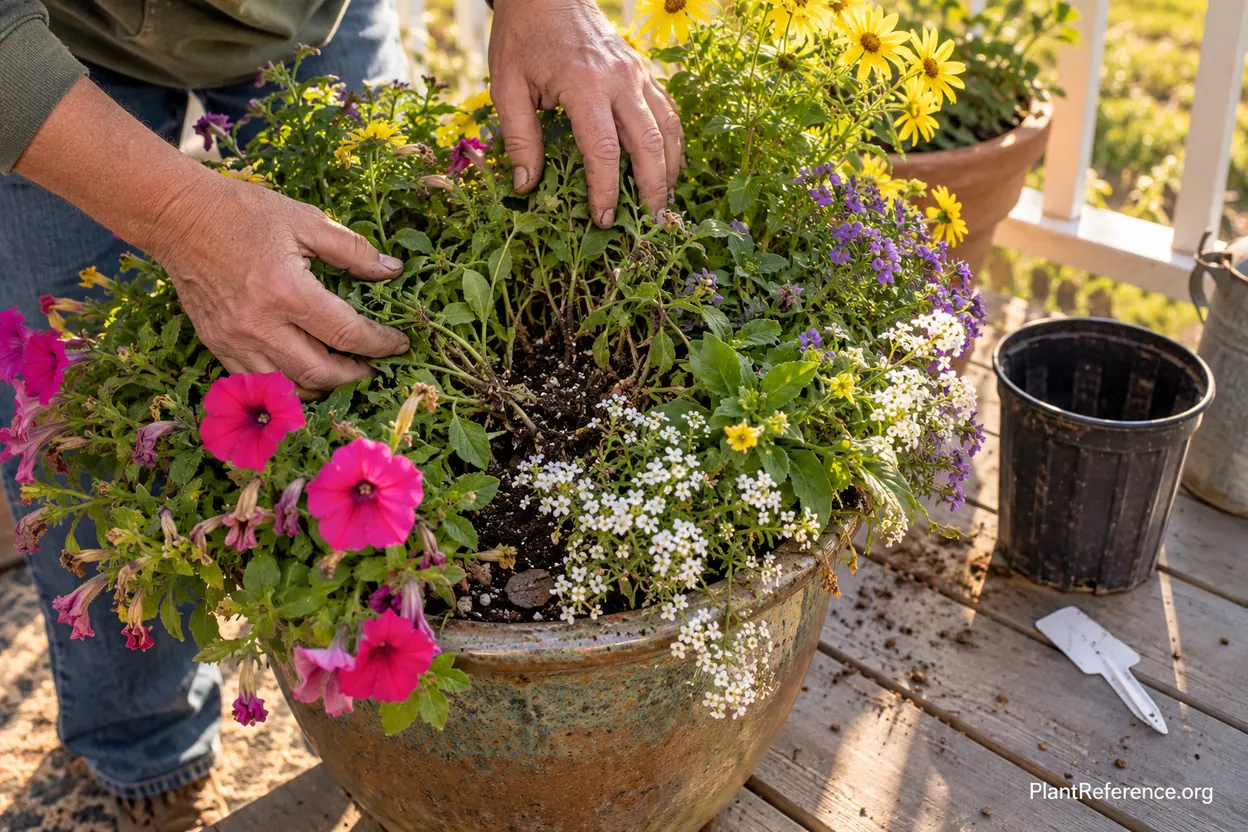
— Image © PlantReference.org 2026
Pets & Toxicity
Recorded toxicity for plants linked in this guide. An unknown status is not a safety assessment.
Toxic to pets: bedding impatiensDetailsHide
The best annual flowers for containers are the ones that fit the location you can offer and the care you can keep up with. A shaded porch, a windy basket hook, and a sun-baked window box are three different growing sites, even when they belong to the same house.
Best Annual Flowers for Containers by Growing Conditions
Start by watching the planting position through a clear day. Count direct sunlight, notice afternoon heat, and check whether a roof blocks rain. Full sun usually means at least six hours of direct light; a bright view from indoors does not necessarily provide that much sun at the pot.
The basic framework in Container Gardening: Pots, Soil, Water & Yields applies to flowers as well as vegetables: container volume, drainage, and water access shape what will grow well. Select plants after those decisions, not before.
Sunny containers
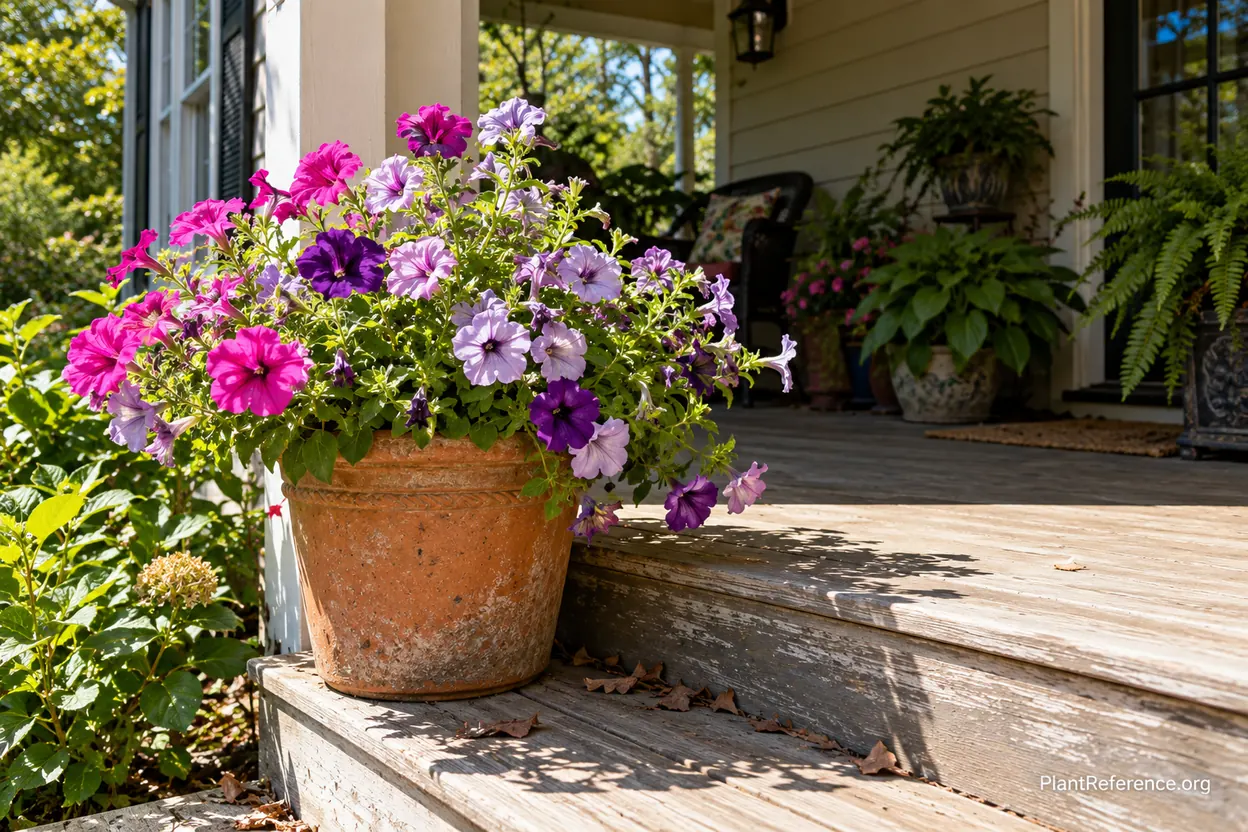
Petunias Petunia x hybrida (peh-TOON-yuh hy-BRID-uh) offer mounding and spreading habits. Spreading types suit baskets and wide pots, while compact selections are easier to fit into smaller compositions. Large-flowered grandiflora types can look battered after rain; multiflora types have smaller, more rain-tolerant flowers.
Calibrachoa 🌿Calibrachoa spp. hybrids (kal-ih-brah-KOH-uh) provide trailing growth and small flowers with little routine deadheading. Their preference for acidic root conditions makes them a more particular choice than their easy-looking cascade suggests. Yellowing leaves deserve a root-zone and nutrition assessment, not an automatic extra dose of fertilizer.
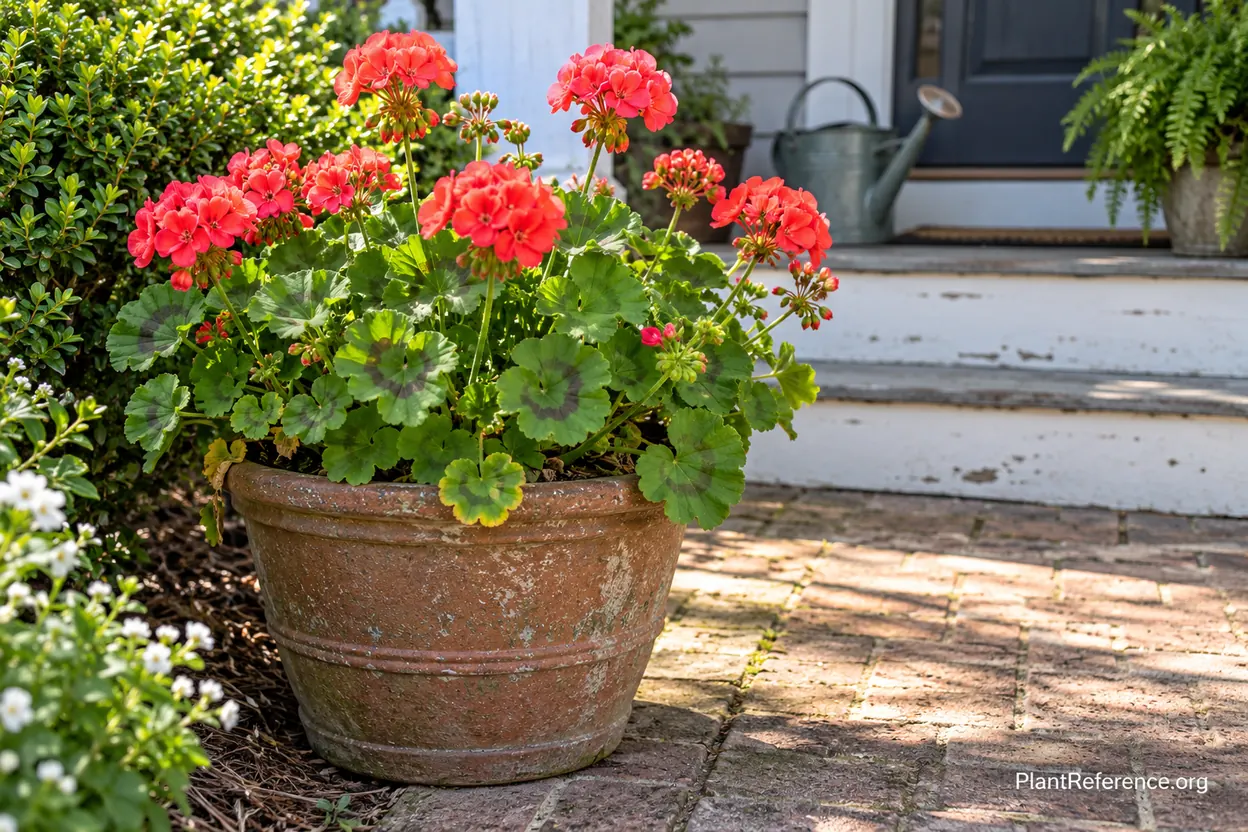
Zonal geraniums Pelargonium x hortorum (pel-ar-GOH-nee-um hor-TOR-um) provide a more upright flowering presence. They work well as the main plant in a porch pot when you want recognizable flower clusters rather than an all-over trailing effect. Remove spent flower stalks and choose companions that will not overwhelm the geranium's canopy.
Shade and gentler light
Standard impatiens 🌿Impatiens walleriana (im-PAY-shenz wall-er-ee-AH-nuh) suit shade, but downy mildew susceptibility should influence purchasing decisions. Where that disease is a known local problem, choose clearly labeled resistant selections or an alternative plant. New Guinea impatiens 🌿Impatiens hawkeri (im-PAY-shenz HAW-ker-eye) offer a different option for suitable part-sun sites.
Begonias Begonia hybrids (beh-GOH-nee-uh) are not one uniform plant. Wax types provide compact, relatively low-maintenance flowering, while tuberous types offer larger blooms with more demanding care. Buy for the named type and its light instructions rather than assuming every begonia belongs in the same position.
Foliage can carry a shaded container even when flowers are between flushes. Coleus is useful for that role, but choose a selection labeled for the actual light level. A dependable leaf pattern beside flowers often creates a fuller-looking display than adding another flowering plant with incompatible needs.
Hot, exposed positions
For sites that repeatedly defeat petunias in midsummer, consider container-suitable selections of heat-tolerant annuals such as angelonia, lantana, or compact zinnias. Heat tolerance does not remove the need for water, adequate root volume, or acclimation. Avoid squeezing a vigorous plant into a tiny pot simply because its species tolerates hot weather.
Plant or group | Best starting position | Useful habit | Main decision before buying |
|---|---|---|---|
Petunias | Full sun | Mounding or trailing | Check mature spread and rain tolerance |
Calibrachoa | Sunny containers | Trailing | Plan for suitable root-zone pH and nutrition |
Zonal geraniums | Sunny porch pots | Upright to mounding | Allow room around the main canopy |
Standard impatiens | Shade | Soft mound | Check disease resistance where relevant |
New Guinea impatiens | Suitable part sun | Fuller mound | Follow the selection's exposure guidance |
Wax begonias | Suitable shade or labeled exposure | Compact filler | Match the specific type to the site |
Angelonia | Sunny, warm positions | Upright accent | Choose a size suited to the container |
Compact zinnias | Full sun | Upright flowering mound | Avoid tall cutting types in small pots |
Choosing Flowers for Pots, Baskets, and Window Boxes
Container shape changes the display and the workload. A broad porch pot can support an upright focal plant with surrounding flowers. A narrow window box offers less room from front to back, while a basket exposes the root zone to moving air and demands safe access for watering.
Porch pots: prioritize balance and access
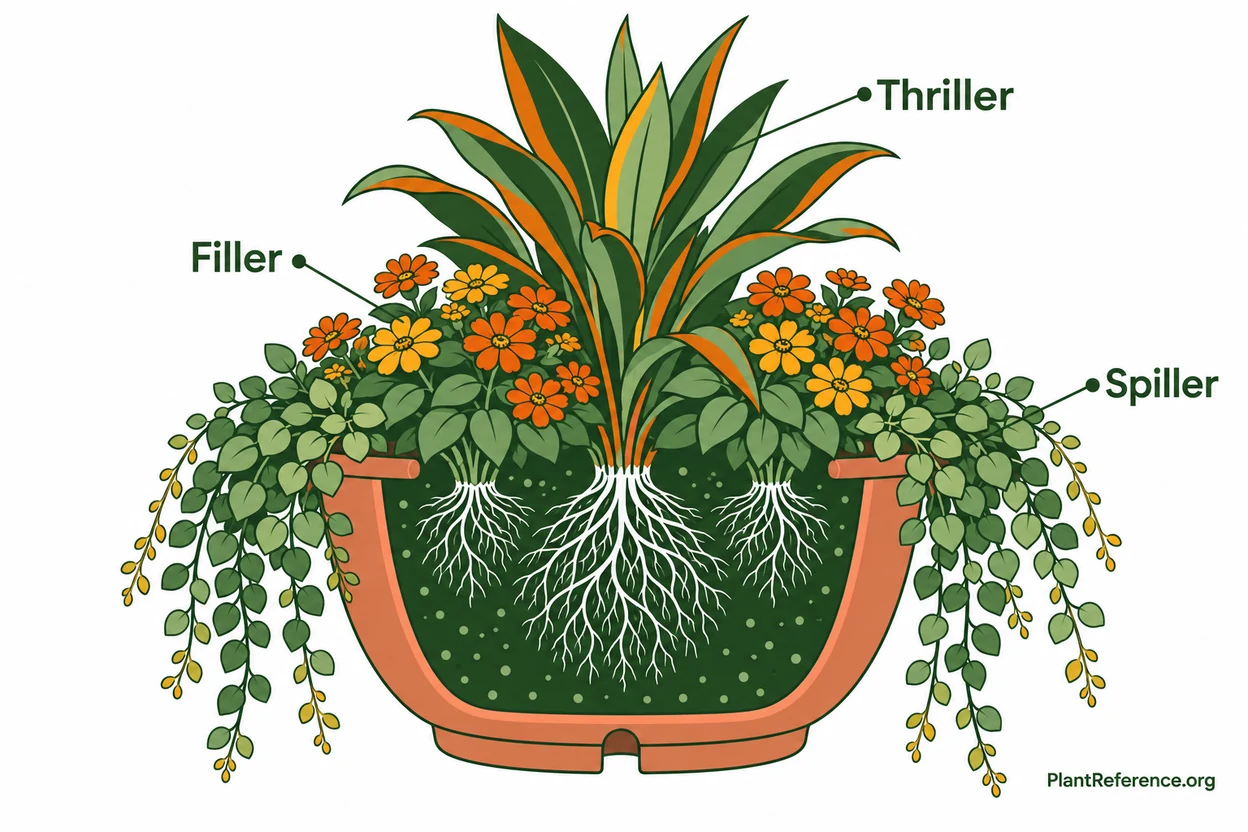
Place the tallest element toward the back when a pot is viewed from one direction, or near the center when it is viewed from all sides. Mounding flowers can fill the middle, with a restrained trailing plant at the rim. Leave walking space after the plants reach their mature width, not just when the pot is newly planted.
A single species repeated in a generous pot is a complete design. You do not need three growth habits in every container. One well-grown geranium or a mass of compact petunias often looks clearer than several species competing in a small root volume.
Hanging baskets: choose manageable vigor
Trailing petunias and calibrachoa are useful basket choices for appropriate sunny sites. Begonia types suited to hanging containers offer another direction where the exposure fits. Choose the plant first by conditions, then by how far you want the stems to trail.
Make sure you can check the mix and water safely without stretching from an unstable position. Check that the hook, bracket, and supporting structure are suitable for the fully watered container, not just its dry nursery weight. If access is awkward, a lower pot is the better design.
Window boxes: repeat a simple pattern
In a window box, repeat one or two compatible plants instead of treating every nursery pot as a new design opportunity. Compact fillers keep the upper outline tidy, while a few trailing stems soften the front edge. Read mature spread carefully because a vigorous spiller can hide the entire box and its quieter companions.
Confirm mounting security, drainage, and where runoff will go before planting. Avoid positioning a box where water damages a wall or falls onto people below. Use the broader exposure principles in Protecting Container Tomatoes on Windy Balconies and Exposed Patios, while keeping flower-specific spacing and feeding separate from tomato recommendations.
Building Compatible Thriller, Filler, and Spiller Combinations
The thriller, filler, and spiller formula describes shape. The thriller supplies height, fillers build the middle, and spillers soften the rim. It does not tell you whether those plants can share light, moisture, or root space, so compatibility comes first.
Match care before matching color
Read the labels together before arranging plants in the cart. If one plant wants a sunny position and another needs protected shade, separate them into different pots. Likewise, do not pair an aggressive trailing plant with a compact specimen simply because their flowers look good side by side at nursery size.
Use a restrained palette when learning container design. Repeating a flower color in several pots can tie a porch together without demanding a different combination in every container. The shape vocabulary in Flower Identification Guide: Petals, Shape & Color Explained can help you notice contrasts between small clustered blooms and larger individual flowers.
Three starting layouts
For a sunny porch pot, consider an upright angelonia with compact petunias around it, provided the selected plants have compatible labeled needs and enough space. Keep the outline simple and allow the petunias to widen. If the container is too small for the mature plants, remove a component rather than compressing the layout.
For a sunny hanging basket, a single spreading petunia selection is a useful starting point. It eliminates competition between different growth rates and makes trimming straightforward. A single-plant scheme is especially helpful when you are still learning how quickly the basket dries.
For a shaded pot, use suitable wax begonias as the flowering anchor and a compatible foliage plant for contrast. Alternatively, grow impatiens alone where the exposure and disease considerations fit. These are adaptable layouts, not fixed plant counts; the actual number depends on container volume and mature spread.
Do not confuse instant fullness with long-term balance. You should be able to see some mix between young plants in many newly planted arrangements. Those gaps give stems room to branch and let you reach the root zone with water later.
Selecting Containers and Preparing the Root Zone
The visible flowers depend on the less visible root environment. Choose a container with drainage openings, stable placement, and enough volume for the selected plants. A decorative outer pot can work if the planted inner container drains freely and you empty trapped water.
Preserve usable growing volume
A pot measuring 12 inches (30 cm) across may be appropriate for a modest planting, while a large mixed display needs more root room. Diameter alone is not capacity: a shallow bowl and a deep planter of the same width hold different amounts of mix. Use dimensions to compare options, then check the plants' mature needs.
Do not fill the bottom with gravel as a substitute for drainage. That takes away growing volume without solving the underlying water problem. Gravel in Bottom of Pots for Drainage: Why It Backfires explains why an open drainage route and suitable mix matter more than a hidden stone layer.
Choose a container mix
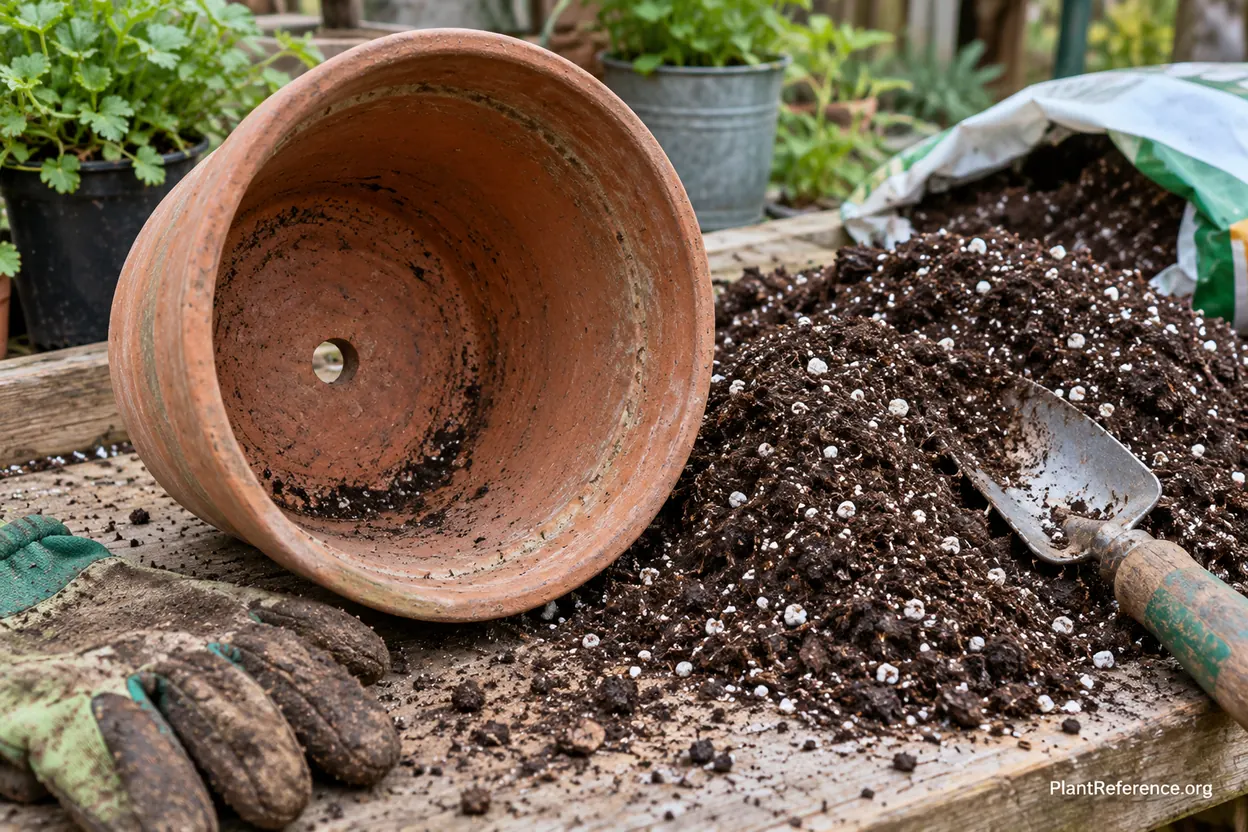
Use potting mix formulated for containers, not a bucket of garden soil. Peat- or coir-based mixes with an aeration component such as perlite provide a supported starting point for annual flowers. Check whether fertilizer is already included before adding more at planting.
The goal is a mix that wets through and drains while still retaining usable moisture. A product labeled moisture-control does not remove the need to check the root zone. Nor does an expensive bag guarantee that an overfilled saucer or blocked drain will stop causing trouble.
For calibrachoa, the research points to a preferred mix pH around 5.5–6.0. If new leaves yellow while their veins remain greener, consider pH and nutrient availability alongside root health. Do not add acidifying products or iron blindly; symptoms alone do not establish the cause or the correct dose.
Planting and Establishing Your Display
Time planting for the actual species and local conditions. Petunias and geraniums go out after frost risk has passed, while tender plants such as zinnias, impatiens, and many begonias need reliably warm conditions. A sunny shopping day is not evidence that the following nights are safe.
Acclimate protected nursery plants or indoor seedlings gradually before giving them the full exposure of an open porch or balcony. Observe them during the transition, especially if the final location is windy. A plant that has only known shelter cannot be assumed ready for a full day in drying sun.
Plant without burying the crown
Moisten dry root balls before handling them. Remove nursery containers gently, support the roots, and position plants at their existing growing depth. Settle mix around them without compacting it into a hard mass, and leave a watering space below the rim.
Water thoroughly after planting and confirm that water exits the drainage openings. Then reassess moisture before watering again. Newly planted containers can stay wet longer than you expect because the roots have not yet occupied all the available mix.
Check final exposure and mature plant spread before deciding how many plants fit.
Inspect nursery plants for healthy foliage and obvious pests before combining them.
Keep labels until you know the identity and care needs of every component.
Water the whole root zone, not only the soil directly beside one stem.
Keep the container accessible for trimming and future moisture checks.
Avoid crowding away your access
Leave a practical route for a watering spout to reach the mix. Once flowers cover the surface, it becomes tempting to sprinkle the top of the canopy instead. Planning an access point at planting makes thorough watering easier and reduces unnecessary wetting of flowers.
If a single plant begins to dominate, address it while the others still have room to recover. Trim healthy overextended growth where appropriate or move that plant into a separate container. Treat the planting as a changing composition, not a sealed arrangement that cannot be edited.
Watering, Feeding, and Maintaining Summer Flowers
Flower containers change quickly as foliage fills the pot. More growth, wind, and hot weather can increase watering demand, while cool cloudy weather can reduce it. Check frequently and respond to the mix rather than using an unchanged schedule all season.
Water with an observation, not an assumption
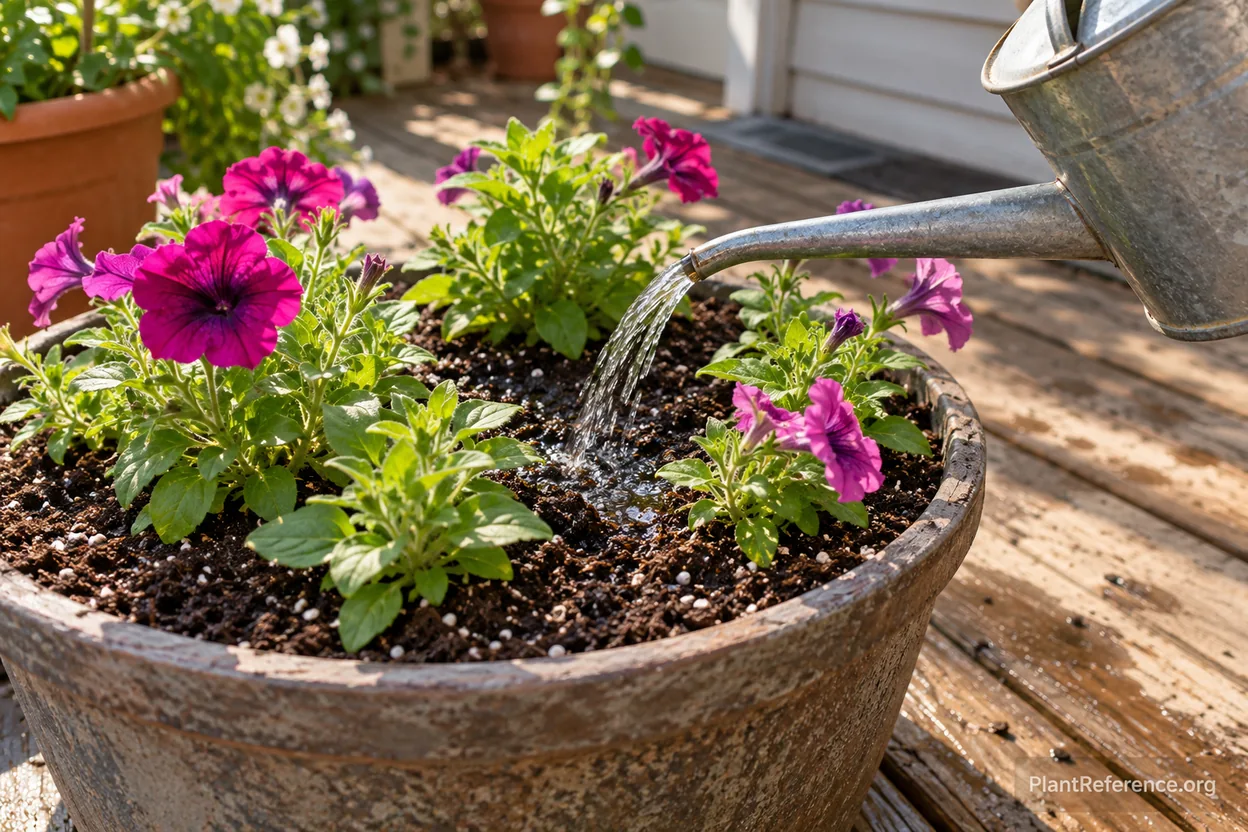
Feel below the surface and lift smaller containers when practical to learn their weight. A dry-looking surface does not prove the whole root ball is dry, and wilting does not always mean thirst. If the mix is already wet, investigate drainage and root stress before adding more water.
When watering is needed, wet the root zone thoroughly and let excess drain. If water runs straight through a very dry container, check whether the mix has actually rewetted rather than assuming runoff means success. Container Plants Drying Out Fast? 7 Ways to Slow It Down offers further ways to review container size, exposure, and moisture retention.
Keep feeding consistent and label-based
Annual flowers in containers need access to nutrients through a finite volume of mix. An appropriate slow-release fertilizer or a water-soluble feeding program can work, but use the product's instructions for container flowers. Account for fertilizer already in the mix instead of stacking products whenever flowering slows.
Plants stressed by heat or damaged roots do not need a stronger dose as a first response. Review moisture and exposure first. If deposits develop on the mix, White Crust on Potting Soil: Causes and How to Flush It can help you examine fertilizer and irrigation inputs together.
Match grooming to the plant
Geraniums and zinnias benefit from regular removal of spent flowers. Calibrachoa, wax begonias, impatiens, and self-cleaning petunia selections need less routine deadheading. Reduced deadheading does not mean a plant never needs shaping or damaged growth removed.
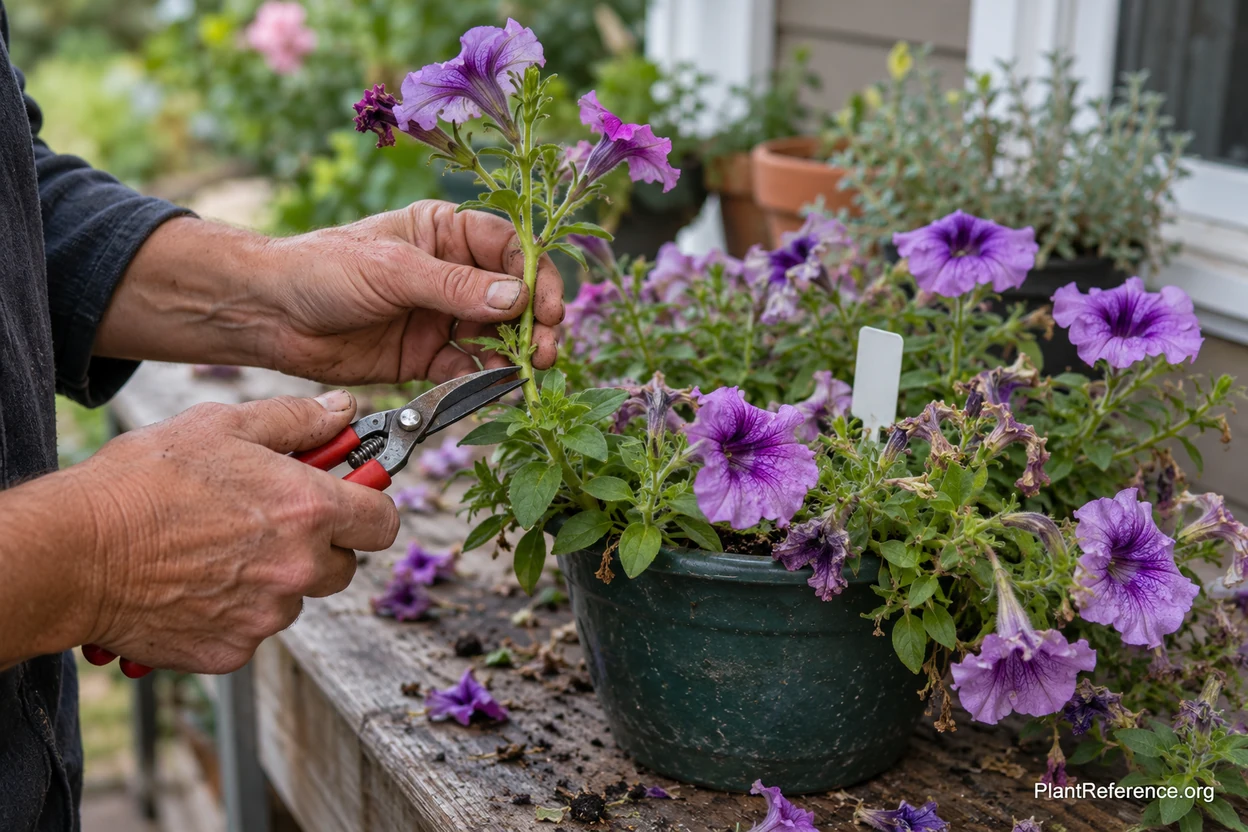
Healthy petunias that become long and sparse can be shortened by about one-third, leaving healthy leafy growth below the cuts. Maintain suitable moisture and feeding afterward, and allow time for regrowth. Do not perform a hard rescue cut on a plant that is already collapsing from an unresolved root problem.
Troubleshooting and Refreshing Tired Containers
When a display fades, identify whether the problem affects one component or the whole container. One struggling species may be losing a competition for space or receiving unsuitable light. Several plants declining together suggest a shared root-zone, watering, or exposure issue.
Heat and repeated wilting
Petunias can slow flowering during weather around or above 90°F (32°C), though selections and sites respond differently. Keep checking moisture and avoid forcing growth with extra fertilizer during stress. Container Plants Wilting in Heat: Cool the Root Zone is useful when hot containers, rather than dry mix alone, are part of the problem.
If your hottest position repeatedly exhausts a planting, change the design next season. Use a larger suitable container, a more heat-tolerant plant, or a position that protects the root zone without depriving the foliage of needed light. The best annual flowers for containers are not the same for every porch.
Wind, crowding, and poor bloom
A sheltered-looking wall can still channel wind through a basket. Check for drying patterns and physical damage before deciding the plant needs more food. Repositioning a container or simplifying a top-heavy planting can be more useful than replacing every plant.
For a dense green display with few flowers, reassess sunlight and feeding. For bare centers and flowers only at stem tips, consider appropriate trimming of healthy growth. A diagnosis based on the plant's structure is more useful than treating every weak display as a nutrient deficiency.
Refresh deliberately
Remove failed plants promptly and inspect the surrounding roots and mix before putting replacements into the same conditions. If only one plant has outgrown its neighbors, separate it rather than discarding the whole arrangement. Keep the labels and note which selections remained manageable.
If you want a permanent shrub as the anchor instead of replacing every component annually, Hydrangeas in Pots: Container Care & Winter Protection explains how that changes the care commitment. Keep such long-term containers separate from small, densely planted seasonal baskets unless you have planned for the different root and seasonal needs.
At season's end, record three things: the actual sunlight, how often the pot needed attention in hot weather, and which plants crowded their neighbors. Those notes turn next year's nursery visit into an informed selection. Start with a manageable combination, keep the roots healthy, and let the flowers fill their space over time.
Frequently Asked Questions

Reading about plants and recognising them are different skills. These three build the second.
- Daily PlantIdentify the day’s mystery plant from a close-up photograph.
- Keyed OutWork a dichotomous key, lead by lead, to name a hidden specimen.
- Name That PlantName a specimen from botanical clues dealt hardest first.
Free to play, no account needed
Tagged with
Claire runs a small cut flower farm on two acres outside Asheville, North Carolina, where she grows annual flowers for farmers market bouquets and a subscription CSA. She studied art in college and fell into flower farming after volunteering at a community garden during graduate school. What started as a few rows of zinnias and cosmos turned into a full-time business within three years. Claire grows over 40 annual flower varieties from seed each season, managing succession plantings from February through October. She teaches seed-starting workshops at the local cooperative extension office and mentors new flower farmers through their first seasons. Claire writes from direct growing experience — she has started tens of thousands of seeds, trialed hundreds of varieties, and made every mistake in the annual flower book at least once. Her advice is specific, seasonal, and grounded in what actually works in the field, not what looks good in a catalog photo.