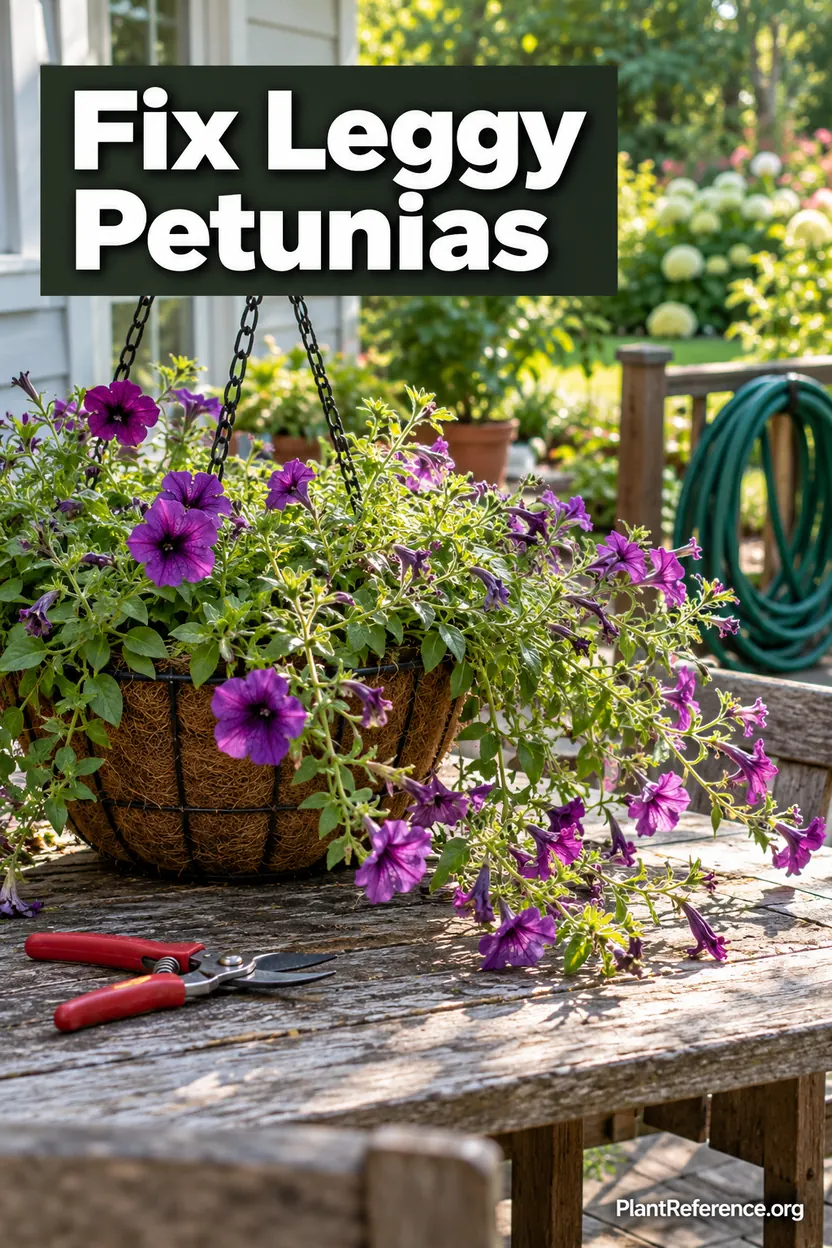
Leggy Petunias: How to Fix Them Mid-Season
— Image © PlantReference.org 2026
Leggy petunias can look finished while their roots and stems still have plenty of season left. The useful question is not how many flowers remain, but whether healthy leaves and branching points remain below them. A measured trim can rebuild the shape once light, water, and temperature are working in the plant's favor.
Diagnose Leggy Petunias Before Cutting
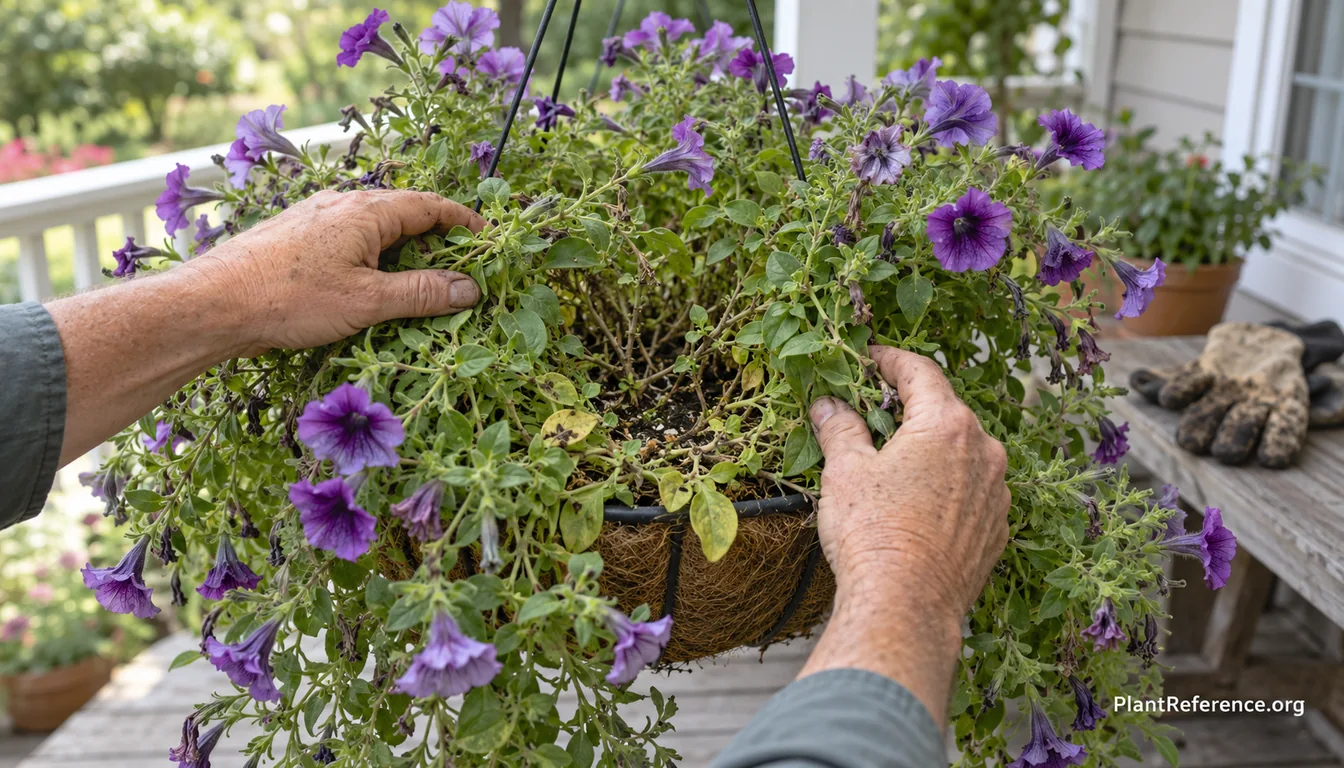
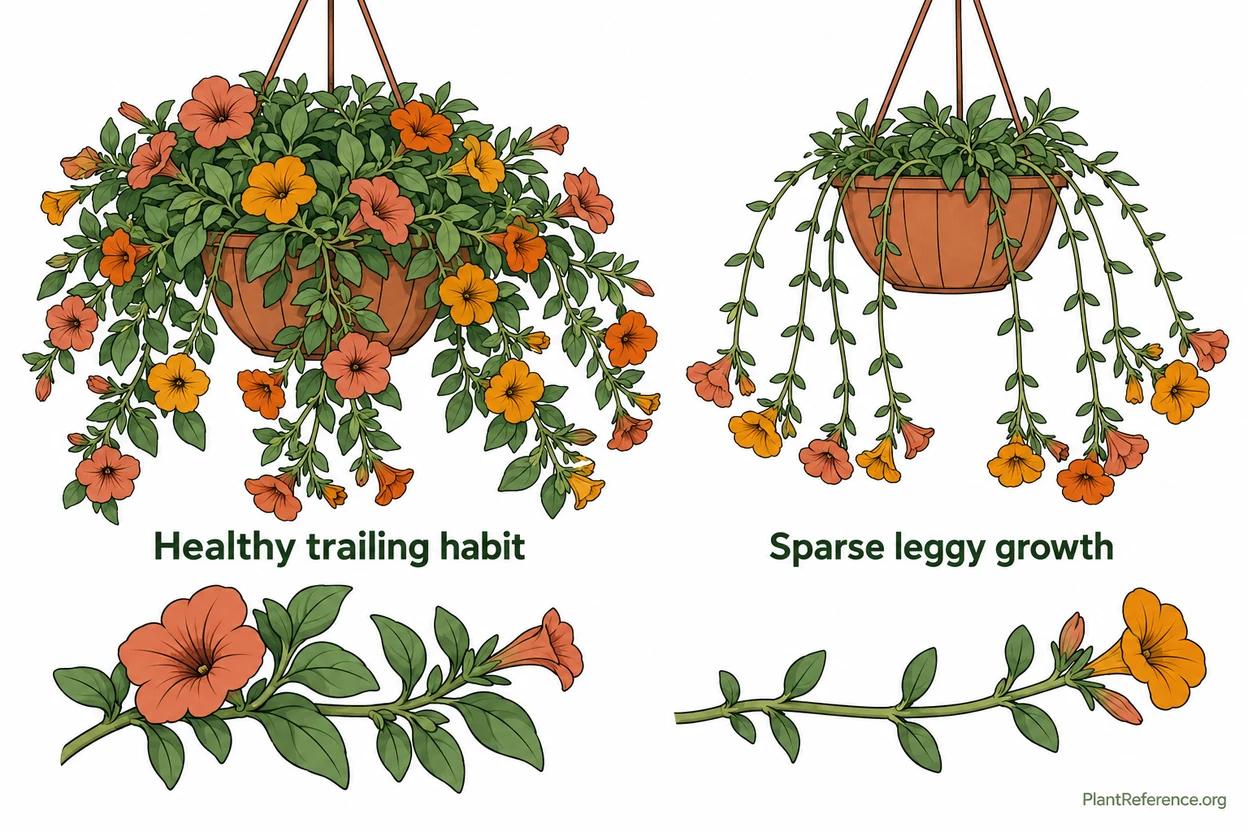
Garden petunias Petunia x hybrida (peh-TOON-yuh hy-BRID-uh) naturally lengthen as they grow. Spreading types should trail; length alone is not failure. Look for a hollow center, long stretches between leaves, and flowers concentrated at the very ends instead of throughout a leafy canopy.
Compare several stems, not just the longest one. A basket with dense foliage and even flowering may simply be doing its job as a spiller. A basket with bare runners and a handful of blooms needs a different response.
Check the whole planting before reaching for snips. The pot-and-water basics in Container Gardening: Pots, Soil, Water & Yields help separate a shape problem from a root-zone problem. If the plant label is missing, Flower Identification Guide: Petals, Shape & Color Explained can help you check flower structure before applying petunia-specific advice.
Correct Light and Root Conditions
Petunias perform best in full sun, usually at least six hours of direct light. Watch the actual basket through the day: an overhanging roof or a tree that leafed out after planting can turn a sunny spring position into summer shade. Pruning will not correct that continuing shortage.
Move a shaded pot toward stronger light gradually, especially during hot weather. For a basket already in strong sun, check moisture instead of assuming it needs still more exposure. A wilted plant in wet mix needs a drainage assessment, not an automatic drink.
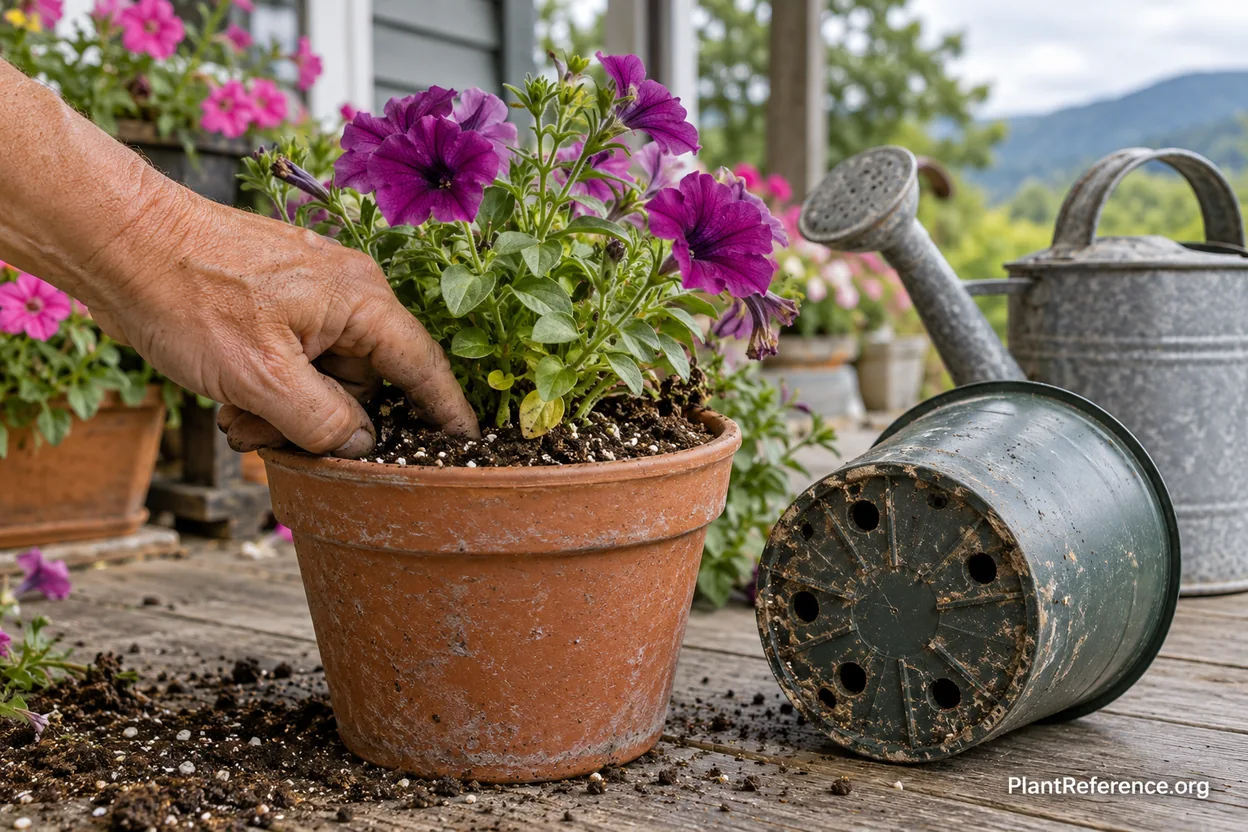
Check below the surface with a finger and lift the pot if practical. When the root ball is dry, water thoroughly and let excess escape; when it remains wet, wait and check that drainage holes are open. Container Plants Drying Out Fast? 7 Ways to Slow It Down explains why a small, crowded basket can become difficult to manage.
Do not add a gravel layer as a rescue measure. Gravel in Bottom of Pots for Drainage: Why It Backfires explains the problem with that shortcut. In a garden bed, persistent sogginess calls for better site preparation; start with How to Improve Clay Soil Without Making It Worse rather than digging around established roots during a heat spell.
How to Fix Leggy Petunias With a Cutback
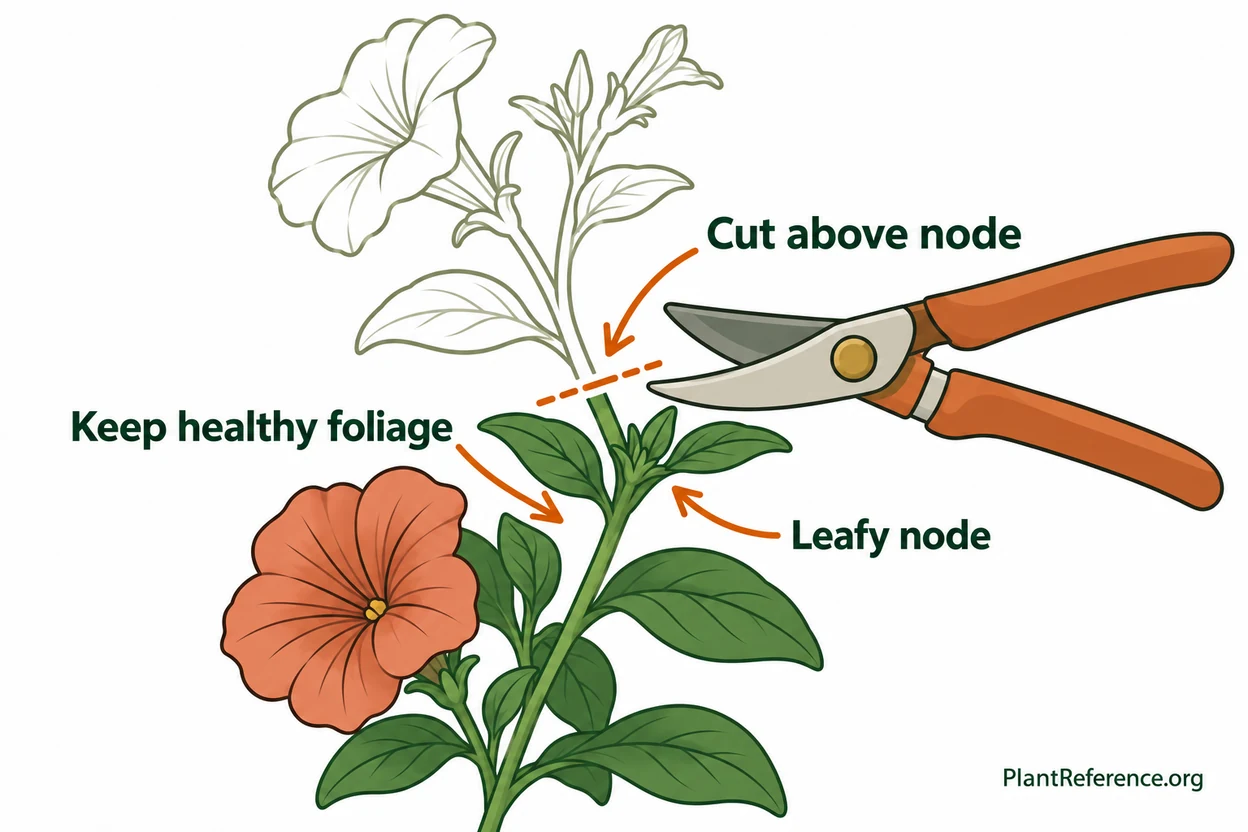
Choose a mild morning when the plant is hydrated, not hanging limp from heat. Clean the blades, spread the stems with your free hand, and locate a leafy node: the point where a leaf joins the stem. Keep that node on the plant and place the cut just above it.
Start by shortening healthy stems by roughly one-third. A stronger reduction, up to one-half, can suit vigorous plants with enough foliage remaining below the cuts, but it is not the default for a weak basket. Never interpret the fraction as permission to leave only bare stumps.
Work through the basket deliberately:
Remove dead or broken stems and inspect the remaining growth.
Follow one long runner back to a healthy leafy node.
Make a clean cut above that node without tearing the stem.
Repeat around the basket, keeping a balanced outline and living foliage.
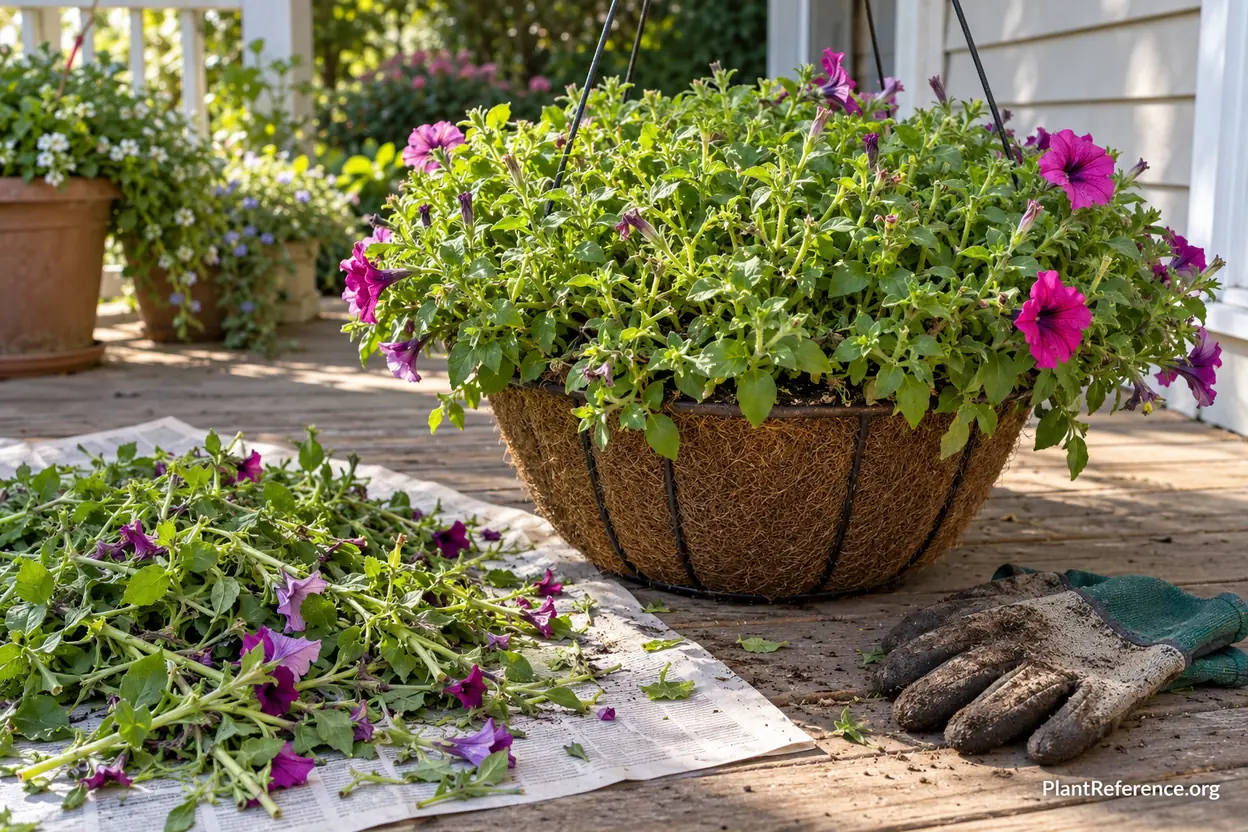
Collect clippings so they do not hide the soil surface.
You will remove some open flowers. That is the tradeoff: this petunia mid-season cutback prioritizes branching over today's display. Removing faded petals alone tidies the basket but does not shorten the bare framework. If uninterrupted color matters, trim separate pots at different times instead of cutting every display on the same morning.
Support Regrowth Without Overfeeding
After pruning, return to checking the mix rather than watering by habit. A smaller canopy may use less water. Keep the root ball evenly supplied without leaving it saturated, and do not repeatedly soak a pot simply because the flowers are temporarily absent.
Review what fertilizer the basket already contains before adding more. Excess nitrogen can encourage leafy, stretched growth, while underfed container plants can struggle to rebuild. Follow the label for an appropriate flowering-container fertilizer; do not combine a full slow-release dose with frequent liquid feeding unless the directions support that program.
A white crust is a reason to investigate salts, not increase feeding. See White Crust on Potting Soil: Causes and How to Flush It. For garden beds, DIY Organic Fertilizer Blends: A Soil-Test-First Guide explains why extra nutrients should follow evidence rather than a disappointing flower count.
Heat also changes the timetable. Flowering can stall during temperatures above about 90°F (32°C), even with adequate moisture. Postpone a major cutback until severe heat eases and use Container Plants Wilting in Heat: Cool the Root Zone to assess the container's exposure. Fertilizer cannot force a heat-stressed plant back into bloom.
Keep the Next Flush Compact
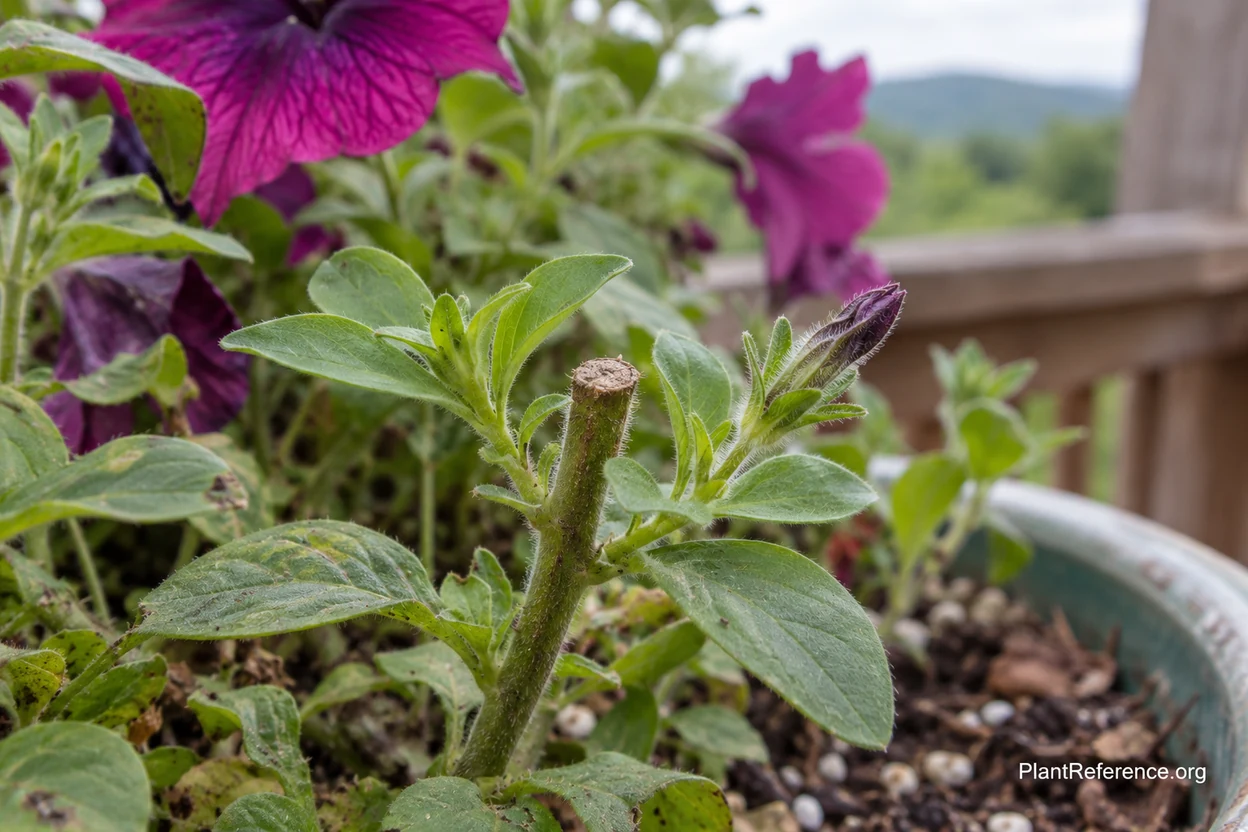
Look for fresh leaves and side shoots over the next two to three weeks. Treat that as an inspection window, not a guaranteed bloom deadline. If the plant keeps declining, return to moisture, roots, and light rather than cutting it harder or doubling the feed.
For the next planting, choose compact, well-branched starts. Young petunias with three to five sets of true leaves can benefit from tip pinching, while already branched plants may need little shaping. Light maintenance before runners become bare is easier than a large midsummer rescue.
Deadhead older large-flowered and multiflora types when spent blooms remain, removing the flower base rather than petals alone. Self-cleaning types need less of that work, but they can still need shaping. Keep the distinction clear: deadheading removes spent flowers; pruning changes the plant's structure.
Frequently Asked Questions

Reading about plants and recognising them are different skills. These three build the second.
- Daily PlantIdentify the day’s mystery plant from a close-up photograph.
- Keyed OutWork a dichotomous key, lead by lead, to name a hidden specimen.
- Name That PlantName a specimen from botanical clues dealt hardest first.
Free to play, no account needed
Tagged with
Claire runs a small cut flower farm on two acres outside Asheville, North Carolina, where she grows annual flowers for farmers market bouquets and a subscription CSA. She studied art in college and fell into flower farming after volunteering at a community garden during graduate school. What started as a few rows of zinnias and cosmos turned into a full-time business within three years. Claire grows over 40 annual flower varieties from seed each season, managing succession plantings from February through October. She teaches seed-starting workshops at the local cooperative extension office and mentors new flower farmers through their first seasons. Claire writes from direct growing experience — she has started tens of thousands of seeds, trialed hundreds of varieties, and made every mistake in the annual flower book at least once. Her advice is specific, seasonal, and grounded in what actually works in the field, not what looks good in a catalog photo.