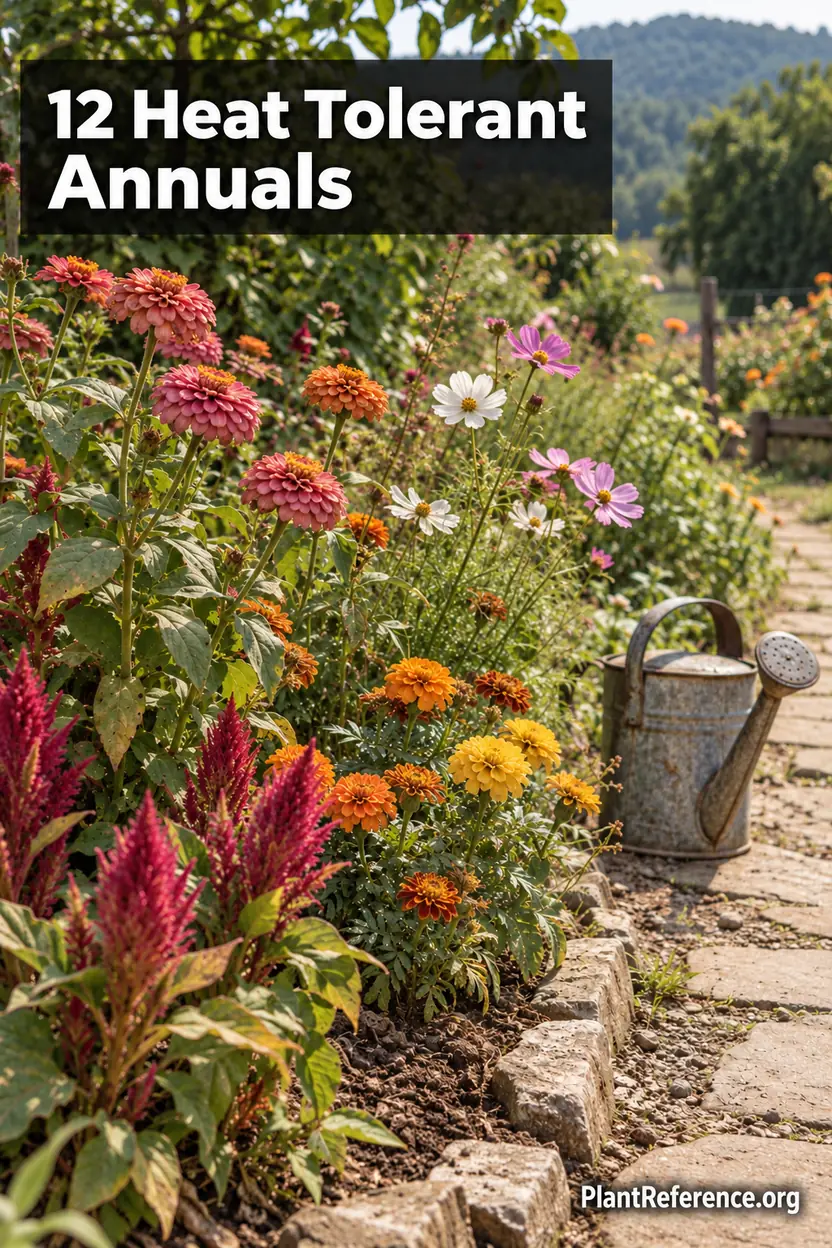
Heat Tolerant Annuals: 12 Choices for Sunny Gardens
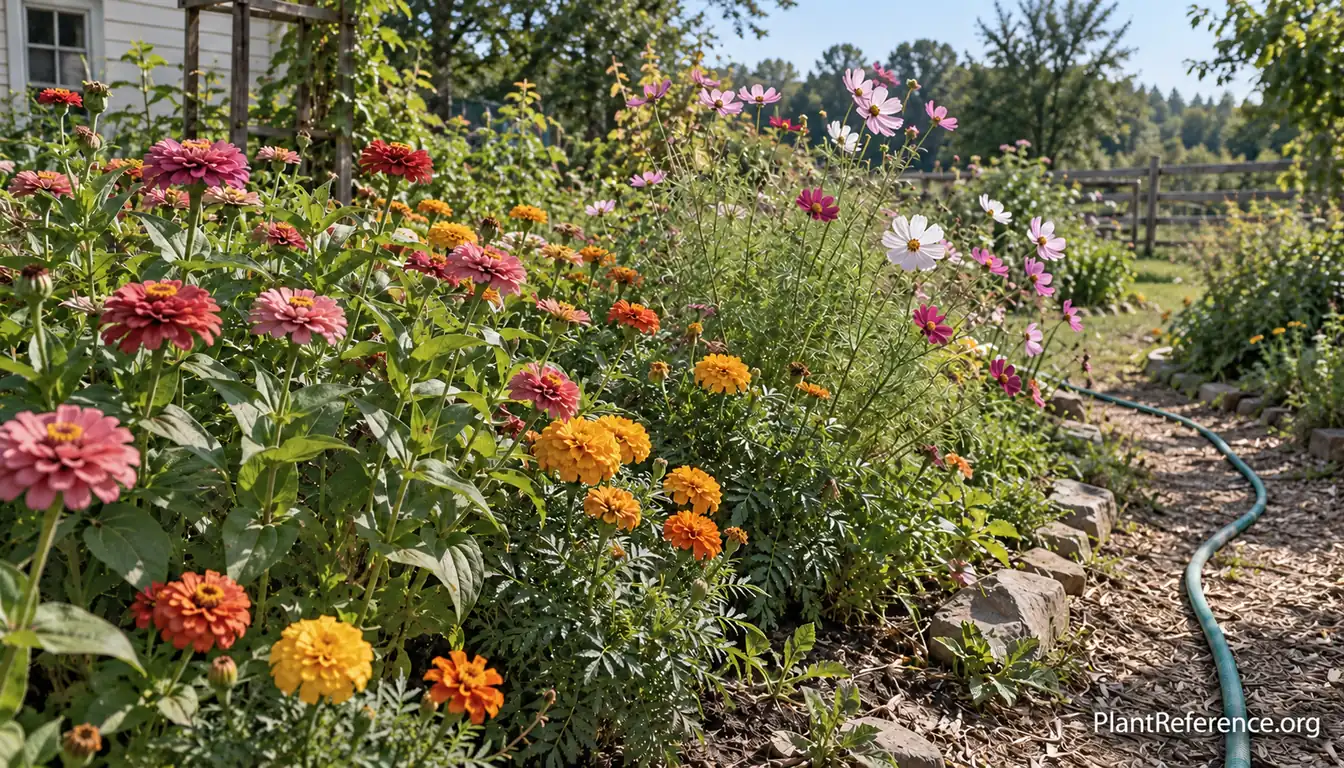
— Image © PlantReference.org 2026
Pets & Toxicity
Recorded toxicity for plants linked in this guide. An unknown status is not a safety assessment.
Toxic to pets: vinca / periwinkleDetailsHide
Catharanthus roseus — Toxicity Warning
Toxic to pets and humansView Catharanthus roseus plant profileHeat tolerant annuals can keep a sunny garden colorful when cool-season flowers begin to struggle. But heat tolerance is not a promise that a plant will flower endlessly in any pot, soil, or watering routine. Choose the right growth habit first, then give the roots a fair chance to support it.
What Heat Tolerant Annuals Can Handle
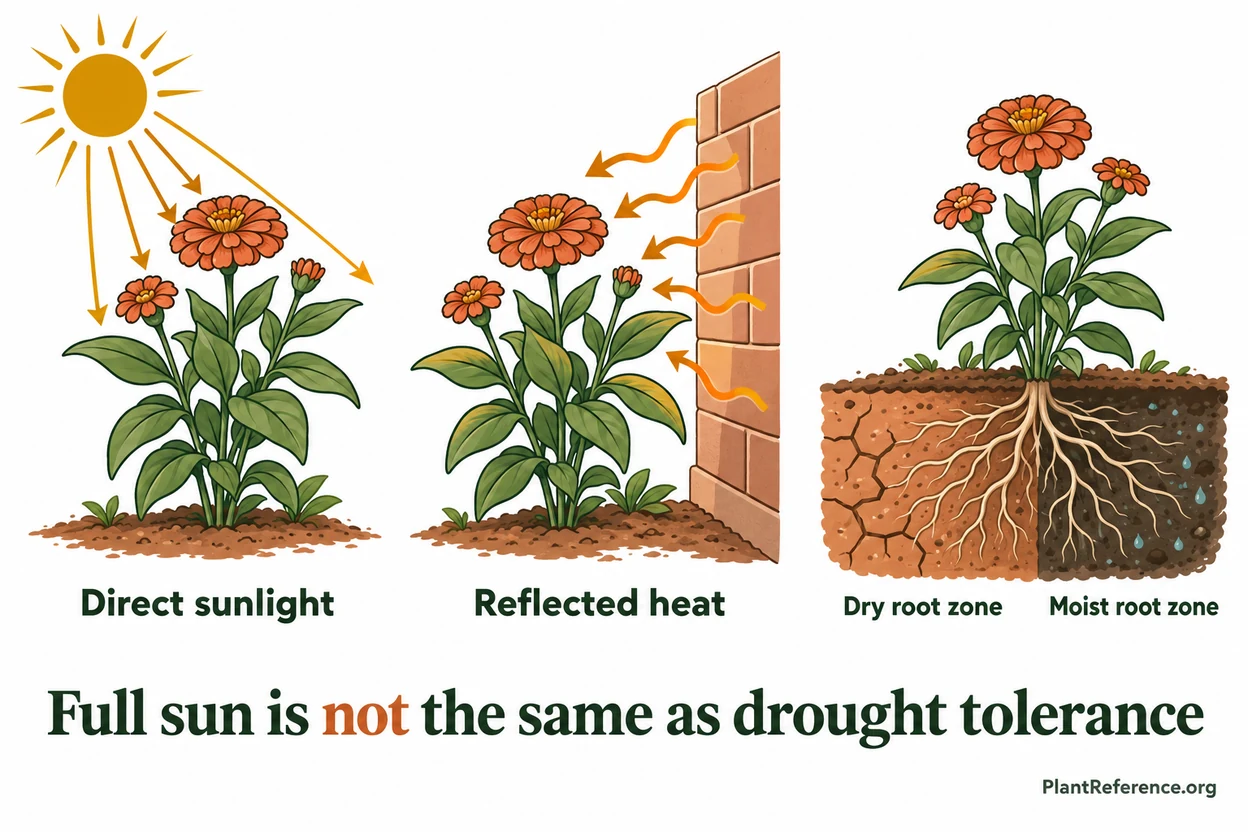
Full sun describes light exposure; heat tolerance describes how a plant handles warm conditions. A sunny spring bed and a paved courtyard in midsummer are different environments. Nearby walls, wind, humidity, and root-zone temperature all influence the result.
Drought tolerance is another separate question. A plant that performs well in heat may still need regular water, especially before its roots establish or when grown in a container. Do not let the label “tough” become a reason to ignore a dry root ball.
Petunias illustrate the distinction. They like sun, yet flowering can slow during temperatures above about 90°F (32°C). A temporary pause does not always mean a nutrient shortage, and stronger feeding cannot reliably force a stressed plant back into bloom.
Begin with Container Plants Wilting in Heat: Cool the Root Zone if the problem is an exposed pot. For the wider foundation, Container Gardening: Pots, Soil, Water & Yields helps match the planting to its root space rather than choosing flowers independently of the container.
Seed-Friendly Flowers for Sunny Beds
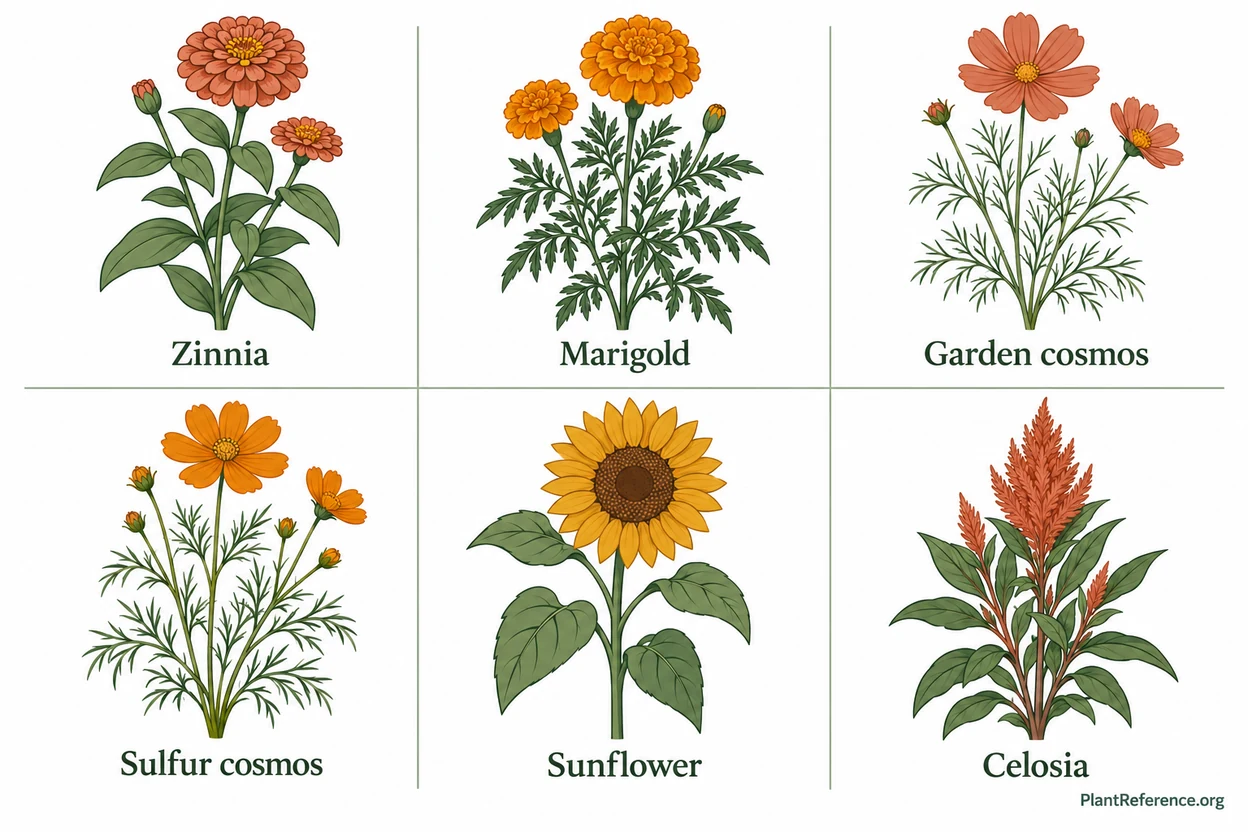
1. Zinnias. Zinnias 🌿Zinnia elegans (ZIN-ee-uh EL-eh-ganz) are a useful choice for warm beds and cutting patches. Direct sow after frost or start indoors four to six weeks ahead. Give them sun and airflow rather than crowding plants together for immediate color.
2. Marigolds. Marigolds Tagetes spp. (tuh-JEE-teez) offer compact French types and taller, large-flowered African types. Match mature size to the space and remove spent heads on types that benefit from deadheading. One spacing rule will not suit every marigold.
3. Garden cosmos. Garden cosmos 🌿Cosmos bipinnatus (KOZ-mos bye-pin-NAY-tus) contributes airy foliage and a loose flower canopy. Direct sowing is a straightforward option, and relatively lean soil can be enough. Excess feeding is not a shortcut to a better display.
4. Sulfur cosmos. Sulfur cosmos 🌿Cosmos sulphureus (KOZ-mos sul-FYOOR-ee-us) provides another warm-season cosmos option. Check the packet for mature height and flower color before using it in a border. Keep the two cosmos choices distinct when planning a palette rather than assuming all packets produce the same plant.
5. Sunflowers. Sunflowers 🌿Helianthus annuus (hee-lee-AN-thus AN-yoo-us) can supply strong vertical structure. Choose the mature size and branching habit deliberately. Do not pinch a single-stem type when its one main flower is the intended result.
6. Celosia. Celosia Celosia spp. (seh-LO-see-uh) offers plume, cockscomb, and wheat-like forms. It prefers warm conditions and should be handled gently around the roots. Choose transplants without treating root disturbance as a necessary planting step.
For bed preparation, use Soil Health 101: How to Build Living, Productive Garden Soil. If the site stays wet or behaves unpredictably, How to Test Garden Soil: Jar, Ribbon & pH Tests is more useful than simply adding more flower seed.
More Heat Tolerant Annuals for Pots and Borders
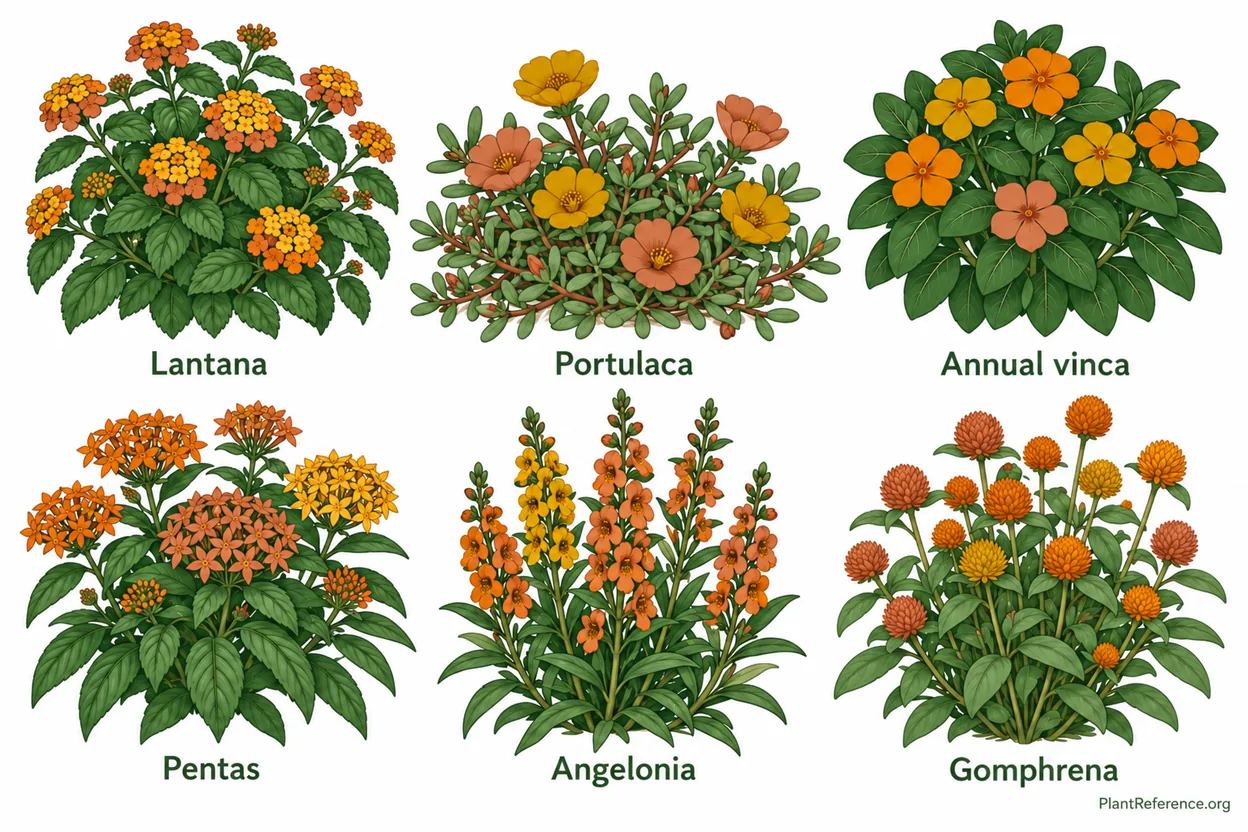
7. Lantana. Lantana Lantana spp. (lan-TAN-uh) can provide warm-season color where it is appropriate to grow. Some forms behave as perennial shrubs in warm climates, so check local suitability and the label rather than treating “annual” as a promise about long-term behavior.
8. Portulaca. Portulaca Portulaca spp. (por-tyoo-LAK-uh) is a low-growing option for a sunny design. Match the selected plant's drainage and watering needs with its neighbors. Do not automatically combine it with moisture-demanding plants just because both tolerate sun.
9. Annual vinca. Annual vinca 🌿Catharanthus roseus (kath-uh-RAN-thus ROH-zee-us) is a warm-season bedding choice. Use the botanical identity to avoid confusing it with other plants sold under the common name vinca. It generally needs little routine deadheading.
10. Pentas. Pentas Pentas spp. (PEN-tas) can provide flowering mass in warm-season beds or containers. Compare the actual selection's mature dimensions with your available space. A compact nursery plant is not a reliable indication of its eventual size.
11. Angelonia. Angelonia Angelonia spp. (an-jel-OH-nee-uh) offers upright structure in a summer planting. It can fill the tall role in a mixed pot when its growing needs match those of the companions. Leave room for the whole canopy, not only the main stem.
12. Gomphrena. Gomphrena Gomphrena spp. (gom-FREE-nuh) adds a different flower shape to a sunny border. Use it to vary form within a restrained color scheme rather than making every plant compete for attention. Check the variety's height before placing it in front of taller flowers.
These are choices, not a requirement to fit twelve plants into one bed. Flower Identification Guide: Petals, Shape & Color Explained helps you compare form when planning the display. Pick a few compatible plants and repeat them for a clearer result.
Match Plants to the Site Before Planting
Warm-season planting begins after frost danger passes and the soil has warmed. A useful checkpoint for tender annuals is soil above about 60°F (16°C), with nights around or above 50°F (10°C). Use local frost history and the forecast rather than a fixed date attached to a hardiness zone.
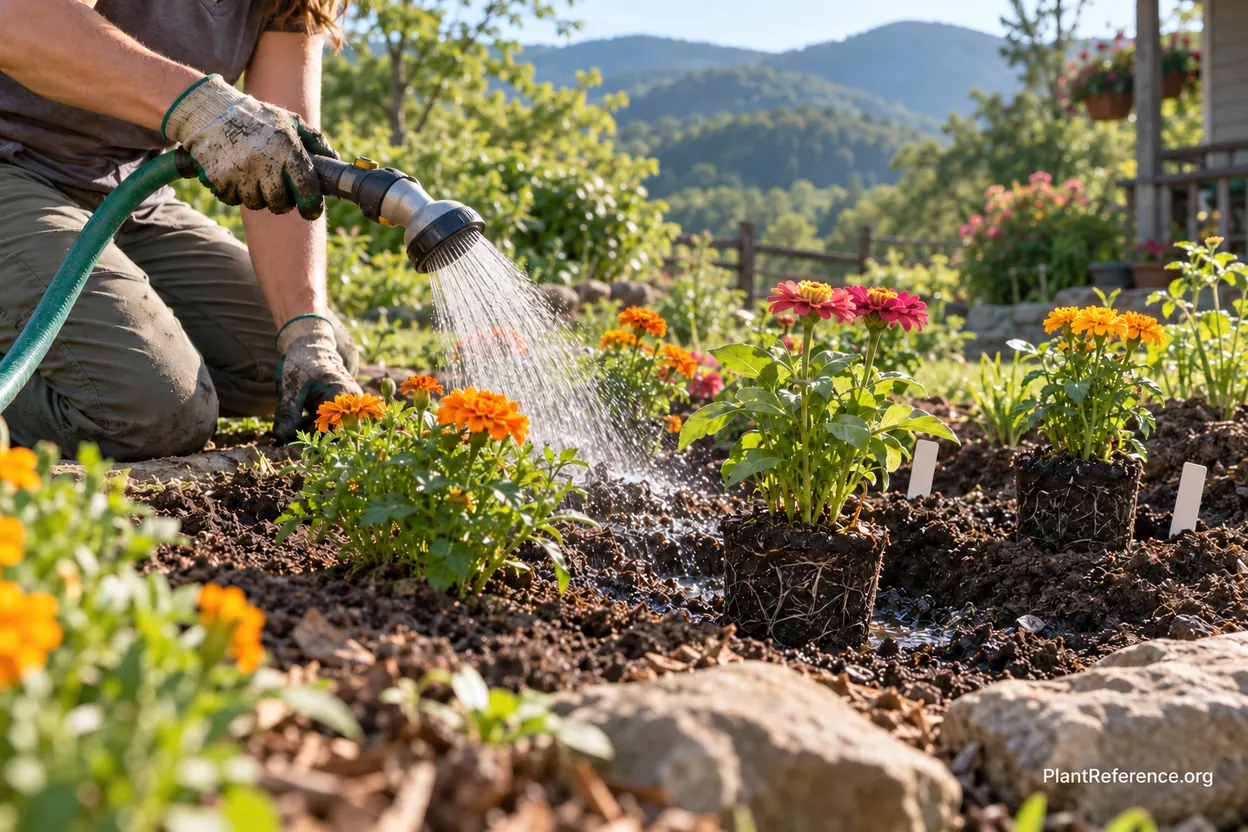
Harden off plants raised in protected conditions, and avoid moving tender growth directly into a full day of intense exposure. Water root balls before they become severely dry, then plant at approximately their original depth. Keep the roots intact where practical, especially with plants sensitive to disturbance.
Read mature widths before placing the plants. Space that looks empty at planting gives foliage room to develop and air a route through the canopy. Tall selections also need a support plan before they lean into neighboring flowers.
For pots, use suitable mix and open drainage holes. Gravel in Bottom of Pots for Drainage: Why It Backfires explains why a stone layer is not a substitute for a functional root zone. An oversized canopy in a small pot can turn a manageable flower into a daily watering problem.
A short selection check prevents many summer disappointments:
Match the plant to actual sun and reflected heat.
Compare moisture needs before mixing species.
Allow for mature width and height.
Plan access for watering and maintenance.
Keep new transplants under observation while roots establish.
Keep Roots Working Through Hot Weather
Check moisture before watering again. A wilted plant in dry mix needs a different response from one wilting in saturated soil. Container Plants Drying Out Fast? 7 Ways to Slow It Down helps investigate repeated dry-outs instead of treating each one as an isolated emergency.
Avoid heavy feeding during a stress episode. The reasoning in DIY Organic Fertilizer Blends: A Soil-Test-First Guide helps separate a nutrition need from an assumption. More fertilizer cannot repair poor drainage or replace water in a dry root ball.
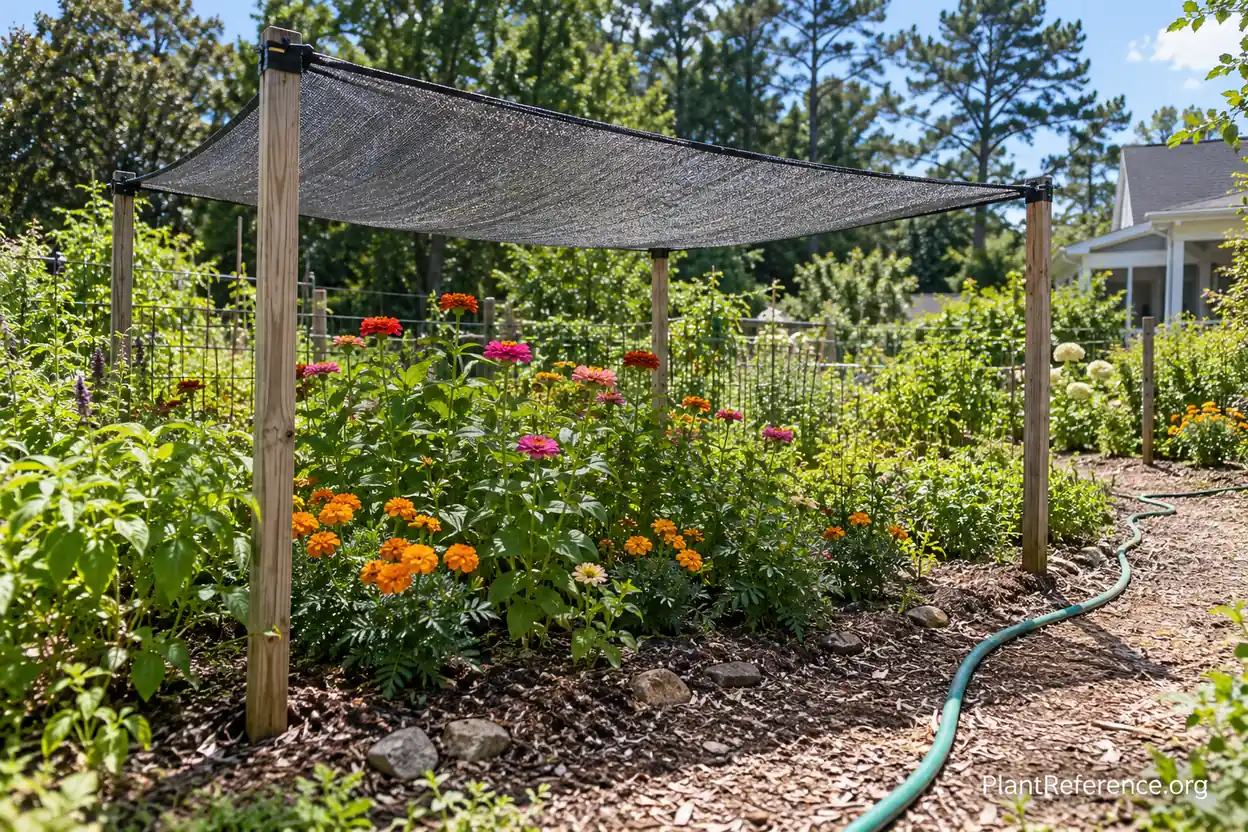
Temporary shade can help with an unusually exposed planting, but it is a management tool rather than a new permanent light requirement for every sun-loving flower. Keep airflow around any cover and reassess once conditions moderate. Do not lay a cover directly on tender flowers.
Remove finished flowers where appropriate, while preserving healthy foliage and new buds. If a plant is severely stressed, postpone major shaping cuts. The best annuals for hot summers still need enough working leaves and roots to continue their display.
Frequently Asked Questions

Reading about plants and recognising them are different skills. These three build the second.
- Daily PlantIdentify the day’s mystery plant from a close-up photograph.
- Keyed OutWork a dichotomous key, lead by lead, to name a hidden specimen.
- Name That PlantName a specimen from botanical clues dealt hardest first.
Free to play, no account needed
Tagged with
Claire runs a small cut flower farm on two acres outside Asheville, North Carolina, where she grows annual flowers for farmers market bouquets and a subscription CSA. She studied art in college and fell into flower farming after volunteering at a community garden during graduate school. What started as a few rows of zinnias and cosmos turned into a full-time business within three years. Claire grows over 40 annual flower varieties from seed each season, managing succession plantings from February through October. She teaches seed-starting workshops at the local cooperative extension office and mentors new flower farmers through their first seasons. Claire writes from direct growing experience — she has started tens of thousands of seeds, trialed hundreds of varieties, and made every mistake in the annual flower book at least once. Her advice is specific, seasonal, and grounded in what actually works in the field, not what looks good in a catalog photo.