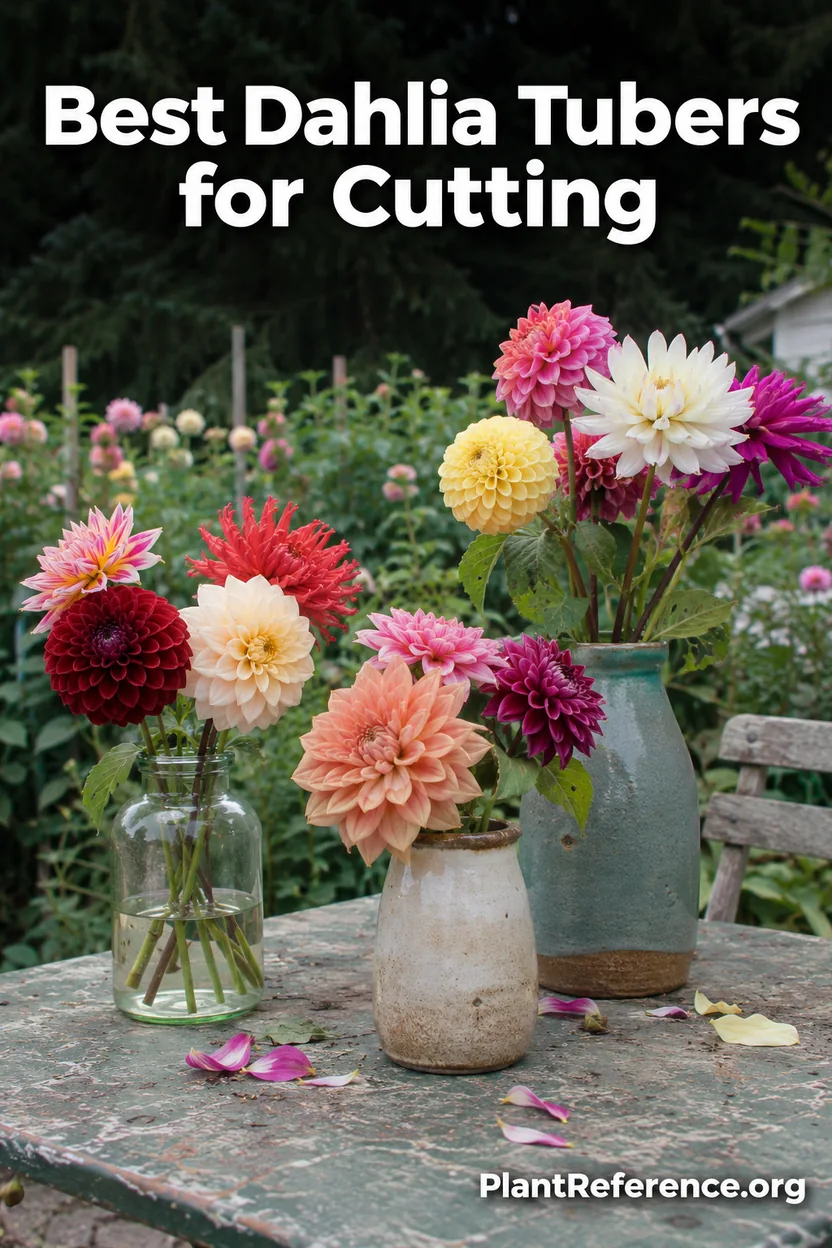
Best Dahlia Tubers for Cut Flower Gardens
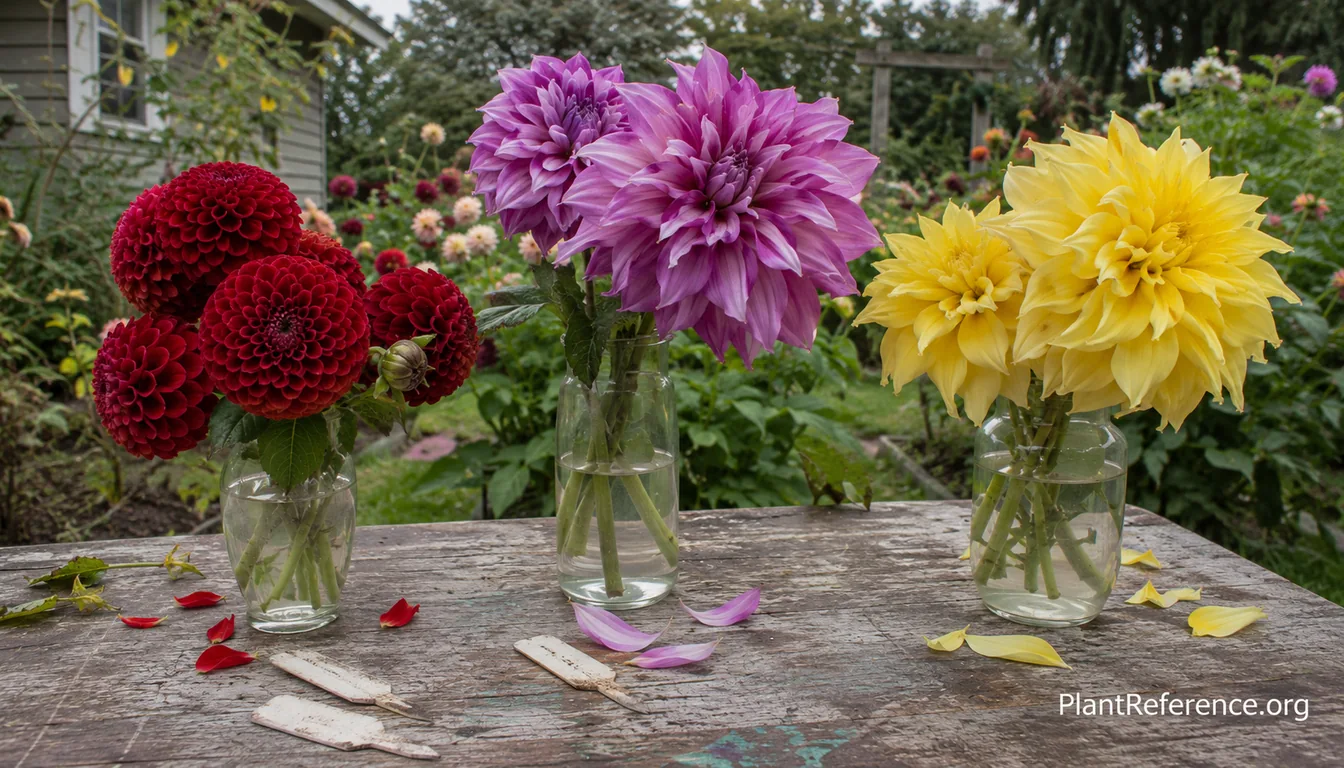
— Image © PlantReference.org 2026
Pets & Toxicity
Recorded toxicity for plants linked in this guide. An unknown status is not a safety assessment.
No linked plant is recorded as toxicDetailsHide
The best dahlia tubers for cut flower gardens are not necessarily the ones with the largest flowers. Choose a mix of shapes you actually want to arrange, then check whether your bed and winter-storage setup can support them. A small, deliberate order is easier to learn from than a collection chosen entirely from photographs.
How to Choose the Best Dahlia Tubers
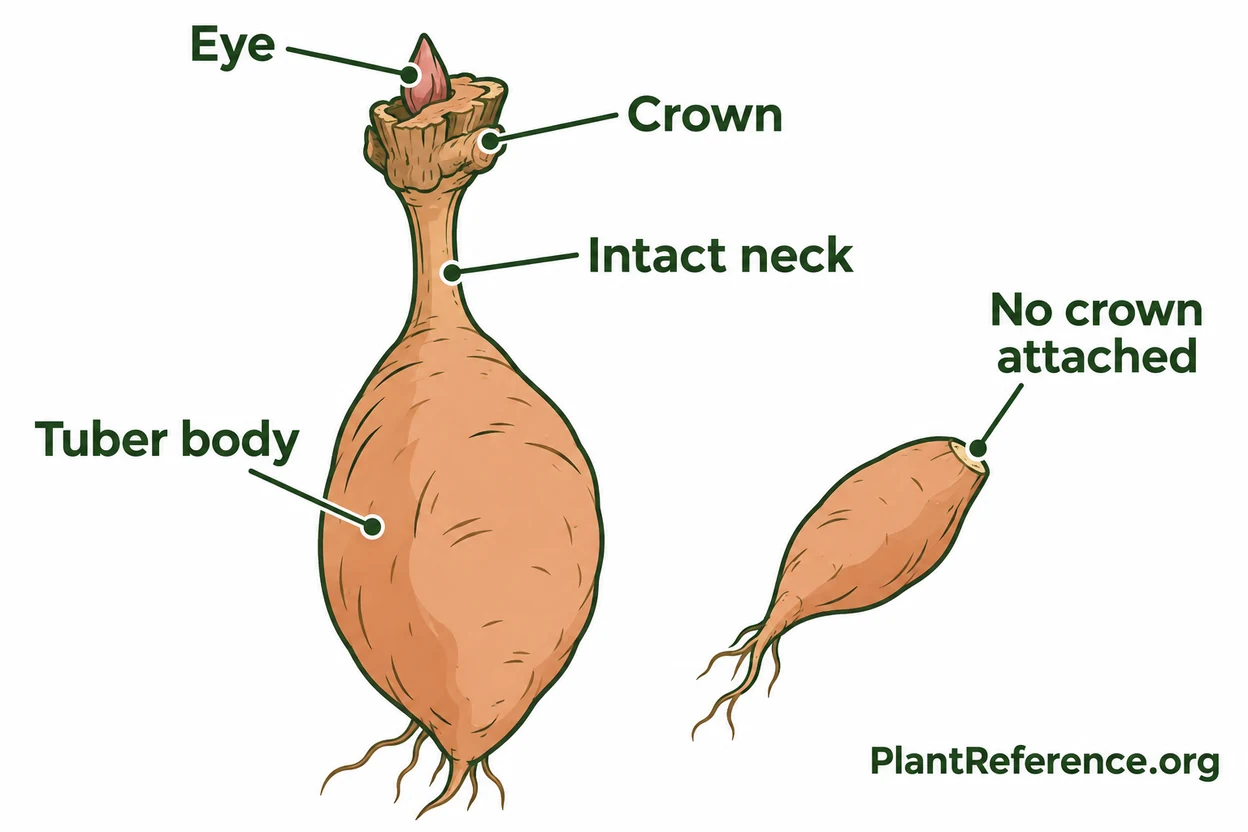
A dahlia tuber is a storage root, not a guarantee of a productive plant. A viable division needs an eye on attached crown tissue, an intact neck, and a sound tuber body. A large detached root without the necessary growing tissue is not a bargain.
Choose named stock when you want a particular flower. Ask the supplier about its labeling and replacement policy, inspect the order on arrival, and keep the names attached through planting and storage. This comparison does not claim current availability, supplier quality, or measured vase life.
For the overall layout, start with Cut Flower Garden for Beginners: Seed to Bouquet. Plan paths and access before filling every gap with another tuber; flowers are much easier to collect when you can reach the plants without stepping into the growing area.
Seven Dahlia Choices by Bouquet Role
This is a use-based shortlist rather than a claim that one cultivar beats every other dahlia in every climate. The research supports the named flower forms and colors below, but it does not supply comparative yield trials. The order favors useful differences in bouquet design.
Choice | Flower character | Best reason to choose it | Tradeoff to consider |
|---|---|---|---|
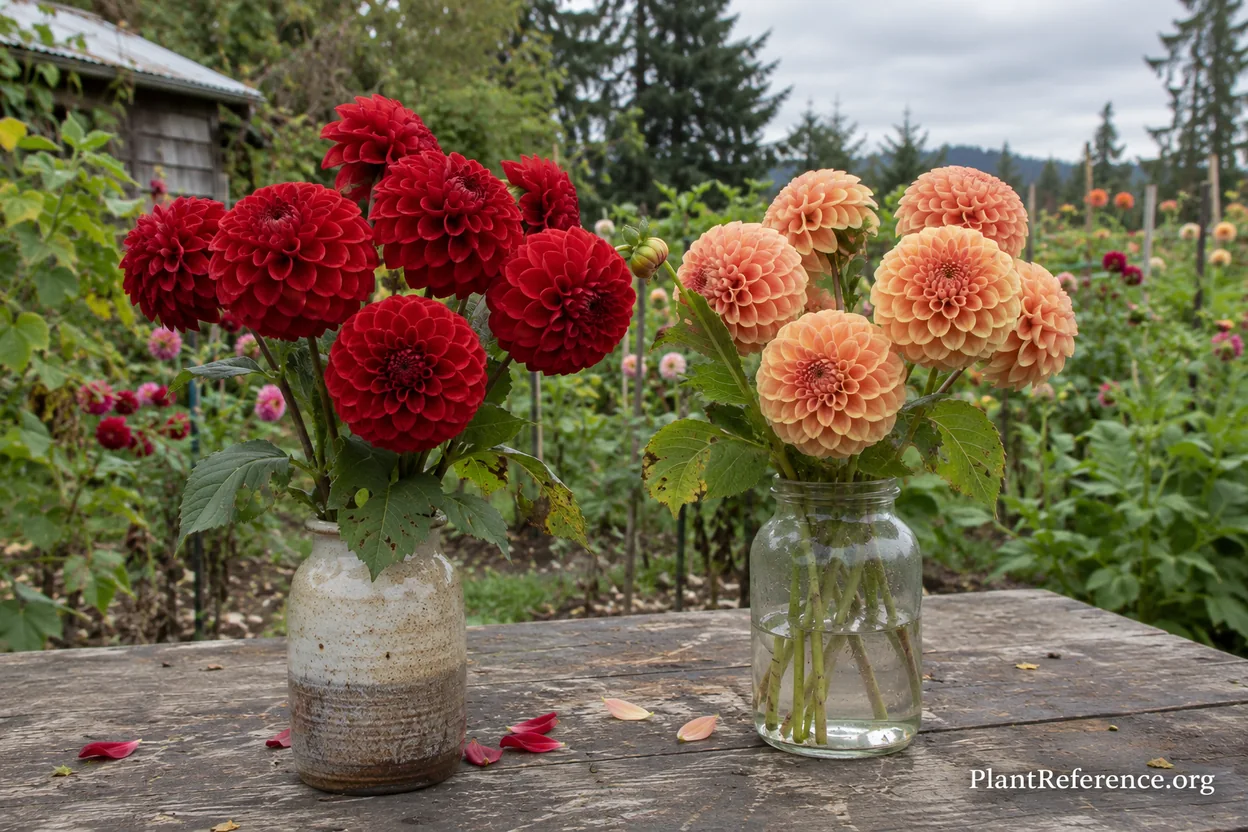
Dahlia 'Cornel' | Red ball flowers | Rounded red accents | Strong color sets the palette |
Dahlia 'Jowey Winnie' | Peach ball flowers | Softer rounded accents | Choose companions around the peach tone |
Large dinner-plate flowers | A prominent focal flower | Large blooms need room in an arrangement | |
Dahlia 'Thomas Edison' | Large purple flowers | Rich focal color | Bold color can dominate a small bouquet |
Dahlia 'Kelvin Floodlight' | Large yellow flowers | Bright focal color | Yellow changes the mood of a mixed palette |
Dahlia 'Rocco' | Pompon flowers | A smaller repeated shape | Not a substitute for a large focal bloom |
Dahlia 'Night Butterfly' | Open-centered collarette flowers | A contrasting form with pollinator interest | A different look from densely filled flowers |
1. A Rounded Red Starting Point
Dahlia 'Cornel' (DAL-yuh) is a ball-form choice named among the research's beginner selections. Its red flowers make it a useful starting point if you want a clear, repeatable color theme rather than a little of everything. Ball forms in the report are approximately 3–4 inches (8–10 cm) across, a manageable scale for many home arrangements.
Choose Dahlia 'Cornel' because you want red, rounded flowers, not because a ranking promises a fixed stem count. Your soil, season, support, and care still influence the result. Pairing it with other flowers starts with a palette decision; Annual Flowers That Bloom All Summer: The Complete Guide offers ideas for the rest of the season.
2. A Softer Ball-Flower Palette
Dahlia 'Jowey Winnie' supplies the peach ball-flower option in this shortlist. It suits a grower who likes the rounded form but wants a softer color direction than the red selection. Comparing these two first is an efficient way to narrow an order.
You do not need both simply because they appear on a list. If you have a small bed and prefer peach bouquets, repeat the peach choice and add a contrasting form elsewhere. Repetition often makes a collection easier to arrange than seven unrelated colors.
Large Dahlias for Focal Flowers
3. A Statement Flower
🌿Dahlia 'Cafe au Lait' is the research's prominent dinner-plate selection and also appears on its beginner list. Choose it when the flower itself is intended to be the visual center of an arrangement. Do not interpret its popularity as proof that it needs less staking, handling, or winter care than other dahlias.
Dinner-plate forms in the report span roughly 8–14 inches (20–36 cm), although individual flowers and growing conditions vary. That scale is part of the appeal, but it also means a single bloom can dominate a modest vase. Plan the arrangement's proportions before filling the whole bed with large-flowered plants.
4. A Purple Focal Choice
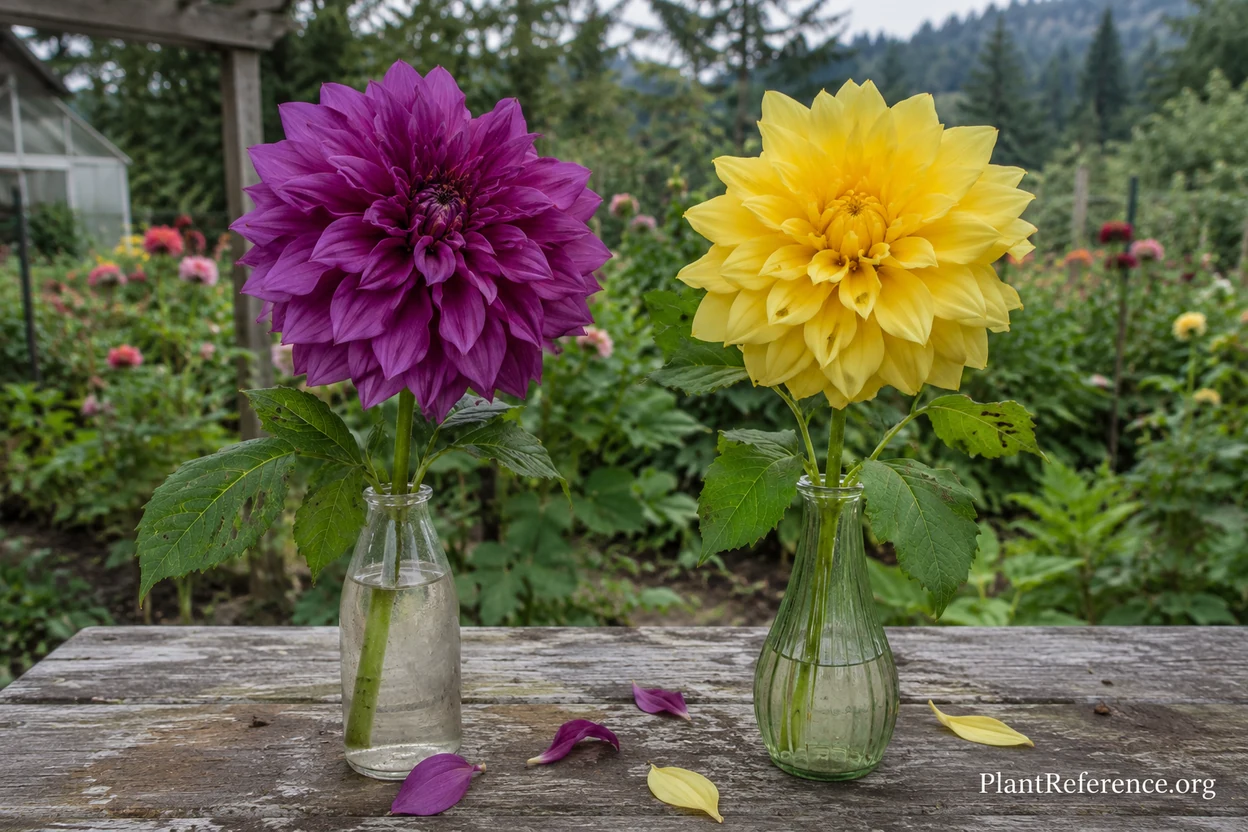
Dahlia 'Thomas Edison' gives the large-flower group a purple option. It is another research-listed beginner selection, useful when a strong purple anchor fits the flowers you already grow. A color you consistently use is more valuable than a fashionable color you struggle to combine.
Choose Dahlia 'Thomas Edison' as a palette decision, not an unsupported promise of longer vase life or better disease resistance. The available research does not establish those comparisons. Leave room in your plans for smaller shapes that keep the large flowers from competing with one another.
5. A Yellow Focal Choice
Dahlia 'Kelvin Floodlight' is the yellow member of this large-flowered group. It makes sense for bright arrangements and gardeners who want an unmistakably warm color. It is less useful if every bouquet you imagine depends on restrained, muted tones.
Consider one large-flowered choice first, with ball or pompon forms as supporting flowers. For companion plants raised from seed, Annual Flowers from Seed: A Month-by-Month Guide helps organize the calendar without assuming they share a dahlia's planting method.
Smaller and Open Forms for Contrast
6. Small Repeated Flowers
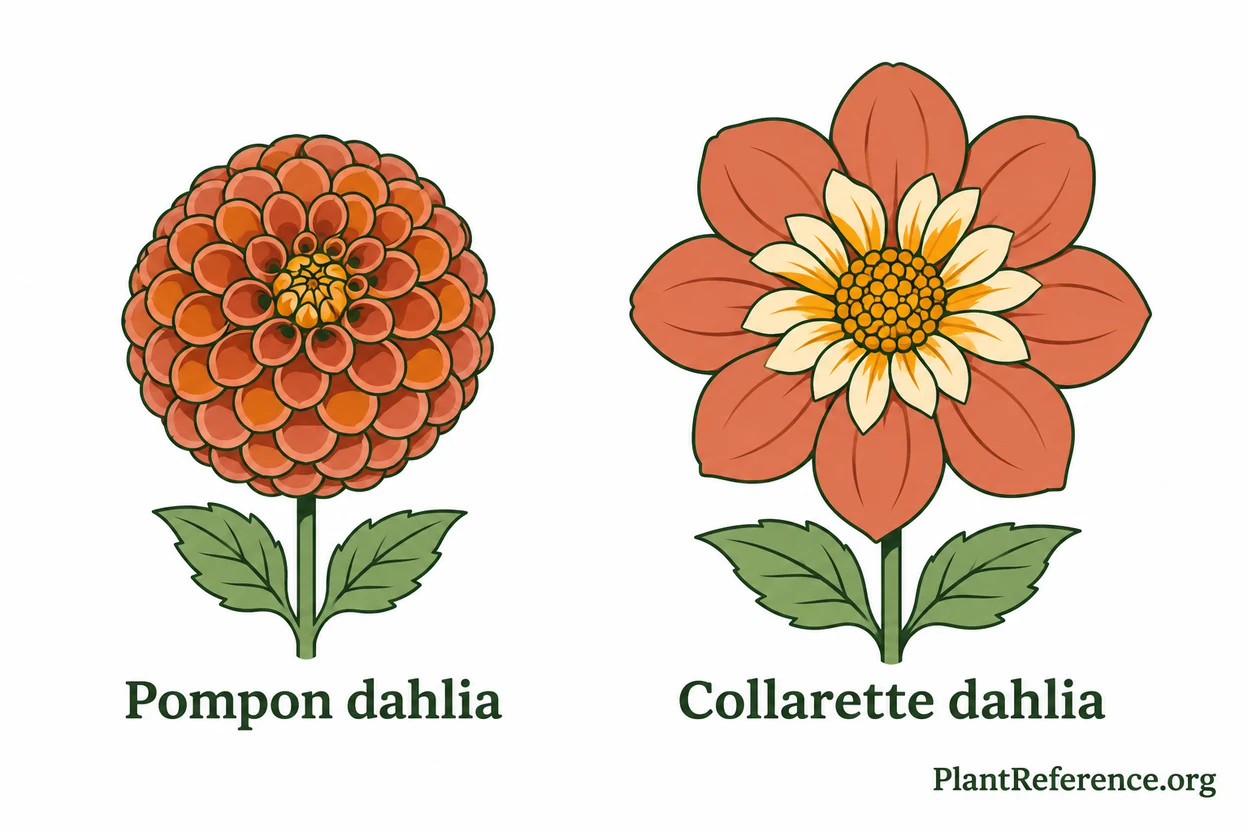
Dahlia 'Rocco' represents the pompon group. The research describes pompon flowers around 1–2 inches (2.5–5 cm) across, giving you a notably smaller shape than the dinner-plate selections. That difference is useful when an arrangement needs repetition rather than another large centerpiece.
The report associates the form with good vase performance but does not provide measured days for this cultivar. Treat it as a form-based choice and keep your own notes on harvested flowers. A small trial gives you more useful local evidence than a precise-looking longevity claim without supporting data.
7. An Open-Centered Alternative
Dahlia 'Night Butterfly' is a collarette choice with an open center and pollinator interest. Its role here is visual contrast, not a claim that it produces the same effect as a densely filled ball dahlia. Choose it when you want the bed to offer more than one flower structure.
If you prefer only tightly filled flowers for bouquets, this may be the choice to omit. If the garden display matters as much as the vase, the open form brings a different reason to grow dahlias. The design principles in Thriller Filler Spiller: Design a Balanced Flower Pot can help you think about contrasting shapes, though these tubers still need their own suitable growing space.
Turn a Good Tuber Order Into a Good Planting
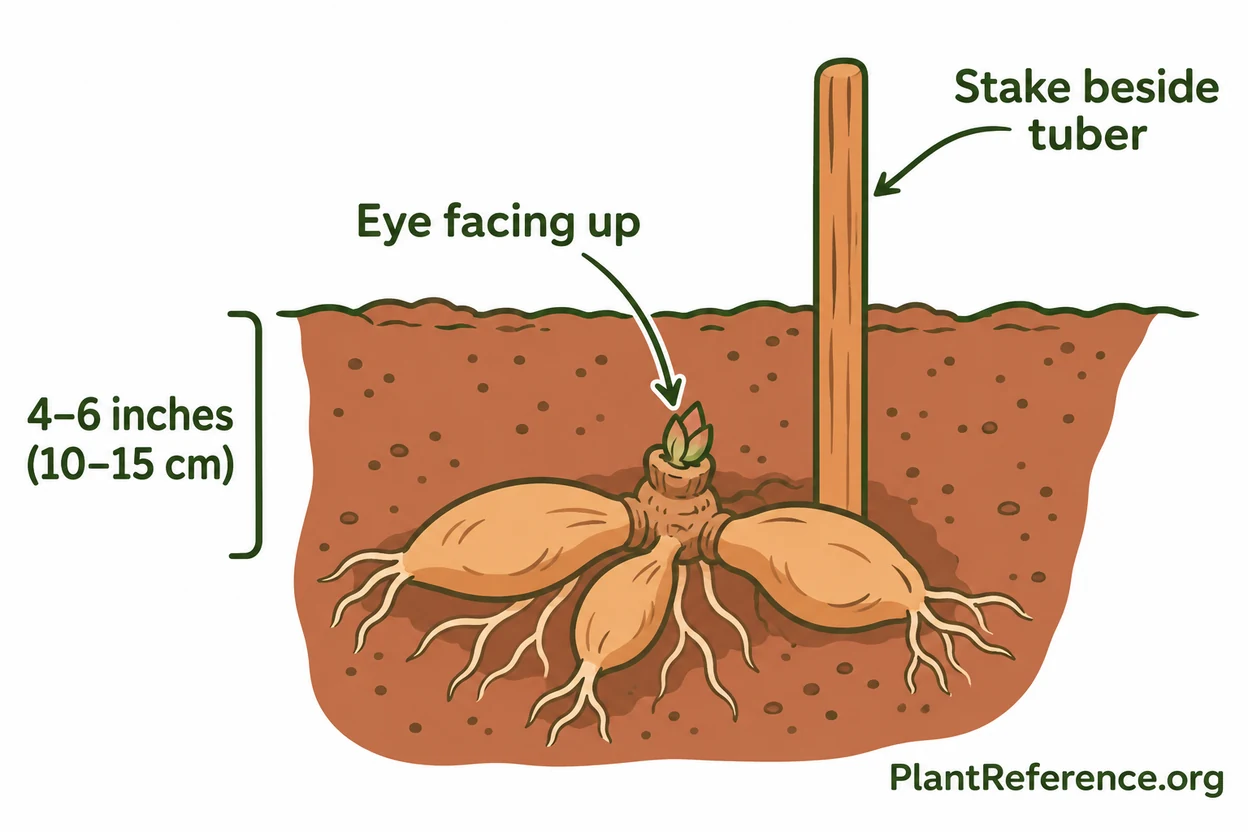
Plant after frost danger has passed and the soil has warmed to about 60°F (16°C). Set tubers roughly 4–6 inches (10–15 cm) deep with the eye upward, following the supplier's instructions for the stock. Aim for 6–8 hours of sun, and install support at planting rather than driving stakes through an established root area later.
Drainage comes before fertilizer. If the planting area stays wet, use How to Improve Clay Soil Without Making It Worse to address the site instead of hoping an expensive cultivar will tolerate it. How to Test Garden Soil: Jar, Ribbon & pH Tests can guide soil assessment before you add amendments.
The research recommends pinching above the third or fourth leaf pair to encourage branching. Pinching Flowers: A Guide to Bushier Annuals explains the broader technique, but keep the dahlia-specific growth stage in mind. Label plants before growth hides the original planting positions.
Keep the Next Season in the Budget
Where winter conditions threaten the tubers, plan to lift and store them rather than treating the purchase price as the entire commitment. After a killing frost, lift before the ground freezes, clean the tubers, and retain viable divisions. A short curing period helps exterior moisture dry before packing.
The research's dahlia storage range is 40–50°F (4–10°C), with vermiculite or peat among the packing options. Inspect at least monthly and remove decaying material. Mild winters do not remove the need to consider drainage and local conditions.
A sensible first order follows a simple sequence:
Choose a color direction you will actually use.
Select a ball form and one contrasting flower form.
Confirm planting space, sun, and support.
Arrange labels and winter storage before ordering more.
Record flowering and storage results for next year's choices.
For long-term bed care, Soil Health 101: How to Build Living, Productive Garden Soil is a useful companion. Keep notes on the cultivar, not just “red dahlia”; those observations let you expand a collection based on your own garden.
Frequently Asked Questions

Reading about plants and recognising them are different skills. These three build the second.
- Daily PlantIdentify the day’s mystery plant from a close-up photograph.
- Keyed OutWork a dichotomous key, lead by lead, to name a hidden specimen.
- Name That PlantName a specimen from botanical clues dealt hardest first.
Free to play, no account needed
Tagged with
Claire runs a small cut flower farm on two acres outside Asheville, North Carolina, where she grows annual flowers for farmers market bouquets and a subscription CSA. She studied art in college and fell into flower farming after volunteering at a community garden during graduate school. What started as a few rows of zinnias and cosmos turned into a full-time business within three years. Claire grows over 40 annual flower varieties from seed each season, managing succession plantings from February through October. She teaches seed-starting workshops at the local cooperative extension office and mentors new flower farmers through their first seasons. Claire writes from direct growing experience — she has started tens of thousands of seeds, trialed hundreds of varieties, and made every mistake in the annual flower book at least once. Her advice is specific, seasonal, and grounded in what actually works in the field, not what looks good in a catalog photo.