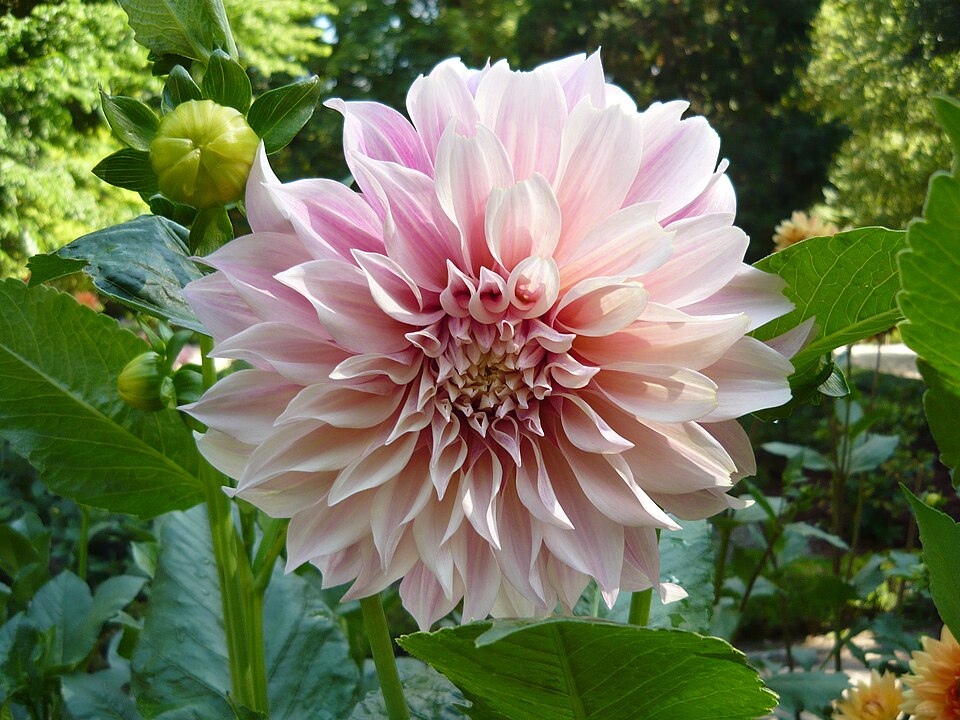
Dahlia, Genus, 'Cafe au Lait', Cultivar,
- Genus
- Cultivar
Cafe au Lait dahlia
Overview
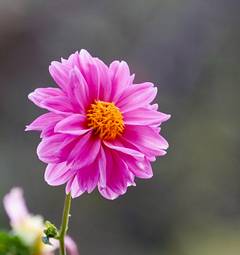
Dahlia 'Cafe au Lait' is a dinnerplate dahlia, growing 36–48 inches (90–120 cm) tall and 18–24 inches (45–60 cm) wide. Fully double creamy pink to blush flowers 8–10 inches (20–25 cm) across — the color shifts between cooler creamy-pink tones and warmer peachy-blush tones depending on temperature, light exposure, and the age of the individual flower. No two flowers are identical in coloring, and the same plant produces flowers of varying tones simultaneously. Widely used in wedding and event floristry for the soft neutral palette. Grows from tuberous roots planted 4–6 inches (10–15 cm) deep after the last frost when soil reaches 60°F (16°C). Blooms 90–120 days after planting. Pinch the growing tip at 12–18 inches (30–45 cm) for branching. Staking required — the heavy flowers on tall stems snap in wind and rain. In cold zones (below zone 8), dig tubers after the first frost blackens the foliage, trim stems to 4 inches (10 cm), dry for 1–2 days, and store in damp peat at 40–50°F (4–10°C). The Dahlia genus is native to Mexico and Central America. Earwigs eat petals. Slugs damage lower foliage. Powdery mildew in stagnant conditions. Non-toxic. Full sun (6+ hours). Well-draining loamy soil. Growth rate is fast from tuber. Containers of 7+ gallons (28+ liters). Deer browse. Zones 8–10 in ground.
Native Range
The Dahlia genus is native to Mexico and Central America. The national flower of Mexico.Suggested Uses
Grown in borders, cutting gardens, and containers of 7+ gallons (28+ liters) in full sun. Space 24 inches (60 cm) apart. Widely used as a wedding and event cut flower. Stake at planting time. Dig and store in cold zones. Non-toxic. Deer browse.How to Identify
Appearance
Size & Dimensions
Height3' - 4'
Width/Spread1'6" - 2'
Bloom Information
Detailed Descriptions
Flower Description
Creamy pink to blush, dinnerplate classFoliage Description
Dark green, pinnately compoundGrowing Conditions
Sun Requirements
Requires 6-10 hours of direct sunlight daily
• Full Sun: 6+ hours of direct sunlight
• Partial Shade: 3-6 hours of direct sunlight
• Full Shade: Less than 3 hours of direct sunlight
Care & Maintenance
Care Guide
Full sun (6+ hours). Plant tubers after last frost at 60°F (16°C) soil temperature. Staking required. Pinch at 12–18 inches for branching. Dig and store tubers at 40–50°F (4–10°C) in cold zones. Earwigs damage petals. Non-toxic. Deer browse. Zones 8–10 in ground.Pruning
Pinch the central tip at 12–18 inches (30–45 cm). Disbud for fewer larger flowers or leave all buds for more smaller ones. After first frost, cut stems to 4 inches (10 cm) and dig tubers.Pruning Schedule
Prune: October–November
fall
Container Growing
Suitable for container growing
Minimum container size: 7 gallons